Menu
"Want them to 'lick you'? Go to the private sector." What do Belarusians say about the prices of veterinary services

I just picked up a kitten, treated it—treat it for free—veterinarians regularly encounter such complaints. Yet sometimes a wave of outrage over veterinary clinic prices spreads across social media. Recently, MАРТ drew attention to the issue and conducted a survey that showed more than half of pet owners consider clinic prices inflated. To give the painful topic some defense, we interviewed cat and dog owners about their views on the cost of treating their beloved pets and the quality of service. We also asked a representative of a state veterinary clinic why the number of domestic animals, as well as the number of “vet clinics,” is growing in the country and why the trend will only continue.
What this text is about
Treating “little tails” is always expensive
Veterinarian: “We run promotions for more than just rare surgeries”
“So you’re a doctor, if you don’t want to treat for free”
Queues are everywhere
“Ask in the corridors of vet clinics whether people like us or not”
“If the price doesn’t suit you—find another place”
MART: half dissatisfied
Treating “little tails” is always expensive
We asked three pet owners from Minsk and Brest, who visit vet clinics, whether they think the prices for their services are high.
Veronica, owner of 15 pets (Minsk): “I don’t understand where such an amount came from.”
The woman has 15 pets: roosters, hens, a rabbit, a parrot, and dogs. She rescued some from a “sleeping place,” others from unscrupulous owners. And to accommodate everyone comfortably, she even moved out of town.
“I took both of my dogs from the “sleeping place,” both with serious chronic illnesses: one had a herniated intervertebral disc, the other had breast cancer. Both have already died. So, for the treatment of
When I called the clinic, I was told that an obligatory pre‑operative examination (ultrasound plus blood tests) was required. They also offered two options: laparoscopy (minimally invasive, with rapid recovery) and open surgery (with prolonged healing and rehabilitation time). Accordingly, there is a price difference.
Initially, the surgery itself was supposed to cost 280 rubles, as they said over the phone. In the contract, however, the prices were already different: from 320 to 380 rubles.
But with all the additional services, I paid 450 rubles, of which 90 were for the examination. Simple calculations show that the surgery cost 360 rubles, not 280. For the sake of fairness, it should be emphasized that the cat was brought out of anesthesia with a special injection, kept in an oxygen chamber with heating, and given a postoperative pad – everything was done with care.
Photo
Pixi. Photo from the owner's archive
We do it at a private clinic, and the total amount, including gloves and the vaccine, comes to about 100 rubles. I think that’s not expensive, but I buy a different vaccine of my own, because I can save 10 rubles—small, but why not?
Some surgeries cost Yulia a lot, but she doesn’t even think about complaining about the cost of private clinic services.
Although sometimes it turned out expensive, I’ve never had any complaints about the price, because everything is spelled out in the contract. I take my own dogs to a private clinic based on experience. But not all of them are good: I’ve heard a lot of bad things about one of the most popular private clinics in the country, that it’s unjustifiably expensive. The one we have been going to for the last few years, we really like.
Elena Ivanovna, owner of Timofey (Brest): “Ten visits in a short time is a sharp blow to the wallet”
A Brest resident brought a sick kitten from the dacha, which was born and abandoned by a stray cat, and with
When they took her to the nearest 24‑hour veterinary clinic, the dog's heart almost stopped. She was dying right in my wife's arms. And at the clinic it was like a movie: they immediately put her on a stretcher and took her out of sight. We had already mentally said goodbye to Mona. We spent two hours on pins and needles, waiting for the worst, recalls Andrei. Then a doctor came and told us that Mona had indeed been pulled from that world. He explained that her condition was very severe and that she needed resuscitation. But he said: “It is possible to save her, but one day in the ICU with examination and treatment will cost 700 rubles. And how many days will be required is unknown.” In effect, we were put in front of a choice: pay or she dies.
I can't recall the exact wording, but it sounded rather cold: “Are you ready, or shall we euthanize?”
Monica. Photo from the owners' archive
Of course, saying goodbye to Monica that night was beyond our strength. We decided to fight for her life. Fortunately, after two days the pet recovered. The disease turned out to be chronic, autoimmune and incurable, but controllable. During the flare‑up night she fell into a hypoglycemic coma – hence those consequences. In the end we spent about 2,000 rubles on all treatment and care. Despite my gratitude to the clinic staff, I don't think it was cheap. But obviously, in such moments you think less about money.
In veterinary medicine everything is like with people: while healthy, ongoing health expenses are unnoticed and imperceptible, but when problems arise, there's an immediate budget collapse. As an example, here are our veterinary expenses over the last year: the largest single amount was 888 rubles for the removal of diseased teeth.
Monica. Photo from the owners' archive
Lilia, owner of Umka: “I spent a lot of
It was really bad. At the state clinic, they were just managing the pain; we gave him injections, but he wasn't getting any better. They said Umka was not a viable candidate and we should put him to sleep... Tears welled up in mine and my daughter's eyes... Then I found a colleague, a volunteer with a lot of experience, who helped me get to a competent doctor at a private clinic. I paid a lot of money, even with a volunteer discount, and it didn't help. We didn't give up, and through the same colleague, we had an operation done at a second private center and saved the cat.
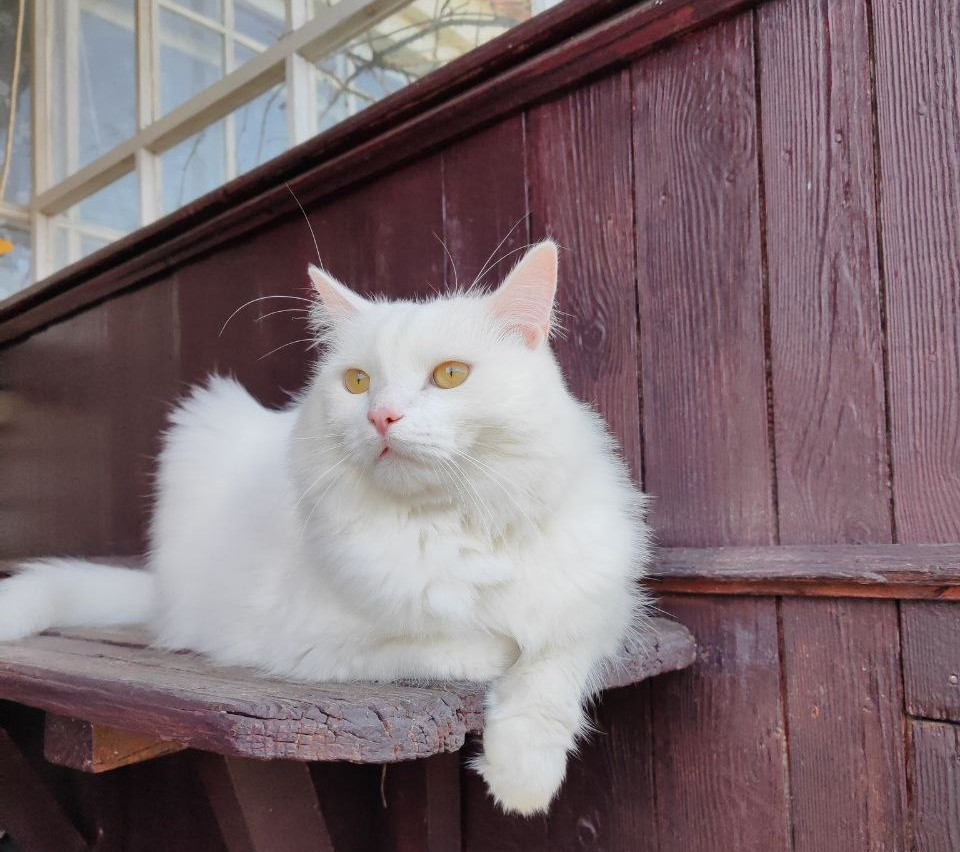
Umka. Photo from the owner's archive
Umka's owner shuddered as she recalled not only the surgeries and anxieties, but also the cost of saving her cat.
—I don't remember the exact amount, but it was expensive. Treating an animal is always expensive. And maybe the high cost was because the operation was unusual: he fell awkwardly in the apartment and pinched a nerve in his spine. He had seizures similar to a person's epilepsy. Neurological operations always cost a lot of money. Fortunately, there was a volunteer discount—it was a bit cheaper, but the sums were still large.
She also had to spend money on medication and a follow-up visit, but Umka's owner has no complaints about the cost of the services:
—Yes, it's expensive, but all the prices are specified in the contract, item by item, and they were quoted to us before the surgeries, not after the fact.
Veterinarian: "Promotions are not only for rare operations"
We also spoke about the cost and quality of services with a veterinarian. Svetlana (name changed at the subject's request), a vet with a lot of experience, immediately noted that prices in all state clinics are the same and can differ insignificantly (by 2–5 rubles) for only one reason: if a particular drug or consumable was purchased at different times.
—In the state system, regardless of the clinic's location, the price list is uniform. Of course, it differs from private institutions, which don't have a unified procurement system or suppliers and each one determines the cost of services in its own way, our interviewee explained, adding that not all procedures and operations are performed in the capital's state clinics—for example, an MRI: it can be done at the Vitebsk Veterinary Academy, where, of course, it will be cheaper than at a private clinic in Minsk. But you still have to get there—not everyone has the desire or the time for that.
— But private providers won’t always be more expensive. They regularly run various promotions. Recently, one of the capital clinics, as part of a promotion, performed complex orthopedic surgeries for free (you only had to pay for materials and anesthesia). And yet these procedures are very expensive and fairly unique in Belarus. But there’s no need to be surprised by such an offer: first, the clinic was attracting clients, and second, its specialists gained experience.
The specialist notes that the promotion includes not only rare surgeries but also the most popular procedures: spaying cats and neutering male cats. Although the specialist advises having them done at state clinics if you want to save money — you won’t have to “hunt” for the promotion.
«So you’re a doctor, if you don’t want to treat for free»
Speaking about the increasingly popular topic of the high cost of veterinary services, the interviewee explains that for some pet owners