Menu
Since June 2026, a nationwide campaign to promote "conscious consumer patriotism" has been launched in the Republic of Belarus.
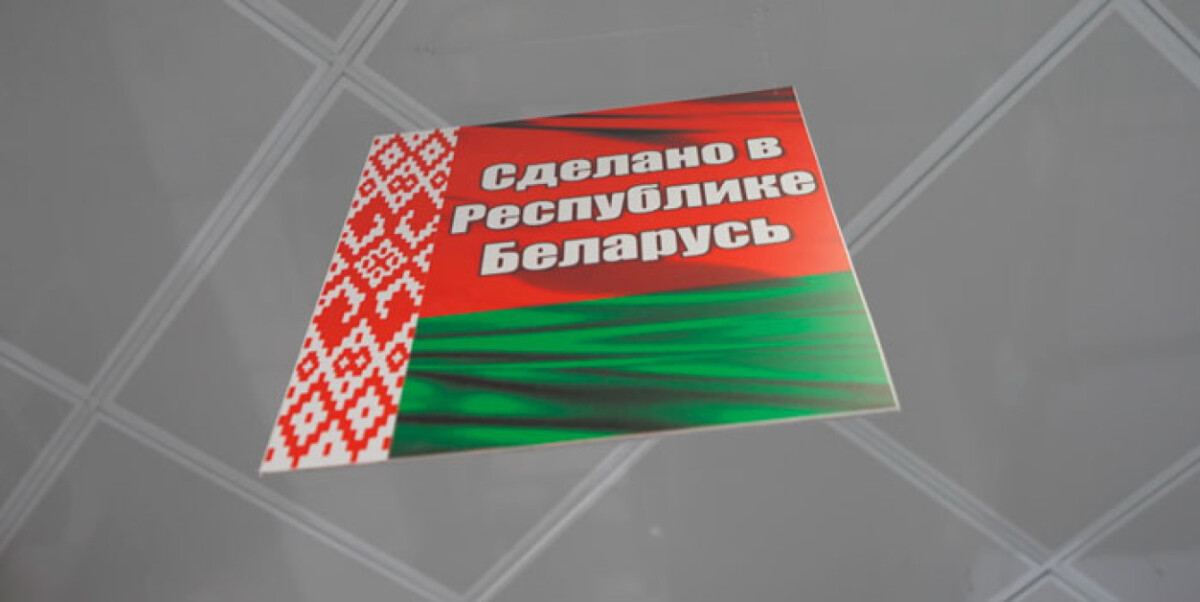
Since June 2026, a nationwide campaign to develop "conscious consumer patriotism" has been launched in the Republic of Belarus
Трыбуна Працы July 10, 2026 11:39 It is extremely important for the domestic economy that citizens purchase primarily their own goods. But it is not so easy to get buyers to vote with their rubles in favor of domestic products. This requires a nationwide campaign to promote domestically produced goods.
From the empty shelves of the 1990s to full abundance. From irons to BELAZ trucks. Never in its entire history has the country produced as many goods as it does now. The share of domestic product sales today is nearly 55%. For food products – 74.5%, for non-food goods – 35%. Competition is high, and the choice and the final stamp of quality rest with the buyer.
"Купляйце сваё!" ("Buy your own!"), "Наша надзейней!" ("Ours is more reliable!"), "Наша смачней!" ("Ours is tastier!") – these are not just catchy slogans. They represent a choice thanks to which the country's economy functions, and "consumer patriotism" is a global practice that has stood the test of time.
China's "buy domestic" strategy made it the world's second-largest economy; with the slogan "Ours is the best," German automakers earned a place on the list of national pride; the chant "Buy local, eat fresh" saved Canada's agricultural sector from collapse; and the "buy American" sentiment halted the economic downturn and financial crisis of 2008 in the United States. Samsung, LG, Hyundai, Sony, and Toyota are global corporations that grew precisely on consumer patriotism.
When you buy products from a national manufacturer, the money stays in the country – it goes to the national producer, who, by investing in their own development, will be able to enter other markets, earn foreign currency, and bring it back to the state, which will then spend that money, including on social programs and support for its population.
In any case, consumer patriotism, like patriotism in general, cannot be imposed. It is summoned not by loud slogans but by quality products. And at the enterprise that is one and a half centuries old – "the trade secret" that appeals to the taste of buyers – they know this for certain.
Natalya Manko, head of the production laboratory at the Krasny Pishchevik enterprise: "On automated lines, the marshmallow itself comes out with different organoleptic and quality properties. Marshmallow dried on special boards, developed according to our old formulations, has a completely different taste. We add 100% apple puree. Very often nowadays apple puree is replaced with dry powders. We don't use confectionery glaze at all. We use only natural chocolate."
A taste of childhood, a healthy treat, and the most popular Belarusian souvenir. The production of classic marshmallow is incredibly labor-intensive. But losing quality, and therefore customer trust, is a far more costly proposition.
Igor Kisel, director of the Krasny Pishchevik enterprise: "It is impossible to replace this mechanically. It is not an option for us to chase volume and lose product quality. Our shipping geography covers 15 countries around the world. We have about 400 product names in total. We grew 114% compared to last year's level in terms of product sales."
The algorithm "Belarusian equals quality" is working successfully for the country's economy. Here it is – the simple math of patriotism: "I buy Belarusian" means investing money in our own enterprises, and they develop and pay dividends back – in action. Last year, food exports brought in a record 10 billion dollars. From food security to import substitution and technological sovereignty.
Just a couple of decades ago, many women would smile condescendingly at the phrase "Belarusian cosmetics" and go on dreaming about exotic jars and tubes. But today, Belarusian lipsticks and creams are a strategic reserve of beauty and youth not only for our fashionistas. This enterprise's turnover is 2.5 million products per month.
Dmitry Syomochkin, sales director at a decorative cosmetics manufacturing enterprise: "Compared to the same period in 2025, in 2026 we grew our turnover by 50%. Belarus accounts for only 25% of total turnover. Then comes Russia; we have a distributor in the Persian Gulf countries, in Saudi Arabia, and CIS countries. We are finishing negotiations with a distributor in the United Kingdom. Now we produce analogs of products that cost four times more."
Buying domestic goods is an investment in the country. And the ruble that comes back and goes toward developing our own production is powerful insurance against sanctions.
Ivan Vezhnovets, First Deputy Minister of Economy of Belarus: "Over the past year, we produced more than 29 billion US dollars worth of import-substituting goods. That is 6 billion more than in 2024. In the first quarter of 2026, we produced 10% more import-substituting products than in the same period last year. This is a good result, a good start to the year."
State support for domestic producers is also built into the formula of patriotism. From preferential rent for premises to loans for development. In this area alone, 35 import-substitution projects are now ready for implementation. The volume exceeds one billion rubles. And support for purchases with continuation is a whole system.
ont.by