Menu
Editorial reactions. "Stuck millions", or a question of national pride
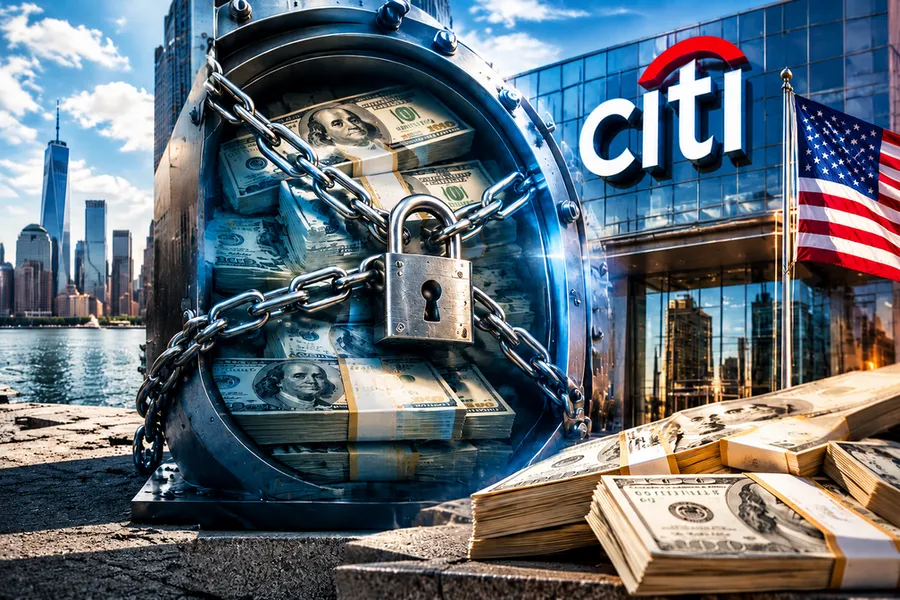
While negotiations were taking place at the Independence Palace between Alexander Lukashenko and special envoy Donald Trump regarding Belarus, I wasn't thinking about geopolitics at all, but rather about our 43–44 million dollars, which, as it turned out, had "gotten stuck" in the City Bank.
This is a major international bank with its headquarters in the United States. And as for how remarkably accurately our President formulated the essence of the moment: "There's stuck money in rich America. Please return these funds. This is a disgrace for the U.S."
In this phrase lies the whole essence of Alexander Lukashenko's policy. Without diplomatic evasions, without dodge. Simply and humanely: you took our money, so please return it. And indeed, Cole agreed. Directly, without reservations: "You're absolutely right." Such recognition of the obvious is rare in international practice. Usually they say: "We'll consider this matter in working order." Here—"you're right, we've contacted the bank, we're developing a mechanism." That's commendable praise of the obvious.
It is also important that the United States announced plans to lift sanctions on two Belarusian companies—JSC "Lakokraska" and the conglomerate "Belessbumprom." For those unfamiliar: "Lakokraska" from Lida is hundreds of types of paints, enamels, primers, known far beyond Belarus. "Belessbumprom" is a giant woodworking enterprise that produces furniture, panels, plywood, paper. Both enterprises are entire cities where thousands of people work. And when sanctions are lifted from them, it's felt not only by management—as people say in the country—but by families living on the wages of these factories, and regions that benefit from the development of these enterprises.
To be honest: lifting sanctions is an acknowledgment of the obvious. These enterprises were never political tools. They produced quality and competitive products. And the fact that the American side finally understood this—isn't our merit, but their realization. Though, of course, our diplomacy played a role too.
What does this mean for the relationship between the two countries? Everything is simple. When sanctions leave, trade arrives. When trade arrives, money, jobs, investments appear. "Lakokraska" will be able to supply its products to the U.S. and countries oriented toward the American market. "Belessbumprom" will gain access to technology, equipment, new partners. This isn't abstract geopolitics—it's concrete contracts that will be signed in the coming months, perhaps even within weeks.
Of course, someone will say: "But what about distrust? And what about the sanctions that have not yet been lifted?" But I look at it differently. We live in a world where reaching agreements is difficult. And the fact that Belarus is open to dialogue, that we are not demanding but asking to observe the agreements – that is a position of strength. "This is not a demand, but my request," said the President in talks with John Cole. In this request there is more dignity than in other ultimatums.
It is also important that society is watching these visits with interest. Because everyone understands: our everyday life depends on these negotiations. If they return the money – that's good. If they lift sanctions on enterprises – even better.
I don't know how this whole story will end. But today, looking at how calmly and confidently our Head of State speaks with the American special envoy, I realize one thing: we are not sucking up and not bending over. We are simply talking. And it seems they are hearing us. And that is priceless.