Menu
Why different batteries are suitable for one car model
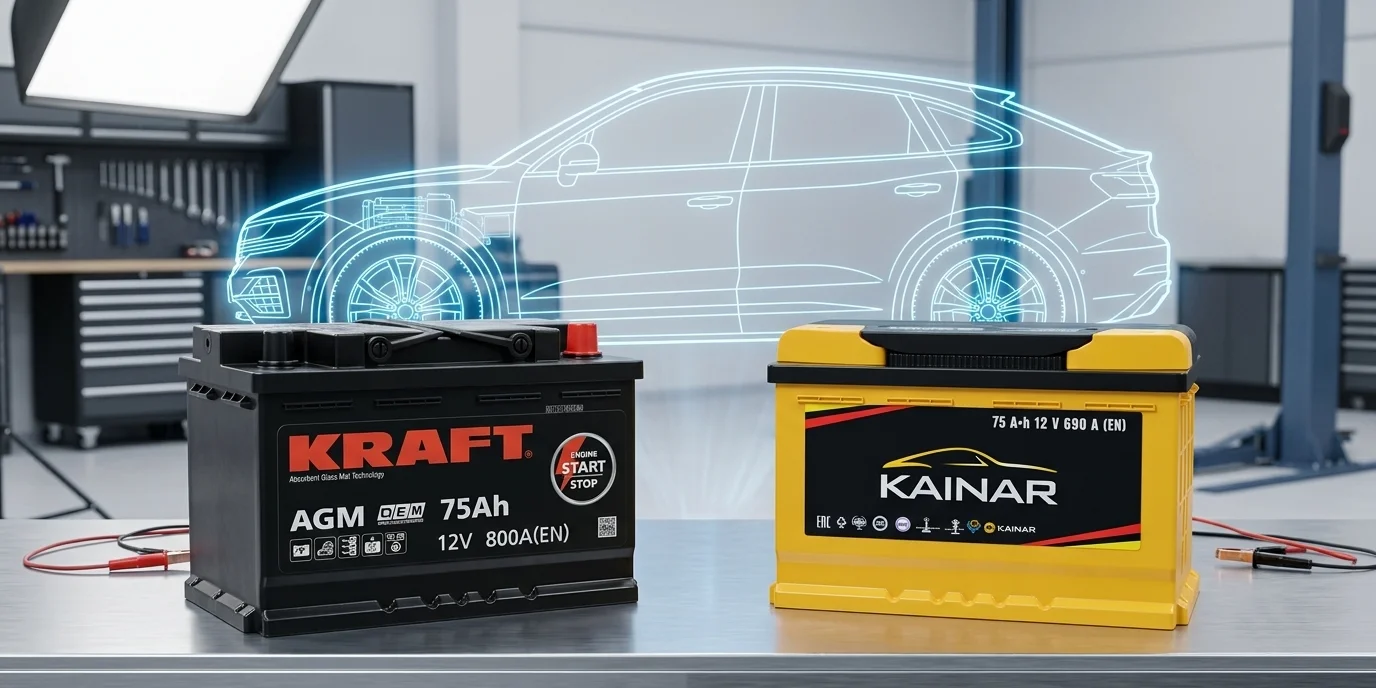
When selecting a battery by car make, you may encounter a situation: for the same car model, catalogs offer several batteries with different capacities, cranking currents, sizes, or technologies. This does not necessarily indicate an error. One car model can be produced in different trims, with several engines and various sets of electrical equipment, so the battery requirements for a specific version may differ.
Different engines — different battery requirements
One of the main factors is the engine. For the gasoline and diesel versions of the same car, the manufacturer may install batteries with different capacities and cranking currents. A diesel engine requires a higher cranking current due to the specifics of fuel ignition and greater load on the starter during start-up.
Besides engine displacement, its design, power, and the car's generation also matter. For example, within one model, engines of 1.4, 1.6, and 2.0 liters may be used, and the manufacturer provides different battery options for them.
Vehicle trim affects the choice
The number of electrical consumers also matters. Seat and window heating, a powerful audio system, additional equipment, the Start-Stop system, and other electronic devices increase the load on the vehicle's electrical network.
Therefore, for a car of the same model, batteries designed for different operating conditions may be used. This is especially noticeable in modern cars: a version without Start-Stop may use a conventional starter battery, while a car with Start-Stop is originally designed for EFB or AGM.
Why sizes and capacities differ
The car's design may also provide several mounting locations or fastening options for the battery. Depending on the trim, the battery can be located under the hood, in the trunk, or under the seat.
Because of this, catalogs for a single model sometimes list batteries of different sizes. However, an externally suitable battery does not yet mean it can be installed without checking the other parameters.
Capacity can also
The same model can be produced for several years, but technically change during production. The manufacturer installs new engines, modernizes electronic systems, changes configurations, and sometimes uses different battery technology.
Therefore, when selecting an ACK, it is not enough to just specify the car's make and model. It is preferable to consider the year of manufacture, engine type, transmission type, presence of Start-Stop system, and factory parameters of the installed battery.
Can one choose any battery from the list?
No. If the catalog shows multiple compatible options, it is necessary to determine which ones specifically suit this particular car modification.
- capacity in Ah
- starting current (A)
- body dimensions
- polarity and terminal placement
- mounting type
- battery technology — WET, EFB or AGM
- compliance with Start-Stop system requirements
An important addition for modern cars: if your vehicle is equipped with a Start-Stop system and complex electronics, when changing the battery capacity or technology (for example, switching from EFB to AGM), registration (recording) of the new battery in the onboard computer (BMS) is mandatory. Without this, the generator will supply incorrect voltage, which quickly damages the new battery.
As for capacity, installing a battery with slightly higher capacity (for example, 65 Ah instead of factory 60 Ah) is acceptable and even useful in cold climate conditions, if the battery fits in the compartment and is correctly entered into the BMS.
Why it is important to look beyond just the make and model
The phrase "this battery is suitable for Volkswagen Golf" or "for BMW 3 Series" is too general. One model may have dozens of modifications with different engines and electrical systems.
Therefore, correct battery selection is performed based on the specific car modification, not only by its name. If there are doubts, it is better to compare the characteristics of the new battery with the parameters of the factory-installed battery, or consult specialists who can determine the appropriate option according to the car's