Menu
We put everything on savings — what expenses will we incur? Our experiment
We put everything on economy — what fuel consumption will we get? Our experiment
Author: Ivan Krishkevich. Photo: Alexander Ruzhechka
Add to main sources Google
If you think you’re spending too much on fuel, don’t rush to change your car. First, you can optimize your trips or at least make them more economical. After all, fuel consumption depends on both the technical condition of the car and your driving style, with the latter being decisive. We set ourselves the goal of achieving the minimal “appetite” of our car, using economical driving techniques and applying some measures regarding the machinery. The result pleased us, although we had to make some sacrifices in terms of comfort.
Some background
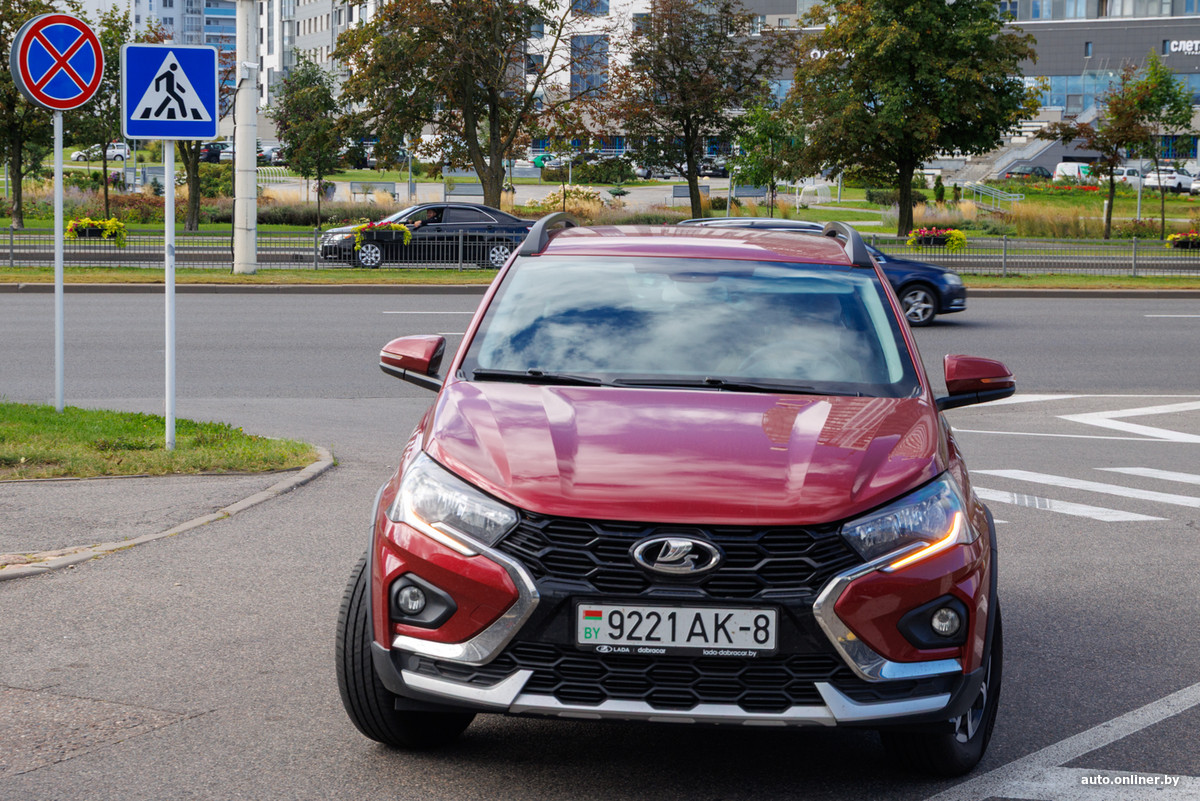
Since we have a Lada Iskra SW Cross on a long test, we decided to conduct the experiment on it. This car is equipped with a 1.6‑liter gasoline engine producing 106 hp and a 6‑speed manual gearbox. The manufacturer’s claimed fuel consumption is 11.1 liters in the city cycle, 6.4 in the suburban cycle, and 8.1 in the mixed mode. It will be interesting to see what we get and under what conditions.
Our circular route, 71 km long, starts and ends in Minsk, partially runs along the MKAD, includes sections of highways where speeds up to 120 km/h are allowed, as well as stretches of ordinary suburban roads where the maximum speed is 90 km/h. There are also a few “city” kilometers.
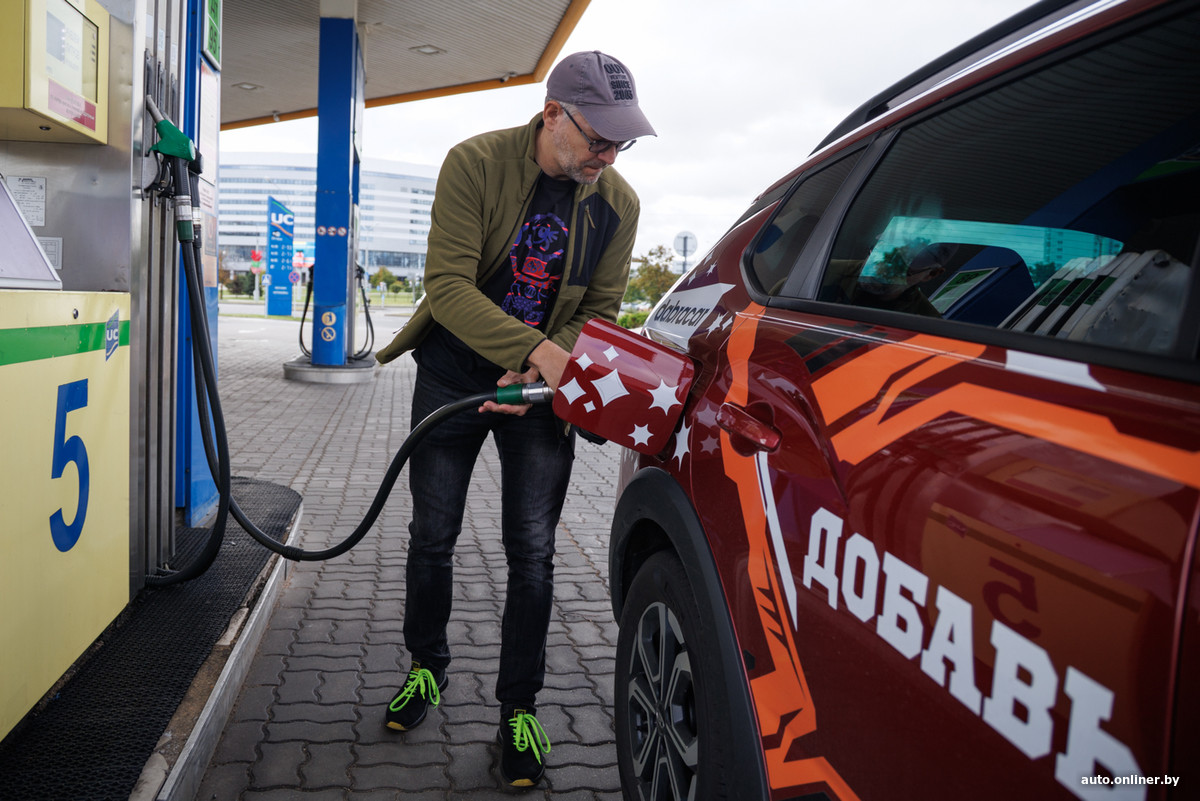
We will make two passes on our “ring.” The first is in the usual active style that the author follows in everyday driving; the second is economical, with some small technical tricks. We will evaluate consumption using the on‑board computer’s readings, but we will also double‑check with a full‑tank refueling. Therefore, the start and finish of the route are conveniently located at a gas station.
In the usual pace
If described in three words, it’s “within the traffic rules.” We do not violate the speed regime, we do not take turns in skids, we turn on indicators during maneuvers, but we accelerate briskly, not shying away from “revving” the engine and quickly shifting gears in the gearbox.
And you can’t do anything else with the Iskra: the 16‑cylinder engine isn’t very powerful on its own, and its character is “top‑end.” So if you want a reserve of traction, it’s better to keep the tachometer needle above 3000 rpm during active acceleration. For moderate driving, staying between 2000–2500 rpm is sufficient, and we have the advantage of six gears. The gearbox (by the way, of Chinese origin) delights with crisp shifts, though the lever throws are a bit large.
But we still can’t go fast. It seems the morning rush hour is already behind us, yet both on Prospekt Pobeditely and the MKAD there's a dense flow, and hooliganism isn’t part of our plans. At least the simulation of conditions is as natural as you can get.
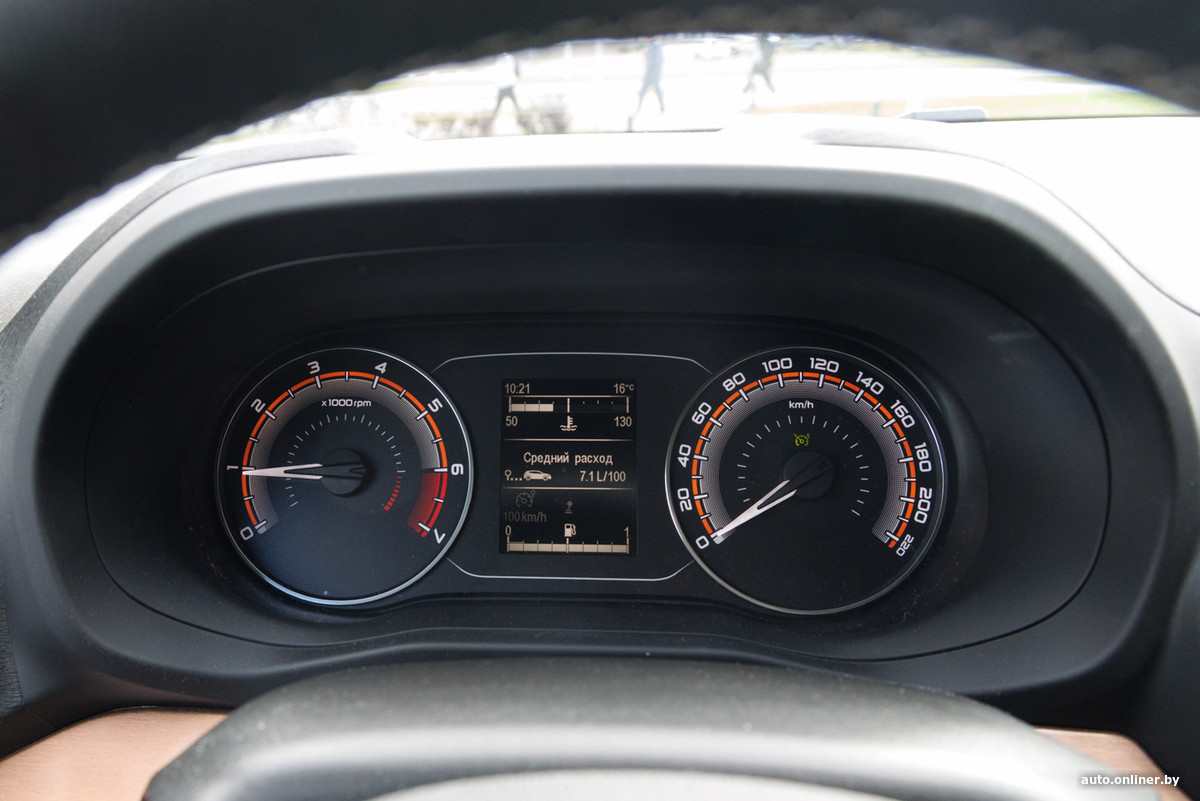
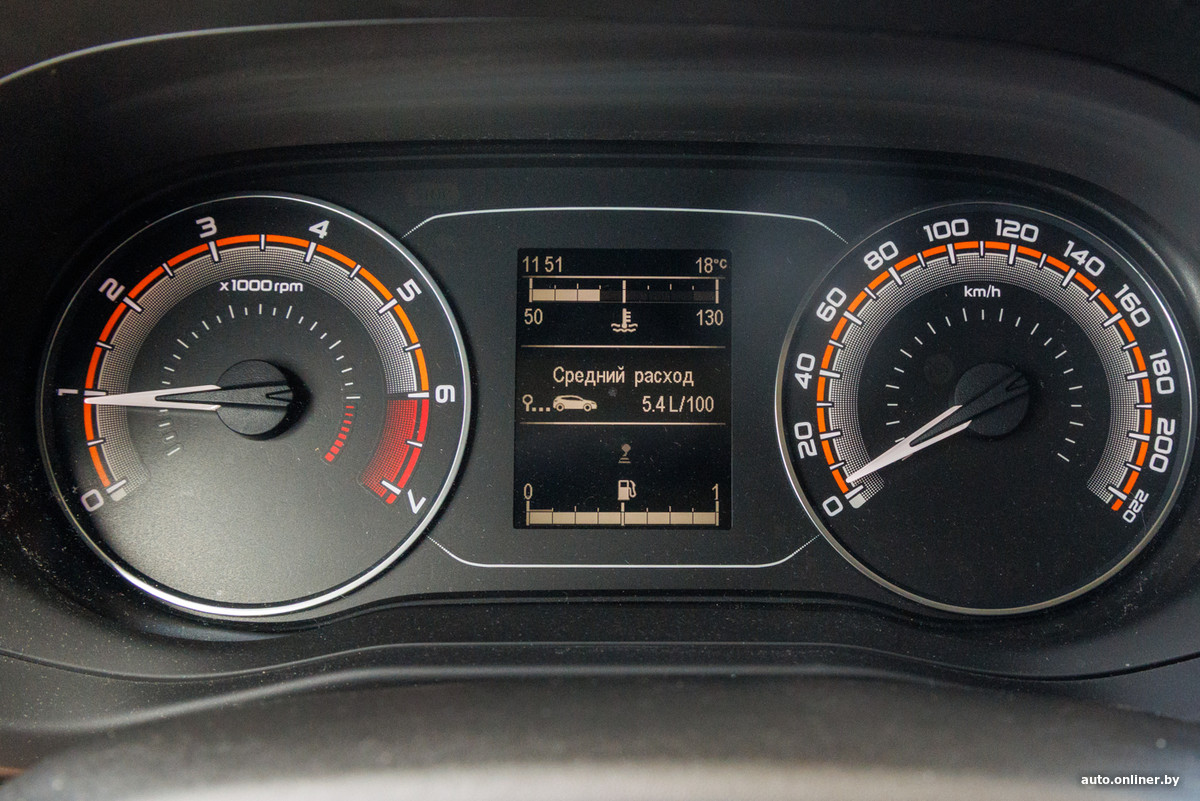
When we manage to get some operational space on the Grodnenskaya road, we confidently hold 120 km/h. By then the average consumption drops below 8 liters and gradually approaches seven, even though the tachometer needle never falls below 3000 rpm. It’s the right moment to note that the main gear ratio in the SW Cross version is 4.3, compared to 3.9 in the regular Iskra SW station wagon. Plus a higher ground clearance and larger wheels. It’s no surprise that the difference in fuel consumption between these versions is 0.3–0.5 liters depending on the cycle. Naturally, in favor of the SW.
We turn toward Zaslavl and on the narrow road we hit slow traffic. And closer to the town, signs also prevent us from accelerating. All right, but our speed doesn’t exceed 80 km/h, and at times drops to 60–70 km/h. That’s not very good from an experimental standpoint, because on the second lap we will drive at roughly the same pace, meaning we can’t improve the
Well, ahead of us are several more dozen much faster kilometers where we can drive at 90 km/h and 120 km/h, which we do. Therefore, as we approach the finish, we record a confident 7.1 liters — that’s what we note.
In economy mode
Before the second lap, we stop at a tire inflation station and raise the pressure from 2.1 to 2.6 bar. This is intended to reduce rolling resistance, which should have a slight (a few percent) positive effect on fuel economy. However, it also means a smaller contact patch between the tires and the road, which negatively affects their grip: theoretically we get a worse “hold” in corners and longer braking distances. In this context, a slightly stiffer handling of irregularities is a harmless detail.

Technical factor
We only inflated the tires, but to further reduce rolling resistance, manufacturers use narrower and stiffer tires on their eco‑versions, and fit aerodynamic wheel covers. They also work on weight reduction by using lighter materials. And eco rally participants, if the regulations allow,
To be honest, in normal driving mode all of this is hardly noticeable, except at a subtle level. One could even ask whether this is self‑suggestion. But the fact that we drive the second lap without the air‑conditioning is already noticeable: under the autumn sun the cabin warms up nicely, even though the outside temperature is only modestly +15 degrees. Moreover, the ambient temperature only rises further. Yet without the air‑conditioning we reduce the engine load, which also leads to savings.
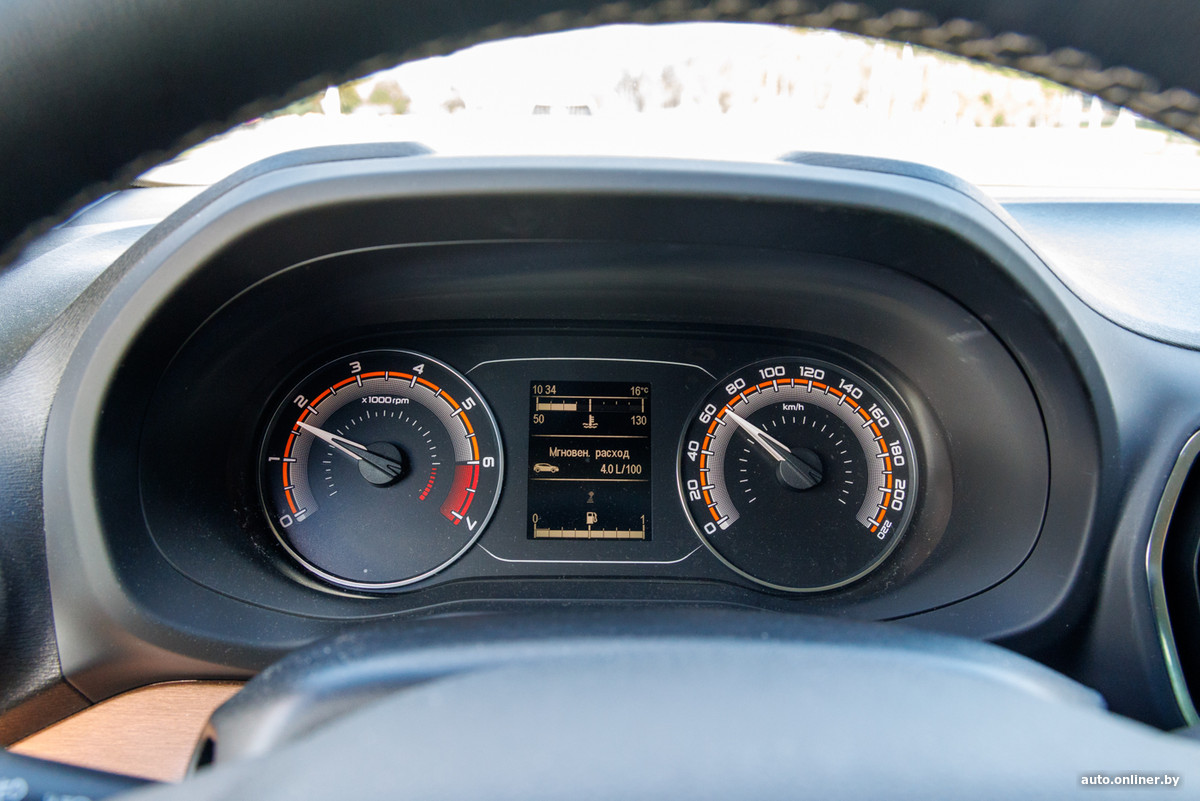
By the way, how's the consumption? It's dropping! Just a few kilometers after the start the on‑board computer shows less than 7 liters, and the figure keeps falling. We haven't even left the city yet, and the display reads 5.8.
Of course, it's not only because we turned off the air‑conditioning and increased tire pressure.
In fact, the biggest savings come from the driving style.
So now the driver has switched to eco‑mode. What does that mean? First, accelerations have become smoother, with less pressure on the accelerator and earlier gear changes. This is when you need to bring the car up to cruising speed.
In other cases it's better to avoid unnecessary accelerations altogether, as well as decelerations. If the traffic situation allows, it's better to keep your chosen speed—just lower than the flow. In real conditions achieving this is often difficult: it requires extra control and concentration from the driver, and such a style can disturb neighboring traffic. Sometimes it can even be unsafe.
That's exactly why we abandoned the most extreme fuel‑saving tricks. Including slipstreaming—driving in
It’s simple here. The lower the speed, the lower the consumption—when moving at a constant pace. We’ve already tested and confirmed that, roughly speaking, every 10 km/h adds about a 10 % increase in fuel consumption. In theory it should be even higher, but let’s not dwell
Air filter MANN-filter C27009
1 review
Panel, length 269 mm, width 191 mm, height 24 mm
20.00 €
from 1.56 € per month
5 offers
Air filter Kolbenschmidt 50014086
Panel, length 325 mm, width 266 mm, height 51 mm
–34% 33.30 €
2 offers
Compare these products →
View Air Filters in the Catalog
Enjoy reading Onlíner? Add our news to Google “Main Sources”
Got something to share? Write to our Telegram bot. It’s anonymous and fast.
Reprinting text and photos from Onlíner without editorial permission is prohibited. ga@onliner.by