Menu
Opinion on the matter. The Bab‑el‑Mandeb Strait is returning to normal operation.
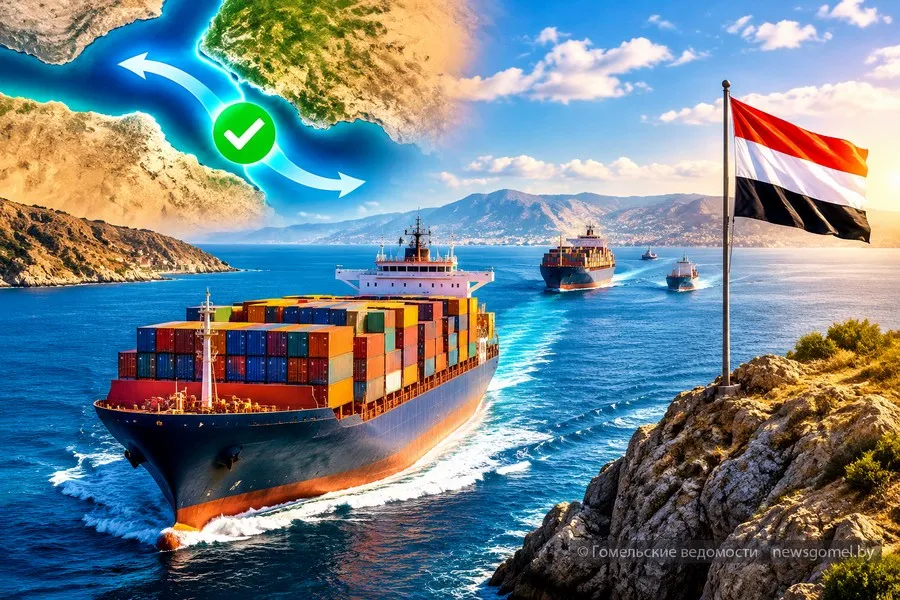
It seems that the situation around one of the planet’s most important maritime routes is gradually gaining a chance for de‑escalation. In the Bab‑el‑Mandeb Strait, the region’s largest logistical artery through which a significant portion of international freight passes, shipping is currently operating in a calm mode. This was stated by an organization that performs the functions of the Ministry of Foreign Affairs in Sana’a and was established by the Yemeni movement “Ansar Allah.”
Additional data was provided by the chairman of the board of directors of the Red Sea Ports Corporation, which is controlled by the Houthis, Zaid al‑Washli. According to him, about 85 vessels passed through the strait in the last 72 hours. This is almost 96 % of the usual traffic intensity. If these figures are maintained, one can speak of a gradual restoration of one of the key links in the global logistics system.
This is of fundamental importance for international trade. The Bab‑el‑Mandeb Strait connects the Red Sea with the Gulf of Aden and essentially serves as the gateway to one of the main routes between Europe and Asia. Any serious instability here can quickly reverberate far beyond the region: ships are forced to change routes, voyage durations increase, fuel and insurance costs rise, and with them the cost of transporting goods increases.
That is why even a temporary reduction in tension here can be good news for the global economy. In recent years, international trade has repeatedly faced situations where another conflict, attack, or disruption of the transport corridor triggered a sort of logistical “swing”: today the cost of transport rises, tomorrow routes change, then goods become more expensive, and after some time the market tries to return to normal operation.
Against this backdrop, the current reports from Yemen appear to be a limited but still
Currently, despite everything, the maritime route is showing signs of returning to almost normal shipping intensity. And if this trend continues, the global economy will at least be able to catch its breath for a while.
I would say that the main thing right now is to prevent another escalation. International trade desperately needs predictability and stability: business is much easier when ships follow familiar routes, delivery times can be calculated in advance, and logistics costs do not spike with each new flare‑up.
The easing in the Bab‑el‑Mandeb Strait still looks more like a breather than a permanent solution. But even such a pause matters. After several months during which the global economy was repeatedly rattled by logistics disruptions, any return of major transport arteries to normal operation is undoubtedly a good sign. Now we can only hope that the current calm will not be a brief pause before a new crisis, but the beginning of a more sustainable stabilization. Let's see how events unfold.