Menu
How to Store Onions and Garlic Until Spring: 7 Mistakes When Drying and Storing That Cause Your Harvest to Rot
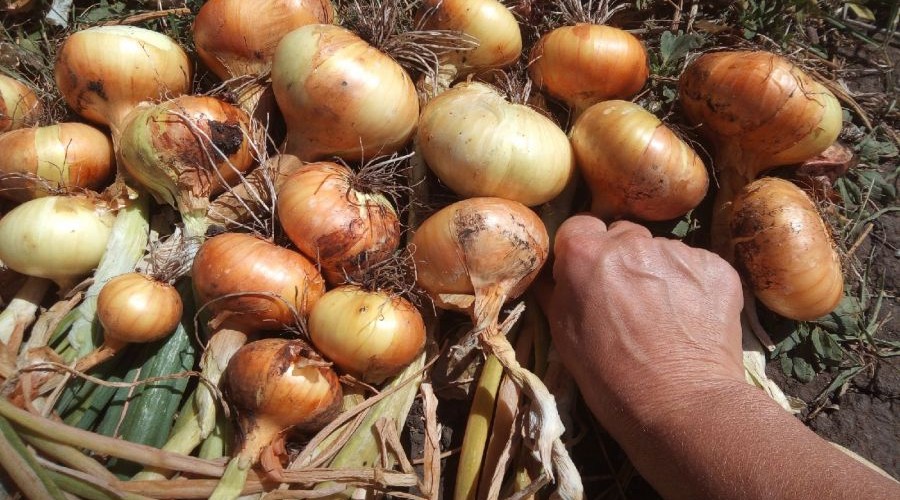
How to Preserve Onions and Garlic Until Spring: 7 Mistakes in Drying and Storage That Cause Your Harvest to Rot
Aksana Kutarskaya, August 31, 2026, 10:20
After harvesting onions and garlic, many dacha owners consider the job finished. The crop is gathered, so they can put it into crates and store it in the cellar until spring. In practice, it is often at this very moment that the main problem begins.
If the bulbs or garlic heads are not dried sufficiently, if damaged specimens are stored together with healthy ones, or if the harvest is left in a damp, poorly ventilated room, soft spots, mold, and rot can appear within a few weeks. Yet preserving the crop until spring is not as difficult as it seems. The key is to correctly go through several stages: harvest at the right time, dry it well, sort it, and create proper storage conditions.
Why onions and garlic start to rot in winter
After harvesting, onions and garlic are not yet fully ready for long‑term storage. Moisture remains on the surface, the outer skins must dry completely, and for onions it is especially important that the neck dries well.
Any damage—such as a hit during harvesting, a cut, a crack, or a softened area—raises the risk of spoilage. A damp environment further creates favorable conditions for microorganisms that cause rot.
Therefore, drying is not a mere formality but the most critical step in preparing the harvest.
For onions, the post‑har
If the neck remains soft or moist, it is better not to rush with putting it away for long-term storage.
Once the onions are fully dried, they need to be sorted through. Any specimens with cuts, dents, soft spots, or signs of rot should be removed from your stocks right away.
How to dry garlic so it doesn't rot
The same general principle applies to garlic, but it is especially important not to rush with trimming here.
After harvesting, the heads are spread out in a single layer in a dry, shaded, and well-ventilated place. You can use racks, trays, or any other surface that allows air to pass freely underneath and between the heads.
Garlic should not be piled up in a dense heap.
A full drying usually takes about three weeks. However, the exact time depends on air humidity, temperature, and the condition of the crop.
A well-dried head has a dry outer skin, dried-up roots, and firm cloves.
Only after drying is complete is the garlic prepared for storage: the stem and roots are carefully trimmed off, taking care not to damage the head itself or its protective skins.
How long to dry onions and garlic
There is no fixed time frame that will work equally well for any crop.
CropApproximate timeMain sign of readinessOnions2–4 weeksdry neck and outer scalesGarlicabout 3 weeksdry skin, roots, and stemDamaged headsseparatelyuse firstIf the weather has been rainy, the room is humid, and the crop was dug up wet to begin with, drying may take longer.
Therefore, you shouldn't put onions or garlic into storage just because two or three weeks have passed. First, assess the condition of the heads.
Where to store onions in winter
For long-term storage, onions need three main conditions: coolness, dryness, and good ventilation.
In ideal professional conditions, a fairly low temperature and controlled humidity are used. But in an ordinary house or apartment, achieving such parameters is difficult.
Therefore, for home storage, the main thing is to prevent dampness and sharp temperature fluctuations.
Suitable options include:
a dry cellar;
a cool pantry;
a dry basement;
an insulated garage;
any other dark room with ventilation.
Onions can be packed into mesh bags, wooden crates with holes, or woven baskets. It is important that air can pass freely between the bulbs.
A sealed plastic bag is a poor choice for long-term storage. Moisture can build up inside, and this increases the risk of spoilage.
If onions are stored in boxes, don't pile them in too thick a layer. It's better to use several small containers than one huge one.
How to store garlic in winter
Garlic also likes a dry, dark, and well-ventilated place.
It can be stored:
in mesh bags;
small cardboard boxes with holes;
wooden crates;
wicker baskets;
suspended in a net or braids.
The main thing is not to create humid and stagnant air around the heads.
If garlic is stored in a box, periodically check its condition. Pay special attention to the bottom layers.
Don't place your stores right next to a radiator or another source of strong heat. Air that is too dry and hot can accelerate quality loss, and temperature and humidity fluctuations are also not good for the harvest.
Which onions and garlic heads should not be put into storage
Before sending the harvest to the cellar or pantry, it must be carefully inspected.
Only firm, dry, and undamaged heads are left for long-term storage.
Set aside right away:
soft bulbs;
heads with cuts;
specimens with wet spots;
vegetables damaged by pests;
garlic showing signs of mold;
sprouted heads;
bulbs with a suspicious smell.
It's best to use such vegetables first.
It's especially important not to think along the lines of "it'll probably keep." Even one already spoiled head in the general mass can become a source of problems for neighboring vegetables.
7 main mistakes when storing onions and garlic
- Putting the harvest in the cellar right away
Freshly dug vegetables should first dry out thoroughly. If you close them in a cool but humid room, the risk of rot increases significantly.
- Drying in a thick layer
Inside a large pile, air barely moves. The top heads may look dry while the bottom ones remain moist.
- Washing onions and garlic before storage
Extra moisture before long-term storage is completely unnecessary. It's far more important to preserve the dry protective skin.
- Leaving damaged vegetables
Mechanical damage shortens shelf life. It's better to use such specimens first.
- Packing the harvest in a sealed bag
Condensation can form inside. Free air exchange is much more important for dry onions and garlic.
- Placing boxes on a damp floor
Even a well-dried harvest can gradually absorb moisture. It's better to place the boxes on shelves, pallets, or another raised surface.
- Not checking the stores until spring
Sealing the cellar in fall and only opening it in spring is not the best idea. Inspect the harvest periodically and remove any spoiled specimens right away.
Can onions and garlic be stored in the refrigerator
For whole dry onions and garlic, the refrigerator is generally not the optimal place for long-term storage.
It's much better to find a dry and cool spot with proper ventilation.
Here, however, it's important to distinguish between a whole dry bulb and a product that's already been prepared.
Peeled or chopped onions and garlic cannot be stored the same way as whole bulbs. The rules for storing prepared foods apply to them.
The popular method of storing garlic in oil deserves a separate mention. Homemade garlic in oil should not be left at room temperature: under such conditions, there is a risk of Clostridium botulinum bacteria developing. For preserves like these, you need to follow proven guidelines for safe storage.
What to do if there's little storage space
There's no need to try to preserve the entire harvest in its whole form.
Some of the onions can be used for canning or freezing. Chopped onions can also be dried in a dehydrator and used in winter for soups, sauces, and hot dishes.
Another option is dried garlic.
This method is especially handy if the harvest turned out to be bigger than you can realistically store in a cellar or pantry.
At the same time, any homemade preserves should be prepared in compliance with food safety rules. Extra caution should be exercised with products stored in oil.
What happens to the harvest after 7, 14, and 30 days
Don't expect that after a strictly defined number of days any onion or garlic will be fully ready. The drying speed depends on the conditions.
After 7 days
Properly laid out harvest should already have a noticeably drier surface. The outer skin of garlic becomes drier.
But this doesn't always mean the bulbs are ready to be put into long-term storage.
After 14 days
Many batches of onions will already show clear signs of maturation: the outer scales are dry, and the neck becomes firmer.
If it's still soft and moist, continue drying.
After 30 days
Under normal conditions, well-dried and sorted harvest can be put into long-term storage.
But even after that, the work isn't finished. The stocks need to be checked periodically.
How to keep the harvest until spring
The most reliable scheme looks like this:
harvest in dry weather → dry carefully → sort thoroughly → choose the right container → ensure ventilation → check regularly.
It is the sequence that matters.
There is no point in looking for a "miracle cure" against rot if the onions are stored while still wet or if damaged bulbs are left mixed together with healthy ones.
Properly prepared harvests can be stored for months without complicated procedures.
How to use onions and garlic in your winter diet
Onions and garlic are not medicine and do not replace vitamin or mineral supplements. But they are useful foods that can easily fit into a varied diet.
They can be added to:
vegetable dishes;
soups;
porridges;
legumes;
meat;
fish;
salads;
homemade sauces.
The main advantage of having your own harvest in winter is the ability to use it gradually, without having to buy small quantities at the store each time.
At the same time, you should not attribute miraculous properties to onions and garlic. Their benefits are best revealed as part of a balanced diet with sufficient amounts of vegetables, fruits, whole grain products, protein, and other sources of dietary fiber.
The main secret of long-term storage
If you sum up all the recommendations into one formula, it turns out to be very simple:
healthy harvest + careful harvesting + thorough drying + proper sorting + dry storage area + ventilation = much less rot in winter.
The most common mistake is trying to speed up the process.
Don't rush to send freshly dug onions and garlic to the cellar. Give them time to dry completely, and then leave only truly high-quality bulbs for storage.
And don't forget about the supplies after they've been put away. A few minutes spent checking them once every couple of weeks can save a significant portion of the harvest.
If the onions and garlic have already been harvested, now is the time to check them using this scheme. Proper preparation now will help preserve the harvest until winter and significantly increase the chances that it will last until spring.
Теги Полезные советыЧериков Предыдущая новость Следующая новость Чемодан, вокзал, гостиница: как возмещаются расходы на жилье в командировке Российский топ-истеблишмент, аграрный апгрейд и чудо армейской школы. Итоги недели Президента