Menu
How to Choose the Right Wall and Floor Tiles: Designer's Tips
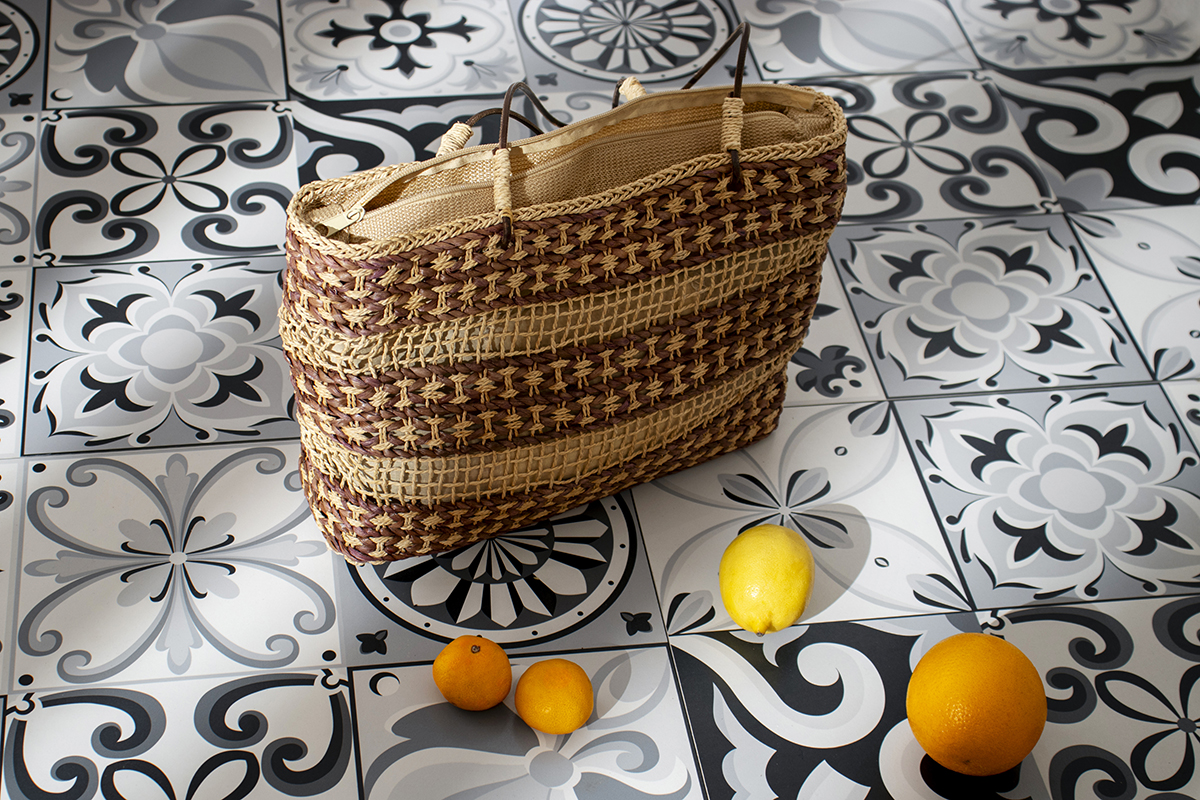
How to properly select wall and floor tiles? Designer's advice
admin
September 2, 2026 8:00
Purchased porcelain stoneware can differ significantly from the showroom sample in both slab size and pattern. Interior designer Tatyana Kakunina explained how to choose the right material so as not to ruin your renovation and not overpay.
Rule #1: Check rectification and edge straightness
The quality of the finish directly depends on rectification — factory trimming of the porcelain stoneware edges on a special machine. With this material, the edge runs at a 90-degree angle, which allows laying the slabs with a neat joint of 1.5–2 mm. If the geometry is off, it will be impossible to join the elements evenly: the joints will start to "wander," and noticeable height differences will appear between the tiles.
To check the edge straightness in the store, Tatyana Kakunina advises taking two tiles from the same carton and pressing their ends against each other on a flat surface. There should be no gaps, light showing through, or chips between the edges. To check the flatness of the tiles themselves, place them face-to-face against each other — the material should join tightly, with no play or wobble in the center.
Rule #2: Study pattern variation
When choosing a marble, stone, or wood-look finish, the designer recommends checking the variation index on the packaging. It is marked with the letter V and has a scale from V1 to V4. The minimum rating V1 means that all elements in the carton are absolutely identical — this is normal only for mono-colors (solid-color tiles). For natural textures, class V3 (moderate variation) or V4 (high variation) is required.
Rule #3: Match the batch number, shade, and caliber
In the kiln, the material shrinks under high temperatures, and its shade changes from batch to batch. Due to this characteristic, slabs from different runs often differ in size (caliber) and color (shade).
When buying porcelain stoneware, Tatyana Kakunina advises checking the markings on each package: the shade and caliber values must match. If you take cartons from different batches, color variation may appear after installation — the finish will become blotchy, or the shade of the cladding in different areas will noticeably differ.
Rule #4: Choose slab size according to the type of housing
Porcelain stoneware is produced in many formats — from small tiles to three-meter large-format slabs. The dimensions of the material matter not only for aesthetics but also for logistics.
For city apartments, Tatyana Kakunina recommends formats of 60×120 cm or 80×80 cm. They allow for neat cutting without excessive waste and minimize the number of joints on walls and floors.
A large format with a height of three meters requires a special approach. Such slabs cannot be brought into a typical multi-apartment building due to narrow elevators and stairwells. However, for private homes this format is ideal: it allows for a cladding from floor to ceiling with no horizontal joints at all.
SB
Tags: DESIGNERHOME
Previous news
Next news
Horoscope for September 2
Horoscope for September 1