Menu
How Belarusians Manage Their Incomes — Data from a Sociological Study
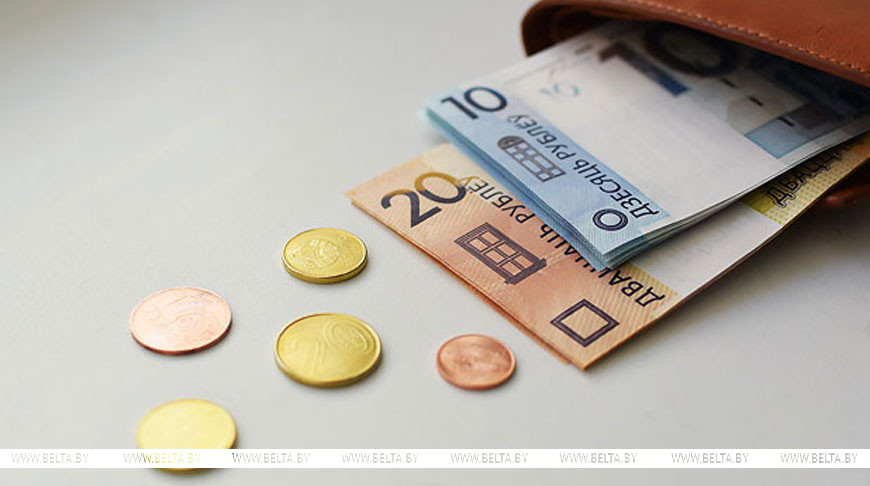
More than 28% of the country's residents keep cash savings in Belarusian rubles, said Alexey Avdonin, chairman of the board of the Republican Public Organization 'Belarusian Society 'Knowledge', commenting on the results of a nationwide sociological study concerning current issues of the country's socio-economic development, as reported by a BELTA correspondent.
Alexey Avdonin pointed out that the fact that 28.1% of respondents keep cash savings specifically in Belarusian rubles indicates the stability of the Belarusian currency, trust in the Belarusian ruble, and confidence in the monetary and credit policy pursued by the National Bank.
He noted that this figure is higher in rural areas — over 30%. This indicates that people in the countryside are more inclined to save money. Broken down by region, the highest proportion of cash savings in Belarusian rubles is found among residents of Brest Region — 37.9% of respondents — and Grodno Region — 36.7%.
Speaking about other results of the study, the chairman of the board of the RGOO drew attention to a global trend linked to economic behavior oriented toward consumption of goods. 'This trend persists in our country. According to the responses, 41.3% of respondents spend all their money and do not save, while 33.4% use installment plans or credit. This is not an exception solely for our Belarusian nation,' said Alexey Avdonin.
He emphasized that this global trend indicates that people today are oriented toward consuming goods and using credit, thereby feeling confident about tomorrow, confident that they can provide for themselves through their wages and secure a stable future, as well as a stable socio-economic situation for their families and children.
It is also important that 12.4% of respondents direct surplus funds into bank deposits. This is a high indicator for the global economy. It reflects trust in the banking system. And this, without a doubt, gives Belarusians the opportunity to earn on deposits and secure a certain passive stable income, emphasized Alexey Avdonin.
In response to the question, "How would you rate your family's financial situation?" 82.2% of respondents answered "Good," and 17.7% answered "Poor." "This indicates that the state's policy, which has been pursued for three decades, has always been aimed at improving well-being. Our President has always said that the main activity of the government apparatus should be focused on improving well-being. And we see the result in the social research findings. The indicators are high," noted the Chairman of the Board of the RGOO.
He emphasized that the programs adopted at the VNS for the socio-economic development of the country for each five-year period are yielding results: the population perceives the stability of their future. "There are no imbalances or uncertainties that lead to negative outcomes. The result is a high financial position, which enables other actions within the economic behavior of our population," the expert explained.
Currently, 82.1% of respondents are satisfied with their workplace, while 17.9% are dissatisfied. According to Alexei Avdonin,
It must be understood simultaneously that the indicator of 37.3% does not mean that such a number of respondents is not inclined toward heavy labor or high earnings. This indicator may reflect a situation related to the fact that people in rural areas are focused on running a household business, caring for children, their education, upbringing. And this indicates that our nation, our society is socially and economically well-structured and the motivation of our population is oriented toward improving the welfare of their families and personal well-being," explained an expert.
Another question was posed: "Do you know the exact cost of the basic food products you regularly purchase?" 80.6% of respondents answered positively, 19.1% negatively.
The population knows and monitors prices at different stores, noted Alexey Avdounin. This allows for more conscious, rational consumption, which is characteristic precisely of those nations that know how to manage money. From an economic perspective, this is a very important indicator that primarily characterizes a high level of rational approach to budget planning.