Menu
Belarus to regulate prices on bakery products and portioned meat and fish produced by retail chains
Belarus to Regulate Prices on Bakery Products and Portioned Meat, Fish Produced in Retail Chains
Trybuna Pratsy July 13, 2026 12:44 Belarus will regulate prices on public catering products manufactured at retail facilities. This was announced to journalists by Oleg Dikun, Deputy Minister of Antimonopoly Regulation and Trade, while commenting on adjustments to the pricing regulation system, a BELTA correspondent reports.
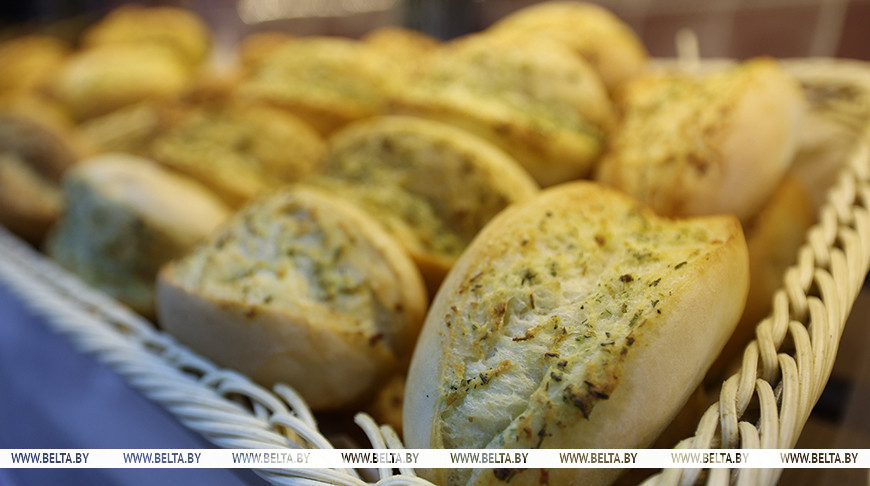
The items in question include the portioning of meat, chicken, and fish (including the production of lightly salted fish), as well as bakery products.
"Now these products will also be subject to regulation," Oleg Dikun noted.
The decision was made in response to citizen complaints indicating that public catering products produced at retail facilities sometimes differed in price — at times by a significant percentage — from those sold in manufacturers' branded stores.
This concerns price regulation on certain goods manufactured at public catering facilities owned by retail entities engaged in retail trade and sold through their retail operations. A markup limit (no more than 10%) is being introduced for these own-production goods when sold through retail trade.
Excluded from price regulation are milk, kefir, and sour cream in glass containers, blended teas, lollipops, chewing gum, exotic fruits, and citrus fruits. In addition, some product names have been clarified.
According to the deputy minister, price regulation has been in effect since 2022. Initially, the list of goods subject to price regulation exceeded 300 items. It was gradually reduced depending on the market situation. Price stability has been ensured for many products.
The ministry expects this state of affairs to continue. Price monitoring will carry on. Analysis is conducted weekly both on the basis of statistical information and through on-site visits to facilities.
"In the event of sharp price spikes on items that were removed from price regulation, a decision may be made to return them to the list," Oleg Dikun explained.
The deputy minister drew attention to the fact that violations are sometimes observed during monitoring, but they are not widespread. Inflation has settled at a record low level over the past several years. It is lower than in neighboring countries.
"It was on this basis that the decision was made to reduce the number of items under price regulation," Oleg Dikun emphasized.
In the near future, the MART will conduct explanatory work on the adopted regulations. A thematic webinar will be held on the basis of the ministry. Specialists can submit questions that businesses would like to have answered.
As previously reported, the resolution of the Council of Ministers introducing amendments to the price regulation system in effect since 2022 was signed on July 10 by Belarusian Prime Minister Alexander Turchin. The exclusion of certain product categories will enable domestic organizations to improve their economic standing, pursue a more flexible pricing policy, and regain their positions in the domestic market.
In addition to reducing the list, the size of the established maximum allowable markups on certain imported and domestic goods (milk, kefir, sour cream, black and green tea) has been changed.
Other adjustments are also envisaged, including the establishment of a period for independent increase of producer prices (in order to eliminate the possibility of manufacturers independently raising producer prices cumulatively over several years — the maximum period for such an increase is limited to a calendar year). Also, retail entities have been granted the right to increase packaging costs by the amount of expenses for mandatory certification of the packaged products.
The main amendments come into force after the official publication of the government resolution, while the provisions regarding pricing on goods produced at public catering establishments take effect 10 days after the official publication of this resolution.