Menu
Without a project, but by the rules: what and how you can build on a dacha plot in Belarus without approvals.
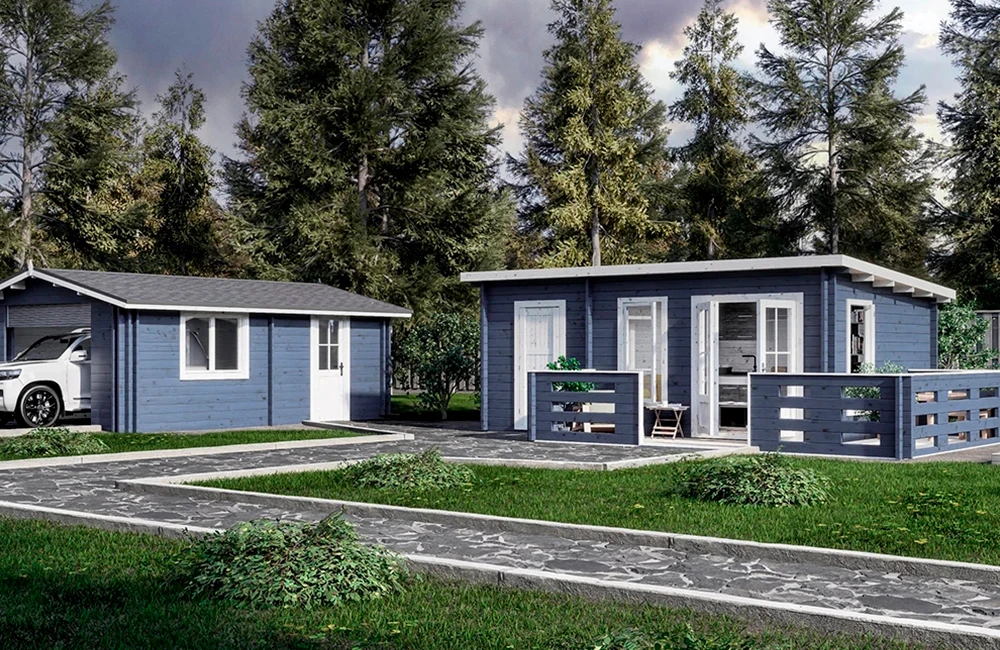
When planning the development of a dacha plot in a gardening cooperative (ST), many Belarusians aim to build a sauna, a gazebo, or a shed as soon as possible. The legislation of the Republic of Belarus is indeed friendly to dacha owners: for the construction of most utility buildings and garden houses, no design documentation or official permits from local authorities are required. However, this does not mean complete freedom of action. Strict sanitary and fire safety regulations exist, and violating them can lead to legal disputes with neighbors and demands to demolish the structure.
The main rule for dacha owners: observe setbacks from the borders
Any construction on a dacha must be oriented to the boundary with the neighboring plot. Even if the neighbor does not object, the law requires maintaining minimum distances from the dividing fence to the foundation and protruding parts of the buildings:
Garden house (dacha): must be located at least 3 meters from the neighboring plot's boundary.
Utility structures (shed, garage, sauna, awning): the minimum setback is 1 meter. The roof slope must be oriented so that rainwater and snow do not run onto neighboring property.
Paddocks, chicken coops, and animal structures: due to sanitary-hygienic requirements and odors, such objects must be placed at least 4 meters from the neighboring boundary.
Tall trees and shrubs: green plantings also have limits. Shrubs can be planted no closer than 1 meter to the fence, medium‑height trees – 2 meters, and tall trees (apples, pears) – 3 meters.
What should the fence between neighbors look like?
Installing fences in gardening cooperatives is one of the most common causes of conflicts. The current regulations clearly limit the maximum height of fences:
Between neighboring plots: the fence height must not exceed 1.7 meters. The fence can be either transparent (wire mesh, picket fence) or solid (corrugated metal), unless otherwise expressly prohibited by the cooperative
The point is that the statutes of specific cooperatives may contain additional, stricter restrictions. For example, in some cooperatives the rules prohibit the erection of solid fences between plots to prevent shading other people’s beds, or they limit the total area of farm buildings.
If one violates the established state regulations or the rules of the cooperative, the offended neighbor or the cooperative’s board has full right to take legal action. In such a case, the owner will be compelled to relocate or completely dismantle the structure at their own expense, and also pay a fine.