Menu
Will they bankrupt you or spare you? We tried to take a loan for a secondhand property in Belarusian banks.
A recent experiment showed that people with an average Minsk salary would find it rather difficult to take out a loan for a standard one-room apartment or even a small unit from a developer. However, getting the money for concrete walls is only half the battle. The apartment also needs to be made fit for living, meaning it needs renovation. Preferential and grace periods are meant to ease this process somewhat, but they don't solve the main problem: the money for renovation has to be saved up and set aside. And what if that isn't possible? Then it's better to look at the secondary market, with homes ready for immediate move-in. What financing conditions for resale housing do Belarusian banks offer?
How much does affordable resale housing cost?
As with new builds, prices for the cheapest apartments from owners in Minsk start at 250,000–300,000 rubles. Let's open the database of listed properties and check prices.
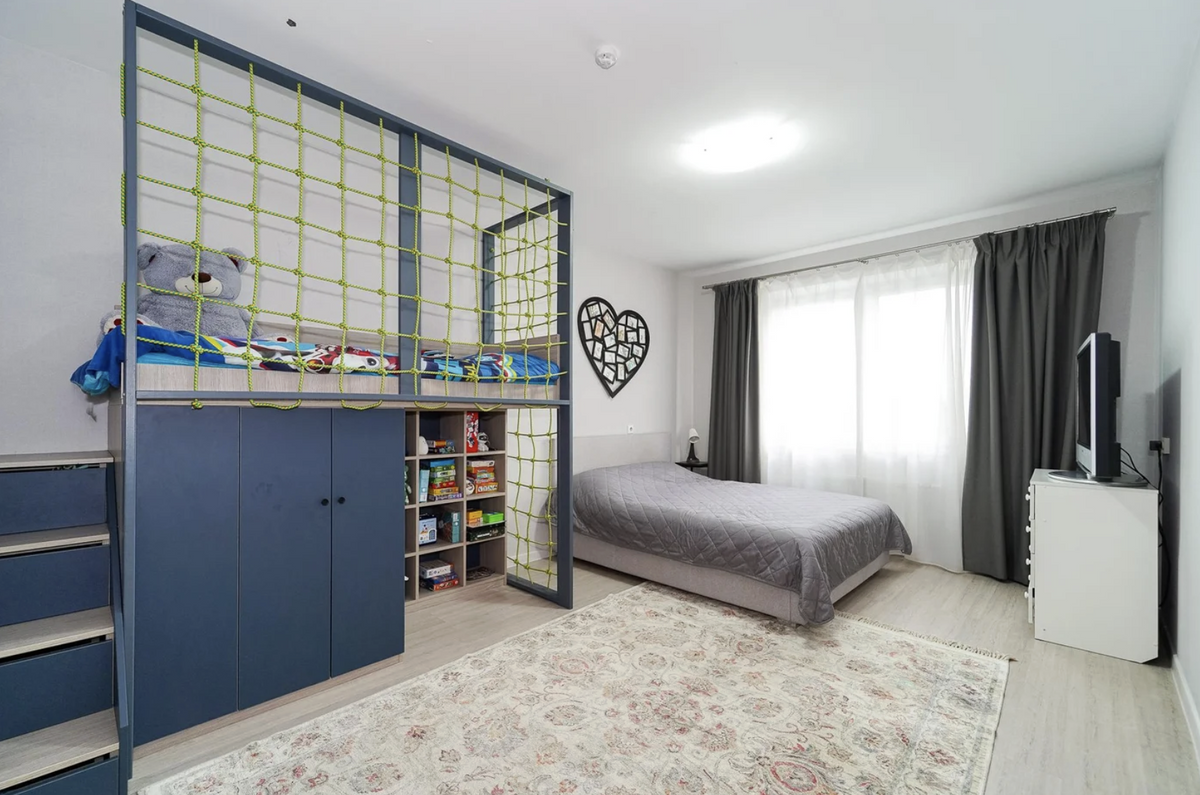
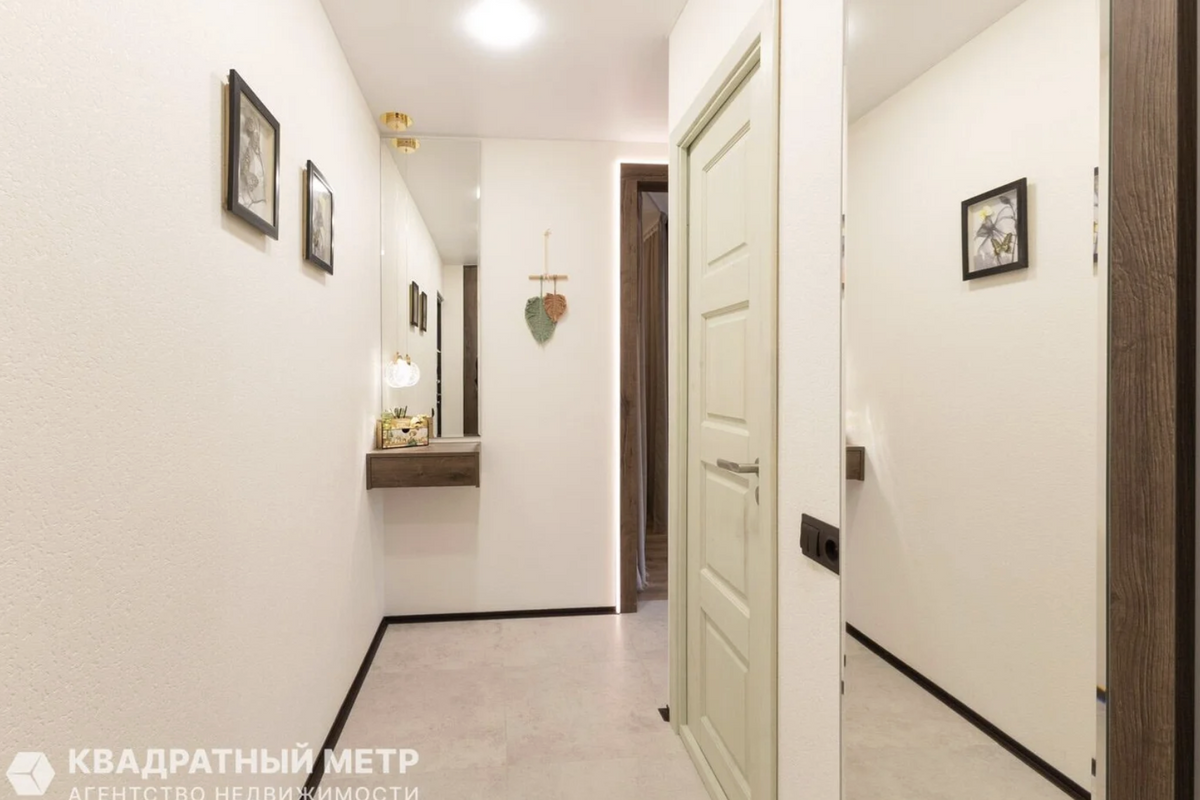
For example, in Stepyanka, a nice one-room apartment is offered in a freshly built panel neighborhood, in a building on Karvat Street. "The apartment is completely ready for occupancy: a neat renovation has been done, and the convenient layout allows rational use of every square meter," writes the realtor. The cost of 45 square meters is 300,000 rubles. We'll take it!
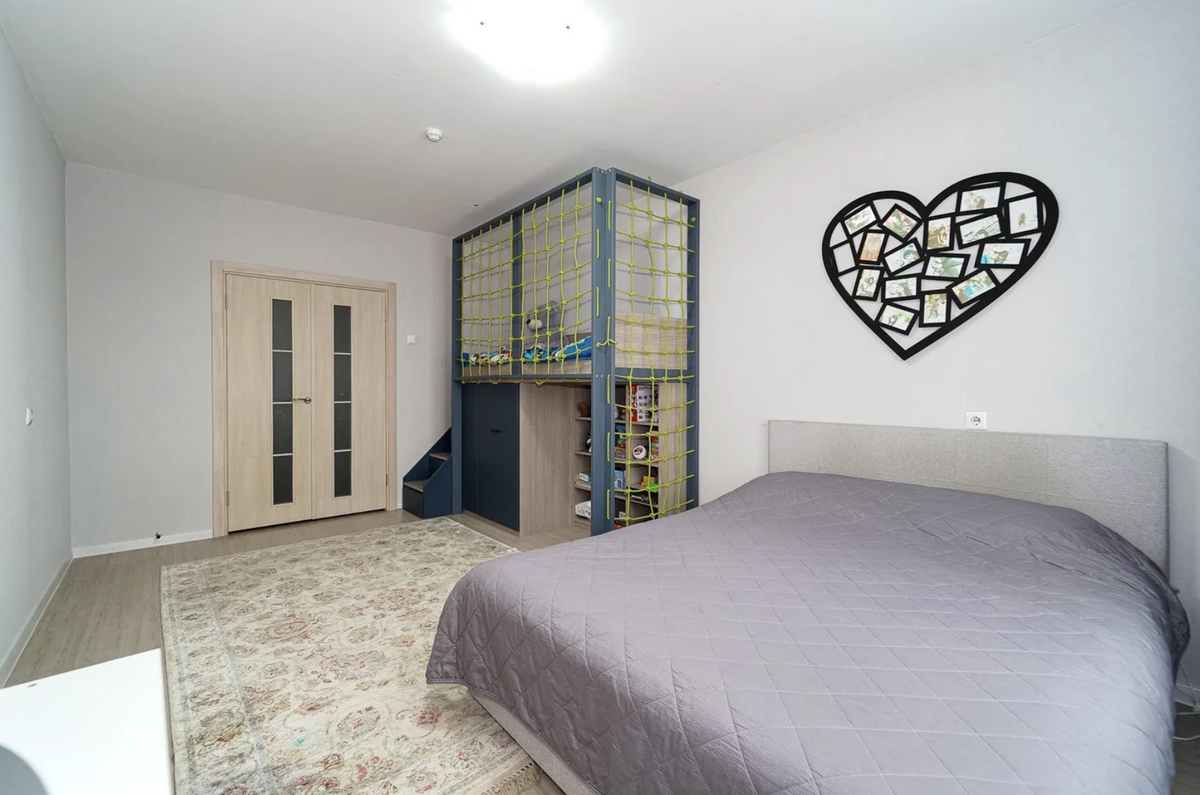
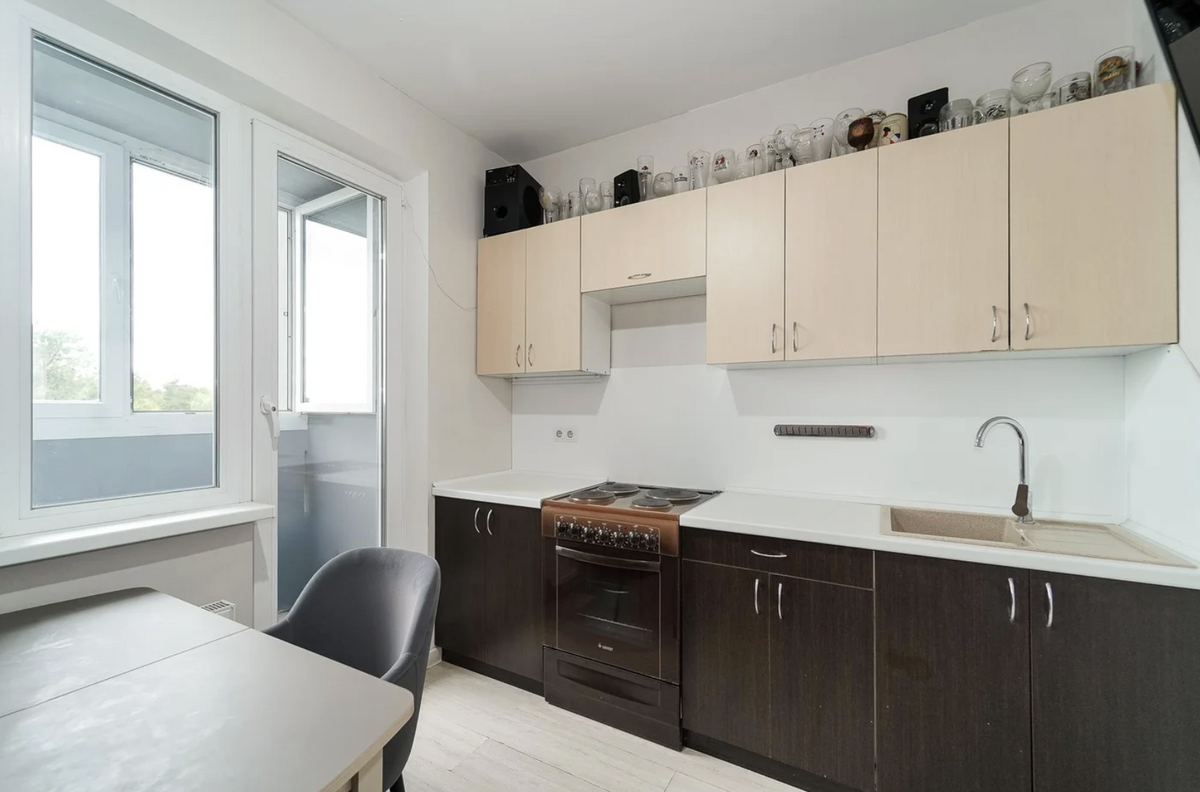
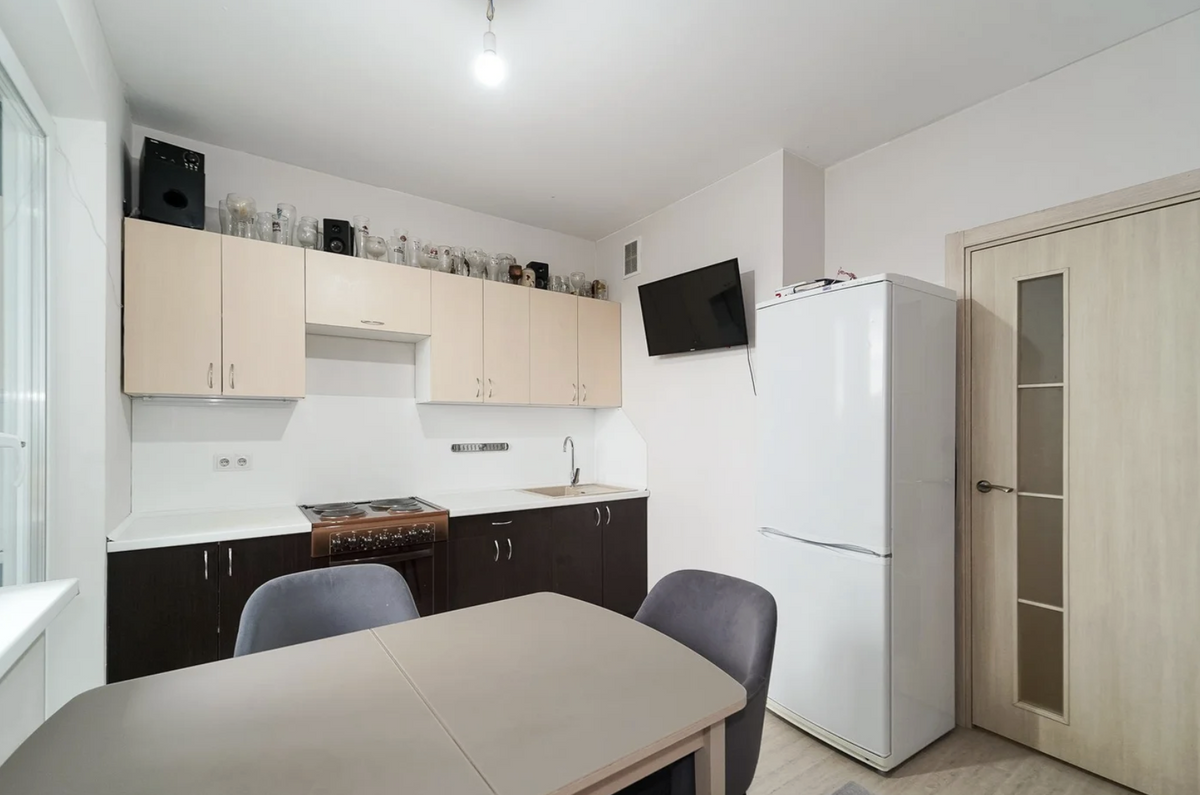
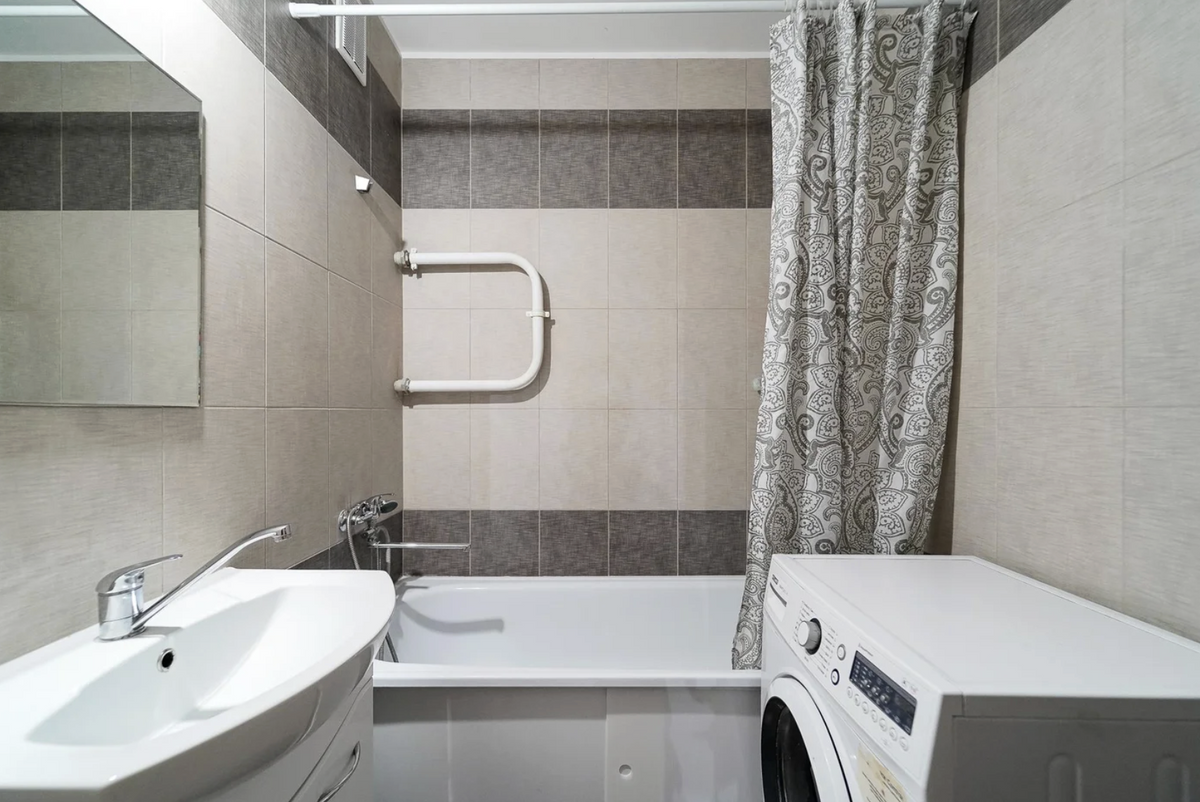
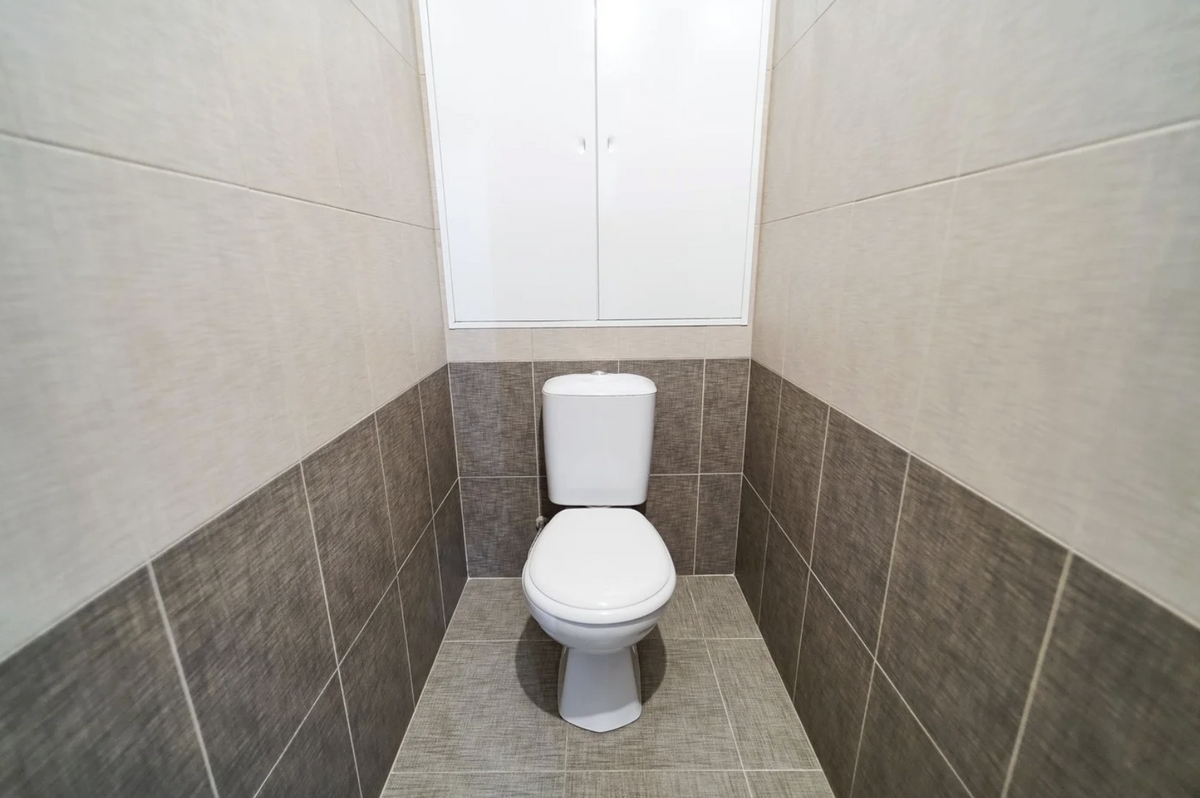
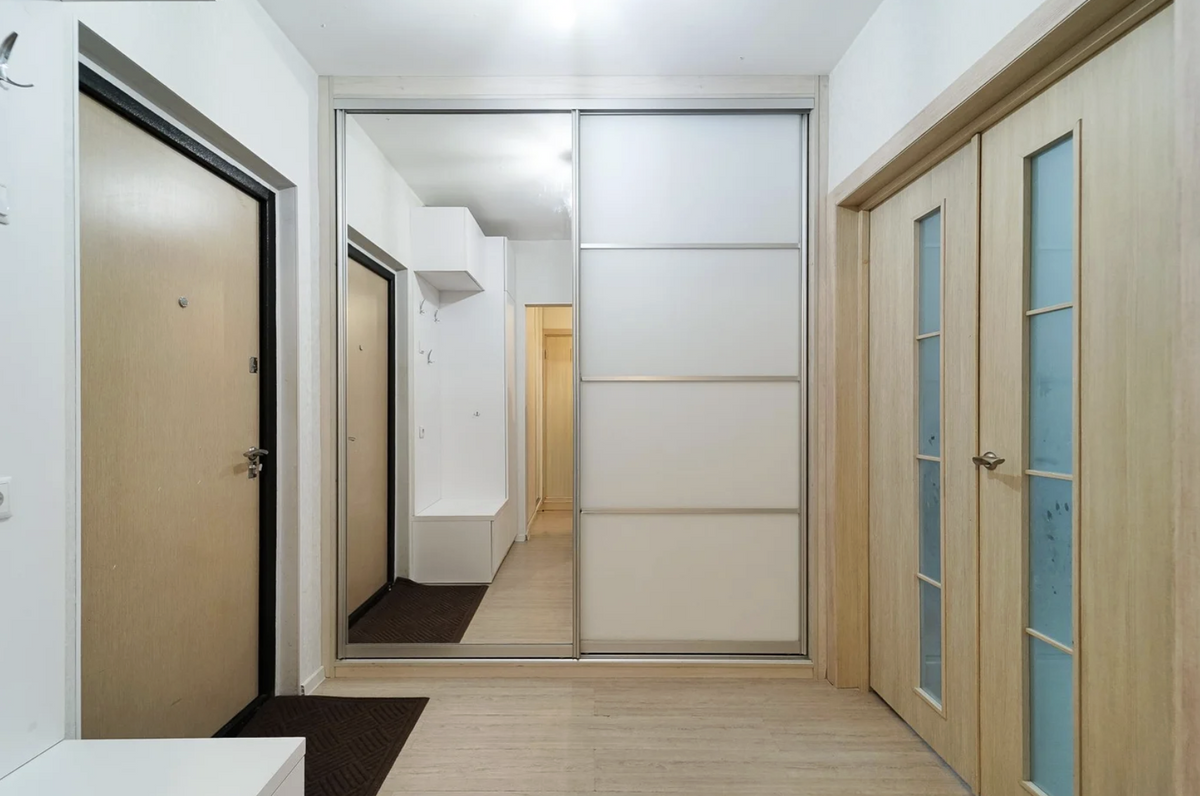
Now let's turn to the older housing stock. In a 1964 building on Beruta Street, a renovated one-room apartment of 32.2 square meters is for sale. Someone has carefully transformed the old walls into something modern and designer-styled. This is just what a person who wants to move into their purchase right away needs. The apartment costs 292,000 rubles.
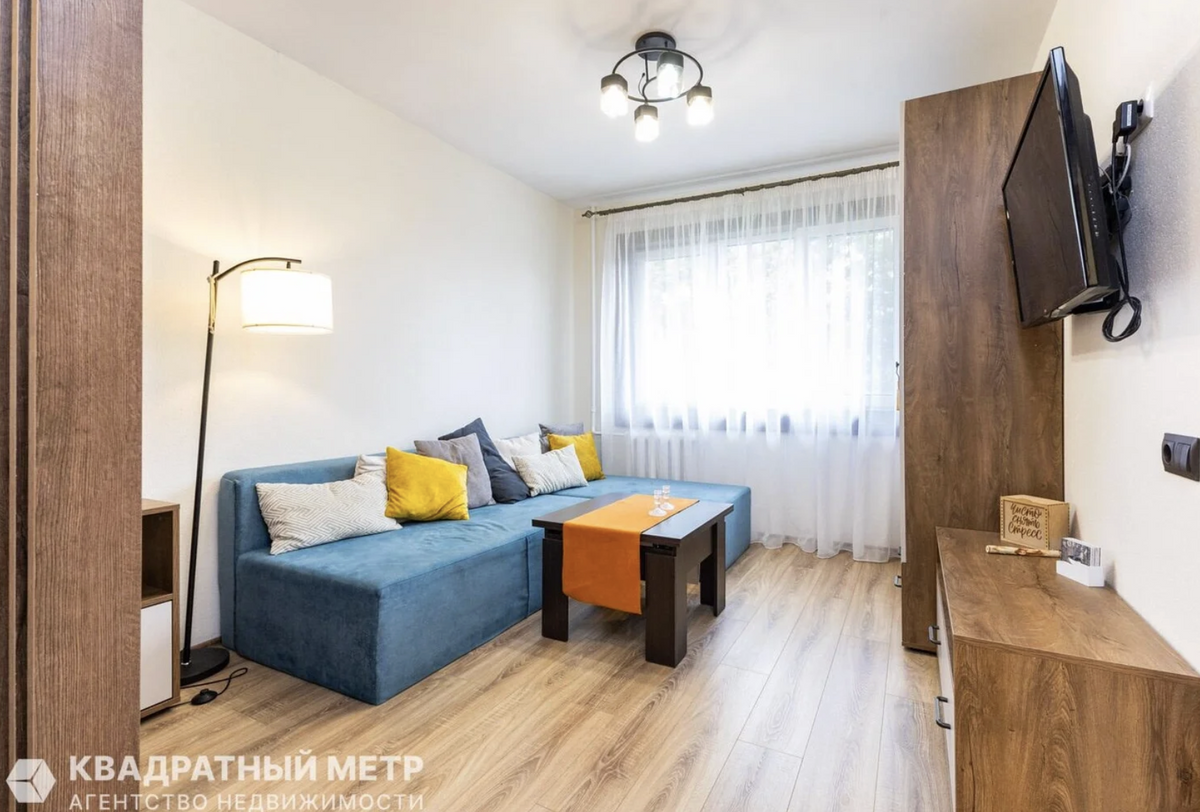
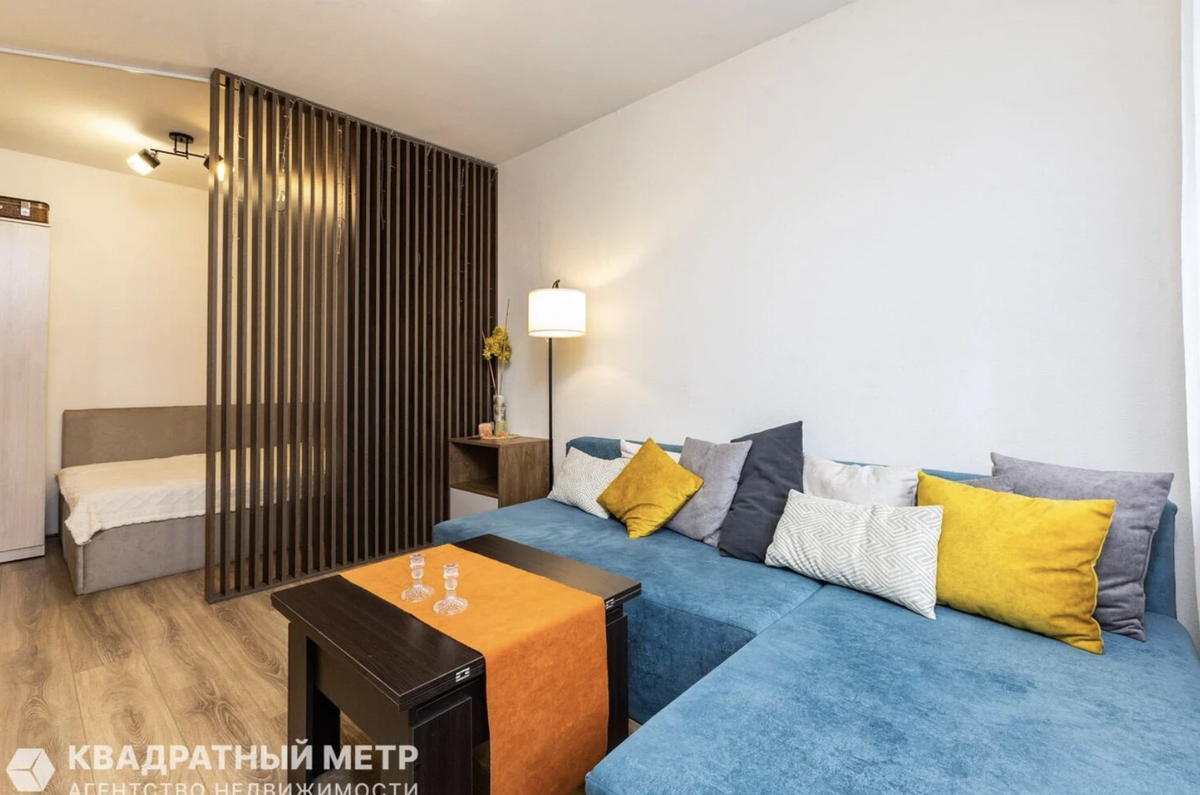
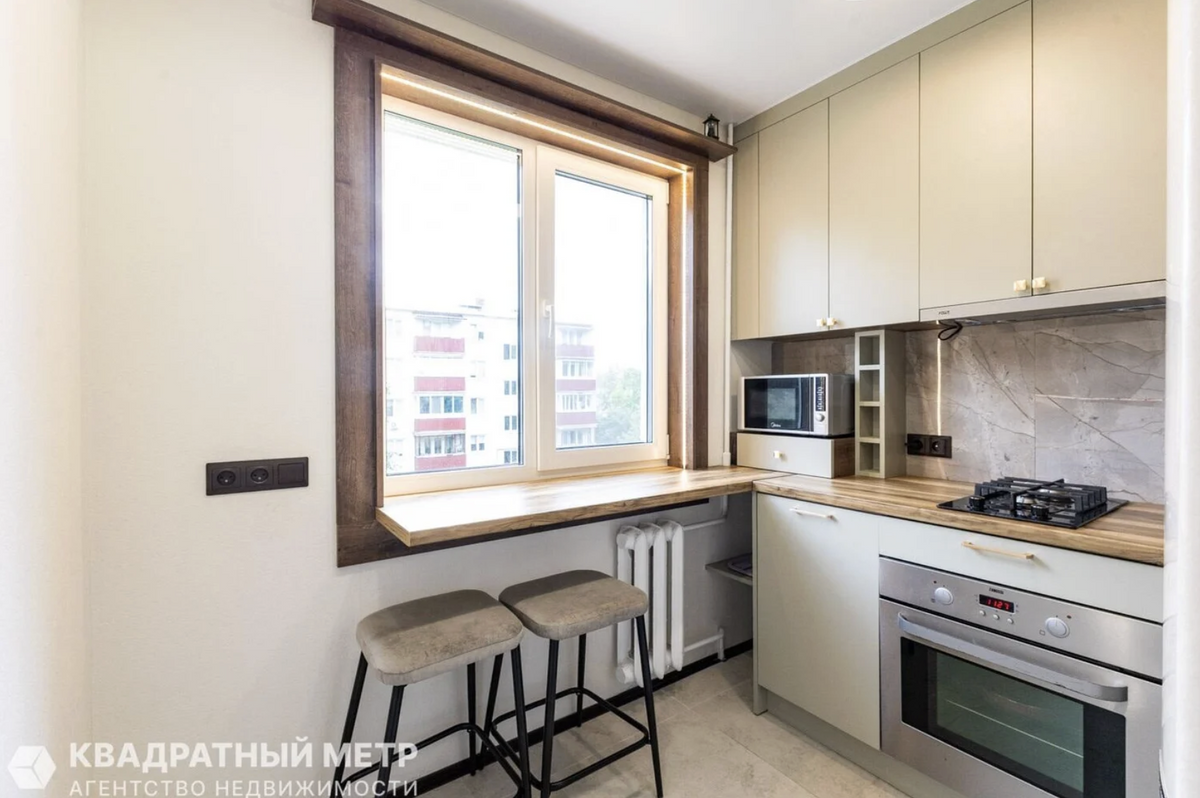
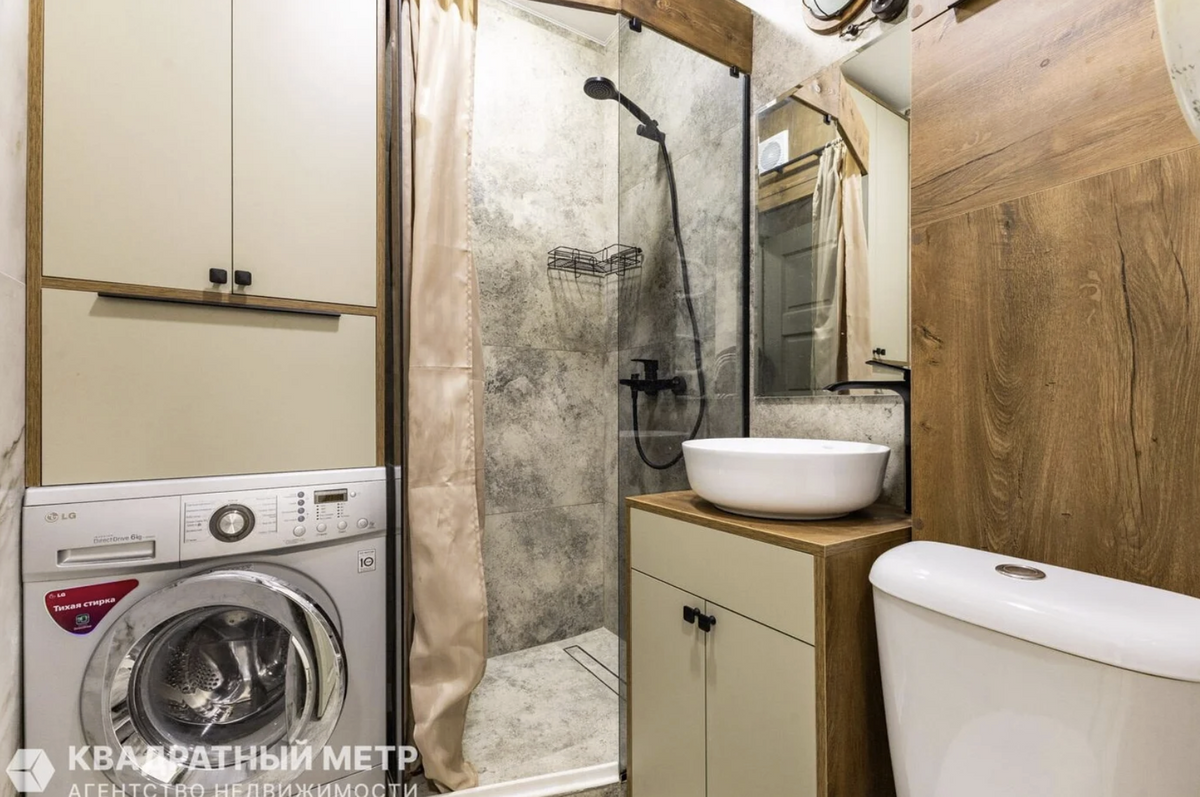
Thus, the picture has emerged: we need 300,000 rubles to buy a resale apartment. Let's say a Minsk resident has managed to save 50,000 or borrow it from parents. What terms will banks offer for a loan of 250,000 rubles with a 20-year repayment period?
Belinvestbank
Last week, Belinvestbank eased lending conditions for secondary housing and announced the introduction of a preferential period. What does this look like in rough calculations?
For two years, the rate is 10.9% per annum, then it depends on the type of housing. When building an apartment, the rate rises to 14.41%, and when buying on the secondary market — to 14.9%. We are interested in the second option. Payments can be either differentiated or annuity (equal installments).
— What should you consider in your circumstances? For 250,000 rubles, you will need a guarantor. Plus, the purchased property as collateral. And your income should be about 5,500 rubles, — the consultant explains.
- And how should I proceed? First find a suitable option and then contact the bank, or the other way around?
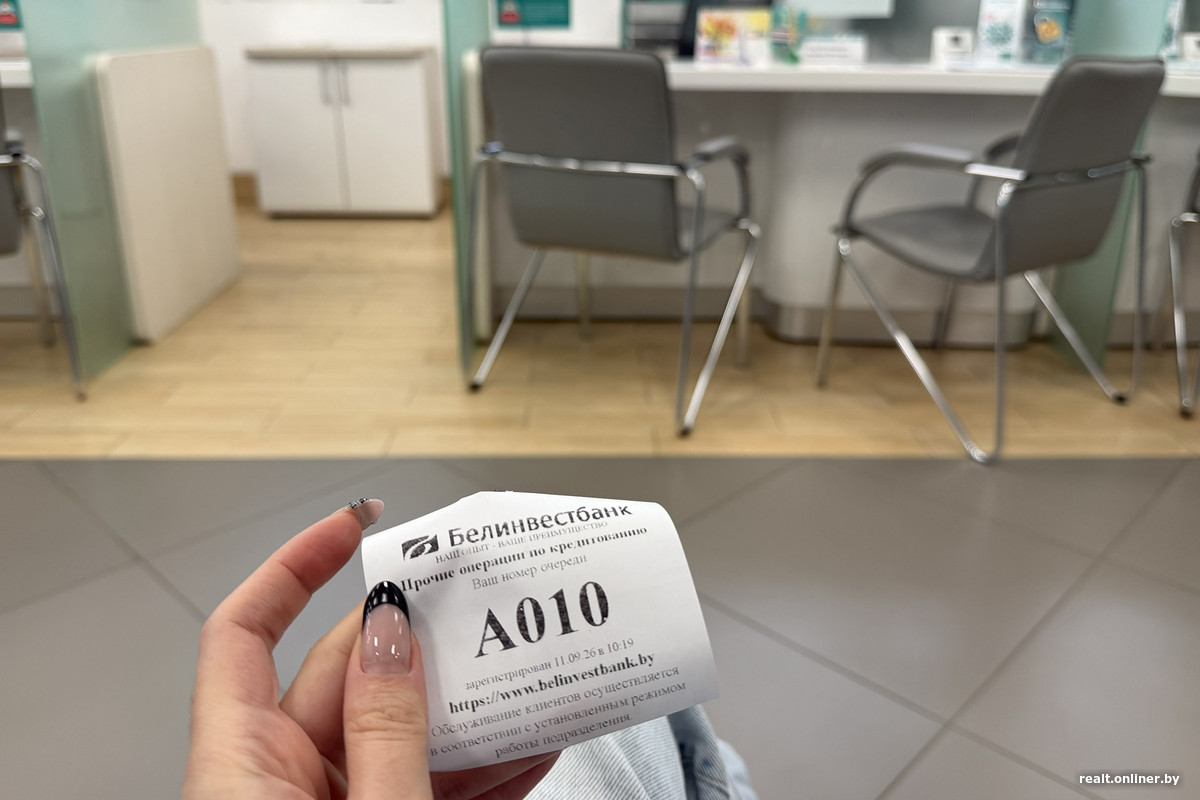
— Look, first you need to find one or two guarantors for your amount. It's also possible to involve three. We collect documents, income certificates of your guarantors for three full months. Then you come with your passport and submit an application. It is reviewed from one to 15 days.
Once your loan is approved, you will have 30 days to receive it. A registered purchase and sale agreement will be needed. The seller opens an account in our bank so that we can transfer the loan funds. And that's how the deal is done.
- Can I repay early?
— Yes, you can. But it all depends on how you plan to repay. Let's take differentiated payments. Suppose you overpaid by 1,000 rubles. Next month, the principal debt will be reduced by 1,000. Interest will be charged according to the schedule, but recalculated on the remaining debt. That is, the payments will already be smaller.
With annuity payments, the principal goes from smaller to larger. That is, at first you pay less of the principal, and toward the end of the schedule — more. How does early repayment work here? If you overpay, the amount you overpaid also goes toward paying off the principal, but from the end of the schedule. That is, you shorten your loan term.
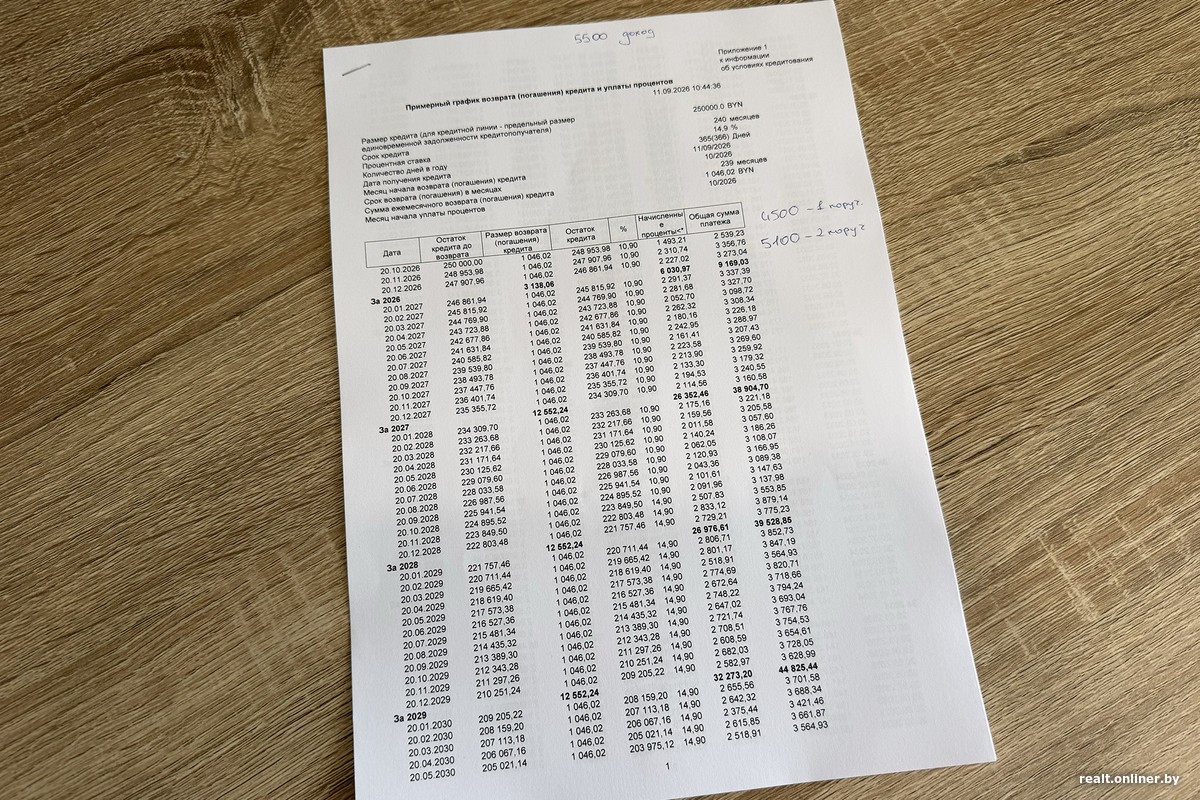
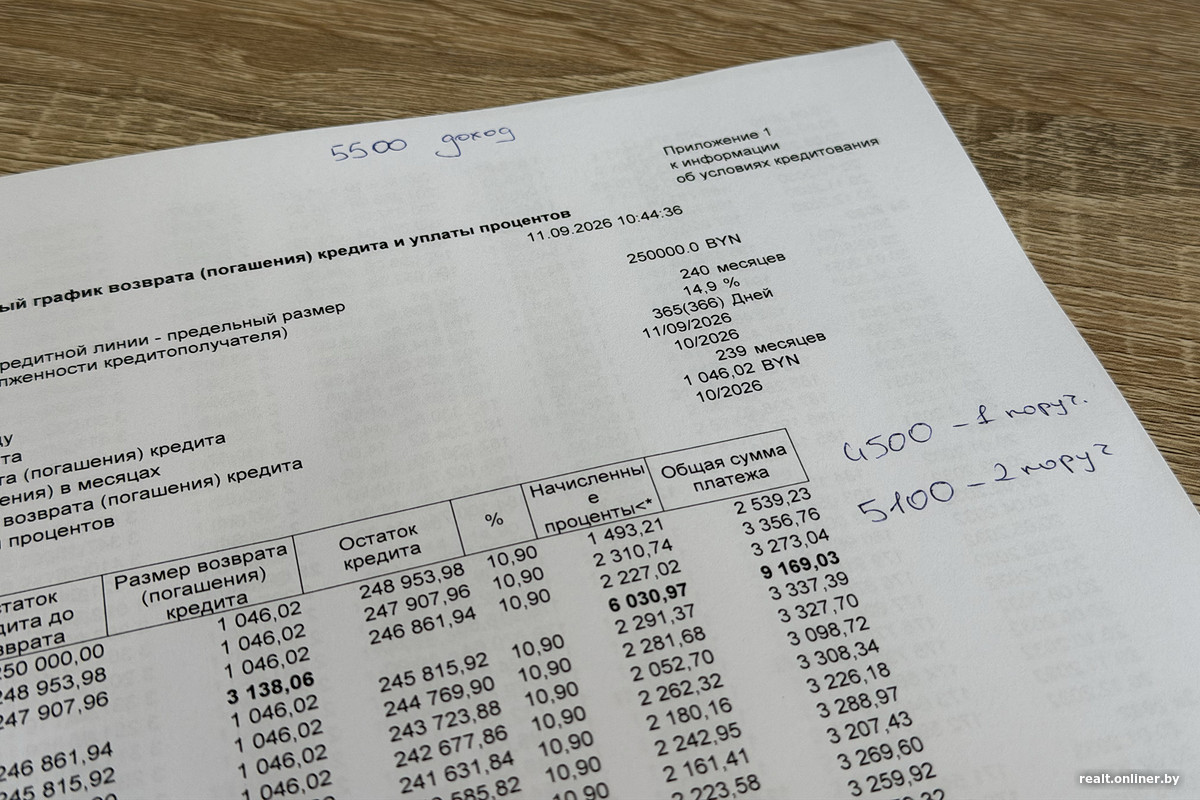
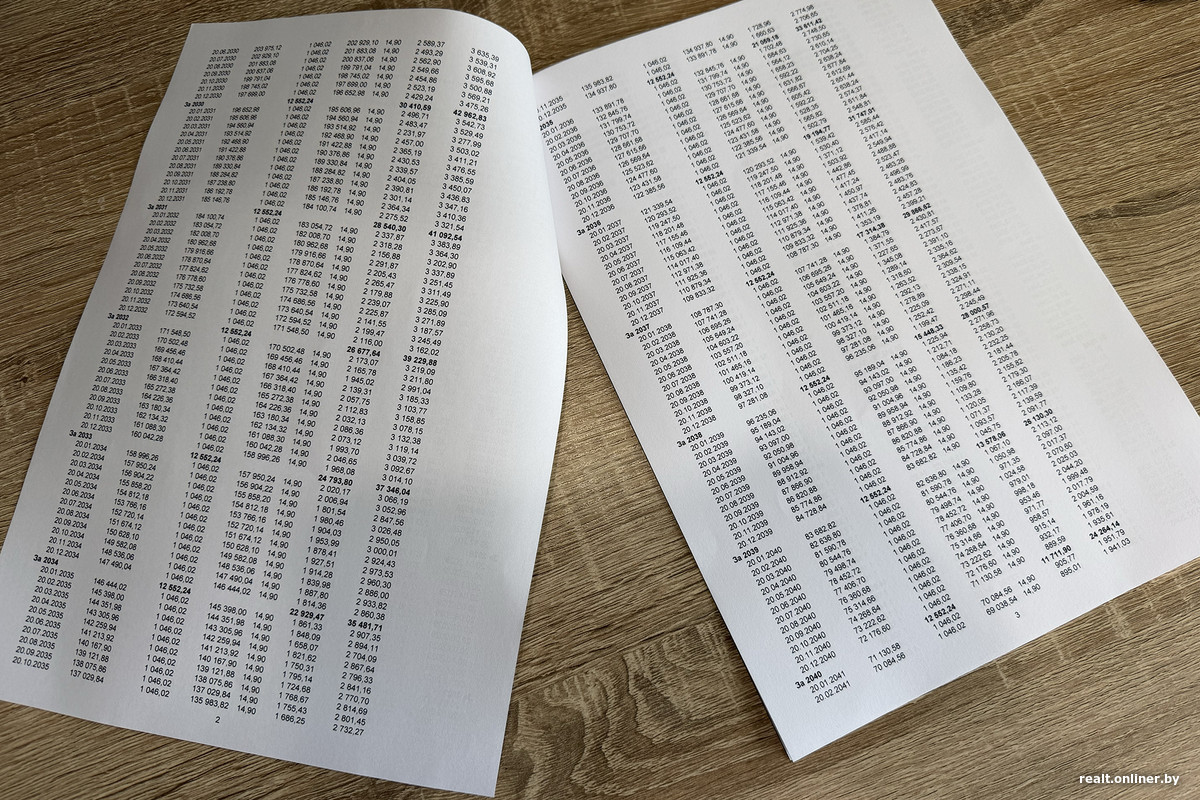
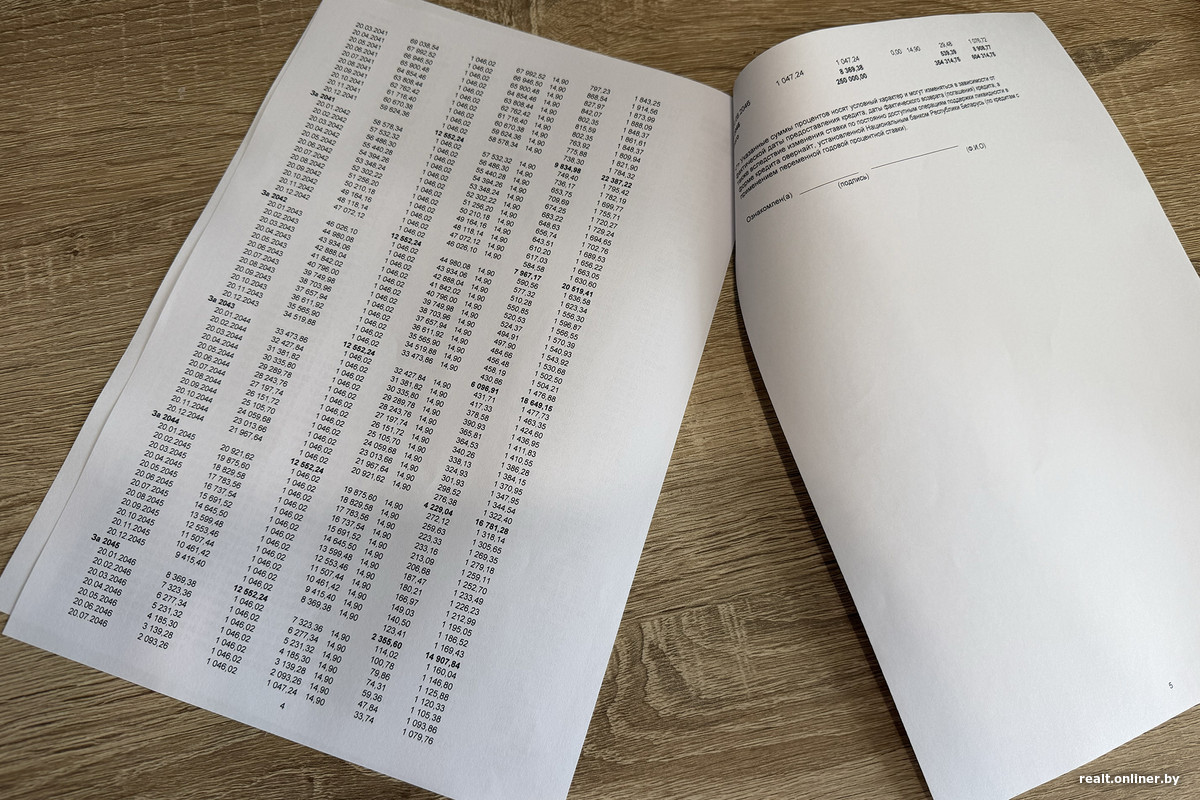
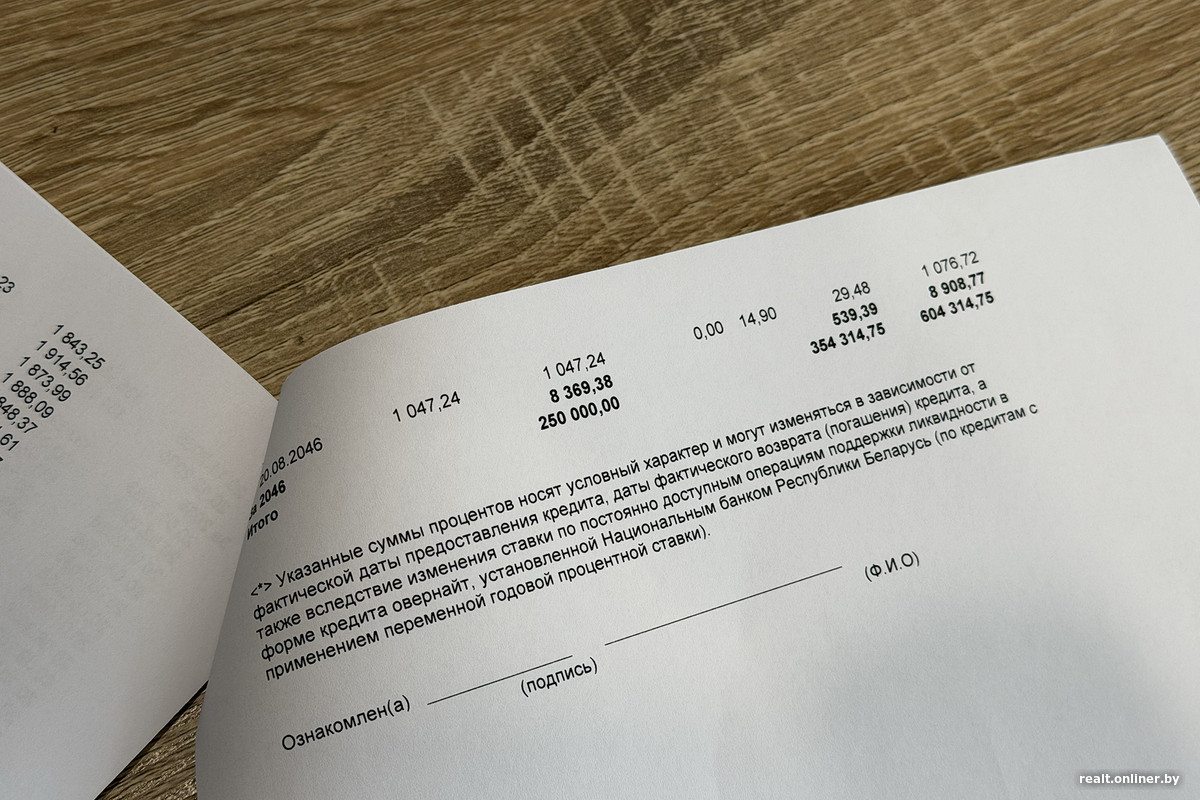
Let's sum up. In 20 years, the 250,000 rubles issued by Belinvestbank will turn into 604,314.
Belagroprombank
Visiting this bank turned into a real quest. The thing is, Belgaprombank's mortgage office only sees clients by appointment. You can show up unannounced and take a ticket, but priority goes to those who booked ahead. On the first visit, the wait lasted more than 30 minutes and we lost our nerve. The second time, the wait stretched to an hour—again with no result. We only managed to see a specialist on the third try. The stream of people wanting either to take out a loan or get a consultation doesn't stop for a minute.
Briefly about Belgaprombank's terms: the rate for the first two years is 11.5%, then 15%. Payments are differentiated, allowing early repayment at any time.
— We lend up to 90% of the property's value, — the consultant says. — Also, for the first six months, a deferral on principal repayment is provided. I'll say right away: for 250,000 rubles, collateral is taken in the form of a lien on the premises and at least two guarantors. Since this is combined security, any person from 18 years old whose income is not below the subsistence minimum can be a guarantor.
- What salary is needed to get 250,000?
- Your net income must be 5,250 rubles.
- What's the action plan?
— First, you submit a loan application and wait for approval via SMS. Then you'll have 25 calendar days to sign the purchase and sale agreement. The seller will definitely need to open an account in our bank.
- Anything else besides the agreement? Insurance, property appraisal...
— No. We conduct the appraisal ourselves and calculate the apartment's market value. It must be no less than the loan amount.
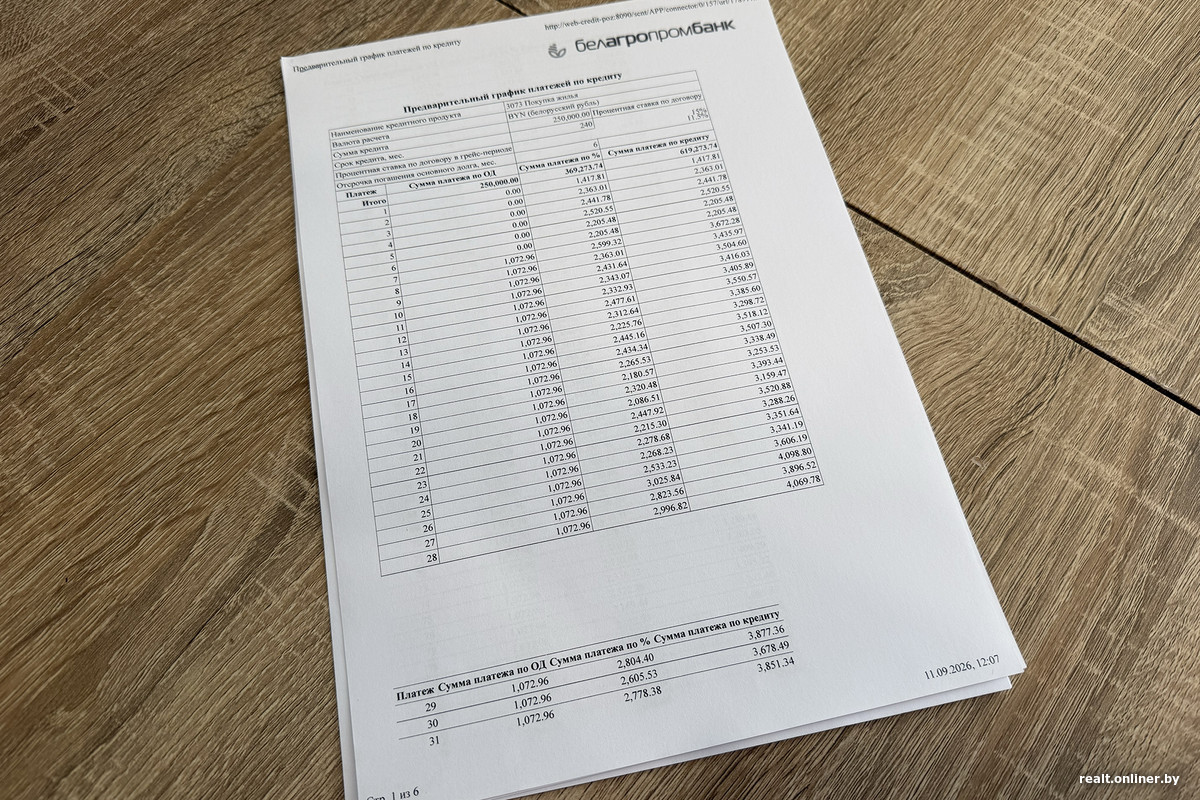
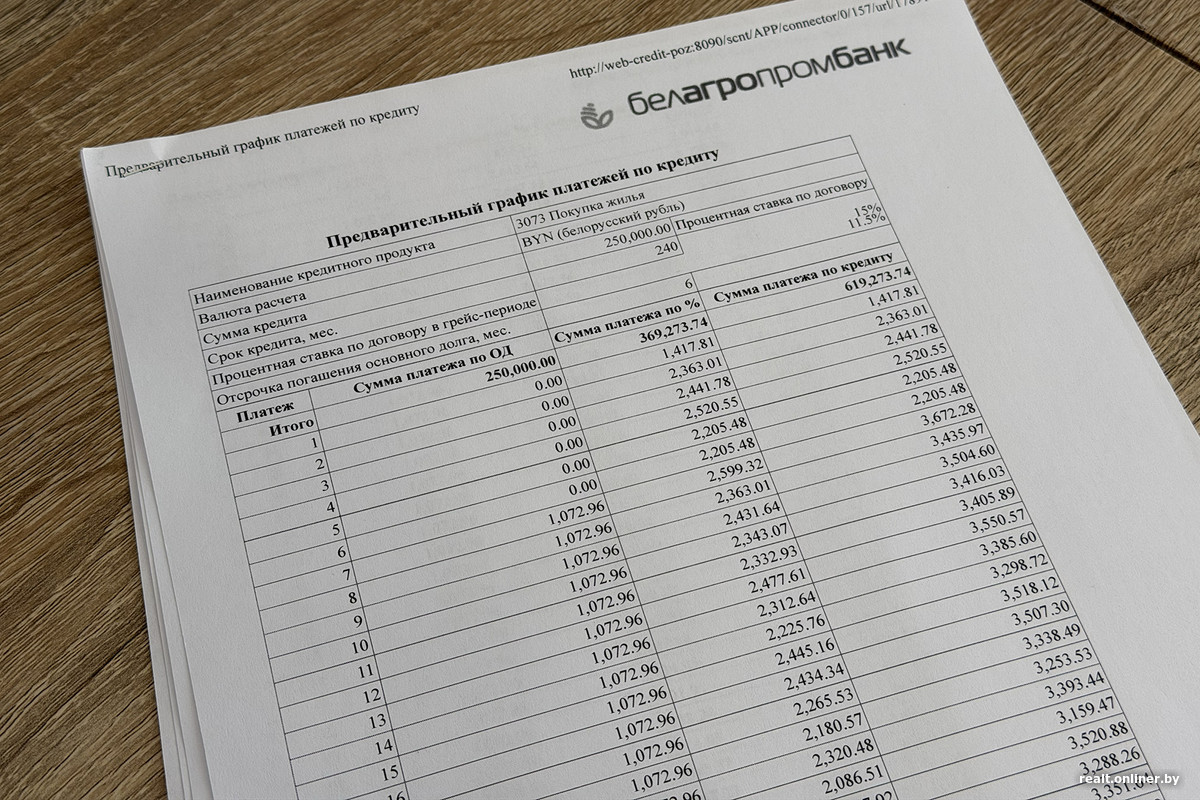
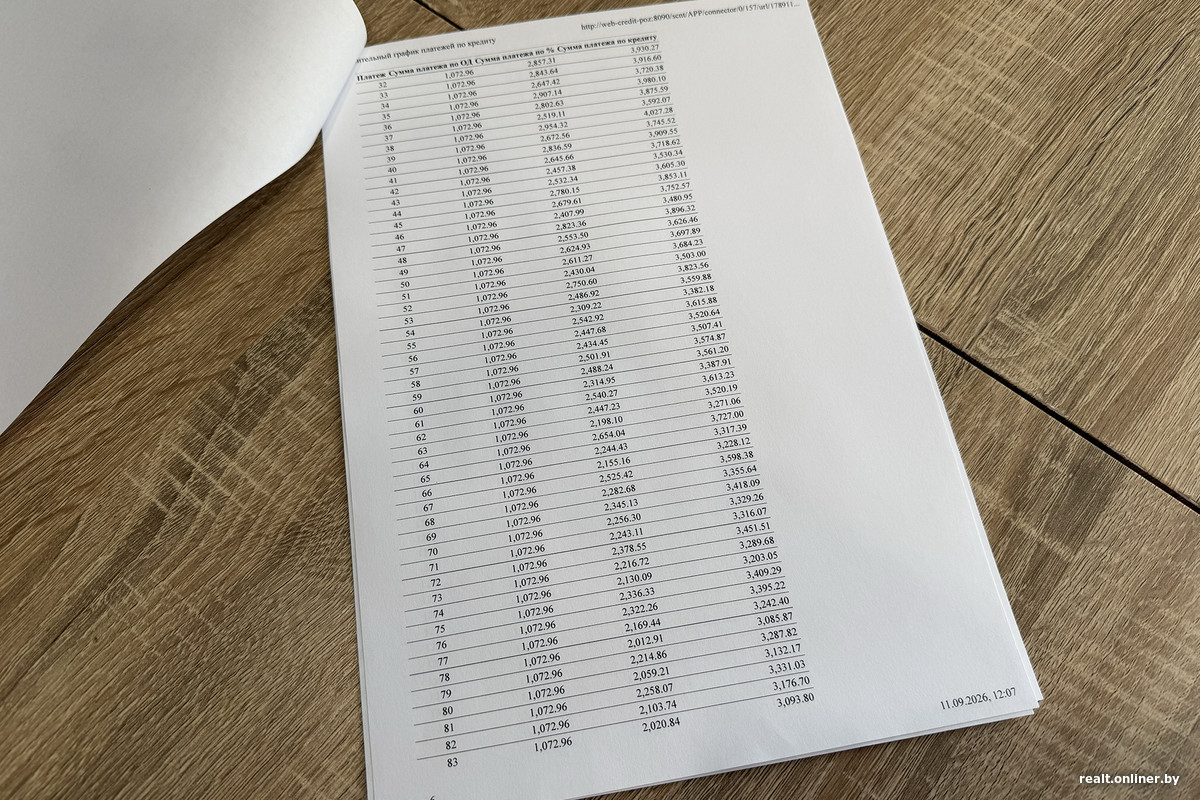
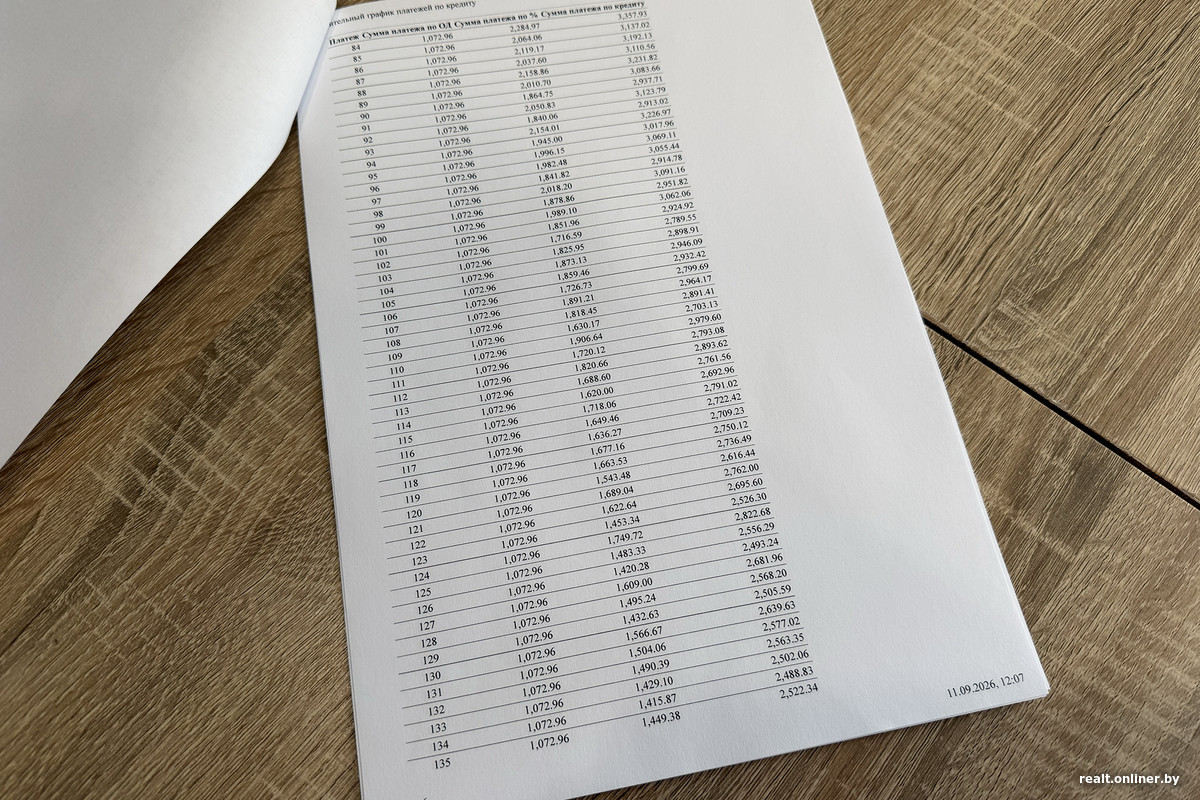
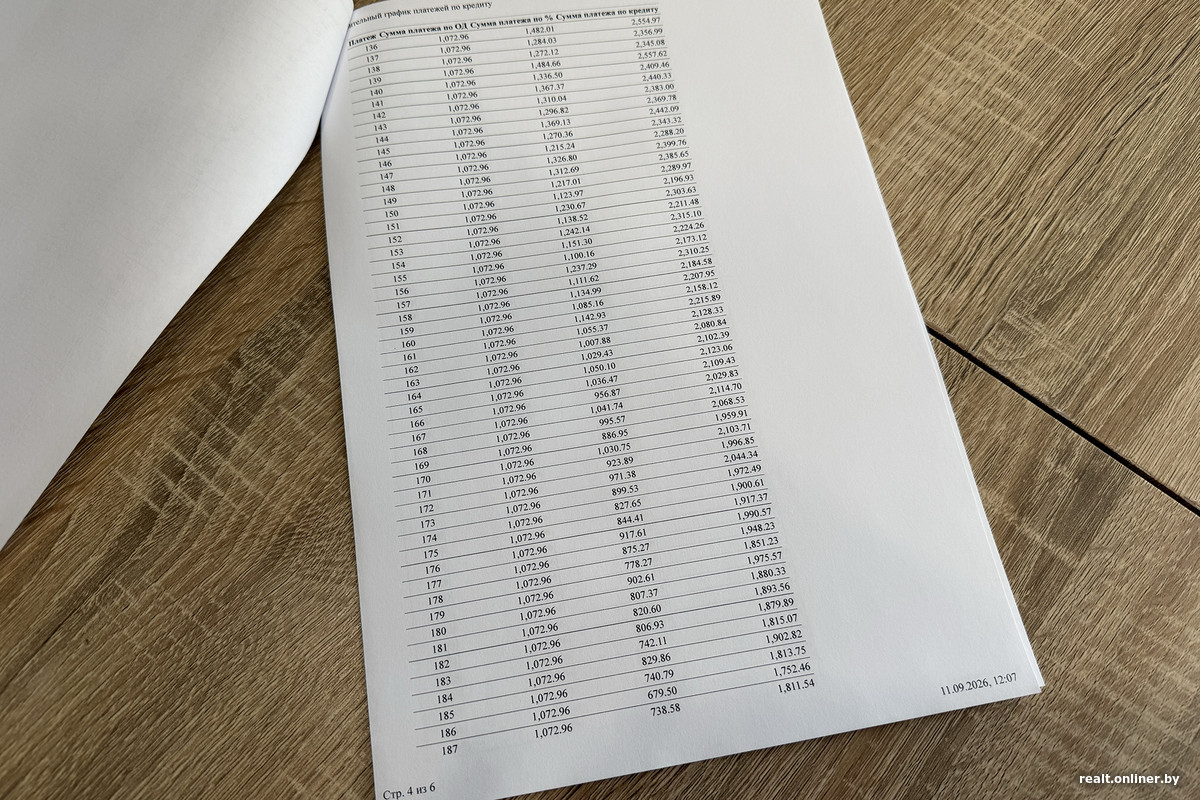
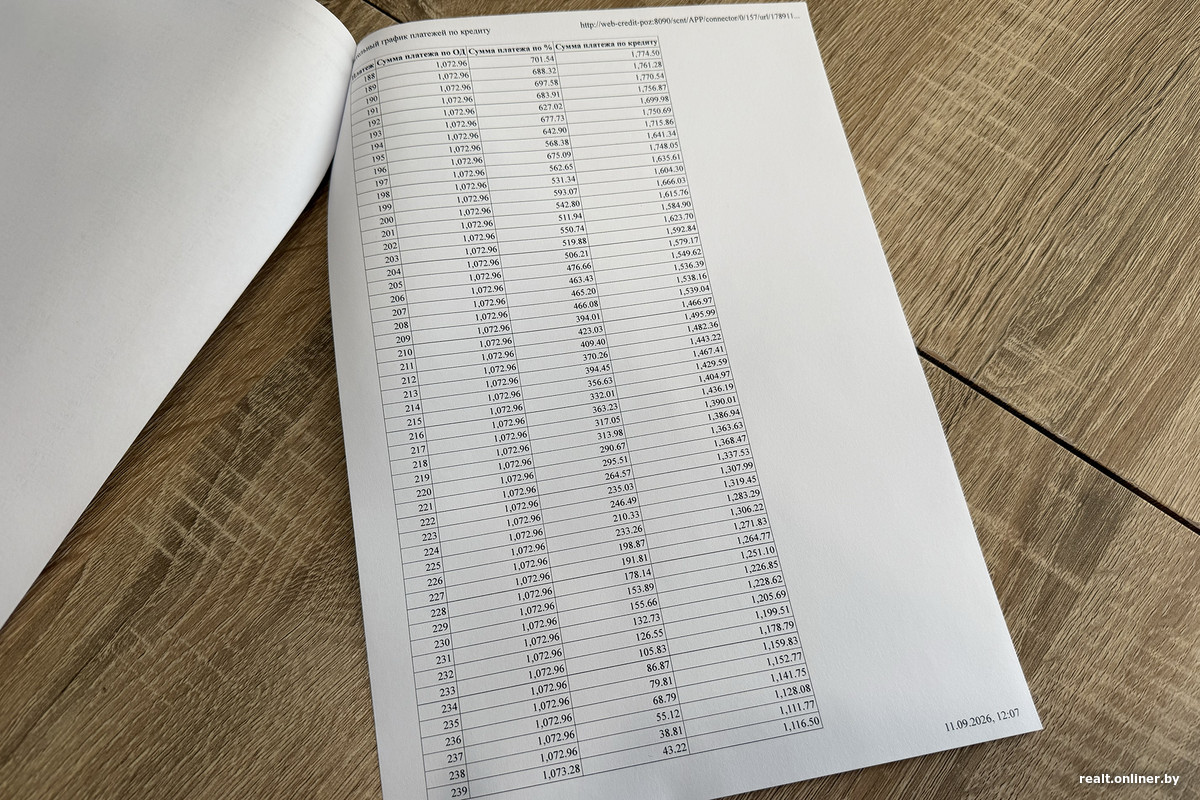
So what's the result? The 250,000 rubles issued by Belgaprombank will reach the mark of 619,273 at the end of the term.
Priorbank
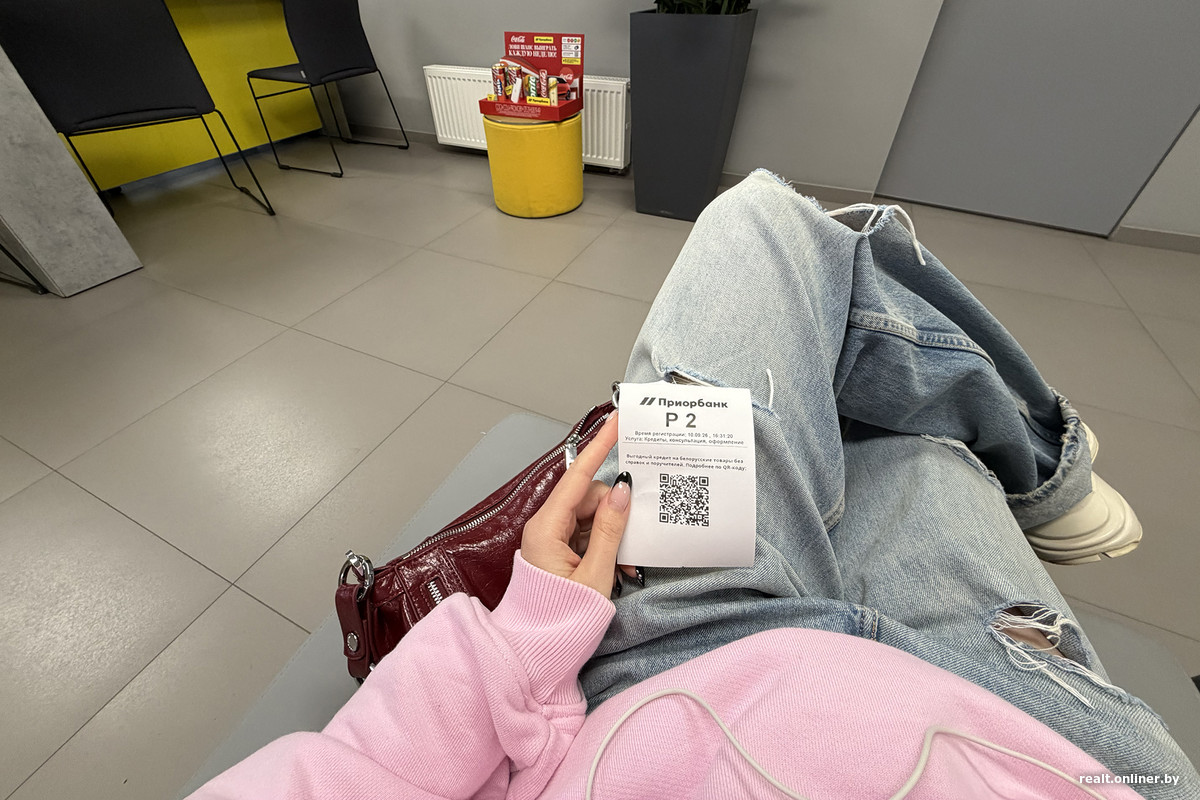
During working hours, there are few people in the Priorbank branch near Nemiga (we know that everyone is sitting in the neighboring Belagroprombank). So it was finally comfortable to get a consultation.
This bank attracted us with its reduced lending rate of 13.5%. True, it only applies for the first 18 months, and then rises to as much as 15.5% per annum. But there is one "but": you need to cover at least 20% of the housing cost with your own funds. The payments are annuity-based, in equal installments.
Moreover, the future new homeowner's salary must be substantial — 5,500–6,000 rubles. If that's not enough, you'll typically have to bring someone into the combined income and find guarantors.
"We lend a maximum of 80% of the value of the property being purchased," explains the consultant. "20% of 300,000 rubles is 60,000. That means you must contribute at least 60,000 rubles of your own."
"I see, okay."
"Let's calculate. To receive 240,000 rubles, your average monthly income over the last six months must be 5,500–6,000 rubles.
Our monthly payments are annuity-based, that is, equal. In your case, that's 3,164 rubles. You can repay early without any fines, fees, or restrictions. The application is reviewed within up to three business days. After that, you'll have a month, that is, 30 calendar days, to bring the purchase-sale agreement and the property appraisal."
"What appraisal?"
"You need to have the property being purchased appraised by an appropriate organization. After that, we check everything and approve the conclusion of the loan agreement. On the day of signing, the bank transfers the money to the seller's account. Then you bring the title documents and, without fail, an insurance policy."
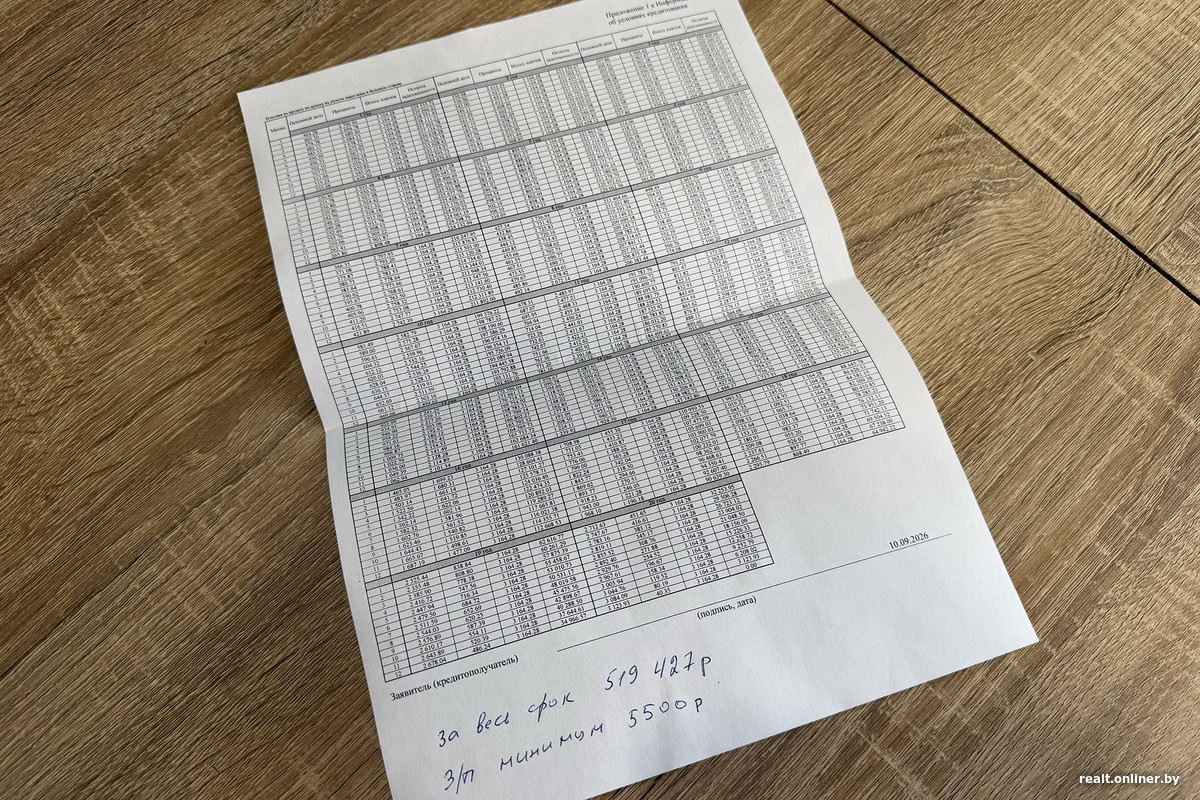
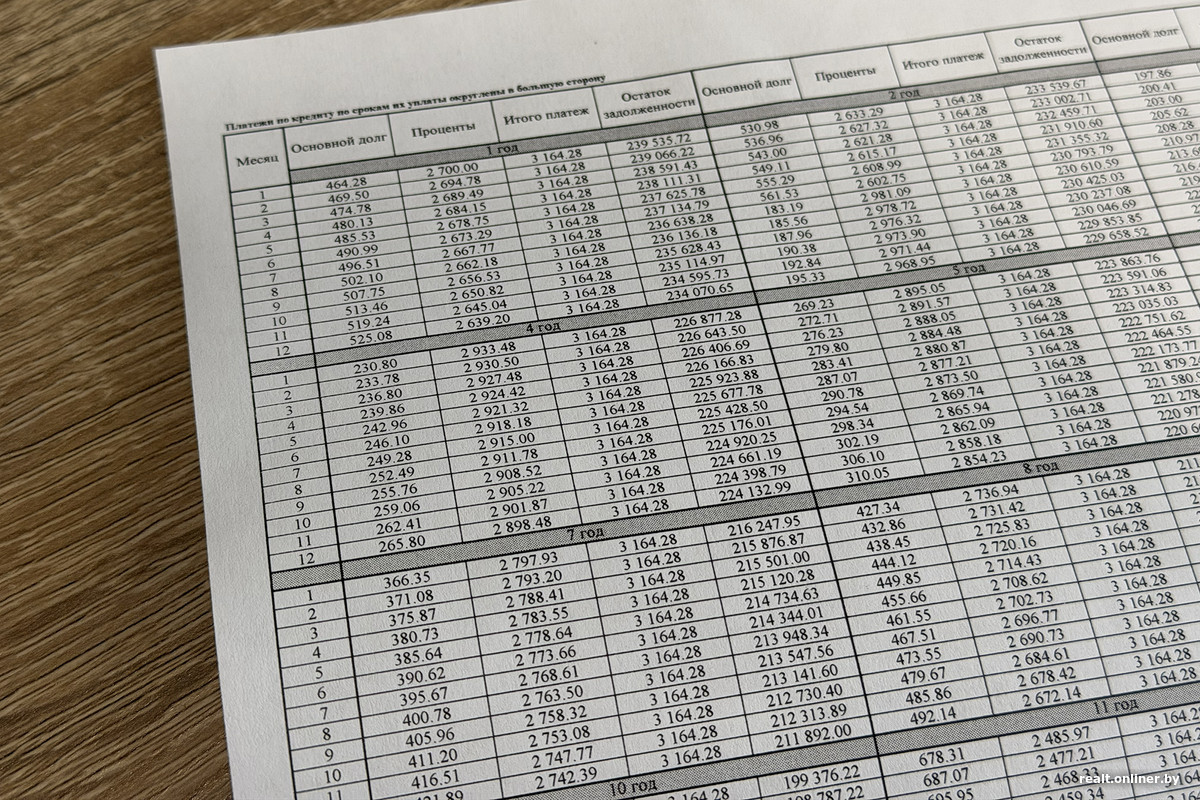
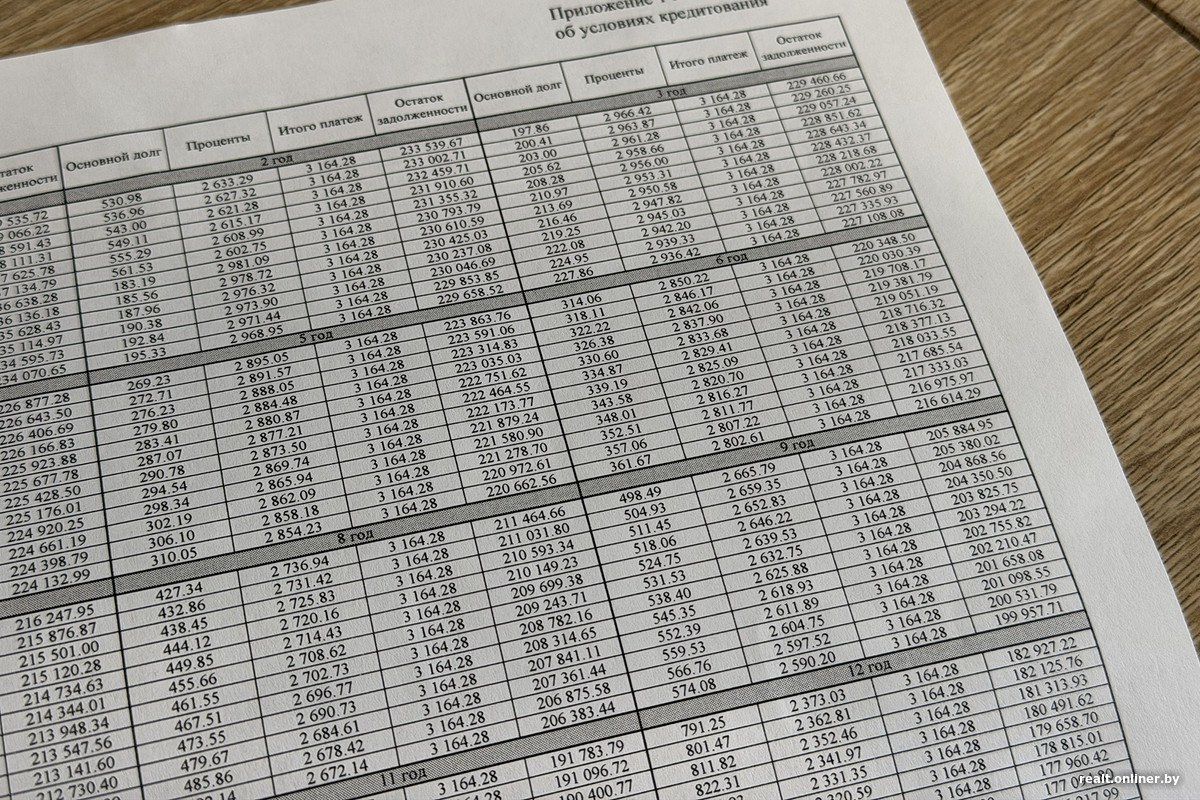
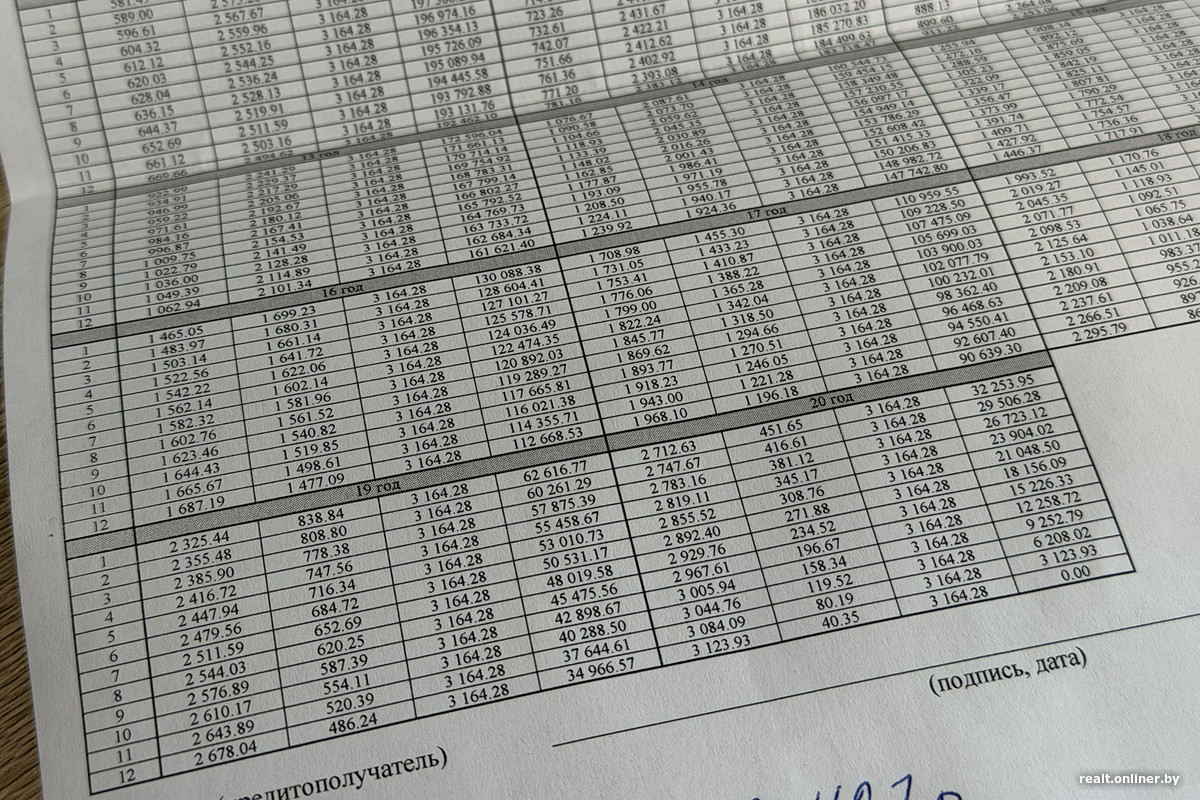
Let's do the math. In 20 years, 250,000 rubles from Priorbank will turn into 519,427.
Conclusions
At one of the banks we asked a specialist: so what is ultimately more profitable — taking out a loan to buy a new build or a resale property? No answer was forthcoming, because everyone decides for themselves which method of improving their housing conditions is better. Obviously, interest rates on loans for apartments from a developer are lower than on loans for housing from an owner. But in the second option, the need to invest in repairs is eliminated.
One thing remains unchanged — the ability to take out a loan for a small apartment in Minsk today in no way correlates with the salaries of Minsk residents. Let us recall that the average salary in the capital for the first half of 2026 was 3,878 rubles. You definitely cannot win this game alone.
| Bank | Term | Loan amount, rubles | Conditions | Largest monthly payment, rubles | Total amount of payments, rubles | |------|------|---------------------|------------|--------------------------------|----------------------------------| | Belinvestbank | 20 years | 250,000 | First two years rate 10.9%, then 14.9% | 3,879 from the third year (differentiated payments, decreasing) | 604,314 | | Belagroprombank | 20 years | 250,000 | First two years rate 11.5%, then 15% | 4,069 from the second year (differentiated payments, decreasing) | 619,273 | | Priorbank | 20 years | 250,000 | First 18 months rate 13.5%, then 15.5% | 3,164 from the first month (annuity payments, equal) | 519,427 |