Menu
Where did minivans go? The market is losing entire car segments.
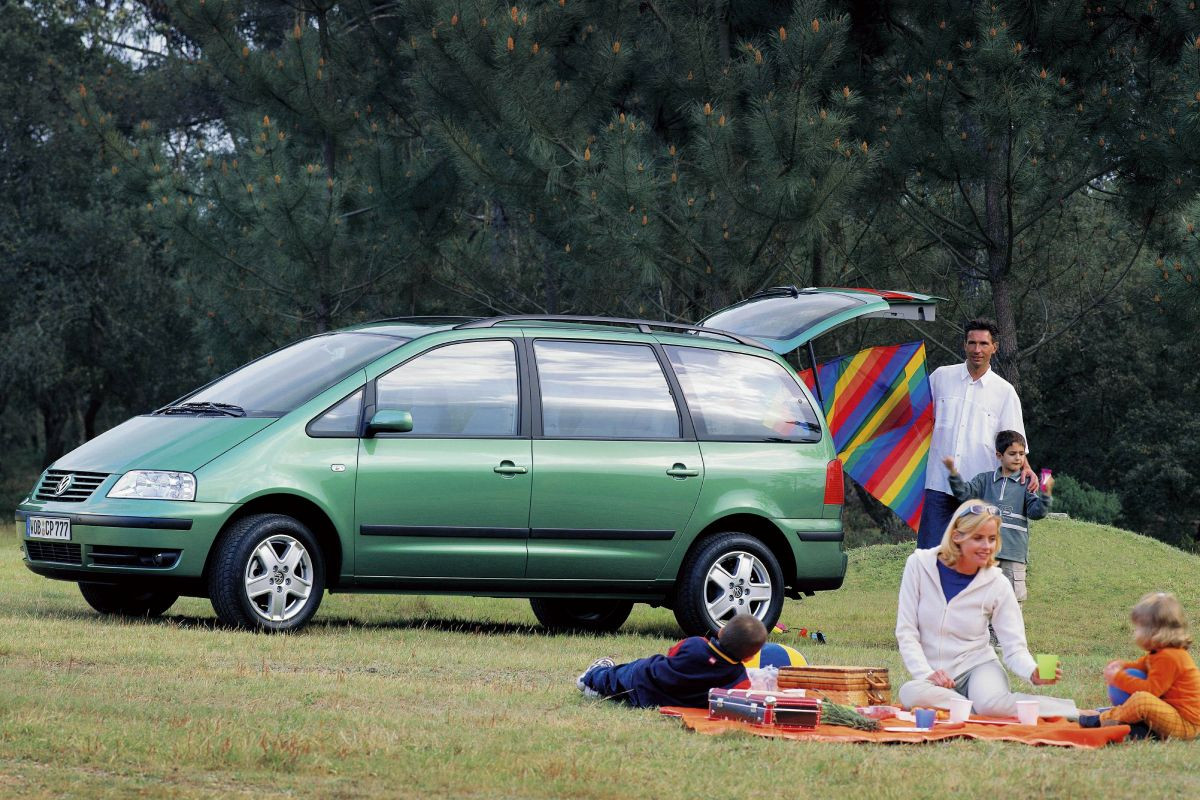
Do you know why it’s hard to sell an orange car? No, it’s not because people dislike bright cars. The main reason is buyers’ fear that an orange car will be difficult to sell on the secondary market later. And do you know why it will be hard to sell it on the secondary market? Yes, it’s all about buyers’ fear. It seems that family minivans have fallen victim to a similar closed loop. Today we will recall which other car segments or body styles have disappeared from the market over the past decades, and try to find out why. The reason is not always rooted in buyers’ preferences.
Minivans: practical, but not prestigious
Let’s start with the pressing issue. It’s hard to imagine a family car enthusiast who wouldn’t want a spacious minivan. Packing two strollers, suitcases, a child feeding seat, a couple of bicycles, and heading out on a comfortable road trip with all that gear and your big family is a dream for many. And it’s already almost unattainable. Passenger minivans have practically left the European market entirely, leaving multi‑child fathers to be left with SUVs and passenger versions of cargo minibus models like the Peugeot Traveller. There are a few Chinese minivans, but they are not in high demand (after all, how would you sell them on the secondary market later!).
And yet, about 20 years ago everyone thought that in the future only single‑volume vans would remain on the market, with prefixes like “compact”, “mini”, “micro”. The idea of making the most spacious car with minimal dimensions especially appealed to EU residents. And here in our country, there were queues of resellers for the German‑imported Volkswagen Sharan. By the way, the first Sharan, along with its siblings from Ford and Seat, sold worldwide in a production run of almost one and a half million units!
Let’s recall why we loved minivans? Of course, for convenience. Sliding side doors, a perfectly flat cargo floor, a low threshold, a third row that can actually accommodate an adult. By the end of the 1990s, automakers began experimenting with practical body styles in different segments. Thus appeared the once‑loved Renault Scenic and Opel Zafira in Belarus, with their regular hinged doors.
But despite their practicality, vans had one major drawback — they were known as dull family wagons with no hint of style or emotion. Gradually families began switching to crossovers with a third row. Yes, the rear seats in
To be honest, cheap two‑door models were purely a marketing gimmick. Buyers paid for a particular form factor, not for performance or body rigidity. Yet these cars enjoyed a certain demand, and at the turn of the 20th and 21st centuries almost every mass‑market brand had an inexpensive two‑door V‑ or C‑class representative.
However, demand for such cars gradually fell, and development costs rose. Opel tried to profit from the new Tigra TwinTop, but in the 21st century demand for such models has noticeably declined. Now, if a model named “two‑door” from the 1990s is revived on the market, it is most likely just another crossover. For example, the new generation Ford Puma.
Stylish three‑door hatchbacks
Fine, nobody misses the plain three‑door hatchbacks like the Ford Fiesta or Volkswagen Golf too much, although they had their own advantages — for instance, larger doors for the driver and front passenger. A far more serious loss for the market was the unique three‑door hatchbacks that looked very different from their five‑door platform siblings.
There were only a few of these models, but at one point it seemed they would become fashionable. We’re talking about the Volkswagen Scirocco, Kia ProCeed I, Opel Astra GTC J, Honda CR‑Z, Volvo C30, Renault Megane III Coupe. Some of these had five‑door “relatives”, but differed from them in every body detail. Because of this, such cars always stood out on the road and, in a sense, became successors to the aforementioned mid‑priced two‑door coupes. But the high cost of developing such vehicles forced manufacturers to pull them from the market. Fifteen years ago, companies could afford to produce an unpopular model. Today, if a car doesn’t sell like hotcakes, it will definitely be discontinued. Or it will be replaced by a crossover, as happened with the Volkswagen Scirocco (it was replaced by the T‑Roc).
When recalling three‑door hatchbacks, one cannot overlook the beauty Alfa Romeo Brera. Such elegance and refinement are clearly missing from modern Italian cars. Among the cool “three‑doorers” on the market, only the expensive Toyota GR Yaris
A few more vanishing types of cars
Strangely enough, subcompact cars of the very smallest class (A‑class) are being written off in history. In Europe, demand for models in this segment remains consistently high. However, for manufacturers, tiny city hatchbacks have become economically unviable. Modern safety and emissions requirements have driven the cost of subcompacts up to the level of compact crossovers. In other words, selling a nominal Citroën C1 for €10,000 has become impossible.
Another collapsing segment is compact convertibles and roadsters. For our latitudes it is irrelevant, but Italians and residents of southern France feel a shortage of interesting open models like the Toyota MR2. In fact, aside from the Mazda MX‑5, no one else competes in this genre.
Gradually, technological progress is stripping cars of the components we are accustomed to. The era of the mechanical gearbox is clearly coming to an end. Soon everyone will forget what an analog dashboard is. Internal combustion engines, of course, are not yet rushing to retirement, but modern youngsters have every chance to live until the day when a gasoline car is perceived as a horse‑drawn carriage today. And if we look even further ahead, the steering wheel and pedal assembly will someday become antiquated. By that time, it is unlikely that there will even be people in the world who are passionate about cars.
Baseus PrimeTrip C03s Magnetic Cosmic Black C0013701 smartphone holder
Device mounting: magnetic, installation on the dashboard
Xiaomi Mi Wireless Car Charger WCJ02ZM smartphone holder
Pivoting construction, device mounting: clamp, installation in the vent grille, wireless charging