Menu
When trees fail to prepare for winter: signs of disrupted natural processes in plants
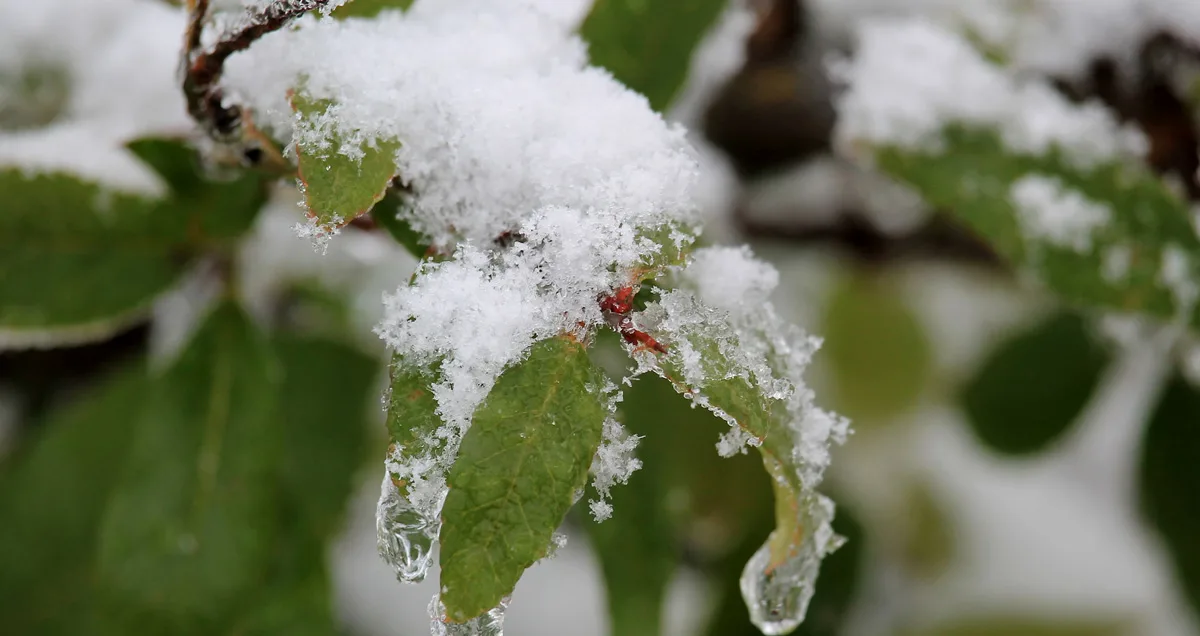
If a tree goes under snow with its leaves still on, it is in a zone of enormous risk.
Why the lack of leaf drop is dangerous: main threats
Leaves remaining on the branches are not just an aesthetic flaw, but a direct threat to the garden's survival during winter:
Critical frostbite. Evaporation continues through the leaves. In winter, when the ground freezes, roots cannot absorb water from the soil. The tree begins to suffer from winter dehydration; branches lose moisture, and under the influence of severe frosts the plant tissues simply die.
Branch damage and fractures. The leafy canopy holds far more snow than bare branches. Under the weight of wet snow and ice, large skeletal branches and even trunks of young trees break easily.
Nursery of diseases and pests. Spores of fungal diseases (rust, moniliasis) and pest cocoons winter well on leaves that have not fallen in time. In spring this entire population awakens instantly and attacks your garden.
Why leaf drop is delayed: four main reasons
Delayed leaf drop is always linked to the tree's extended period of vegetative growth (active growth). Several key factors contribute to this:
Unsuitable variety (southern roots). If you planted southern or unadapted varieties in temperate latitudes, their internal biological clocks are set for a longer, warmer summer. They simply do not realize that it's time to prepare for the cold.
Overfeeding with nitrogen. Nitrogen fertilizers stimulate green mass growth. If applied in the second half of summer or in autumn, the tree will start producing new shoots instead of preparing for winter.
Excess moisture. Prolonged autumn rains or excessive watering at the end of summer keep the root system active. Sap movement does not slow, and the tree continues to think that summer is still ongoing.
Excessive summer pruning. If you drastically prune the canopy in summer, the tree will devote all its energy to regrowing lost branches. As a result, young shoots will grow until the first frosts and will not have time to harden.
What should a gardener do?
If you notice that your garden stubbornly does not shed
Instead, adjust the care: completely eliminate nitrogen from the second half of summer; from August, switch to only phosphorus‑potassium fertilisers (they accelerate wood ripening) and strictly control watering in the dry autumn, stopping it when prolonged rains begin. If the tree went into winter with leaves, pay special attention to installing supports under the branches to protect them from snow load.
СБ