Menu
What new Belarusian medications will appear in pharmacies, experts explained
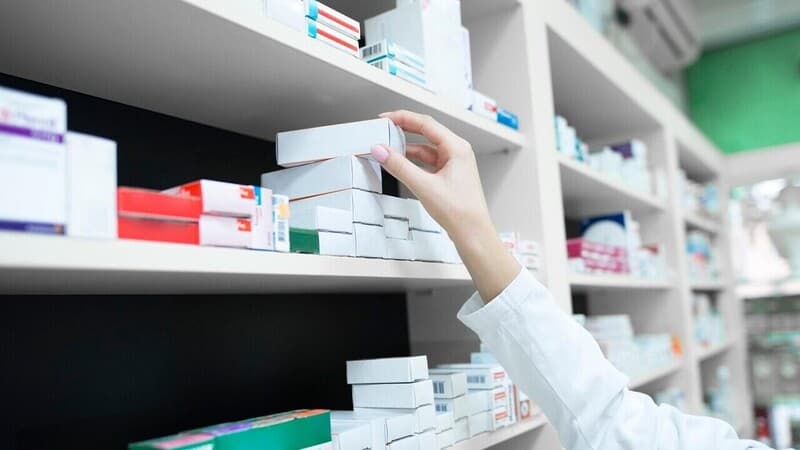
Which next‑generation drugs will appear on the shelves of Belarusian pharmacies in the near future, scientists and pharmacists told viewers on the STV channel, BELTA reports.
They reminded viewers that after the collapse of the USSR, Belarus faced a critical shortage of medicines — only a handful of Soviet factories operated in the country, and pharmacies barely managed to stock a hundred Belarusian drugs. Over the years of independence the sector has made a leap — today Belarusian manufacturers produce about 1,700 different medicines.
At a session of the All‑Belarusian People's Assembly, the development of pharmaceuticals was set as a priority. The head of state set the task of restoring production in a new quality, creating its own from scratch while not forgetting existing lines. And on the pharmacy shelf, the main items should be those marked “Made in Belarus.”
When we talk, for example, about the socio‑economic development program of our country, the first priority is demographic security. And here, undoubtedly, the availability of high‑quality medicines is essential to meet the tasks before us," noted Sergey Polykov, director of the N.N. Alexandrov Oncology and Medical Radiology Research Center.
The main task of Belarusian pharmaceuticals is to build a full production cycle: from molecule synthesis to packaging the finished drug. Scientists today apply the same formula. “We first produce small batches, gradually scaling up to the volumes required for our production. The great advantage is cost reduction, because we buy not the expensive substance itself but simple chemical reagents from which we make it ourselves,” explained Valentin Ostapchuk, head of the active pharmaceutical ingredients sector at the NPF “ChemFarmSynthesis” of the Institute of Bioorganic Chemistry of the National Academy of Sciences of Belarus.
The President's mandate to bring at least 50 new domestic drugs to the market each year is being met with room to spare. In the last five years alone, more than 350 products have been created in the country. At the same time, the full cycle also addresses the second key task — ensuring quality control, viewers were told.
The main focus of the NPP is anti‑cancer drugs. They are 30‑50 % cheaper than foreign counterparts, and 90 % of them are targeted—such drugs hit precisely the target, a specific molecule that drives tumor growth, so they cause far fewer side effects. The scientists plan to master the production of monoclonal antibodies. These are next‑generation drugs that are no longer produced by chemical synthesis but based on living cells. “We are perhaps the only enterprise that actually does the full cycle. Practice has shown that this is now the most essential trend. Although at the time we started, many people told me that we shouldn’t do this: we will buy everything. Life has shown that we won’t buy everything, and what we do buy is very expensive,” noted Elena Kaliničenko, head of the NPP “ChemFarmSynthesis” at the Institute of Bioorganic Chemistry of the National Academy of Sciences of Belarus.
Another strategic direction is emergency‑care drugs. At one of the domestic enterprises, they are preparing to launch production of their own carbapenem substances—the so‑called reserve antibiotics, powerful drugs used in intensive care units for the most severe infections when ordinary medicines are already ineffective. “The company’s strategic vector is the expansion of its product portfolio through the development and implementation of high‑technology pharmaceutical products, including in segments with limited competition and no domestic analogues. Today we produce 208
Belarusian medicines have long proven their effectiveness not only at home, but also abroad. A striking example is the flagship industry enterprise "Belmedpreparaty". Every year, around a billion units of products are released here, over 300 names, and almost 40% are exported to about two dozen countries. At the same time, the plant is closing those areas where dependence on imports is critical. One of the main ones is the production of insulins. Today, the plant accounts for more than 70% of all packages of this medication on the country's market. The company plans to launch new generation medications. "These are more predictable medicinal preparations from the group of insulins, which, we hope, will soon replace ordinary genetically engineered insulin," shared Sergei Marchenko, Deputy General Director of RUP "Belmedpreparaty".
Today, in Belarusian pharmacies, every second preparation on the shelf is domestic, and in hospitals, the share of domestic medicines reaches 80%. And, most importantly, doctors themselves trust them. "As soon as some preparations appear that are coming out of patent protection, as a rule, the pharmaceutical industry immediately reacts to this, and starts producing them. And we remain satisfied. Patients too," emphasized Sergei Polyakov.