Menu
What incomes in Belarus require paying tax?
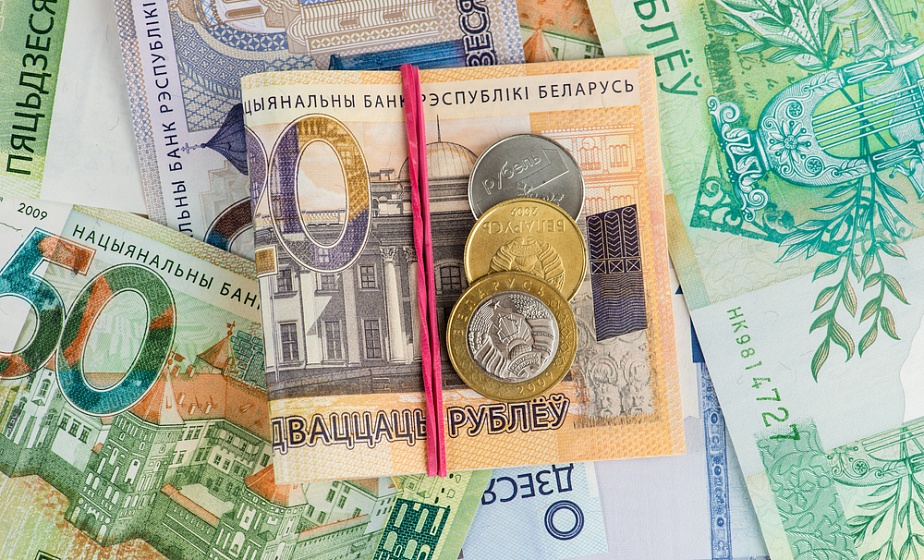
In Belarus new rules have appeared and some exempt amounts have changed.
Receiving money from parents for a wedding, a gift from friends, a transfer across borders, or material assistance from an employer – formally in all cases a person receives income. But the tax consequences for such payments are completely different.
In 2026 new rules appeared in Belarus and some exempt amounts were changed. One of the most frequently encountered limits is 6,000 rubles per year, however it cannot be applied to all monetary payments.
We will figure out which gifts and payments are not subject to income tax, where the established limit applies, and in what cases the recipient must report themselves to the tax authority.
Wedding gifts: exempt limit – 6,000 rubles
If money is given as a gift by friends, colleagues or distant relatives, there is a common annual limit.
Gifts received in Belarus from physical persons are exempt from income tax within the limit of 6,000 rubles for the calendar year. The norm was established in point 22 of Article 208 of the Tax Code.
However, the sum is calculated not separately for each giver but for all similar gifts received by a person during the year.
For example, if friends gave a person 10,000 rubles during 2026, the tax benefit applies only to 6,000 rubles. The remaining 4,000 rubles become taxable income.
At a rate of 13%, the tax would be:
4,000 × 13% = 520 rubles.
For spouses receiving gifts, they are accounted separately: the limit applies to the income of each recipient individually.
From parents one can receive 20,000 rubles without tax
For close relatives a completely different procedure applies.
They include:
- spouse or partner
- parents and children
- close brothers and sisters
- grandfathers and grandmothers
- grandchildren
- great-grandfathers and great-grandmothers
- great-grandchildren
Separately this category includes co-relatives of another spouse. Money and other gifts between such people are not subject to income tax regardless of the amount.
Therefore, for example, a gift of 20,000 rubles from parents and the same amount collected by friends have completely different tax consequences.
If kinship is required, documentation must be provided.
Transfer from another country: 6,000 rubles are not always exempt from tax
Since 2026, a separate exemption applies to monetary funds that an individual receives from abroad from another individual, provided the sender is not a close relative, in‑law, guardian, or custodian.
The overall tax‑free limit here is also 6,000 rubles per year.
However, there is an important nuance: what matters is not the mere fact of a bank transfer, but the purpose for which the money was received.
The exemption does not apply if the receipt is actually:
- salary or other compensation for work
- payment for work or services
- proceeds from the sale of property or property rights
- income from intellectual property
- income from securities or tokens
- a win or prize
- a gift
- dividends or interest
- rental income
- income from entrepreneurial or other activity subject to a special tax regime
Therefore, a cross‑border transfer of less than 6,000 rubles does not by itself guarantee tax exemption.
If, however, the money was sent by a close relative specifically as a gift, the rule for gifts from close relatives applies — such income is not taxed regardless of amount.
Employer‑provided material assistance: the limit
If the value of souvenirs received from a single source exceeds the established limit, it is necessary to consider the tax consequences of exceeding it.
Using a personal car for work may now trigger a tax.
Another change in 2026 concerns employees who use their own property for work.
For example, an employee drives a personal car for work-related matters, and the employer pays him compensation for wear and tear on the car. A similar situation is possible with personal equipment, tools, or devices.
Starting January 1, 2026, such compensation is no longer exempt from personal income tax.
That is, payment for wear and tear of a personal car, equipment, or tools is now considered taxable income. In most cases, the standard rate of 13% applies.
Such payments are also taken into account when determining income to which higher rates of 25% and 30% may apply. They become relevant at very high annual incomes — over 350,000 and 600,000 rubles, respectively.
When a tax return must be filed
If in 2026 a person received income that must be self-declared, the return must be submitted no later than March 31, 2027.
Calculated by the declaration