Menu
Going all-in on cost-cutting: What's the catch? Our experiment.
If you feel you're spending too much on fuel, don't rush to change your car. To begin with, you can optimize your trips or at least make them more economical. After all, fuel consumption depends both on the car's technical condition and on your driving style, with the latter factor being decisive. We set out to achieve a minimal "appetite" from our car by using eco-driving techniques and applying some technical measures. The result pleased us, although we had to make some sacrifices in terms of comfort.
Some preliminary notes
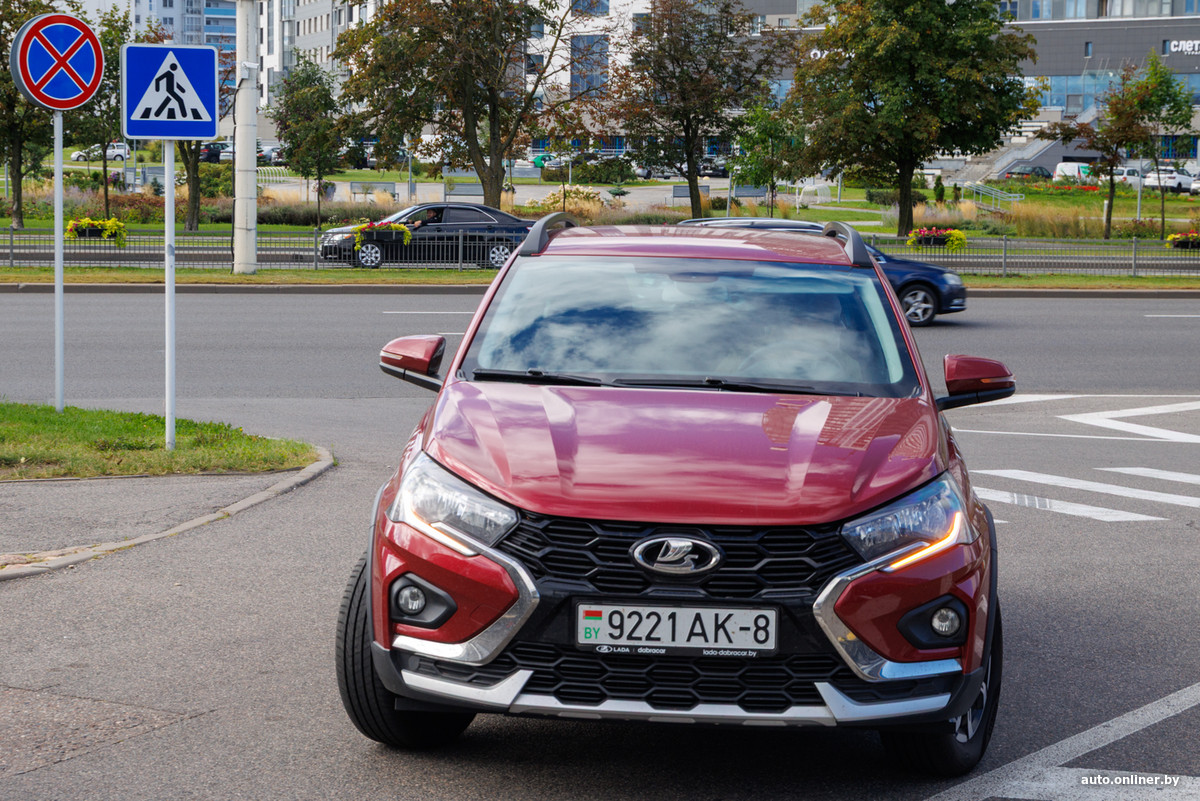
Since we have a Lada Iskra SW Cross on long-term test, we decided to conduct the experiment on it. This car is equipped with a 1.6-liter gasoline engine producing 106 hp and a 6-speed manual transmission. The manufacturer's claimed fuel consumption is 11.1 liters in the urban cycle, 6.4 in the extra-urban cycle, and 8.1 in the combined cycle. It will be interesting to see what we get and under what conditions.
Our looped route, 71 km long, starts and ends in Minsk, partially runs along the MKAD, and includes both sections of high-speed highways where 120 km/h is allowed, and sections of ordinary suburban roads where the maximum speed is 90 km/h. Plus, there are a few "urban" kilometers.
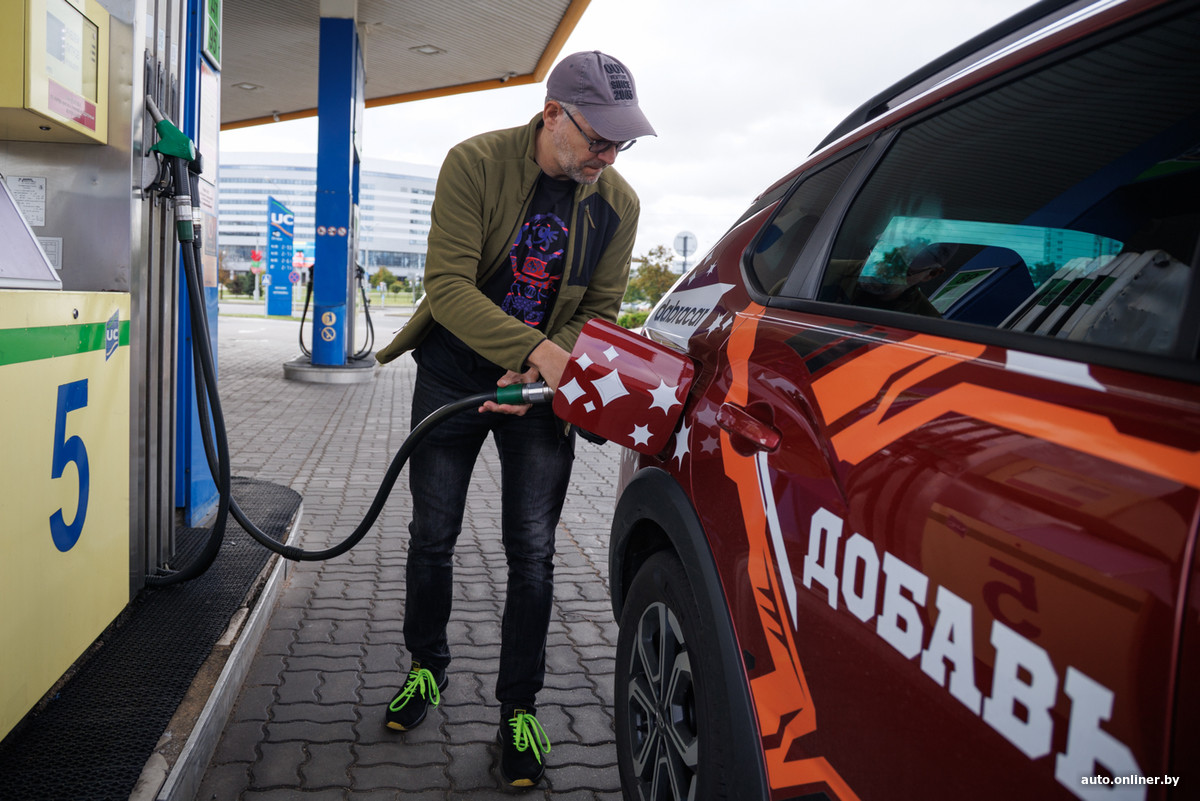
We will make two laps around our "loop." The first — in the usual active style that the author follows in everyday driving, the second — in an economical style, and with a few technical tricks as well. We will estimate fuel consumption using the on-board computer readings, but we'll also back it up with a control fill-up to a full tank. That's why the start and finish of the route are deliberately located at a gas station.
At the usual pace
If described in three words, it's "within the traffic rules." We don't violate the speed limit, we don't take corners in slides, we use turn signals when maneuvering, but we accelerate briskly, not hesitating to "rev" the engine and quickly shift gears.
Indeed, with the Iskra it can't be any other way: the 16-valve engine is not very powerful in itself, and by character it's "high-revving." So if you want to have a reserve of traction, it's better to keep the tachometer needle above 3000 rpm during active acceleration. But in measured driving, it's enough to stay at 2000–2500 rpm, especially since we have as many as six gears at our disposal. The gearbox itself (by the way, of Chinese origin) pleases with crisp shifts, except that the lever throws are a bit long.
Well, we still won't be able to drive fast. The morning rush hour seems to be behind us, but traffic is heavy both on Pobediteley Avenue and on the MKAD, and we have no intention of driving recklessly. But the simulation of conditions couldn't be more realistic.
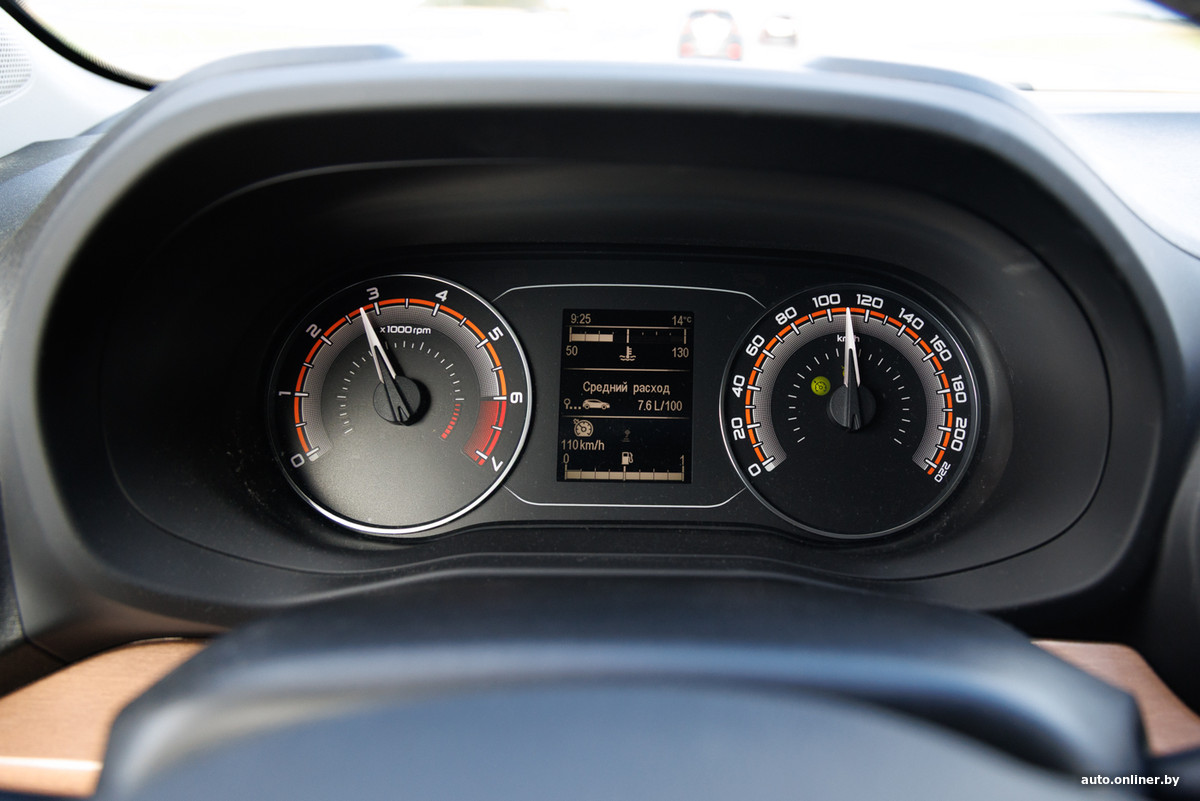
When we finally manage to get some open road on the Grodno highway, we confidently hold 120 km/h. By that point, the average fuel consumption drops below 8 liters and gradually approaches seven, even though the tachometer needle never falls below 3,000 rpm. This is a good time to note that the final drive ratio on the SW Cross version is 4.3, versus 3.9 on the regular Iskra SW wagon. Plus a larger ground clearance and bigger wheels. Unsurprisingly, the difference in fuel consumption between these versions is 0.3–0.5 liters depending on the cycle. Naturally, in favor of the SW.
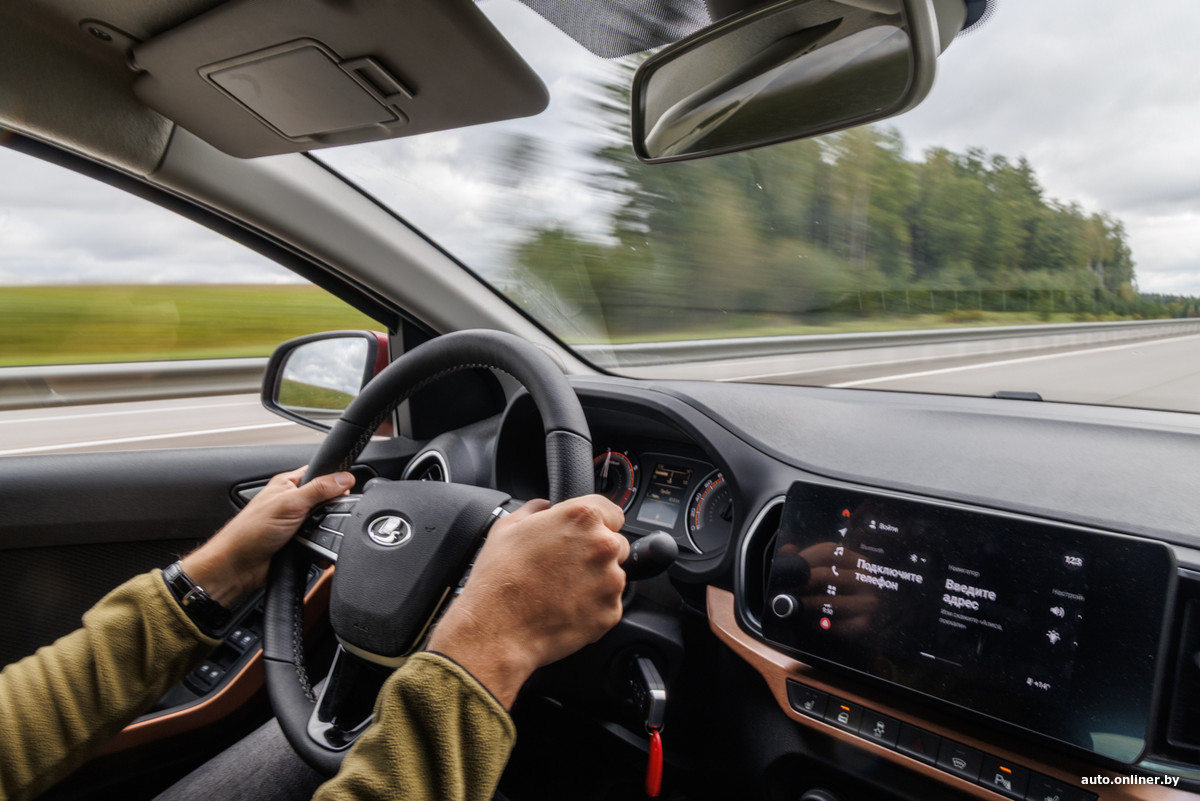
We turn toward Zaslavl and on a narrow road run into slow traffic. Closer to the city, signs also prevent us from speeding up. It would be fine, but our speed doesn't exceed 80 km/h, and at times drops to 60–70 km/h. That's not very good from the experiment's point of view, because we'll drive the second lap here at roughly the same pace, meaning we won't be able to improve the result. But here's a clear example: just turn off the high-speed highway onto a country road, and you save fuel if not time.
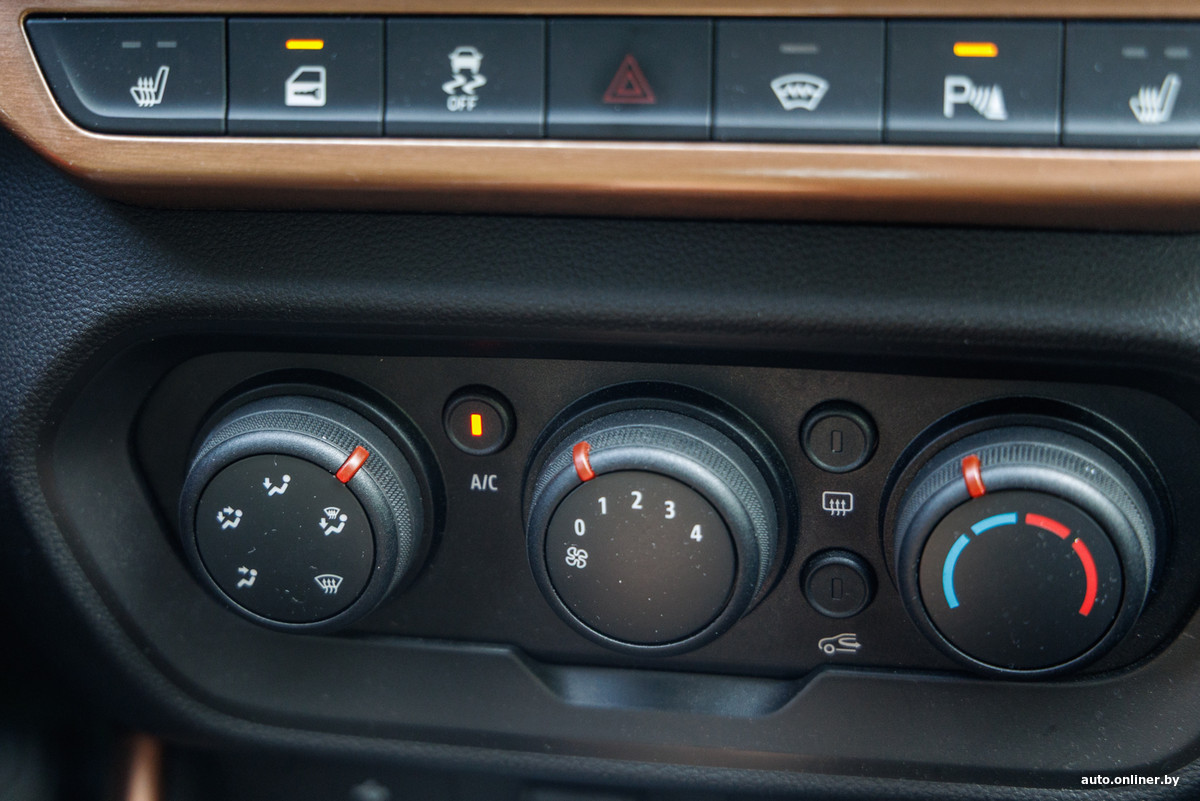
Well, as expected: at the entrance to Zaslavl we get 6.8 liters. Let's remember this figure and check it on the second pass. Meanwhile, we have a city cycle, albeit short in distance: low speed, acceleration, and braking. However, it doesn't affect fuel consumption much.
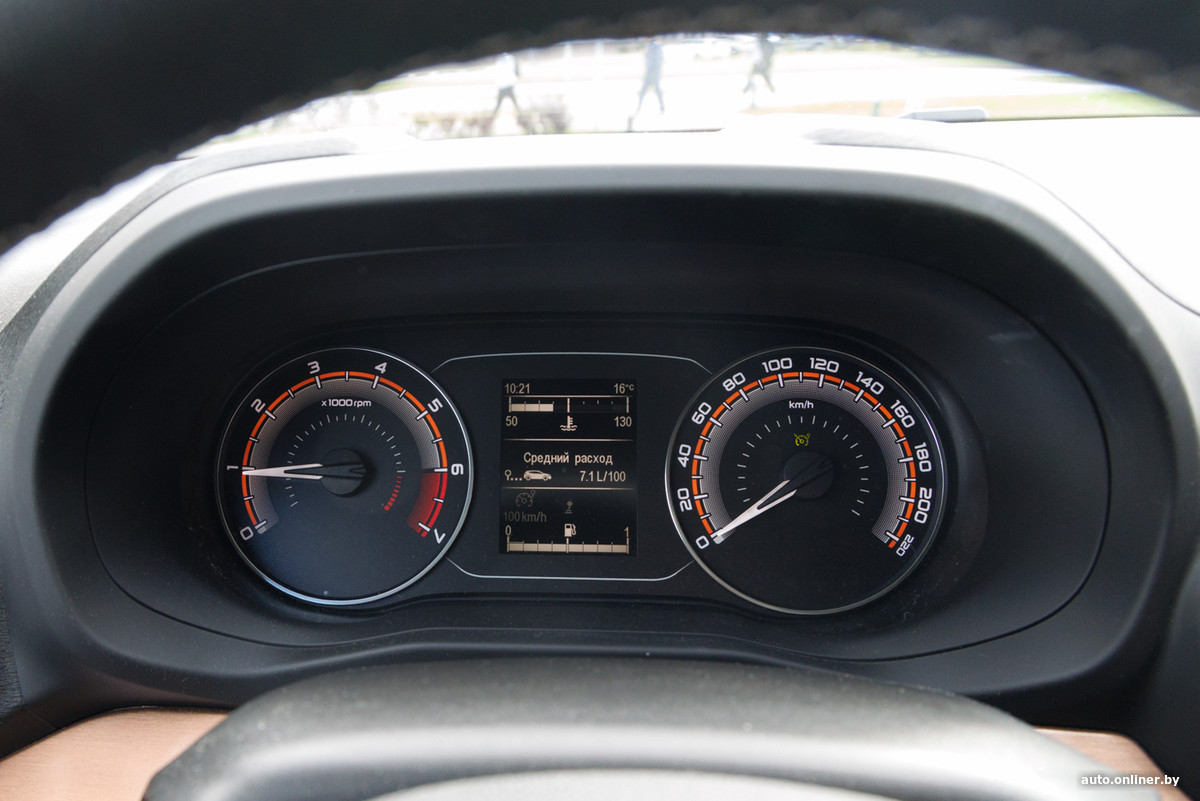
Well, ahead of us are a few dozen much faster kilometers, where we can drive both 90 km/h and 120 km/h, which is what we do. And so, approaching the finish, we get a solid 7.1 liters — that's what we record.
In economy mode
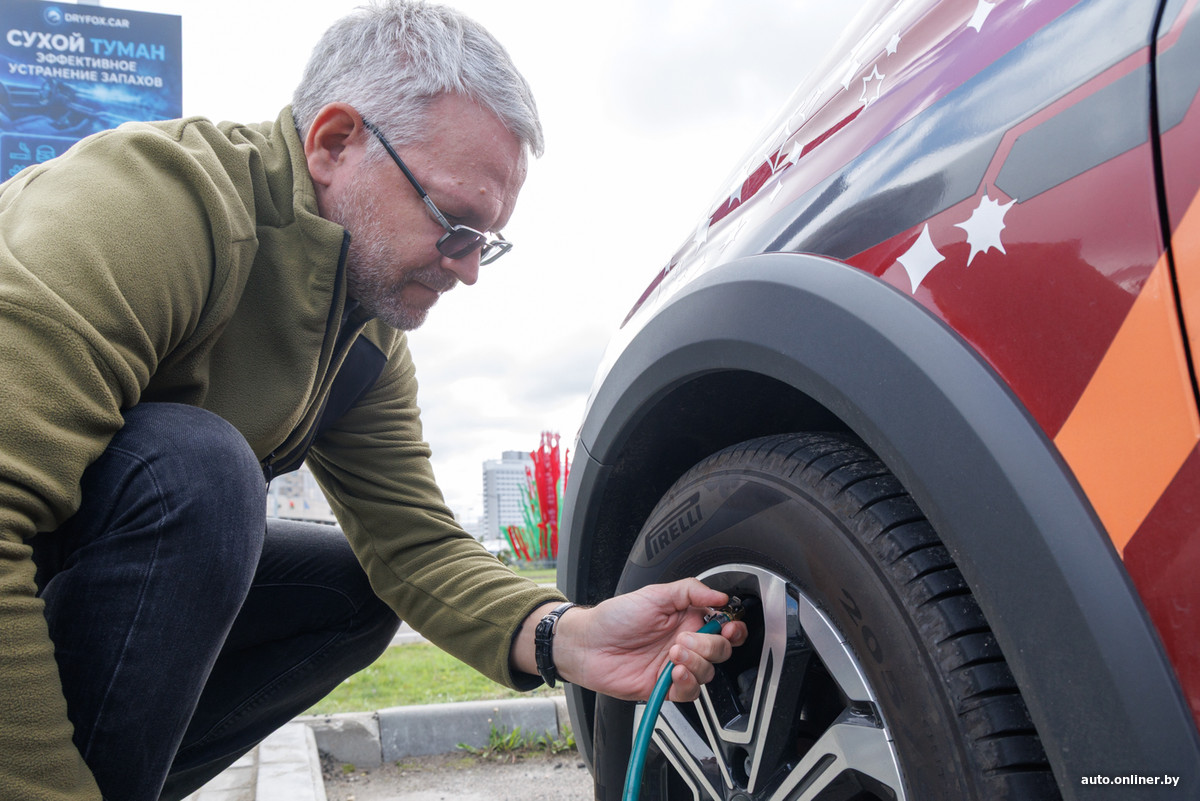
Before the second run, we stop at a tire inflation station and increase the pressure from 2.1 to 2.6 bar. In doing so, we want to reduce rolling resistance, which should—even if only slightly (by a few percent)—have a positive effect on fuel economy. True, it should be kept in mind that this also means a smaller tire contact patch with the road, which in turn negatively affects grip: theoretically, we get worse cornering "hold" and a longer braking distance. Against that backdrop, a slightly harsher ride over bumps is a harmless trifle.
Technical factor
We merely inflated the tires, but to reduce rolling resistance even further, manufacturers use narrower and stiffer tires on their eco versions and fit aerodynamic wheel covers. They also work on reducing weight by using lighter materials. And eco-rally participants, if the regulations allow, throw out everything they can from the cabin and trunk.
Aerodynamics has a very strong influence on fuel consumption, so that is also worked on. Moreover, this applies not only to exterior panels but also, for example, to the underbody. Lower-viscosity oil is poured into the engine, and the automatic transmission is programmed to shift up as early as possible. They abandon permanent all-wheel drive in favor of on-demand all-wheel drive, and with two clutches at that, to disconnect the driveshaft, as in the Audi quattro ultra. And this is only a small part of the measures taken to reduce consumption. Each of them contributes a pittance, but in total these drops add up to a more or less substantial percentage of savings.
However, a malfunction of certain components or their improper operation can significantly increase a car's "appetite." The condition of the fuel and exhaust systems, as well as the ignition system, is especially critical. Old spark plugs, a fuel or air filter can noticeably affect efficiency. Dragging brakes and incorrect wheel alignment reduce free coasting, which also leads to excessive fuel consumption.
To be honest, in normal driving mode you hardly feel any of this, except perhaps as subtle nuances. And even then, you might ask whether it's just self-suggestion. But the fact that we're doing the second lap without the air conditioning is already noticeable: under the autumn sun, the cabin warms up nicely, even despite a modest +15 degrees outside. Moreover, the ambient temperature only continues to rise. But without the air conditioning, we reduce the load on the engine, which also leads to fuel savings.
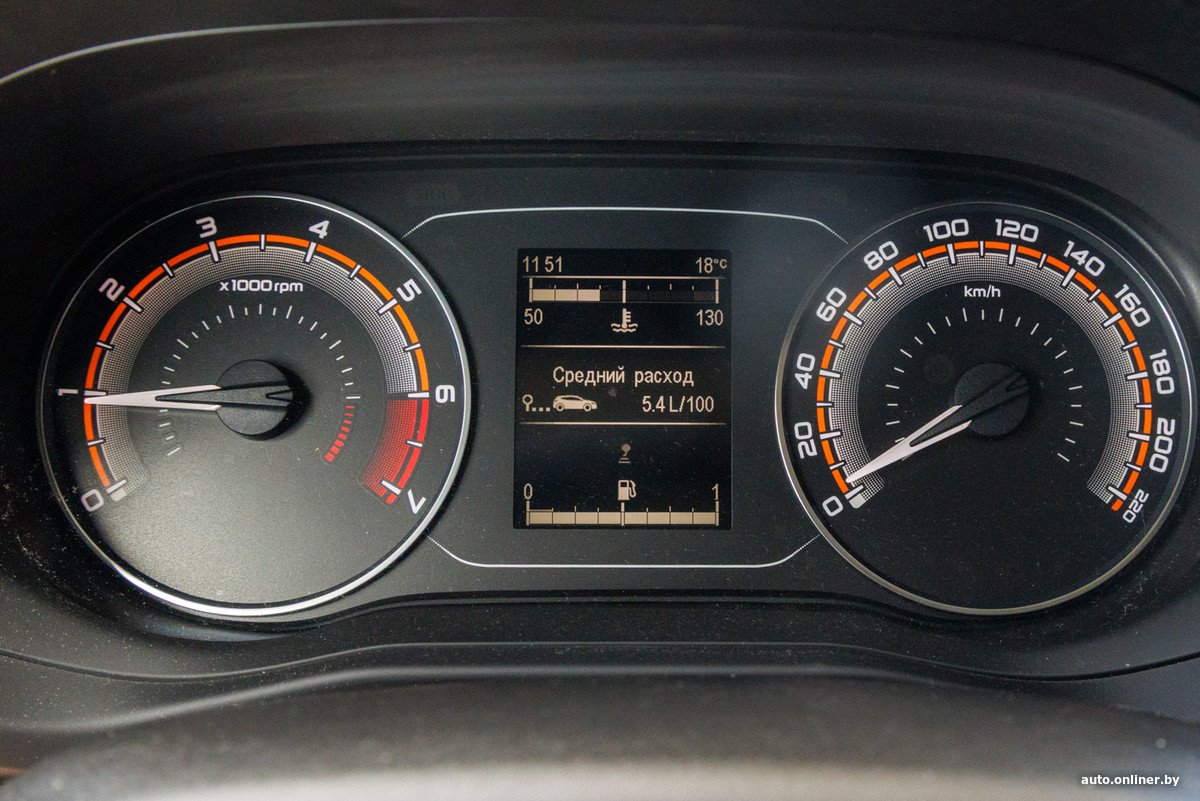
By the way, what about fuel consumption? It's dropping! Just a few kilometers after the start, the onboard computer shows less than 7 liters, and then the figure keeps decreasing. We haven't even left the city yet, and on the onboard computer screen we see 5.8.
Of course, it's not just that we went without the air conditioning and increased the tire pressure.
In fact, the greatest savings come from driving style.
So, the driver has now switched to eco mode. What does that mean? For starters, acceleration has become smoother, with less pressure on the gas pedal and earlier gear shifts. This is when you need to accelerate the car to cruising speed.
In other cases, it's better to refrain from unnecessary acceleration altogether, as well as from slowing down. If the road situation allows, it's better to maintain your chosen speed—it will just be a bit lower than the flow of traffic. In real-world conditions, achieving this is often not easy: it requires extra control and concentration from the driver, and besides, such a style can get in the way of other drivers. And sometimes it's simply unsafe.
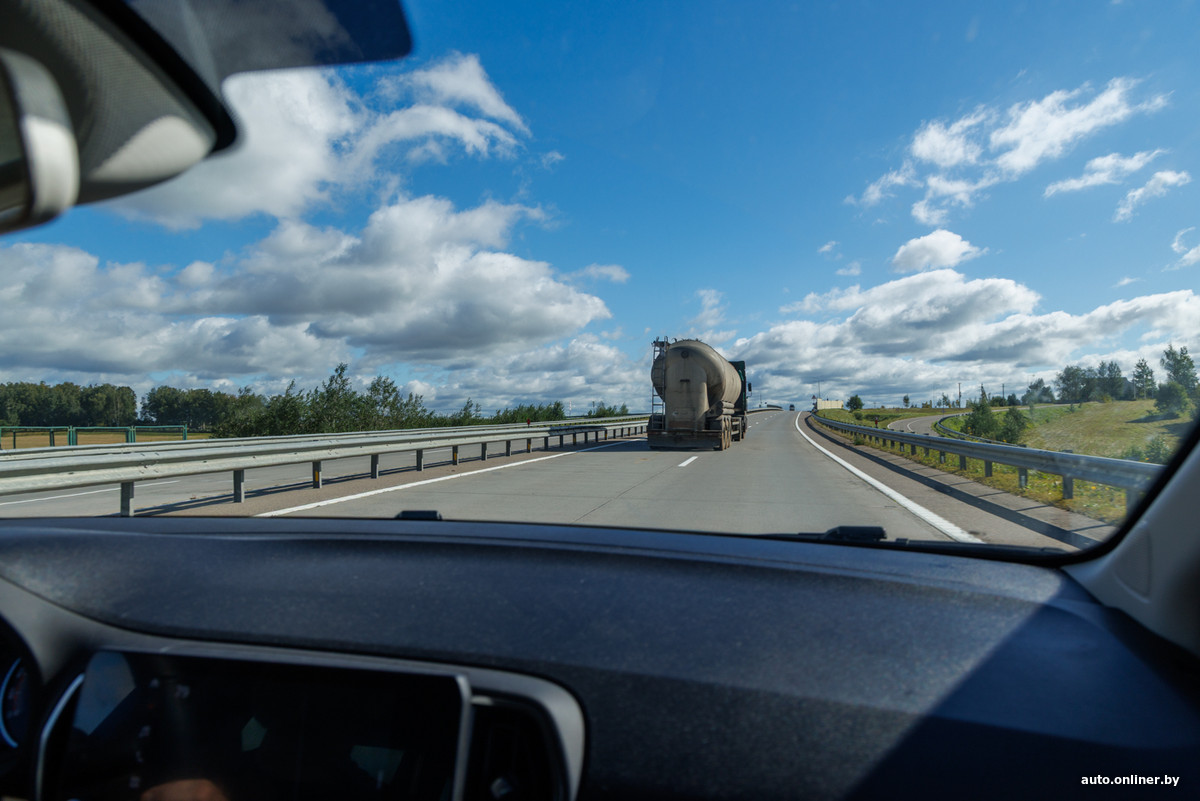
That is precisely why we abandoned the truly extreme fuel-saving techniques. Including slipstreaming—driving in the aerodynamic pocket behind the vehicle ahead. In eco-rallies, drivers often tuck in behind trucks. But to achieve the desired effect, you need to drive within just a few meters of them.
Of course, we couldn't avoid trucks. In the sense that we often crossed paths with them on the route, but as a rule, they turned out to be faster than us. After all, our speed on the speedometer never rose above 80 km/h, and according to GPS it was around 75–76 km/h.
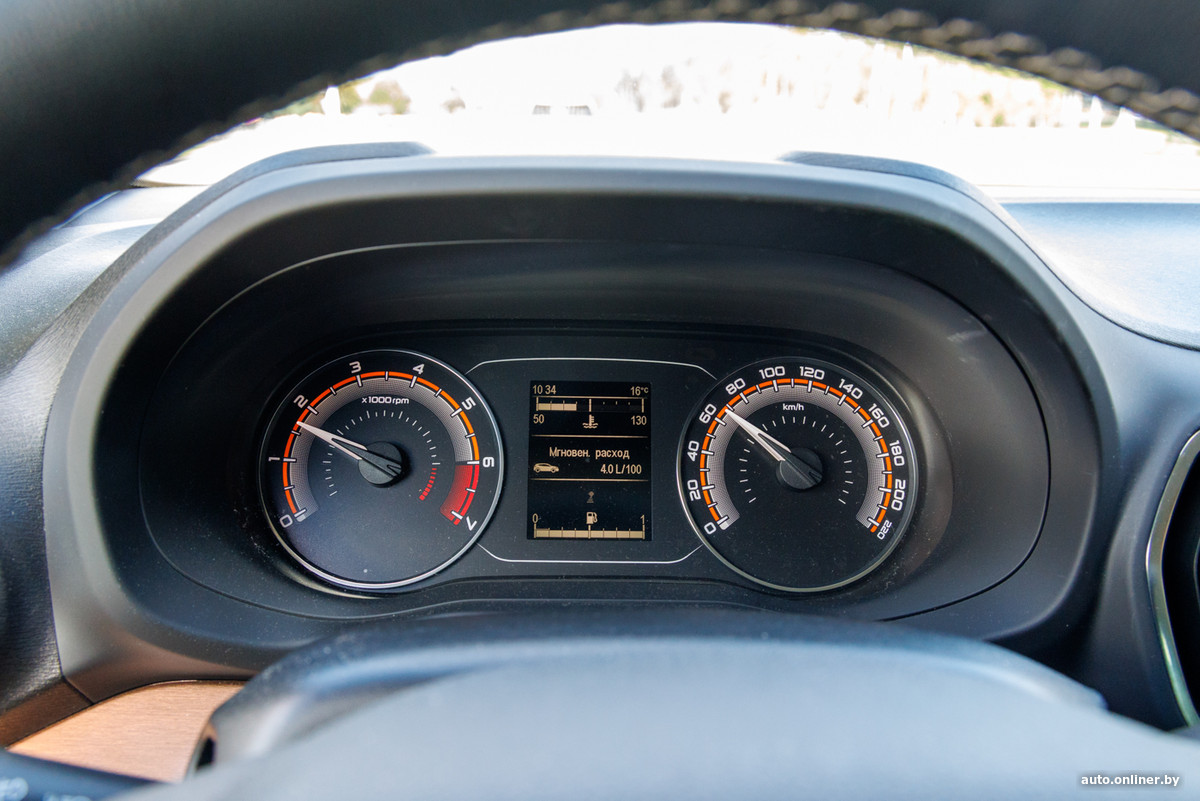
It's simple here. The lower the speed, the lower the fuel consumption—when driving at a steady pace. We've already tested and confirmed that, roughly speaking, every 10 km/h adds about +10% to fuel consumption. Actually, in theory it should be even more, but let's not get into that now. All you need to know is that if you want to save fuel, you need to slow down. So we're cruising along at a leisurely pace. And on the approach to Zaslavl, we get a wonderful 5.2 liters—compared to 6.8 last time.
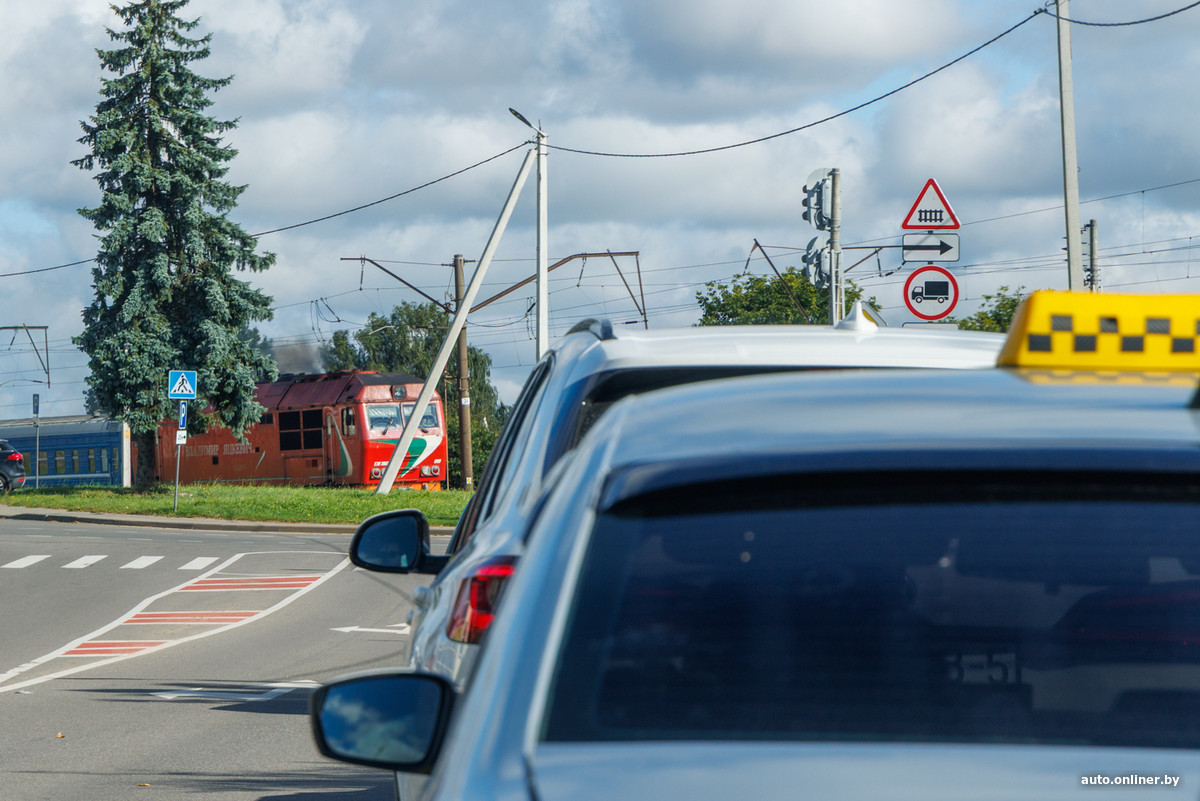
Yes, but in Zaslavl itself we run into problems. First we stopped at a railroad crossing—waiting for a train to pass. To avoid burning fuel needlessly, we turned off the engine. When we started it again, it was already 5.3 liters. We drove slowly through town, braking and accelerating a couple of times—by the time we left, we had 5.4.
On the highway, consumption should have dropped—but instead it rose to 5.5 liters. And that's when we noticed the long uphill stretches and the headwind—all of this also affects the result. Well, we'll save some elsewhere. We'll accelerate on the downhill to carry momentum up the next rise. But on that climb, we won't even try to hold speed; let it drop to 50 km/h if it wants, since there's a sharp turn right after anyway. But if the trajectory allows, we don't reduce the revs, so we don't have to accelerate later. Overtaking? Only if they're overtaking us, not us overtaking them.
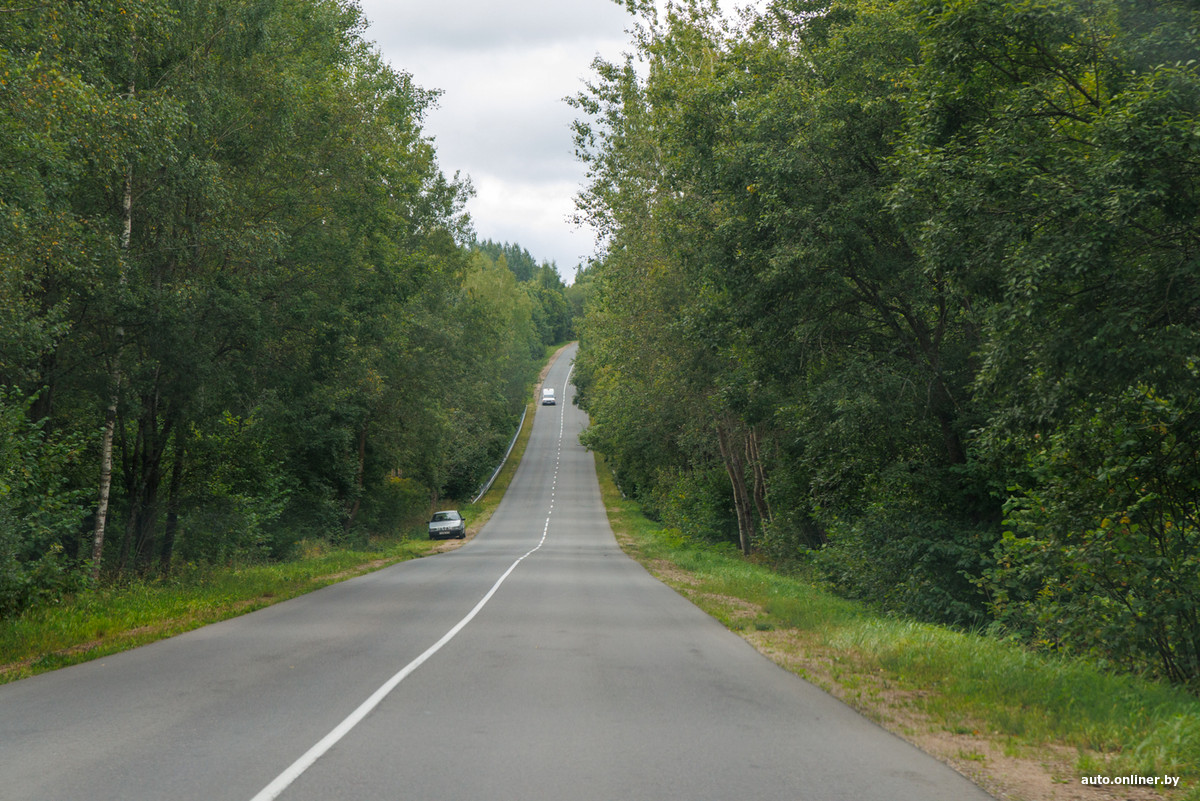
And that's how we reached the finish, where we recorded consumption of 5.4 liters.
How accurate are the on-board computer's readings? To check, we filled the tank to the brim at the start, and then at the finish—at the same gas station and the same pump, also until the first shutoff. It came out to 9.81 liters over 142 km, which is an average of 6.9 liters. According to the on-board computer, it was 6.25 liters (if you add the results of the two trips and then divide the sum in half).
A difference of 1.7 liters—that's, let's say, 24% savings. You'll agree that's not bad. That said, to repeat, we didn't resort to extreme measures like slipstreaming, didn't crawl along at 50 km/h holding up traffic, didn't fold in the mirrors, and didn't turn off the engine on downhills (yes, yes, such tricks are also in the arsenal of desperate "hypermilers").
As for the time spent, we covered the first 71 km loop in 1 hour and 9 minutes at an average speed of 61.7 km/h, and the second in 1 hour and 22 minutes at an average speed of 51.9 km/h. So the saying "the slower you go, the farther you'll get" is literally about fuel economy.