Menu
Two engines broke off in the sky: recalling how a Boeing 747 crashed into a residential area of Amsterdam
STORIES
Two engines broke off in the sky: recalling how a Boeing 747 crashed into a residential area of Amsterdam
Author: darriuss. Photo: nu.nl, youtube.com, De Telegraaf, flickr.com, airliners.net
On October 4, 1992, an Israeli cargo Boeing 747 made an intermediate stop at Amsterdam's Schiphol international airport. Four hours after refueling and reloading, it took off for Tel Aviv, and just six minutes later, both of its right engines broke off. The desperate struggle of the pilots to save lives ended with the giant airliner crashing into a residential area of the Netherlands' capital. How could this have happened? What cargo was on board the plane, and why, years after the disaster, did the surviving residents of the destroyed high-rise building begin to complain of serious health problems? Onlíner tells the story of a warm Sunday evening that became the last in the lives of 43 people.
About this article
What this Boeing was and where it was headed
How the crew tried to save the plane after the failure of two engines
What the area where the plane crashed looked like
Why the number of victims was difficult to establish
Explosion or metal "fatigue"? What the investigation revealed
Secret cargo on board: could it have affected the health of residents?
This article has already been published on Onlíner. On the anniversary of the disaster, we have updated the material and are once again telling the story of how the Boeing crashed into a residential quarter of Amsterdam.
What this Boeing was and where it was headed
Most often, major air disasters with a large number of victims are the result of unfavorable weather conditions, the so-called "human factor," or a combination of these factors. On October 4, 1992, nothing foreshadowed disaster. The weather was surprisingly good for autumn in Amsterdam, and the crew of the Israeli cargo Boeing 747 was very experienced: for example, the 59-year-old commander of the aircraft, Itzhak Fuchs, had been flying since the late 1950s, and for the last 11 years, he had been a first pilot on the largest "Boeings."
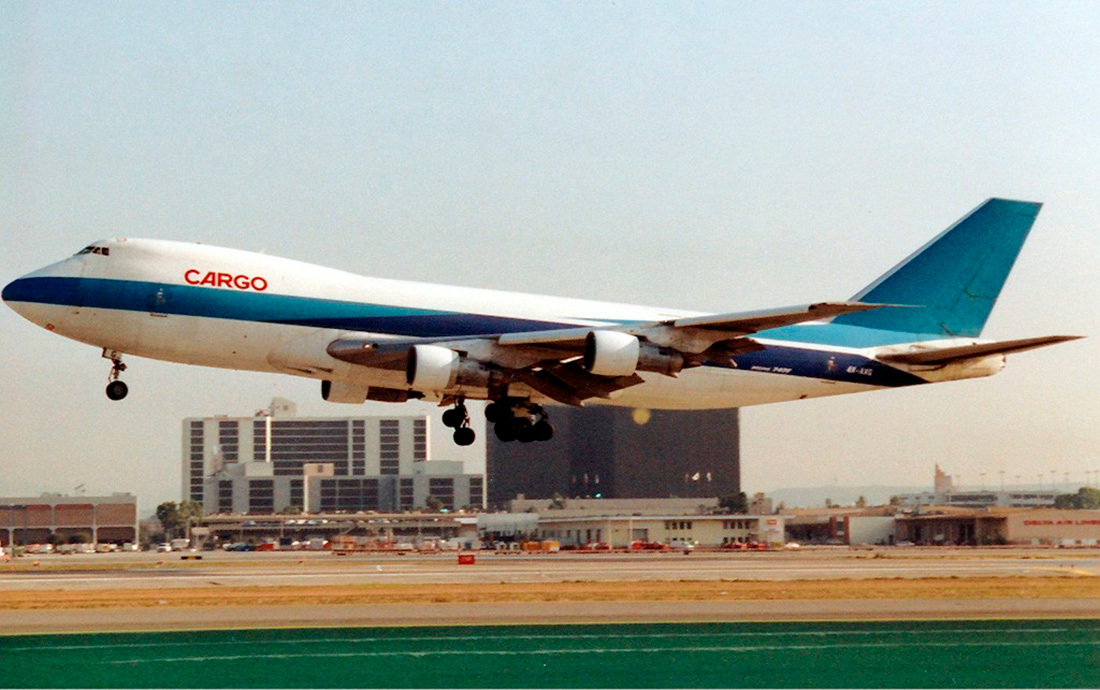
The crashed plane a few months before the tragedy
The aircraft with the registration number 4X-AXG was not new (it was released in 1979), but from the very beginning, it was operated by the same company - Israel's national carrier El Al. In its 44-year history, the company had almost no aviation accidents: by the beginning of the 1990s, El Al had lost only 2 planes in the distant 1950s, one of which was shot down by Bulgarian Air Force fighters. This was one of the safest airlines in the world.
The Boeing 747 that landed at Amsterdam's Schiphol Airport at 14:20 local time was performing flight number 1862. It had taken off from New York and was headed to Tel Aviv, with a stopover in the Dutch capital, where it was refueled and loaded with additional cargo. The total weight of the cargo on board was 115 tons, and questions about its contents would arise later, after the disaster.
After four hours of maintenance at Schiphol, the airliner was finally ready to continue its flight. At 18:21, it took off, turned right, and began to gain altitude over Amsterdam. Just six minutes later, when the "Boeing" was already at an altitude of 1950 meters above the city's suburbs, the pilots heard a loud bang, reminiscent of an explosion. The instruments showed that both right engines had failed - a situation that is extremely rare in itself.
What was worse, however, was that the crew could not fully grasp the severity of the situation. In fact, they had no opportunity to visually monitor the condition of the engines: from the cockpit, the inner engines of this type of "Boeing" are completely out of view. With great difficulty, the crew could see the edge of only the outer engine, but given the development of the emergency situation, they did not even have that chance.
At the same time, on Lake Goymer, dozens of fishermen and Amsterdamers on their own yachts witnessed an astonishing scene. Two objects had separated from another taking-off plane. Some people took them for parachutists, while others did not have time to make sense of their emotions when two huge turbojet engines from Pratt & Whitney crashed into the water. Meanwhile, the crew of the Israeli "Boeing" continued to fight for its survival.
Immediately after losing the engines, the second pilot, who was in charge of takeoff, transmitted a distress signal to the ground and began a turnaround, requesting an emergency landing at the same Schiphol airport. The crew started descending in a spiral, simultaneously reducing speed, and for some time, they managed to keep the airliner in the air. However, on the second turn, the inevitable happened in this situation. As the speed decreased, the lift of the damaged right wing also decreased, which led to a rapid increase in the Boeing's roll to the right. At 18:35:25, the second pilot managed to transmit to the ground, "We're falling, flight 1862, we're falling, falling, falling."
Seventeen seconds later, the diving plane with a 90-degree roll to the right crashed into an 11-story residential building in Amsterdam's Bijlmer district. Eight minutes had passed since the beginning of the development of the catastrophic situation.
What the district where the plane crashed looked like
Bijlmer was conceived as an ideal residential district of a modern city in the 1960s. As in the Soviet Union, in Western European countries during these years, the idea of Le Corbusier's strict separation of so-called "residential areas," i.e., housing, and "workplaces," i.e., work, became popular. Moreover, Dutch architects planned to build a district on the southwest outskirts of Amsterdam where pedestrians and cars would be separated.
According to this concept, on a large plot of land, intricately curved and elongated residential buildings were freely arranged, resembling beehives in their configuration. Between the buildings, well-landscaped recreational areas with large water spaces were created, and all car traffic was carried out on elevated viaducts on the second level. The chosen high-rise format of houses, built using industrial methods (actually the same familiar "panel houses" to us), allowed for a significant reduction in construction costs and, consequently, rent for apartments.
As usually happens, the path to the ghetto was paved with good intentions. By the beginning of the 1990s, the garden district had turned into a semi-criminal haven for illegal migrants, drug dealers, and decadent elements. And although the remnants of the former amenities were still present around, Bălții Români's reputation, to put it mildly, was not the best. It was in one of its houses that the crashed Israeli plane crashed.
Why the number of victims was difficult to establish
One of the local residents, who was lucky enough to live in an entrance that was not affected by the disaster, later told the story: "I heard a deafening explosion and ran out into the street. People were panicking and jumping from the upper floors. I managed to save some, but many more were blocked in their apartments."
The fully fueled 150-ton plane crashed into the sixth floor of an 11-story residential complex, destroying several sections with a total width of 120 meters. All four people on board were killed, as well as at least 39 residents of Bălții Români. "At least" because it was extremely difficult to accurately count the victims. In addition to the officially registered residents, there was an unknown number of illegal immigrants in the house. Many of them were left with nothing but memories of their relatives - the temperature at the epicenter of the explosion was too high. There could have been many more victims, but thanks to the good weather and the weekend, many of the building's residents were outside.
Explosion or "metal fatigue"? What the investigation showed
The subsequent investigation was able to reliably establish the cause of the incident. No traces of explosives were found on the engines recovered from the lake, which allowed the version of the terrorist attack, seemingly the most natural for this Israeli airline, to be ruled out. Weather conditions and crew error were also not to blame - this time it was the technique that failed.
The designers of this type of aircraft generally provided for the possibility of losing one of the engines. The bolts of their attachment were made in such a way that in the event of, for example, extreme overloads, the engine would detach from the pylon located between it and the wing, without touching either the neighboring engines or the wing with fuel tanks inside. In this case, everything went not as the specialists had assumed: there were no extraordinary overloads during takeoff, but rather a simple metal fatigue occurred.
The attachment bolts of the inner right engine ruptured not according to the standard scheme. Instead of simply falling down, it hit its outer neighbor, tearing it off as well, and a nine-meter-long piece of the wing's edge. This led not only to the complete loss of thrust from two engines on one side but also to the destruction of one of the airliner's hydraulic systems and damage to the flaps. At an already high speed (around 520 km/h), the lift of the right wing was still sufficient to continue flying, but during landing and speed reduction, the "Boeing's" lift dropped to critical values. With such damage, saving the plane was simply impossible.
The inspections conducted after the completion of this investigation found that in hundreds of cases, the attachment bolts of the 747 "Boeings" needed to be replaced urgently. Moreover, the crash of flight No. 1862 was just one of several serious incidents of this kind. In late 1991, under similar circumstances, a China Airlines cargo plane of the same type crashed: it also first lost its inner right engine (which, however, was already together with the pylon), which then tore off the outer engine, after which the flight ended in a crash and the death of the crew. In March 1993, a Japan Airlines Boeing 747 lost one of its engines.
The incident highlighted the need for urgent replacement of the attachment bolts in many Boeing 747 aircraft, and it became clear that the crash of flight No. 1862 was not an isolated case, but rather one of several serious incidents related to the same issue.
The investigation into the causes of the El Al plane crash was assisted not only by the examination of the engines recovered from Lake Gooimeer, but also by the analysis of data from the flight data recorder. Unfortunately, it was not possible to reconstruct the conversations of the crew in the cockpit, as the cockpit voice recorder was never found. This, along with a number of other factors, led to the emergence of conspiracy theories surrounding Flight 1862.
The presence of a secret cargo on board has raised questions about its potential impact on the health of local residents. Approximately a year after the tragedy, some of the residents of the Bijlmer district who lived in the damaged building began to complain of a general deterioration in their health. They were plagued by chronic respiratory diseases, insomnia, fatigue, impotence, and stomach problems. They attributed their ailments to the cargo of the crashed Boeing. Some people recalled seeing a group of individuals in white protective suits among the rescuers on the day of the disaster. The missing black box, whose disappearance was attributed to someone's malicious intentions, was also not forgotten.
According to official data, the Israeli cargo plane was carrying consumer goods and computer components. In 1998, after the start of a parliamentary investigation, the Dutch authorities and the El Al administration acknowledged that, in addition to these goods, the Boeing was also transporting 190 liters of dimethyl methylphosphonate, a precursor used in the production of sarin, a chemical warfare agent that was used by the Aum Shinrikyo sect in a terrorist attack on the Tokyo metro in 1994. The dimethyl methylphosphonate was intended for the Israeli Institute for Biological Research for "testing filters that protect against chemical weapons".
Experts invited by the Dutch parliamentary commission stated that the amount of dimethyl methylphosphonate on board the crashed plane was not sufficient to produce sarin in quantities suitable for military use. This explanation did not satisfy skeptics, and the commission's findings are difficult to describe as unequivocal. Dutch deputies stated that there was insufficient data to claim that the crashed Boeing was carrying some kind of secret military cargo, and that the "people in white suits" were likely ordinary participants in the rescue operation.
Subsequently, the question was decided to be investigated at the level of medical research: in the Netherlands, the health of Bэйlmer residents and rescuers was studied, comparing part of the participants with control groups. Rescuers who participated in the elimination of the consequences indeed had more physical and psychological complaints, however, no clinically significant differences in medical indicators were found compared to the control groups. No statistical data were found among residents that would allow associating specific diseases with the impact of the disaster.
The possible impact of substances from the cargo was also separately assessed: calculations showed that immediately after the crash, they could cause irritation to the eyes and respiratory tract, but permanent damage to health was not expected. At the same time, the researchers themselves acknowledged the significant uncertainty of such assessments: in the first hours after the catastrophe, necessary measurements were practically not carried out, so it was impossible to fully restore the nature and scale of the impact years later.
The technical cause of the catastrophe has long been established, and the conducted research did not confirm that the cargo of the plane became the cause of chronic diseases in Bэйlmer residents.