Menu
To buy an apartment now, at the peak, or wait after all? An expert on the situation in the real estate market
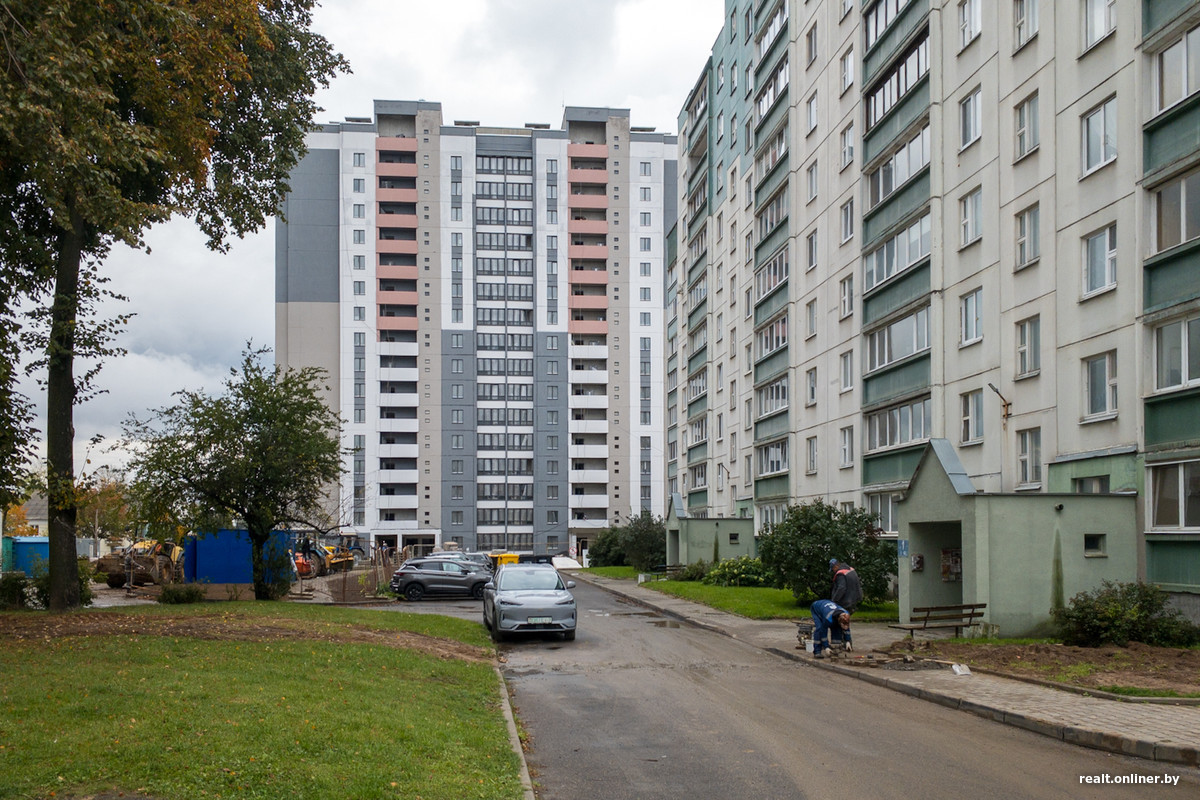
What is happening in the real estate market no longer even frightens. It's as if a sense of resignation has set in: the price per square meter has risen, is rising, and will continue to rise. This is precisely why, whenever possible, experienced Belarusians try to buy apartments and houses. But does concrete always guarantee a carefree old age and protection from inflation? Can a Belarusian "square meter" serve as a reliable investment method? Why do neighboring countries have lower interest rates on loans? The first deputy chairman of the board of the National Bank, Alexander Egorov, discusses all this in his author's project "ProDengi".
Everyone wants to live in Minsk
- How accessible is housing for an ordinary person? It seems that prices are constantly rising, and loan interest rates are sky-high. And yes, and no, Alexander Egorov reasons. Let's turn to statistics: the housing affordability index across the country as a whole has grown by 34% over 15 years - from 41% to 75%. What does this index mean in plain language?
This is the ratio of the average salary to the cost of a square meter. That is, how many square meters can be bought for one salary.
The growth of the index indicates that, despite all the inflationary processes and devaluations of previous years, the nominal incomes of Belarusians, on average, have been growing faster than the cost of a square meter. Housing, on average, across the country, if we look at a distance of one and a half decades, has become more accessible.
But the truth is that the market is extremely non-uniform: Minsk is a real bottleneck. The affordability index in Minsk at the end of 2025 was 65%, which is significantly lower than the national average of 75%. A similar situation is observed in the Minsk region, where the index has fallen to 58% and is the lowest in the country.
Why is this happening? Everyone wants to live in Minsk. Or at least in the Minsk district.
The demand for housing is huge, and the supply of new apartments is decreasing every year. As a result, prices are rising faster than across the country as a whole.
However, if we look at the regions, for example, the Grodno or Gomel regions, the index is around 100%. In these regions, housing is one and a half times more accessible than in the capital, explains the first deputy chairman of the board of the National Bank.
Why do interest rates on loans differ between us and them?
- Why are mortgage rates lower in neighboring countries? The affordability of housing in capitals - Minsk, Warsaw, Vilnius - is roughly the same, at around 50-60%. That is, you need to save for housing for the same number of years.
If we talk about interest rates on loans, they need to be compared with the growth rates of nominal wages.
We have nominal wages growing at around 13% per year. Accordingly, with a mortgage rate of 13% per annum, the share of loan payments relative to a person's income decreases over time. The most difficult period is the first couple of years, when payments are at their maximum. This is why banks are now gaining popularity with loans that have a low interest rate for the first few years, known as a grace period.
I will give a specific example. If you are an average family of two working people in Minsk and want to take out a loan of 300,000 rubles, then with an interest rate in the grace period for the first year, loan payments will be around 20% of your net income. And after two years, taking into account wage growth and an increased interest rate, payments will be around 40%, which is well within the debt burden indicators set by the National Bank, explains Alexander Egorov.
Is it worth buying square meters as an investment in 2026?
In the long term, a square meter in Minsk does an excellent job of protecting capital and outpacing inflation. Over the past 20 years, starting from 2005, the real increase in the value of a square meter (completely cleared of inflation costs) was around 125%. This is an average of confident 4% annual returns in currency. And this is without taking into account the money that could be earned from renting.
By September 2026, the offer prices in Minsk updated the historical maximum, breaking $2,500 per square meter at the exchange rate. But let's apply a conservative approach.
Buying an asset at historical peaks, after a long uninterrupted growth, is always a colossal risk of correction.
The market is cyclical. Let's compare the income from renting an apartment in Minsk and a simple non-revocable bank deposit in Belarusian rubles. We take a standard one-room apartment in Minsk with good repairs. The price is around 300,000 rubles. If you rent it out, after paying a fixed tax and taking into account a month of downtime to find tenants, you will receive around 4.5% per annum net. And now let's look at non-revocable ruble deposits: interest rates are currently at the level of 12-14% per annum. That is, the deposit outperforms the concrete.
But we did not take into account the growth in the value of the asset - the apartment. In this case, with the value of a square meter growing by 9-10% per year in rubles, the yield will be comparable. Here it is essential to assess the risks, but potentially, you can get a benefit comparable to a deposit.
At the same time, the financier notes, there is also a more attractive option at first glance: buying off-plan and reselling or renting it out. And many people opt for this strategy. However, there are also nuances here - from possible delays in the house's completion date to problems with repairs. Therefore, the expert advises diversifying risks: putting part of the money into a deposit, and investing part of it in real estate.
- Real estate has been, is, and will be a fundamental solid asset, the expert is convinced.