Menu
To act in accordance with the law: how to contest a traffic police fine from a photo fixation camera in Belarus
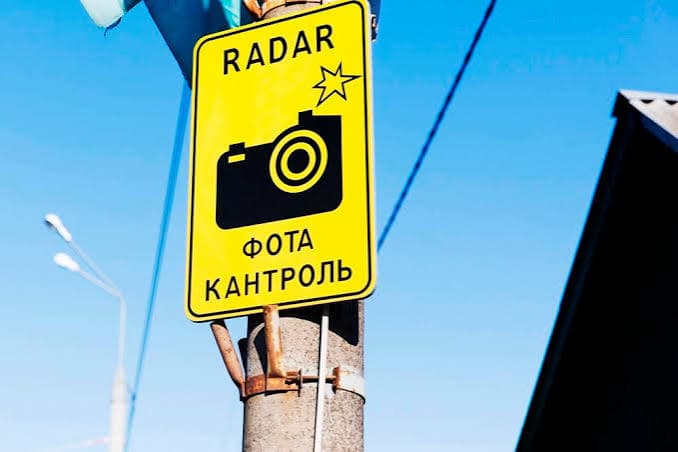
A "happiness letter" from a photo enforcement camera in Belarus is automatically issued to the owner of the vehicle. However, there are situations when someone else was driving at the time of the violation, the car was sold without re-registration, or the device made a technical error.
Let's break down the current algorithm of actions for 2026: what deadlines to meet, what evidence to collect, and where to submit an application to cancel the fine from the camera.
When a violation is recorded in automatic mode (exceeding the speed limit, including average speed, violating stopping and parking rules, lack of technical inspection), a special procedure for bringing to responsibility applies:
The presumption of responsibility of the owner. According to Article 4.8 of the Code of Administrative Offenses and Part 6 of Article 10.4 of the Administrative Procedure Code of the Republic of Belarus, the traffic police are not required to prove the guilt of the car owner - the decision is made without their participation based on the camera data.
Warning is not applied. With automatic photo fixation, exemption from liability with a warning (even if the violation is the first one in a year) does not work - a minimum fine is always imposed under the relevant article.
Electronic document management. Since June 19, 2026, changes to the Administrative Procedure Code (Law No. 138-Z) have come into force: a copy of the decision on photo fixation can be sent to the owner not only by registered mail but also in electronic form (through a personal account on the Ministry of Internal Affairs portal or email with consent).
In what cases can the fine be really challenged?
Simple disagreement with the amount of the fine or a request to "forgive for the first time" will not work. The decision can be canceled if there are valid reasons:
Someone else was driving. You handed over the car to a relative, friend, colleague, or rented it out.
The car was sold but not re-registered. You transferred the car to a new owner under a sales contract (or earlier - under an invoice or power of attorney), but they have not yet managed to register it with the traffic police.
The car was taken out of your possession against your will (theft, hijacking, evacuation).
Technical or factual error. In the photo, there is a different car with a similar license plate number (a letter or digit was incorrectly recognized), the car was being transported on a tow truck at the time of fixation, or the road section did not correspond to the specified speed regime.
Step 1. Check the deadlines for appeal
The deadline for submitting an application depends on how much time has passed since the decision was received:
Up to 1 month from the date of receipt of a copy of the ruling – the standard and free procedure through the GAI (part 7 of article 10.4 of the PICoAP of the Republic of Belarus).
From 1 to 6 months from the date of entry into force of the ruling – if the monthly deadline is missed, the ruling can only be canceled through the prosecutor's office, paying the state duty (part 3 of article 13.12 of the PICoAP of the Republic of Belarus).
It is important to note that the payment of the fine from the camera is given 1 month from the date of receipt of a copy of the ruling. Unlike fines that an inspector issues on the spot in a simplified procedure, the amount of the fine for automatic photo fixation in case of delay does not increase by 2 basic units. However, if it is not paid on time and an application for cancellation is not submitted, the materials will be transferred to the bodies of compulsory execution, and the money can be debited from bank accounts compulsorily with the accrual of compulsory collection.
Step 2. Gather evidence
Since the obligation to prove one's innocence in the case of photo fixation lies with the car owner, the application must be accompanied by convincing confirmations:
If another driver was behind the wheel: his written personal explanation with confirmation that he was driving the car on the specified date and time, a copy of his driver's license. It is ideal if the real offender comes to the GAI with you.
If you were in a different location: train/airplane tickets, passport stamps about crossing the border, a business trip certificate, a hospital excerpt about being on inpatient treatment, GPS tracker data.
If the car has been sold: a copy of the sales contract, the act of acceptance and transfer of the vehicle, a receipt for the money received.
In case of a camera error: photos of your car (where the differences in the body, wheels, stickers, and trim from the car in the GAI photo are visible), data from the DVR.
Step 3. Submit an application to the GAI (within 1 month)
You need to contact the territorial division of the GAI at your place of residence (registration), and not the department on the territory of which the camera recorded the violation.
What to indicate in the application:
the name of the OGAi and the applicant's details (name, address, phone number);
the number and date of the ruling on the imposition of an administrative penalty;
a clear statement of the reasons for disagreement and the data of the person who actually drove the car (name, date of birth, address, phone number);
a list of attached evidence;
a request to cancel the ruling issued in respect of you.