Menu
This man is the largest real estate owner in the world. He also has business in Belarus
Amazon, Apple, and Meta, Nike and Spotify, FedEx and Walmart all pay rent to the same person. He owns office towers in London, Miami, and Toronto, hotels in Paris and Chicago, warehouses near Liverpool, and residential skyscrapers in New York and Boston. He invests in ports and wind farms, yet his name is on no signboard. He does not speak at conferences, does not give interviews, hardly takes loans, and is extremely reluctant to sell his assets. Over a quarter of a century, the entrepreneur has assembled more than two hundred properties in 13 countries in his holding, a collection Forbes valued at $25 billion. Today the son of a railway worker without a university degree is already 90 years old. Specialists consider him one of the most reliable and flexible players in the market, but the general public has heard almost nothing about him, even though everyone has seen his stores. They are familiar even to Belarusians. Zara, Pull&Bear, Massimo Dutti, Bershka, Stradivarius belong to the Inditex family group. This man is called Amancio Ortega, and he has long been regarded as the king of textile retail. And, above all, why is he also building a real‑estate empire?
The Messenger from the Shop
Amancio Ortega was born on March 28, 1936, in the Spanish province of León. Because of his father's work, the family moved constantly until they settled in the Galician city of La Coruña, a port town in the northwest of the country. Money
The first Zara store opened in La Coruña in 1975. According to the common story, the impetus was another obstinate large client who decided not to pay for already released merchandise. Ortega decided to sell his goods himself. It turned out that customers know best what they want, and that production benefits from hearing their opinions without intermediaries. The ability to respond instantly to public requests played a key role in Amancio's business development. In 1985 the network became part of the Inditex holding, and by 1988 it had already gone international. Later Pull&Bear, Massimo Dutti, Bershka, Stradivarius and other now well‑known brands joined Zara.
This is how fast fashion came to be.
Design, cut, logistics, and retail remain under Ortega's unified control. The batches are small, and a trendy item reaches the rack in just a few weeks, whereas previously the industry was used to waiting months. Collections are mainly sewn by regional contractors, because about half of the partner factories are located near the headquarters, in Spain, Portugal, Turkey, and Morocco. Basic items, where speed is not critical, are ordered from Asia. New
For years, he had lunch in the common cafeteria of Inditex's headquarters in Arteixo, and now he still lives in the center of La Coruña, opposite the Orzán beach, in a five-story building he owns, which has been renovated into a family home. For breakfast, one of the richest people on the planet, just like in his youth, prefers ordinary sausages with fried potatoes. He has stepped back from directly managing the fashion empire, but Pontegadea, under his supervision, continues its unobtrusive yet aggressive expansion. Purchases are made through legal entities with faceless names, so deals are often only discovered months later. Even on London's Baker Street, famous worldwide thanks to Sherlock Holmes, the appearance of the Spaniard went unnoticed at first. The residential complex with 86 apartments was bought by Ortega for £150 million as early as February 2026, but the record of the new owner only appeared in the British register in August.
Excess money
Zara has brought Ortega a colossal fortune, which literally needs to be invested somewhere. Thus, in 2026, Amancio is expected to receive a record €3.2 billion in dividends alone. For comparison, in the crisis year of 2020, he was entitled to "only" €646 million, five times less. If the entrepreneur had received this money as a private individual, he would have had to pay the Spanish state up to 30% in income tax. However, the billion-dollar payments are made to the accounts of his holding company Pontegadea, the owner of Inditex shares. Spanish corporate norms are much more lenient towards such structures. Until 2021, such dividends were not taxed at all, and now the rate for them is a symbolic 1.25%.
According to Forbes calculations, this legitimate scheme has saved Ortega around $7 billion over a quarter of a century.
Why doesn't he accumulate free funds like many American IT giants do? The reason lies in the strict tax climate in Spain, where there is a property tax, as well as a solidarity tax introduced in 2022 for ultra-large fortunes with a rate of up to 3.5%. Every December 31, the tax authorities record the balances on the accounts of managing companies. Any "extra" billion lying idle in a bank turns into a costly burden. However, this tax completely exempts so-called "working assets" of a family business, such as commercial real estate that generates rental income. That's why Amancio constantly reinvests all his income. According to expert estimates, this "flight from money into concrete" strategy has helped the businessman save at least $800 million in property taxes.
For one of the largest family offices in the world, Pontegadea looks surprisingly modest. The holding company has only about 90 employees in eight international branches. Meanwhile, the company's annual rental income is already around €850 million. This is roughly a quarter of the dividends generated by the core business, but at the same time, the income from premium rentals is more or less stable and, unlike retail, does not depend on fashion trends. The money earned from real estate is also not withdrawn from the business by Ortega. The net profit remains within the company and is immediately directed towards new deals.
Pontegadea has virtually no debt.
Its external obligations currently amount to only about 2% of the value of its assets, which is a rare occurrence in global development. Since billion-dollar dividends from Inditex arrive reliably every year, Amancio's liquidity reserve is virtually unlimited, and deals are paid for exclusively with "live" cash. This financial shield allows the billionaire to dominate the market unchallenged, acquiring the best trophy properties. It's no wonder that one of the industry's brokers compared Ortega to a collector of rare art masterpieces. The philosophy of the holding company was described in an interview with the Financial Times by top manager Roberto Cibeira. According to him, Pontegadea is looking for assets that guarantee a stable cash flow and preservation of capital, and the pursuit of super-high returns is alien to it. Cibeira noted that 95% of Amancio's properties are located in the most prestigious districts of megacities. And the billionaire's long-time associate, Jose Arnau, added at the same time that the incoming flow of dividends is so enormous that the need for their constant reinvestment has inflated the scale of Pontegadea far beyond the initial expectations.
From Madrid to Vancouver
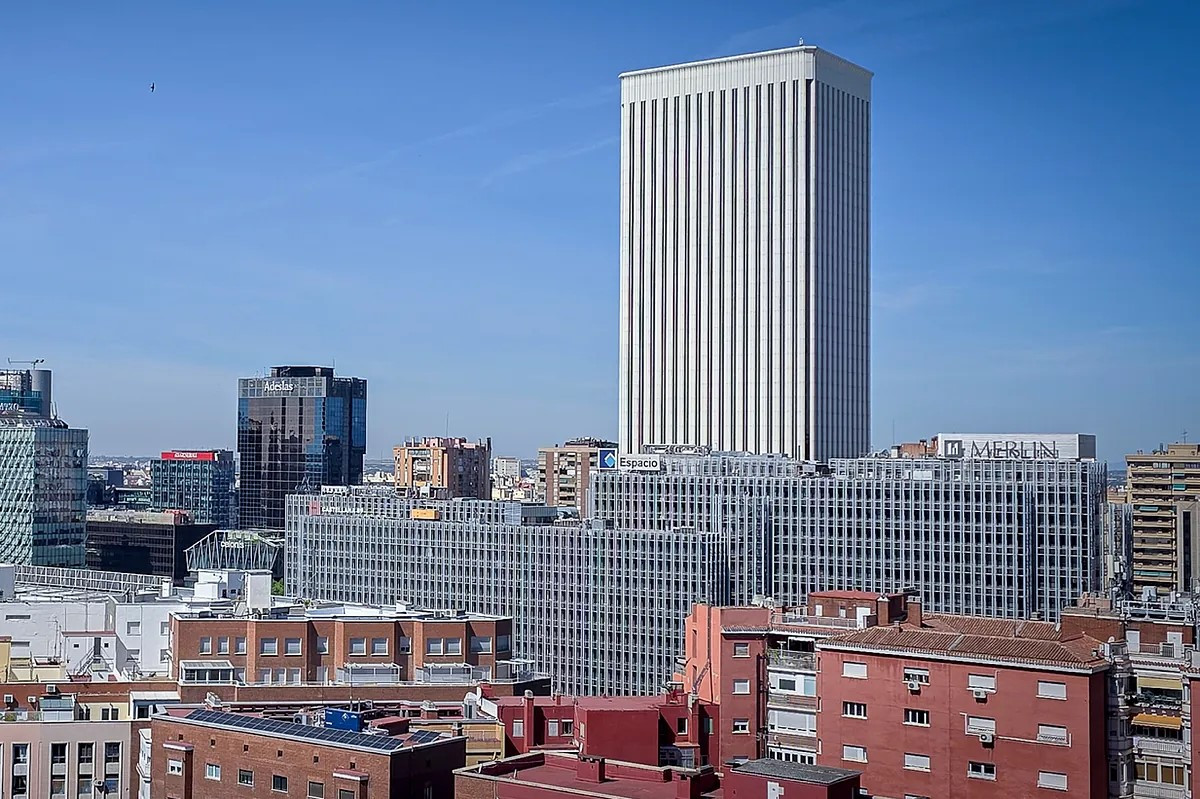
In his home country, Ortega buys real estate less often than in other countries, but it is in Spain that his most recognizable trophies are located. In 2011, his holding company purchased the famous 43-story Madrid skyscraper Picasso, and in 2016 - the Torre Cepsa skyscraper (now Torre Moeve). In total, more than 20 iconic Pontegadea properties are located on the main business and shopping streets of the country's two largest megacities - the capital and Barcelona.
Abroad, Amancio has made even bolder moves.
The main center of his foreign expansion was London. There, under the control of Pontegadea, are about 15 premium properties with a total value of over €4.2 billion. Among them is the prestigious Devonshire House business complex, which rises monumentally on Piccadilly, directly opposite Green Park. Across the ocean, Pontegadea's appetites proved to be no less grandiose. In Toronto, Ortega owns the famous Royal Bank Plaza financial complex, whose windows are adorned with real gold plating. In New York, his portfolio includes the futuristic 19 Dutch residential tower in Manhattan. In the real estate of South Florida alone, the Spaniard has invested over a billion dollars over the decade, collecting an impressive collection of buildings in Miami. And in Seattle, he owns the large-scale Troy Block hub with an area of around 74,000 square meters, fully rented by Amazon.
In Pontegadea, they strive to diversify the nomenclature of investments. Five-star hotels (such as the Parisian Banke, bought for $113 million) in the portfolio of assets coexist with gigantic logistics complexes. The area of just one of them, near Liverpool, reaches 80,000 square meters.
Gradually, Amancio is entering related fields: from multi-level parking lots to shares in seaports.
According to Forbes, in 2025 alone, the Galician entrepreneur made 13 major acquisitions in ten cities in eight countries for a total of over $3 billion. Among them are seven office buildings, two hotels, a pair of industrial facilities, a luxury shopping complex, and a residential skyscraper. In addition, Pontegadea bought 49% of the shares of the British port operator PD Ports. The triumph of the year was the purchase of the Canada Post complex in Vancouver. Ortega paid around $850 million in cash for this IT hub, making the most expensive deal with office real estate in Canadian history.
Only luxury
Brokers have repeatedly told business publications about the "very strict criteria" for selection adopted by Pontegadea. Since 2001, the holding has acquired around 216 properties, but has sold less than a dozen. While classic real estate funds typically hold assets for five to ten years, after which they fix profits and get rid of them, the strategy of the Galician billionaire is based on long-term ownership. PropHero analyst Ricardo Villena describes it with the formula "buying not to sell". Regardless of the state of the market, premium buildings on the main commercial and business arteries of metropolises are almost never empty. This is why Amancio is betting on ultra-conservative locations. After all, he has the money to make such a choice.
In 2026, the list of Amancio Ortega's real estate assets was replenished again. The Parisian Capital 8 for €800 million became the most expensive purchase of Pontegadea in Europe. It was joined by the aforementioned residential complex on London's Baker Street, the luxurious residential tower The Kensington in Boston for €205 million, two Canadian warehouses for Amazon and Lactalis for €215 million, and around 15% of the Australian port and logistics operator Qube. Most of Amancio's assets define the appearance of entire districts. However, the name of their true owner is known only to a narrow circle of market players and means nothing to ordinary passersby. Whether it is good or bad that the best buildings on the planet are quietly concentrating in the hands of one person remains a debatable question.
The future
While debates continue, Pontegadea is expanding its circle of interests. The basis of Ortega's portfolio remains offices, residential skyscrapers, and premium retail, but in recent years, alternative energy has been added to them. Today, the holding controls wind and solar parks with a total capacity of over 1000 MW. The meaning of such diversification is clear. Power plants and distribution networks, like buildings in the center of the world's largest cities, generate stable income under long-term contracts. At the same time, the energy sector lives according to completely different economic cycles, backing up Pontegadea during periods when the global office real estate market is going through difficult times.
Amancio's main heir is currently considered to be his younger daughter Marta, who has been successfully heading Inditex since April 2022.
Judging by the composition of the board of directors of both structures, the giant business empire will remain a strictly family affair in the future. Certainly, when a new generation takes the helm of Pontegadea, the investment strategy may change, and then the unique "collection of masterpieces" risks being gradually sold off. However, there are no prerequisites for this yet. In this case, investing the money earned from clothing in real estate has proven its effectiveness. Brick and concrete have turned out to be the perfect safe for storing family capital and legacy.