Menu
Think it's expensive now? How the electronics market went crazy before
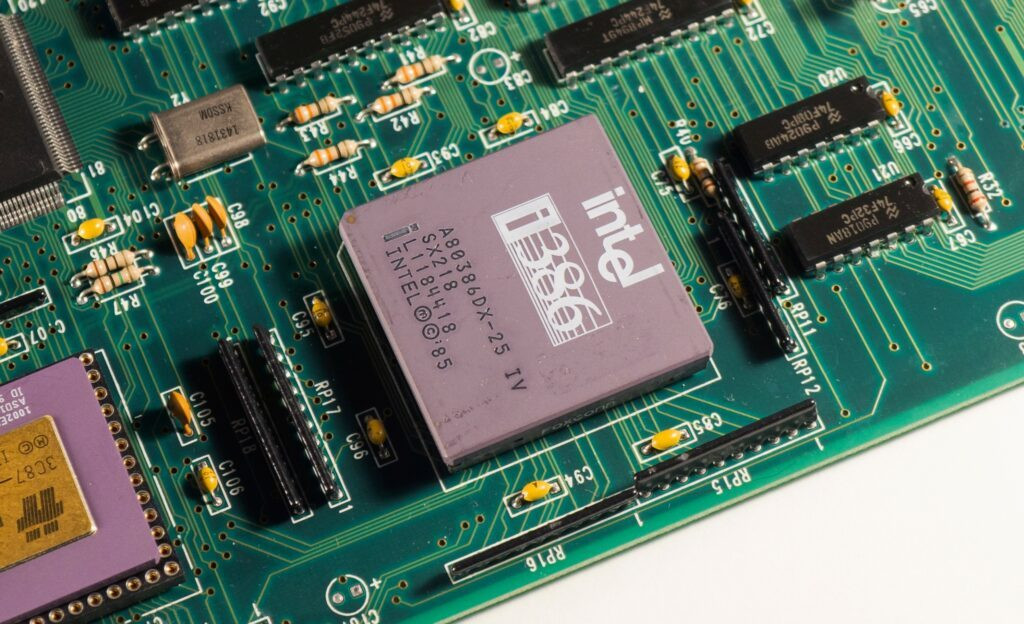
The rise in prices for memory and electronics seems like a new problem of the AI era. However, the market has already experienced similar crises - and sometimes much more severe than the current one. In different years, memory, video cards, and even phones have disappeared from stores, and prices have skyrocketed several times. Let's recall what happened back then and who was blamed each time.
About this article
The 1988 RAM crisis
The 2000s: the boom of phones with color screens
2011: the disappearance of Radeon HD6970
2011: how the flooding in Thailand made PCs more expensive
2016: smartphones drew memory away from PCs
The mining booms of 2017 and 2021
Our time and the memory crisis: when will it end?
The 1988 RAM crisis
In the early 1980s, the semiconductor market was experiencing a real boom. Manufacturers were actively building new factories, expecting further growth in demand. However, the market soon faced overproduction, and the prices of microchips plummeted.
Against this backdrop, Japan was rapidly strengthening its position. Local companies learned to produce memory cheaper than their American competitors, and by the mid-decade, they had taken the leading positions in the DRAM market. The competition was so fierce that in 1985, even Intel, AMD, and Motorola withdrew from the mass production of RAM.
A few years later, the situation turned upside down. In a 1988 article, computer specialist Simson Garfinkel described how expensive RAM had suddenly become:
"I recently learned from personal experience how expensive DRAM - dynamic random-access memory - has become. I'm assembling a personal computer and went to buy a motherboard for it. The motherboard for an XT-class computer cost $119. The memory for it now costs $300. A year ago, it would have cost $50."
The reason was not just one. After several years of producing more RAM chips than the market required, some companies left the RAM market, and the remaining manufacturers simultaneously rebuilt their factories to produce a new generation of memory.
The situation was exacerbated by the trade conflict between the US and Japan. American companies accused Japanese competitors of selling microchips at artificially low prices, and the US authorities introduced trade restrictions. This further complicated the supply situation when demand for memory began to grow again. As a result, there was a physical shortage of components for everyone, and prices skyrocketed.
It got to the point where the large American computer manufacturer DEC raised the cost of memory expansion modules by about 35%, and HP delayed the release of new computers due to a shortage of RAM.
By mid-1989, the situation began to normalize: manufacturers established the production of new chips, supply grew, and prices fell. However, the crisis significantly changed the balance of power in the market: Japanese companies consolidated their position among the leaders in memory production, and American manufacturers began to more actively develop other areas of the semiconductor industry.
2000s. The boom of phones with color screens
In the early 2000s, the shortage came from a different side. It was preceded by a decline in the technology sector after the collapse of the dot-com bubble. Against this backdrop, in 2001, many phone manufacturers were left with excess stocks of devices and components. Having been burned by overestimated forecasts, companies more cautiously assessed future demand.
Meanwhile, mobile phones were rapidly becoming cheaper and simultaneously acquiring color displays and cameras. New features helped to revive sales, but now manufacturers underestimated how quickly buyers would start replacing old devices with new ones.
By the Christmas season of 2003, the situation had reached the point where manufacturers could no longer cope with demand. Siemens was working at full capacity, and Motorola faced a shortage of camera components. As a result, new models V300 and V500 were supplied in smaller quantities than planned.
There was a particularly acute shortage of color displays, camera sensors, and memory chips. According to iSuppli analysts, the forecast for global phone shipments in 2003 had to be increased from 480 to 510 million devices. And by the end of the year, according to Gartner, sales reached 520 million - 20.5% more than in 2002.
As a result, operators did not always receive the required number of phones, and a shortage of individual models arose in stores. However, mass production stops did not occur.
In January 2004, Motorola announced that it had attracted additional suppliers and was ready to increase the production of camera phones. A familiar domino effect ensued: after the decline, manufacturers were cautious, and when demand grew, it was not easy to quickly increase component supplies.
- The disappearance of Radeon HD6970
Even before the big mining boom in 2017, which we will discuss later, video cards began to disappear from stores. In 2011, the American publication PC Perspective investigated why it had become difficult to buy a Radeon HD 6970 video card. The card was of interest not only to gamers: at that time, it was considered one of the fastest consumer solutions for mining bitcoin. In the spring, the model was sold without any problems, but by summer, stocks had significantly decreased.
At the same time, the shortage of HD 6970 was not only due to mining. Video card manufacturers talked about weak chip supplies from AMD, although more affordable Radeons were already clearly in high demand among cryptocurrency miners. Mining at that time was not able to collapse the entire market, but the first alarming signals had already appeared.
- How the flooding in Thailand made PCs more expensive
In the fall of 2011, prices for computer components were raised by natural disasters. The flooding in Thailand flooded hard drive factories and their suppliers. The dependence on this region was high: shortly before the disaster, approximately 60% of Western Digital's supplies were provided by Thai enterprises.
The scale of the failure became clear at the end of the year. For the quarter that ended on December 30, Western Digital shipped 28.5 million hard drives, compared to 52.2 million the previous year — approximately 45% less. Against the backdrop of a shortage, prices quickly rose.
According to an estimate by the analytical company IHS iSuppli, the average selling price of HDDs across the industry rose from $51 in the third quarter to $66 in the fourth quarter — approximately 30%. This figure took into account supplies to equipment manufacturers and other buyers, so the growth in store prices could have been significantly different.
The shortage also affected finished computers. Already in late October, Acer President Jim Wong reported that the company had begun to raise prices for future orders, compensating for the increase in hard drive prices. And in December, Intel felt the consequences: the company lowered its quarterly revenue forecast by $1 billion.
The recovery took months: by the fall of 2012, the industry had restored HDD production. However, the return of supplies did not mean an immediate return to previous prices. During the crisis, PC manufacturers began to conclude long-term contracts for disks. According to IHS iSuppli, in the spring of 2012, such agreements guaranteed supplies but fixed prices at about 20% higher than the pre-flood level.
In 2016, smartphones drew memory away from PCs. In 2016-2017, the story with memory repeated itself, but now the main competitor to computers in the fight for production capacity of factories were smartphones and servers. According to DRAMeXchange analysts, high demand forced the three largest manufacturers of operating memory to transfer production capacity from computer memory to mobile and server memory. If in the first half of 2016, computer memory prices were decreasing, then in the second half, they sharply rose.
In essence, the mobile market began to compete with PCs for the same factories. If more smartphones were needed and the margin of mobile memory looked more interesting, it was more profitable for manufacturers to direct their capacities there. And computer buyers, in turn, received more expensive RAM and SSD modules.
The mining booms of 2017 and 2021. The market for video cards was truly affected in 2017, when interest in the Ethereum cryptocurrency, which could then be mined on video cards, sharply increased. Miners began to massively buy up graphics processors, and prices rose along with demand. In early 2018, the GeForce GTX 1060 6 GB, recommended at $250, was selling for approximately $530, and the GTX 1070 was selling for almost $900. The situation was even worse for AMD: the price of the Radeon RX 580 instead of $230 reached approximately $660.
Already in 2021, a second, much more painful round occurred: the global chip shortage coincided with a new rise in cryptocurrency rates and mining profitability. In May 2021, the RTX 3080, with a recommended price of $700, was selling on eBay for an average of approximately $2600, the RTX 3070 instead of $500 was selling for $1660, and the RTX 3060 Ti instead of $400 was selling for more than $1600. For some models, the price increased more than fourfold.
The situation finally began to normalize only in 2022, when the rate of major cryptocurrencies fell, the profitability of mining collapsed, and Ethereum switched to Proof of Stake — a mechanism in which calculations on video cards were no longer required to confirm transactions. After this, video cards quickly began to return to stores, and prices began to drop to recommended levels.
Our time and the memory crisis. When will it end?
Representatives of major manufacturers differ in their assessments of when the current crisis will end.
At the September conference on the results of the 2026 financial year, Micron CEO Sanjay Mehrotra stated that most of the company's supplies for 2027 have already been contracted, and at prices significantly higher than those of 2026. The management of Samsung's memory business describes a similar picture.
SK Group looks even further ahead and admits that the tense situation in the market may persist until 2030. At the same time, the company plans to roughly double its memory plate production capacity.
However, Acer CEO Jason Chen disagrees with such forecasts. In his opinion, which he shared in an interview with the Taiwanese publication DigiTimes in September, additional production capacities in China are capable of changing the balance of supply and demand, and prices may start to decrease as early as after the middle of 2027.
The stories told in the article have different scales and reasons, but the scenario is similar each time: demand grows sharply, production cannot keep up, prices soar, and after some time, the market adapts.
Therefore, if you are now mourning the fact that you did not assemble your PC on time, history is more likely on your side. Each such crisis ends sooner or later: factories increase their capacity, the hype subsides, and prices stabilize, even if they do not return to what they were before. We have already experienced electronics shortages. We will survive this one too.