Menu
They cut with water and freeze at minus 40. How they make village-style potatoes in Belarus
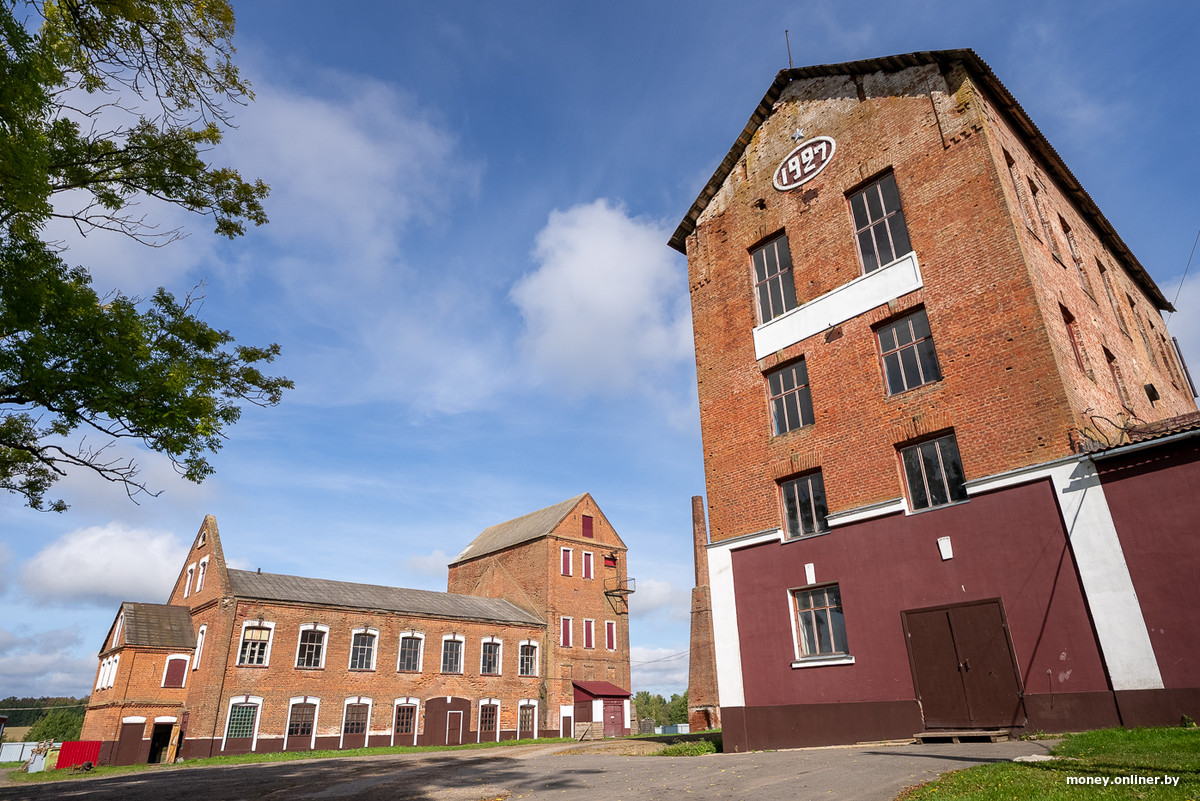
Potato “by the village” and French fries are perhaps the most straightforward food in any fast‑food chain, but before it ends up in a cardboard box it goes through a fairly complex route: the field, sorting, knives, deep‑frying, and a freeze at minus 40. To see the entire journey of the potato—from the earth to a bag of frozen sticks—we went to Tolochin to a starch plant.
The local plant turns 120 this year: its history dates back to 1906, although at that time it was only a winery. The plant survived the war and the anti‑alcohol campaign, and in 2002 a starch factory was added to it—then they began to grow potato more intensively for starch and for sale.
The area has gradually grown—from 100–200 hectares of potato to 1,000. There were times when up to 95% of the food potato was shipped to Russia, but since exporting became more difficult they decided not to limit themselves to selling raw tubers and to start processing. The new plant project began in 2018, production
After sorting, the potatoes begin flowing in various directions. Sorting proceeds by caliber: potatoes pass through holes of specific sizes.
— One must understand that potatoes are not bearings; they never become perfectly round. They can be sorted by diameter, but the machine cannot handle length properly. Sometimes a tuber is narrow, passes through the hole, yet remains long itself. So manual sorting still remains necessary, and replacing humans completely here is not possible yet.
If we speak specifically about further use, several directions emerge. The smallest potatoes go toward starch, caliber approximately 35–40 millimeters may go toward seeds, while potatoes around 40–45 millimeters we can already direct toward slices, i.e., "potato the peasant way."
During harvest, we can even select parts of the potatoes for production immediately, while the main mass is placed for winter storage. There are large chambers for this purpose. The potatoes are piled there in layers of approximately 4.5 meters. In storage, they may remain together — both small and large. Already during winter they are extracted using special technology from the chamber and sent back for sorting. There they are again divided by caliber: some go for sale, some for seeds, some for french fry or slice production.
The most difficult thing is not even collecting the potatoes, but preserving them in the desired state. For potatoes destined for frying, for example, a temperature of approximately 7–8 degrees Celsius is required. Sensors are installed in the chambers, which continuously monitor them.
After sorting, the potatoes begin flowing in various directions. Sorting proceeds by caliber: potatoes pass through holes of certain sizes.
— One must understand that potatoes are not bearings; they never become perfectly round. They can be sorted by diameter, but the machine cannot handle length properly. Sometimes a tuber is narrow, passes through the hole, yet remains long itself. So manual sorting still remains necessary, and replacing humans completely here is not possible yet.
If we speak specifically about further use, several directions emerge. The smallest potatoes go toward starch, caliber approximately 35–40 millimeters may go toward seeds, while potatoes around 40–45 millimeters we can already direct toward slices, i.e., "potato the peasant way."
During harvest, we can even select parts of the potatoes for production immediately, while the main mass is placed for winter storage. There are large chambers for this purpose. The potatoes are piled there in layers of approximately 4.5 meters. In storage, they may remain together — both small and large. Already during winter they are extracted using special technology from the chamber and sent back for sorting. There they are again divided by caliber: some go for sale, some for seeds, some for french fry or slice production.
The most difficult thing is not even collecting the potatoes, but preserving them in the desired state. For potatoes destined for frying, for example, a temperature of approximately 7–8 degrees Celsius is required. Sensors are installed in the chambers, which continuously monitor them.
In addition to temperature, it is necessary to ensure that the potatoes do not begin to sprout during long-term storage. For this purpose, a special treatment is applied: a substance that suppresses the formation of sprouts is introduced into the air inside the storage facility. It spreads throughout the chamber along with the air and allows the potatoes to be preserved for a longer period in the state required for further processing.
Up to 25 tons of potatoes are processed here per day. Production
From the storage facility, we move to the production workshop. Here, the tubers are washed, manually sorted several times, cut with a powerful stream of water, slightly boiled, coated with spices, fried, and then sent to a shock freezing chamber with a temperature of minus 40 degrees Celsius.
We ask the chief technologist, Marina Anatolyevna, to show us in detail how the entire chain is organized. We start with the very first stage and then simply follow the potatoes along the line.
Marina Anatolyevna explains that for the "country-style" potatoes, they use the "Yulia" variety, which has a size of approximately 40-45 millimeters. If they take too large potatoes, the wedges will be too big and, roughly speaking, will not fit in the mouth.
First, the potatoes are fed into a rotating drum where they are thoroughly washed. Then they are moved to a stone removal unit to remove any debris that may have come with the potatoes, and after that, they are sent for manual sorting. Here, the employees inspect the potatoes manually and have knives to cut out any dark spots, dents, or damage that the tubers may have received during harvesting.
The potatoes are then processed further, with the employees carefully checking each one to ensure they meet the required standards.
Everything that is trimmed goes on a separate conveyor into a waste container. There a crusher is installed that grinds all of it. Water with starch, which is produced during potato cutting, is added there as well. Solid pieces cannot pass through the pipeline, so they must be ground and mixed with water. Then all these wastes are sent to the starch plant.
After manual sorting, the potatoes go back into the drum washer. Next on the line is a steam cleaning station, but when we produce potatoes in the village style, it is not turned on, because we need a slice with the skin on. Then comes a brush machine, another drum washer, and after that a hydro‑cutting.
Whole, washed and inspected potatoes are fed into the hydro‑cutting. A large flow of water accelerates the tuber and sends it straight to the knife block. When we produce potatoes in the village style, we install the corresponding knife block that cuts one tuber into eight pieces. If we were making fries, we would use different knives and get sticks.
For slices
After hydro‑cutting, the slices go to the inspection table, where we look not at a whole tuber but at the sliced potato. If there is an uneven edge, a damage or defect that was not seen before, it is removed. Everything that is rejected here also goes into the waste container and is sent for processing.
Then the potatoes go to blanching. In the first stage starches and sugars are broken down, in the second they are washed away. In very simple terms, the potato is slightly boiled here. We need it to become sufficiently elastic, but not overcooked. If the potato is left too long, it will start to crumble and will no longer move properly along the line.
After blanching, the village‑style potatoes are dipped into a tray with a breading mixture. The mixture itself is obtained in dry form; it contains paprika, garlic, onion, herbs, ground pepper, salt, and modified starch.
We mix this dry mixture with water to a certain density so that it lies well on the potato and holds on to it. The wedge passes through a bath and is completely covered with this mixture.
Next, the potato goes to a drying cabinet, where it is slightly dried, and then dipped in spices again on a cascade pour. We made it additionally because when passing through the bath, the mixture may lie unevenly somewhere or part of it may be lost, and here the potato is poured over again from above so that the mixture gets on all sides and the whole wedge is tasty.
After this, manual inspection is again necessary. If something was missed at the previous stages, for example, a bad spot or some defect remained, it can be removed here. As you understood, such control is carried out throughout our entire line.
Then the wedge enters the fryer. Here it is located for several minutes at a set temperature and fried until half-cooked. We use sunflower oil, the full volume of our fryer is 750 liters. At the same time, the oil constantly circulates and is cleaned. Approximately every 45 seconds, it passes through a drum filter with a mesh size of 1000 microns. All small particles that appear during frying remain on the filter.
The potato constantly absorbs a part of the oil into itself, so the system automatically adds fresh oil: the potato absorbed a certain amount of oil - the same amount is added. The oil constantly circulates, is filtered, and replenished. It turns out that approximately every eight hours, the entire volume of oil in the fryer is completely updated.
The same story is with the breading mixture: it circulates through the system, there is a container where the necessary level is constantly maintained. As the mixture is used up along with the potato, the system adds new mixture.
After the fryer, the potatoes are already fried to a semi‑finished state, but they cannot be sent straight to flash freezing because they are too hot. First we cool the product to about +30 °C and only then do we send it on.
Meanwhile, defective potatoes that have already spent time in the fryer and absorbed oil are not sent to the starch plant—in contrast to fresh trimmings, they are sent as livestock feed.
— The next stage is the fluidization tunnel, where flash freezing takes place. Inside the air temperature is about minus 40 °C. Due to the airflow, the pieces bounce and freeze in midair, preventing them from sticking together.
The temperature in this part of the shop is kept at about +6 °C, so all employees work in warm jackets and hats. At the tunnel exit, the product temperature must not exceed minus 18 °C.
After the tunnel, the fully frozen potatoes are lifted by a vertical conveyor to a 14‑head multi‑dose unit. Automation selects various combinations and assembles the weight we need at the moment. For example, this could be a 750‑gram or a 2.5‑kilogram package.
When the required weight is assembled, the potatoes are placed into a bag, the bag is sealed, and it moves on. The finished pack passes through weigh‑bridge scales to verify its mass, then through a metal detector.
The line is designed to produce up to 2 tons of finished product per hour, and over a day it produces roughly 20–25 tons of potato chips or fries.
Work is carried out in two 12‑hour shifts, although the equipment does not run continuously for all 24 hours. About three hours before dawn are allocated for sanitation: the line is washed, the blanchers' water is changed, the hydro‑cutting equipment is cleaned, and the freezing tunnel is thawed.
French fries are made according to roughly the same principle, but with some minor differences. A larger and more elongated variety of potato, "Innovator", is used for them, and before cutting, the tubers are peeled of their skin using steam under a pressure of 22 atmospheres. On the hydro cutter, a different block of knives is installed, which cuts the potatoes not into eight wedges, but into the familiar strips. After blanching, the fries are not dipped in a mixture of spices and breading - this stage is simply skipped. The rest of the process is the same: the fryer, cooling, shock freezing, and packaging.
What happens to the wedges after the factory
Further on, the frozen potatoes can be sent to an air fryer or oven, waited for a few minutes, and eaten. In fast food restaurants, the process is slightly different. We went to Mak.by to see what happens to the same wedges already