Menu
“There are no ‘Doshik’ and ‘Rollton’”. How a Minsk cafe works where you have to cook your own noodles.
Translation
Title: "No 'Dosik' or 'Rolltonchiki'. How a Belarusian cafe works where you have to cook your own noodles"
What keeps opening around the Mikhailovsky Park house, but there was certainly no Korean instant noodle self-service yet. The format that involves independently cooking in boiling water with familiar instant noodles is essentially new for Minsk. In Southeast Asia such a concept has long been practiced successfully in tiny "night owls" – combis, and our Nodl positions itself as a fully-fledged establishment. We took a look inside the place that had already begun to buzz on social media, examined how everything is arranged there, and spoke with its creator about stereotypes surrounding "dosik", teenage subcultures and sharp sensations.
How did the Korean noodle appear in a former Soviet apartment?
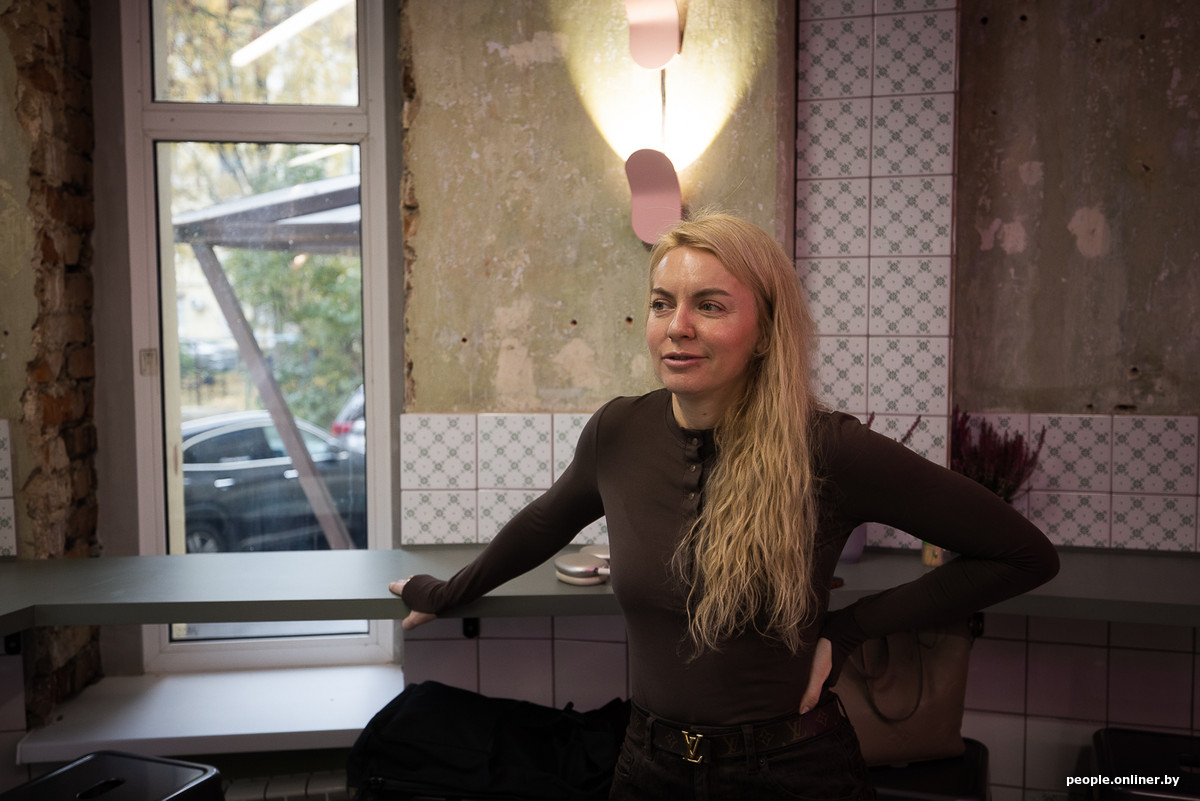
Amidst shelves stocked with dozens of varieties of instant noodle packages, displays of Asian snacks and refrigerators filled with drinks in bright jars, we encounter Inna – the founder of Nodl.
For her 44 years as a Belarusian she managed to develop three other businesses, serve as CEO of a foreign company, summit Mount Elbrus and become a successful personal development trainer. Food service, even in an unconventional format for Belarus – a new venture she was drawn to by her project partner, inspired by frequent trips to Seoul.
"I've always wanted to bring something to Belarus that would help people broaden their horizons. I had turned down the food industry field for a long time, knowing all the difficulties from experienced friends who constantly advised: don't do it. But when my business partner proposed this idea, I decided to try anyway. Also my daughter is a K-pop fan. I myself also recognize that Korean culture is now mainstream. Not deeply immersed in it..."
Innocently I only learned from my daughter that people with Asian features are the most beautiful ones – she wants to get married to a Korean (laughs. — Pr. Onlíner). I say I'm not opposed to it.
Another important motivation for Inna was her concern that her daughter's peers, and indeed the whole modern generation, roughly aged 14 to 20, really have nowhere to hang out in groups in the city center except for food courts in shopping malls. In fact, this phenomenon has already reached such serious proportions that it has turned into a separate teenage subculture — 'food court girls,' or 'nastiks' (we won't delve into the etymology, that's a long story). Basically, they refer to all these girls in baggy jeans who spend three hours eating a single order of fries among seven people at a big table, which greatly annoys tired adults after shopping.
— Of course, we used to hang out on rooftops and in building entrances, but now, when there's so much going on in the world, just sitting at a food court… Anyway, I decided it was worth taking a risk to create, among other things, a community, a place for teenagers and students. In fact, all our activities started with a meeting of a drama-watching club: the guys wrote to us themselves, asking if we could organize something. I personally find that exciting. Even though I may not fully understand this culture myself, I get immense pleasure when I see people who are genuinely passionate about something.
Inna, however, emphasizes that Nodl is primarily a business project, and it was launched not on a romantic impulse. From idea to implementation took about a year — during that time the team studied the direction, conducted market research. They went
The owner draws our attention to the premises: it turns out the noodle shop appeared in the place of a 1950s apartment, remnants of which were found under several layers of drywall. They decided to keep the vibe, and what couldn't be preserved — to recreate. Vintage tiles were gathered from all over Belarus, old wallpaper was glued on, then deliberately peeled off. Inna smiles: nowadays youth surprisingly knows about the past, and the mix of Soviet renovation with Asian neon raises no questions. They didn't try to do everything "Korean-style" so as not to look cringe.
"Listen, well, if you imagine that this noodle shop was run by four generations of a Korean family and the heirs decided to slightly modernize it, then it would look exactly like this."
"All that's left is to give it a little touch‑up (she laughs — note from Onlíner): it's still too clean for us. Although a couple of Koreans came in once, walked around, looked, and then asked: 'Is this also opened by Koreans?' I said no, it's me. They replied: 'Wow, well, you pulled it off.' It was very pleasant to hear."