Menu
The smell of veneer, or From Socialka to Lуковая. Svetlana Tarakhovich, the master of the furniture workshop, on a family labor dynasty and 46 years at Fandok
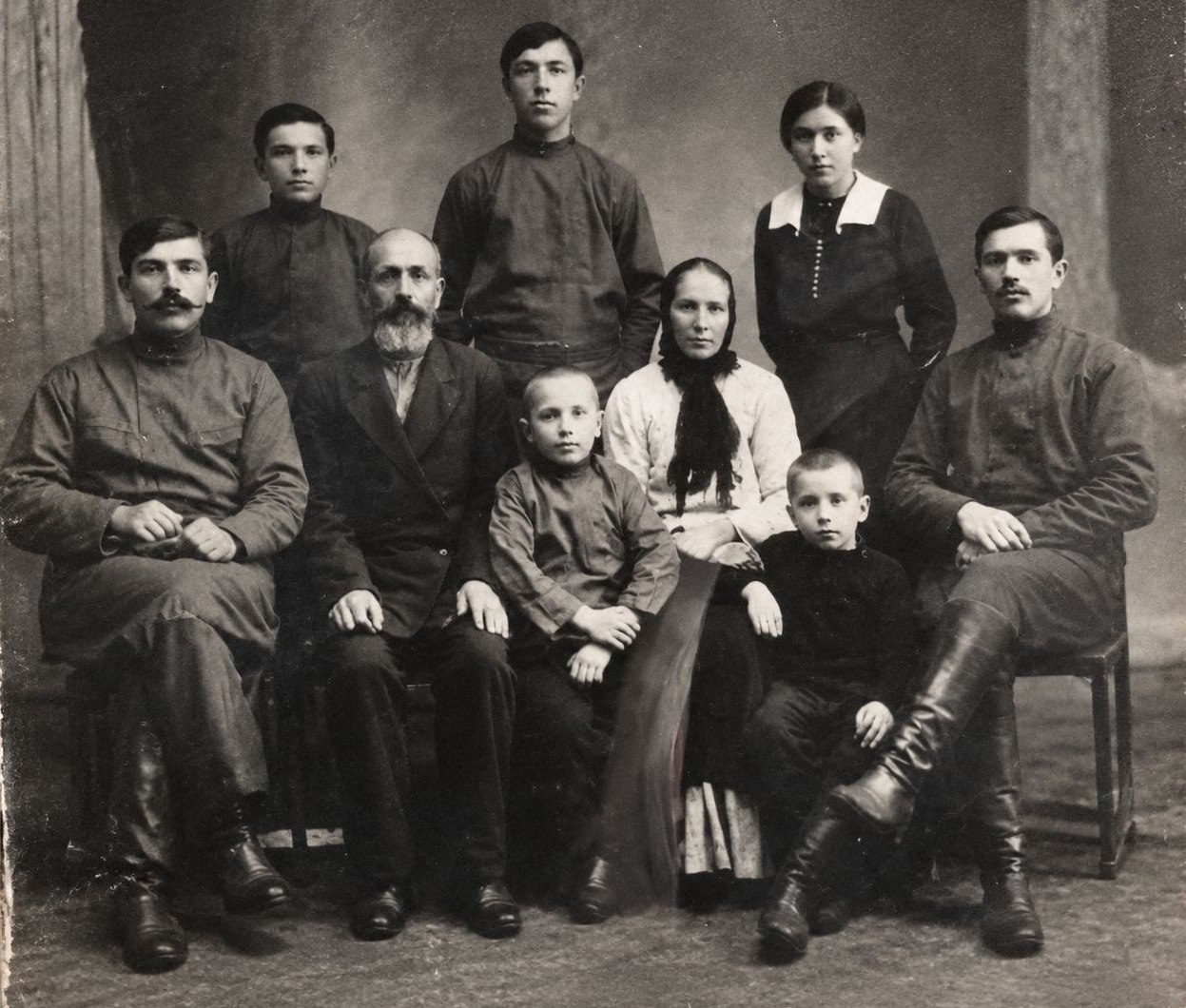
The continuity of generations and loyalty to their profession are the main economic and spiritual foundation of any successful enterprise. OAO "FanDOK" is an integral part of the history of Bobruisk, one of the flagships of the woodworking industry, and a company whose products are known far beyond our country. Today's guest in the "Labor Dynasties" section is Svetlana Vladimirovna Tarakhovich, a master of the furniture workshop, a mentor to young people, and the chairperson of the company's veterans' organization.
"Zhukovskaya Myza": from Social Street to Lukovaya
As is well known, labor dynasties are an essential component of any production. They maintain an unbroken connection between times, preserve the best traditions of craftsmanship, and have a positive impact on the internal climate within the team.
Over the nearly century-long history of the company, dozens of labor dynasties have grown. However, the family tree of the Tarakhoviches-Zhukovs is truly impressive.
The history of woodworking in our city dates back to distant times. Long before the creation of the timber processing plant, now known as "FanDOK", smaller sawmills and woodworking productions existed in its place. According to some accounts, the first sawmills and woodworking cooperatives in the city appeared as early as the late 19th and early 20th centuries. During World War I and the Polish occupation, many of them were damaged or destroyed.
In May 1926, construction of a new large woodworking enterprise began on the banks of the Berezina River.
The history of the dynasty began long before the foundation of the plant itself was laid. Svetlana Vladimirovna's great-great-grandfather, Anton Zhuk, was connected to woodworking from the very first cooperatives. Like his son, Pyotr Antonovich, they were engaged in carpentry: preparing materials, building houses.
"Zhukovskaya Myza" (or Zhukova Myza) - this is what the area on Sadovaya Street, from "Social Street" (Socialisticheskaya Street - author's note), stretching along the Berezina River to Lukovaya Gora, was later called. The Zhuk family had lived there for centuries, and it was there that they built their homes.
Ilya Petrovich Zhuk, the great-grandfather of our heroine, came to work at the Bobruisk Timber Processing Plant literally from the day of its founding.
Ilya Petrovich and Nadezhda Pavlovna Zhuk (center)
The founder of the dynasty had six children, and each of them, in turn, had six more. If we count all the close and distant relatives of Svetlana Tarakhovich who have worked and continue to work at "FanDOK" over the years, the number is quite impressive - almost 400 people!
The smell of veneer and plywood
Svetlana Vladimirovna herself spent almost her entire childhood at the enterprise. She often visited her mother there, and sometimes her whole school (she studied at school No. 14, which was nearby) would go on excursions. Her relative, Uncle Ivan, worked as a groom, and the children would often ask him to take them for a ride on a cart around the factory territory.
– I will never forget the smell of veneer, – Svetlana Vladimirovna recalls. – Sometimes, when I was walking to school, the wind from the factory would carry the aroma of plywood raw materials. The smell of fresh wood is incomparable to anything!
At school, young Svetlana loved geography and history. Her grandmother taught her how to sew and bake pies. In other words, the girl did not think about working at the combine at all. But imperceptibly, graduation was approaching. Svetlana decided to become... a fashion designer.
However, a person rarely can appreciate the true significance of the events that have happened to them. Only later, with the wisdom gained from the years lived, does the understanding of the value of what happened come.
Not having been accepted as a fashion designer, Svetlana was faced with the question of where to go to work. And her feet seemed to take her to her native wood processing plant of their own accord.
By the way, at that time it was almost impossible to get a job at such enterprises as Fandok. It was only thanks to the merits of her "dynasty" that Svetlana was able to get a job at the factory.
This was in the distant year of 1980. Her first workplace was the parquet flooring shop. According to Svetlana Vladimirovna, the work was very interesting. The young people, just like now, were treated very well. They tried to support and teach them. And the salary for a young girl at that time was quite decent.
– The first 40 rubles of advance payment, – Svetlana Vladimirovna recalls, – I immediately gave to my mother. We lived together, and it was shameful to sit on our parents' necks. The remaining 100 rubles – we distributed fairly. And that was enough for me.
I got into a good team. My first team leader and mentor – Tatyana Vladimirovna Dryk – was able to captivate and interest me from the very first minutes. Having stepped foot on the territory of the combine as its worker, I never thought of changing my profession in my life!
At that time, the Komsomol movement was actively functioning. The Bobruichanka received her first voucher, to Kislovodsk, precisely from the youth organization.
In the Soviet Union, all-Union youth meetings and rallies were actively practiced. It was there, at the base of the youth center "Sputnik", that young people from different parts of the USSR could get acquainted, actively communicate, and establish friendly ties.
Incidentally, only two vouchers were allocated to the Mogilev region, and Svetlana, as the most active Komsomol member, was awarded one of them.
I am proud of my dynasty!
Over more than 46 years of continuous service, she has thoroughly studied the production process and gone through all its stages. She was a worker, a machine operator, a lumber receiver. In the SMP workshop, she became a master for the first time. Then she became the master of the furniture workshop, retired, but continues to work to this day.
Today, manual heavy labor is becoming a thing of the past. High-tech equipment, computer systems, and modern machines are replacing it. It can be said with confidence that in our time, everything has been done at the enterprise to make the work of furniture makers as comfortable and safe as possible.
Despite the fact that Svetlana Vladimirovna is already on well-deserved rest, she does not plan to leave her native furniture workshop - she cannot imagine her life without the factory gates. In addition to production tasks, she heads the veterans' organization of the enterprise. Under her leadership, the factory workers take care of preserving memory: they take care of the burials of veterans of the Great Patriotic War and internationalist soldiers, involving the factory's young people in this important mission.
– I am very proud, – Svetlana Vladimirovna says emotionally, – that I am a continuation of the work of many generations of my ancestors! And I am grateful to fate that the family history was, is, and continues! The main thing is not to lose this. And be a worthy example for young people. After all, they are our future!
Pavel Podzorov Photos from S. Tarakhovich's personal archive