Menu
The First BELAZ: What It Was Like and How It Became a Symbol of the Era
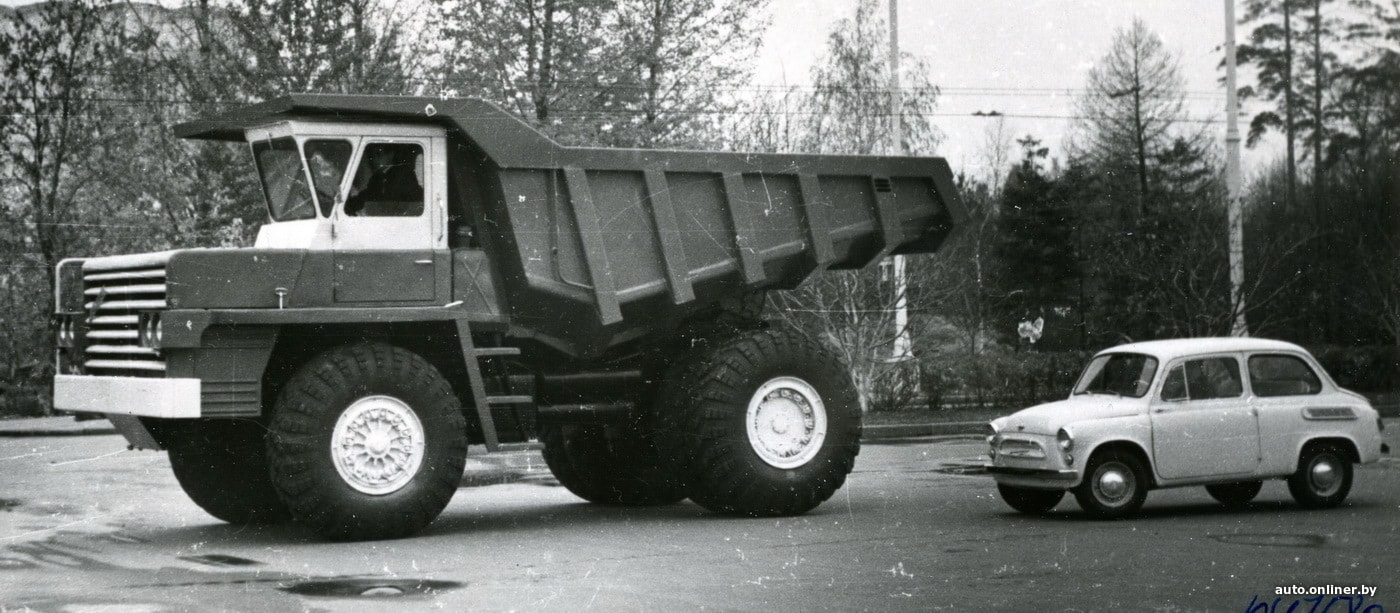
BELAZ-540 is one of the most iconic Soviet dump trucks. It was assembled in less than a year at a young plant in Zhodino, and quickly became a symbol of the 1960s: powerful, brutal, recognizable. Over time, this model became firmly embedded in the visual code of the USSR — as a symbol of a country confidently developing its mineral resources and building an industrial future. Today we recall how this machine was created.
What this article is about
What was the BELAZ-540 like — the first Soviet mining truck
BELAZ on screen: how the dump truck became a movie star
Serial production of the BELAZ-540: how the era of mining giants began
How BELAZ became more powerful and economical
BELAZ for export: sales geography
Unusual machines based on BELAZ: from a canteen to a blower
The legacy of the BELAZ-540: what replaced it
This article was already published on Onlíner, and we decided to share it with you again — because the stories and events it reveals continue to remain important and interesting.
What was the BELAZ-540 like — the first Soviet mining truck
In September 1961, assembly of the first prototype of the BelAZ-540 was completed at the automobile plant in Zhodino. The MAZ-525 dump trucks produced at that time in Zhodino, although they had an embossed stamping on the sides of their hoods reading “Belarusian Automobile Plant,” were still called MAZs. And the completely new machine was the first to officially receive the BELAZ brand.

The BELAZ-540 mining dump truck was a technically advanced truck for its time. It was the first Soviet truck with hydropneumatic suspension, as well as a combined hydraulic system for the power steering and the body lifting mechanism.
It was also a truly designer car. The exterior, created by the talented industrial artist Valentin Kobylinsky, was not only functional but also beautiful. Both in appearance and in terms of technical solutions, the BELAZ-540 matched the world level of its time.
The BELAZ-540 layout followed the “cab next to engine” scheme. This configuration made the machine shorter and more maneuverable. Weight was distributed rationally across the axles, and the body occupied most of the chassis. It’s simple: smaller dimensions — more utility. These principles remain relevant today, especially for compact mining equipment.
And the BELAZ-540 was also impressively large. For its time, naturally. Bear in mind that it was the highest-capacity Soviet dump truck at the time. That's why people loved photographing it next to passenger cars to emphasize its scale.
Here and below, scanned historical photographs from the author's collection are used as illustrations.
BELAZ on Screen: How a Dump Truck Became a Movie Star
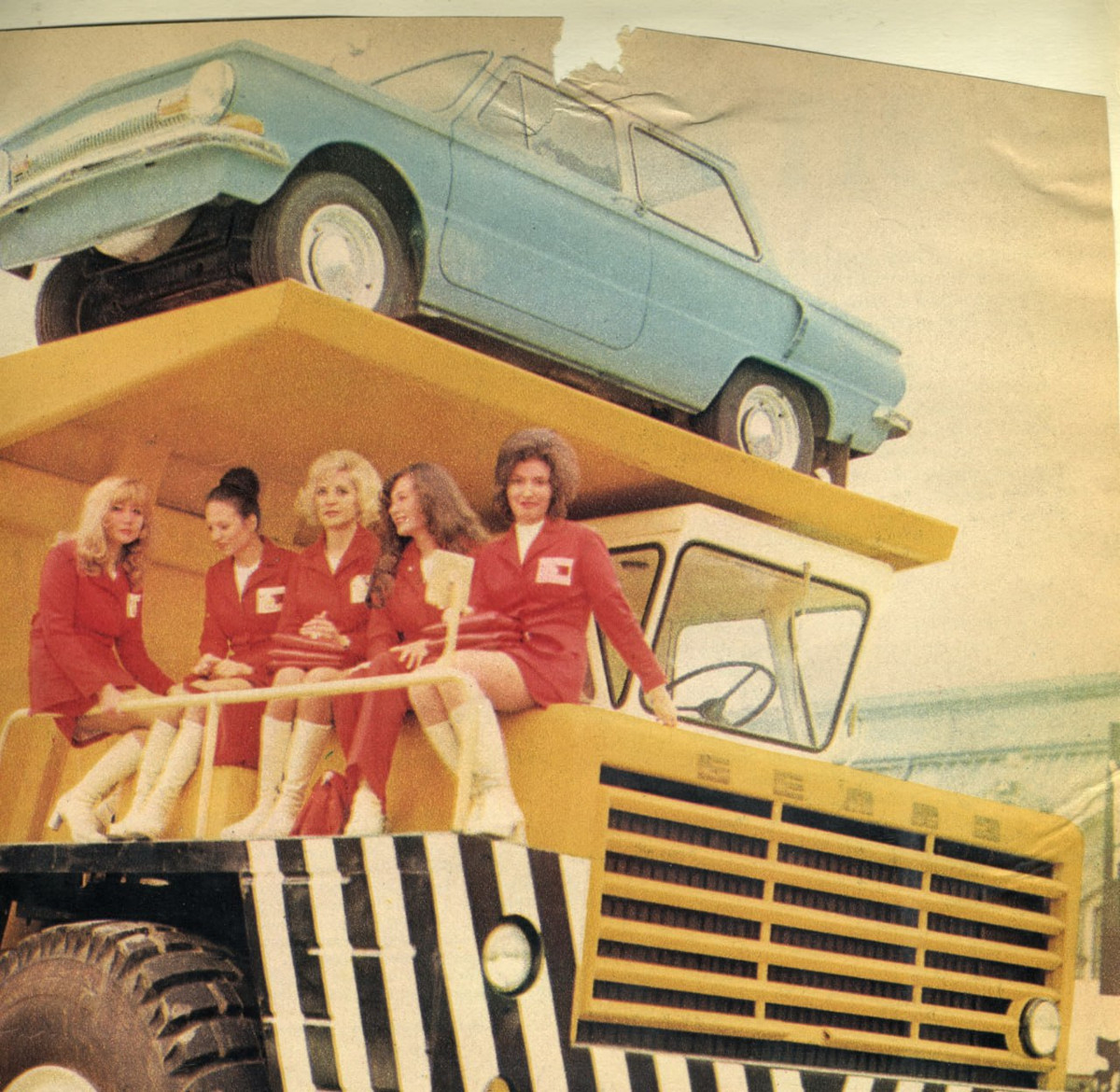
The BELAZ-540 quickly became a star of the Soviet public. It was photographed for newspapers, magazines, and postcards — it showed up everywhere. And soon the dump truck also appeared in movies: one of the prototypes played a notable role in the comedy "Queen of the Gas Station". The vehicle was still being tested while it was already being filmed — the movie and the tests ran in parallel, in 1962.
- Attendant! Attendant! Damn! Sleeping on the job! Girl! Fill it up!
- Don't shout. If you're rude, you'll get nothing at all.
- Shush!
- No, it's you who should say "shush," please!
- They've put a bunch of little trinkets here. What are you looking at? What are you looking at? First the militia plays on your nerves, and then... You'd be better off spraying from a spray bottle in a barbershop. Hey you, little trinket!
- Mister! Mister! Mister, what about the money? Mister! You have to pay...
- Lyudmila, come here!
- What?
- How many liters did it take away?
-
- I warned you. Well then, my little fish, we'll deduct it from your salary now. According to instructions. And tears won't cover the shortage.
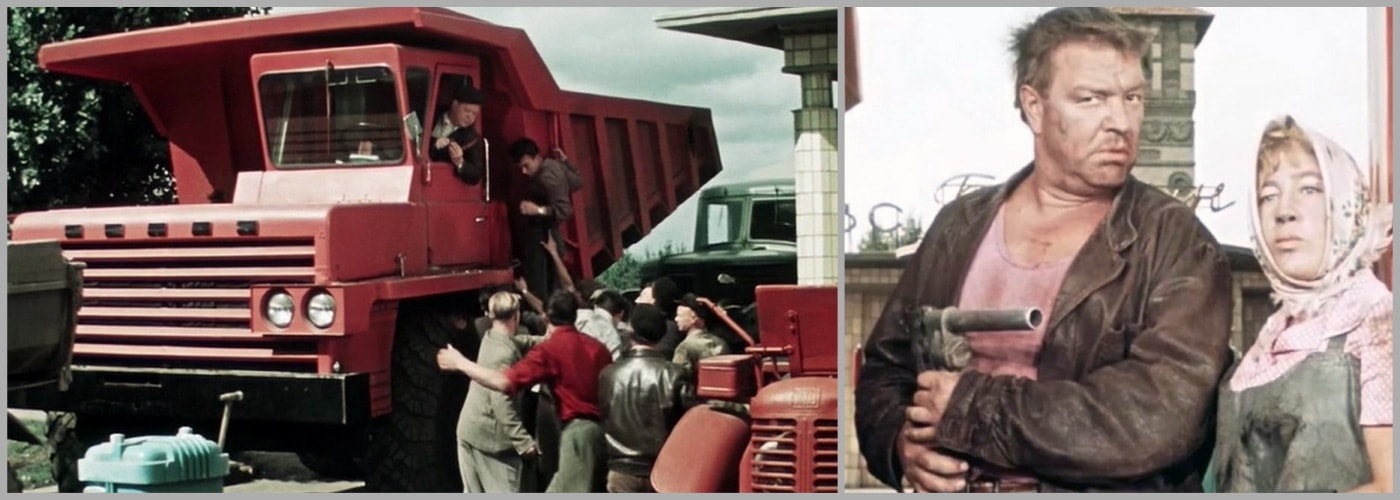
Obviously, the BELAZ-540 was added to the film for effect. Of course, such vehicles were not supposed to drive on public roads and fill up with diesel at ordinary gas stations. As for the fuel capacity, on the one hand, the filmmakers didn't get anything wrong: the BELAZ-540's fuel reserve was 400 liters, so it could well have carried away 370.
However, there was still a technical blunder: the 400-liter reserve was the volume of two fuel tanks, and Lyudmila poured diesel into only one of them. Yet that doesn't make "Queen of the Gas Station" any less of a masterpiece.
And here is a scene from the lesser-known film "Sasha-Sashenka", shot in 1966 at Belarusfilm. The head of a construction office, Ptakhin, with his family, moves things to a new apartment — right in the bed of a BELAZ (interesting how they loaded it). In real life and on the road, that was, of course, impossible, but cinema is cinema.
Serial Production of the BELAZ-540: How the Era of Quarry Giants Began
After a series of tests, serial production of the BELAZ-540 began in September 1965.
For the first four years, the truck was produced in parallel with the MAZ-525. For example, in 1962 the Belarusian Automobile Plant assembled five pre-production BELAZ-540s and 1,005 MAZ-525s. The following year, production of the BELAZ-540 model doubled — 10 pre-production trucks against 1,090 MAZ-525s. In 1964, two dozen pre-production trucks were already built, and in 1965 full-scale series production began, with 300 BELAZ-540s assembled. True, more MAZ-525 dump trucks were still assembled in their final year of production — 820. From 1966, the Belarusian Automobile Plant switched entirely to producing the BELAZ-540.
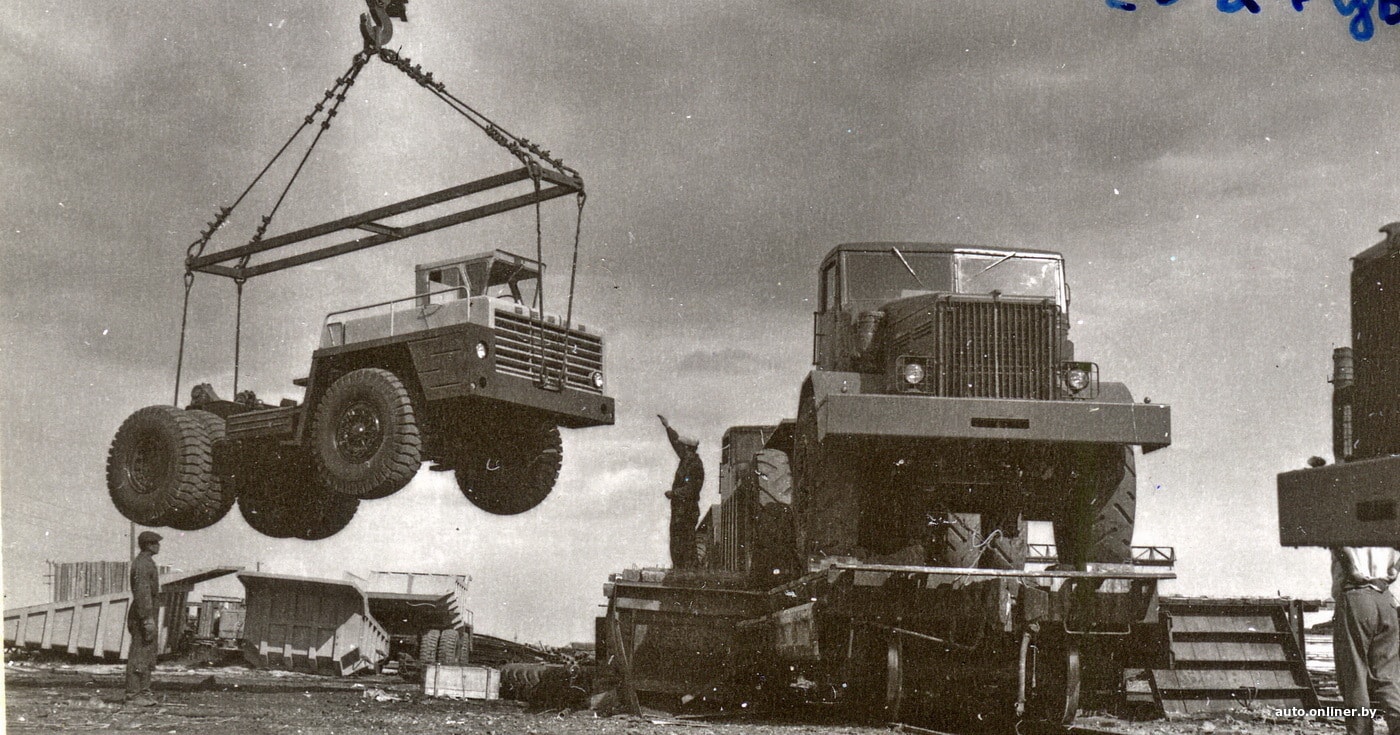
They immediately began thinking about increasing the payload capacity. The production of 45-ton road trains with BELAZ-540V-5271 semi-trailers was planned. The vehicles passed tests, but in the end they did not go into series production. Preference was given to the "standalone" BELAZ-548 model with a 40-ton payload capacity. But that is a separate story.
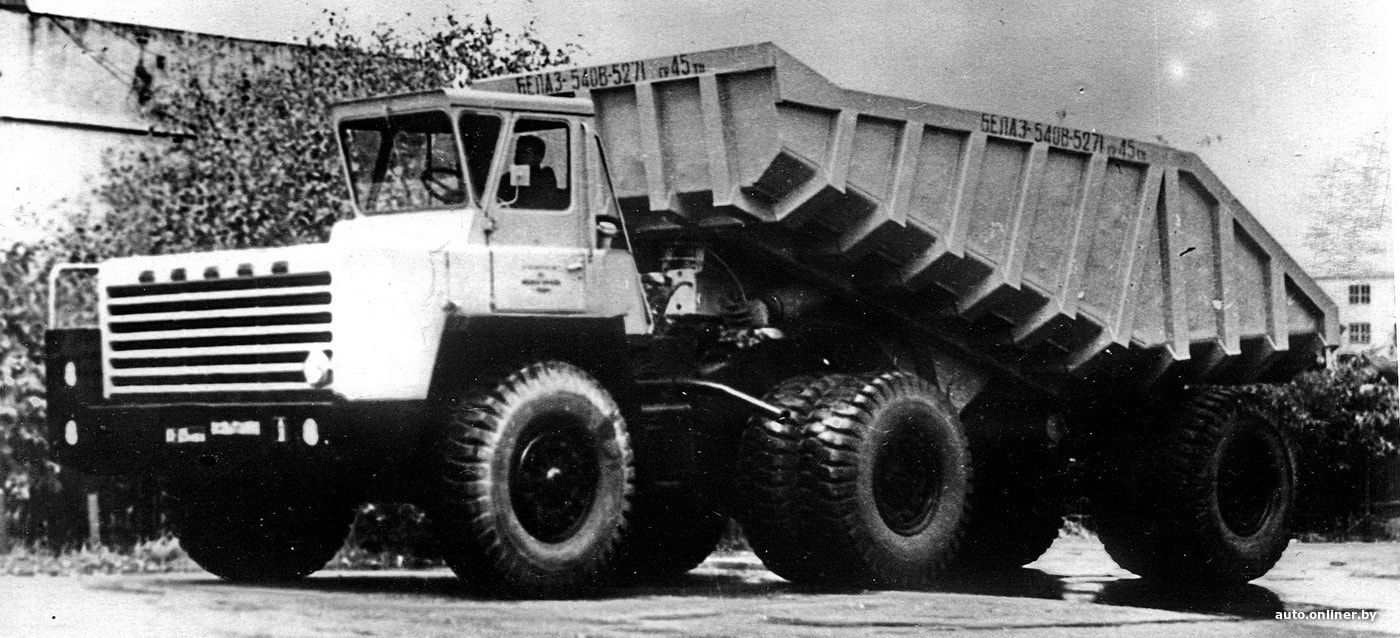
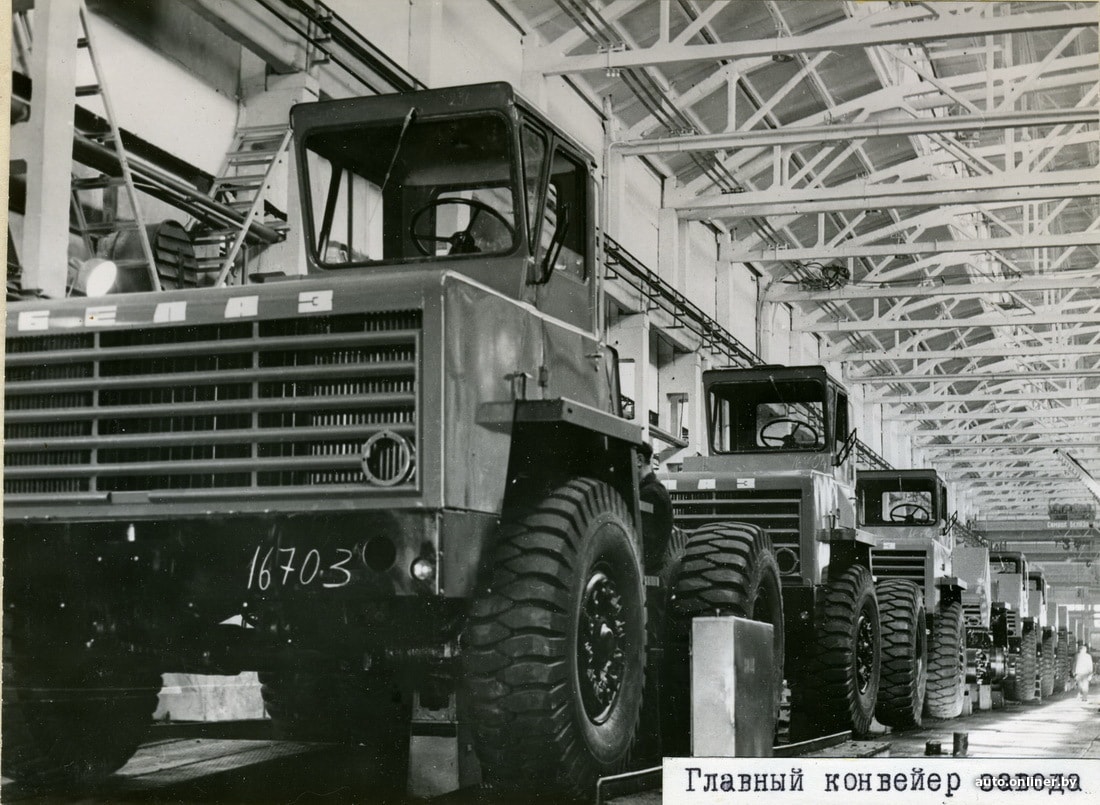
Production BELAZ trucks differed from the prototypes — primarily in the repositioned headlights, which noticeably changed the appearance. Initially, the dump trucks were equipped with the D12A-375B engine — this was the "civilian" version of the legendary V-2 tank diesel. But such an engine was seen as a temporary solution: the focus was on the more modern YaMZ-240, which the Yaroslavl plant was only preparing for mass production.
On the eve of May Day 1967, the first batch of BELAZ-540A rolled off the assembly line — with the new, more economical and easier-to-maintain YaMZ-240 (V12, 22.3 L, 360 hp). But due to a shortage of engines from Yaroslavl, the "pure" BELAZ-540 with the tank diesel continued to be assembled in parallel — at least until 1973. From 1974, only the 540A version remained on the assembly line. On average, the plant produced 2,000–2,500 vehicles of this family per year.
How BELAZ became more powerful and economical
By 1986, the BELAZ-540A had been noticeably upgraded. The vehicle was thoroughly modernized to make it more powerful, reliable, and economical. All key components and assemblies were updated — thanks to this, the payload capacity grew to 30 tons. The new variant received the name BELAZ-7522 and was equipped with a more economical YaMZ-240M1 diesel, as well as an LG-470 torque converter with improved efficiency.
The transmission was updated, the final drive was strengthened, and the brakes were refined. The parking brake became easier to maintain, and stone ejectors were added for the rear dual wheels. The platform was also redesigned — it was now made of stronger metal and had a new shape. As a result, the truck consumed less fuel (by 2–3%), lasted longer (by 13–15%), and required maintenance less often (the interval grew by a quarter).
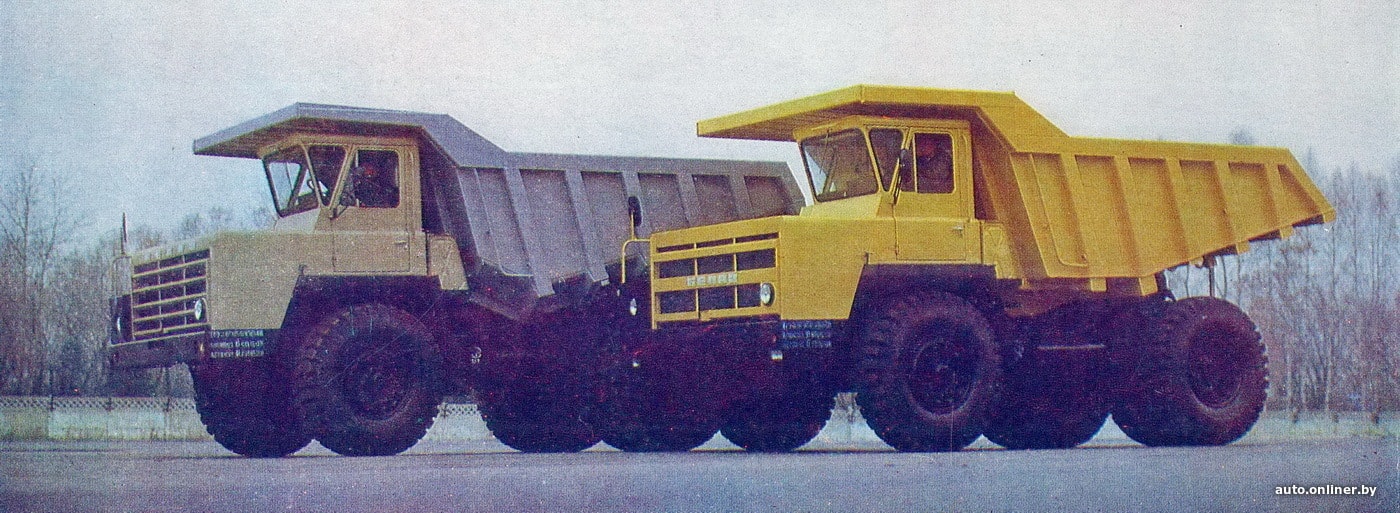
The cab was also updated. New seats appeared, along with a dashboard with safety padding, a more powerful heater, and an electric windshield washer. Sound insulation was also improved. Externally, the modernized 30-tonners were easy to recognize by the new radiator grille — it not only enhanced airflow but also made washing easier. The mirrors became larger, and with them, visibility improved.
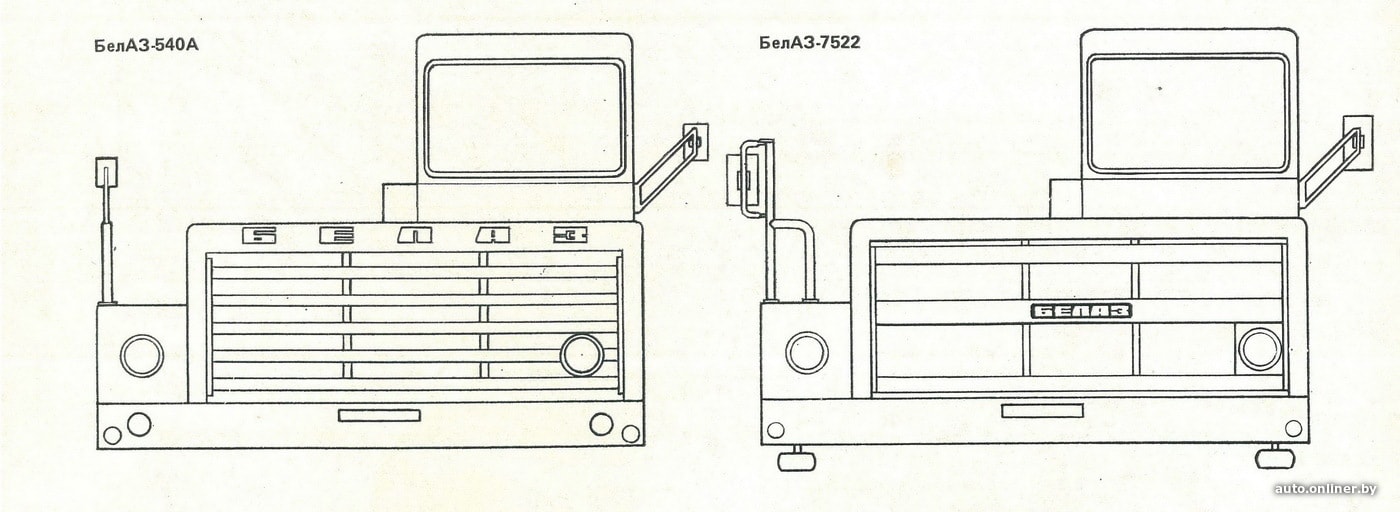
In the late 1980s, the classic BELAZ was modernized for the third time. It was then that the first prototype, designated BELAZ-7540, appeared. The appearance did not change, but quite a few design refinements were made. For example, a more powerful engine began to be installed — a 420-horsepower YaMZ-240NM instead of the 360-horsepower YaMZ-240M.
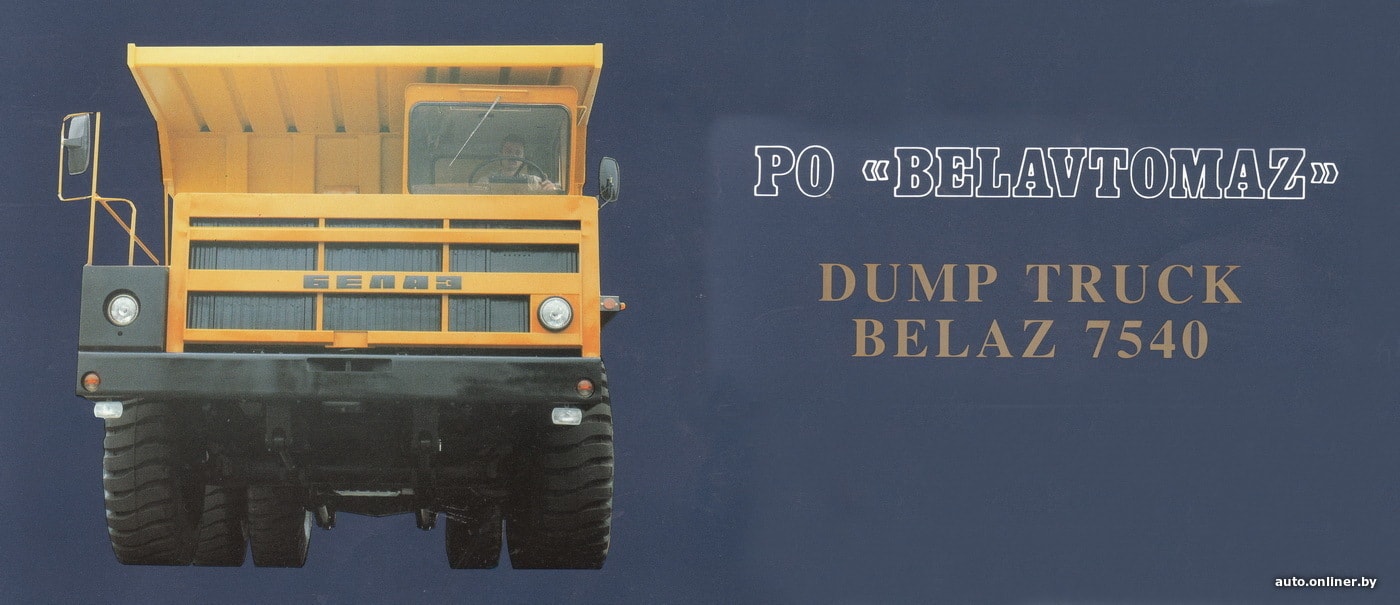
In this form, the BELAZ-540 survived the collapse of the Soviet Union. But they were produced in far smaller numbers than during the USSR. The last examples with the classic rectangular, angular appearance were assembled, apparently, in 1996.
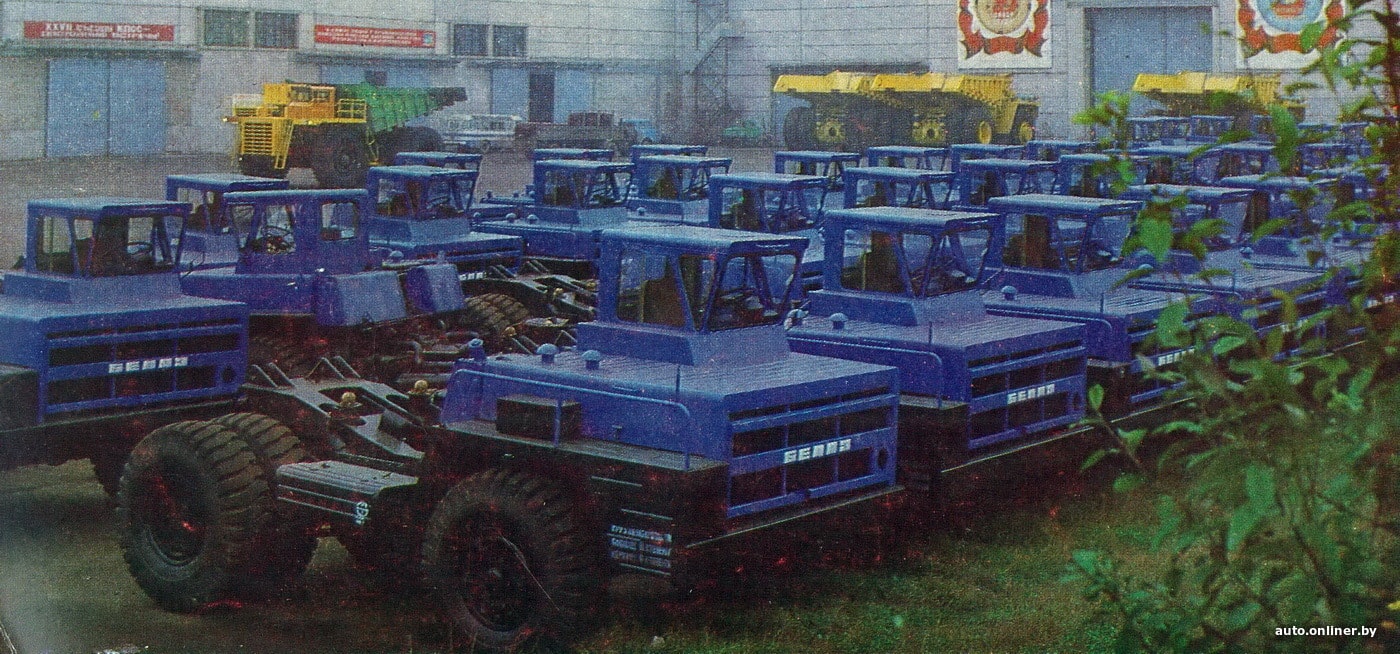
BELAZ for export: sales geography
The BELAZ-540 sold very well abroad.
The Soviet foreign trade association Avtoexport produced colorful booklets in various languages around the world. "Buy Soviet BELAZ trucks that you will like." And they did buy them, even in capitalist countries.
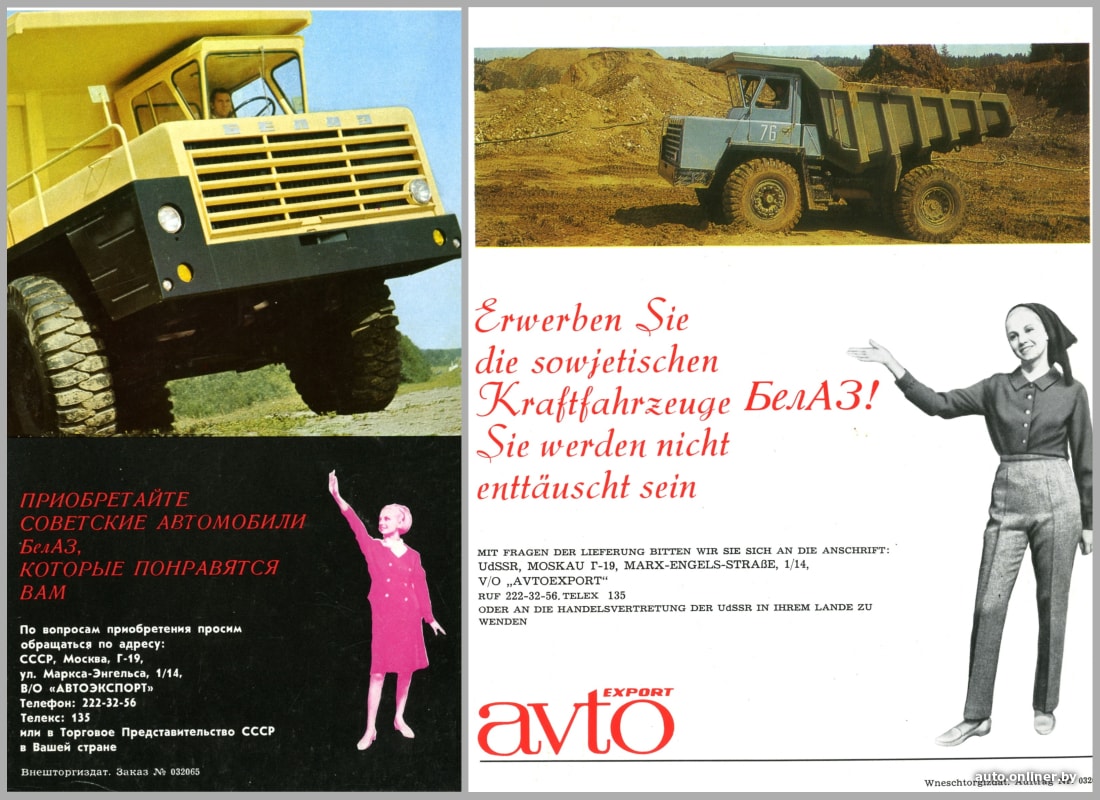
This shot, for example, was taken in the United Kingdom, in Wales. It is reliably known that from 1970 to 1980, the UK bought 43 BELAZ trucks. Among other capitalist countries, they were also purchased by Belgium, Italy, Cyprus, West Germany, and Sweden.
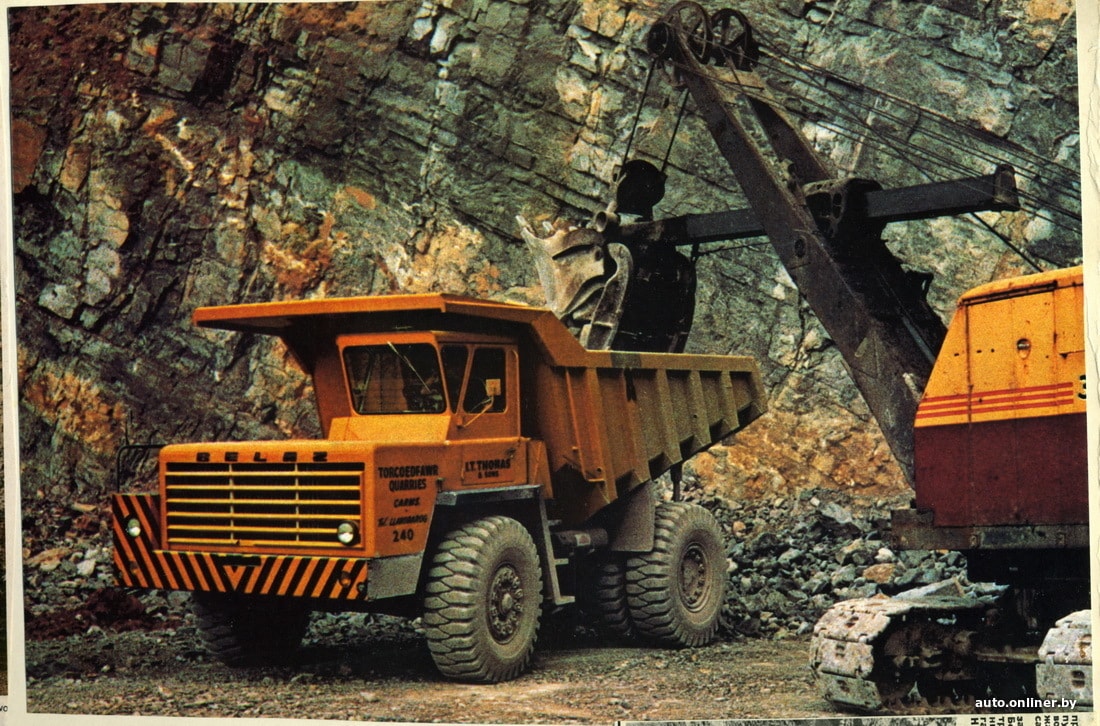
In addition, during the 1970s, the Belarusian mining dump trucks of the BelAZ-540 family were bought by Algeria, Afghanistan, Burma, Bulgaria, Hungary, East Germany, Egypt, Zambia, India, Iran, Cuba, Mongolia, Pakistan, Poland, Romania, Syria, Turkey, Czechoslovakia, and Yugoslavia. The largest buyer was China. In the 1980s, other countries were added to this list.
Unusual machines based on BELAZ: from canteens to blowers
The BELAZ-540 also became the basis for unusual special-purpose equipment.
For example, there were firefighting BELAZ-540s. One served in Dnepropetrovsk, another in Yakutsk. The firefighters converted them themselves.
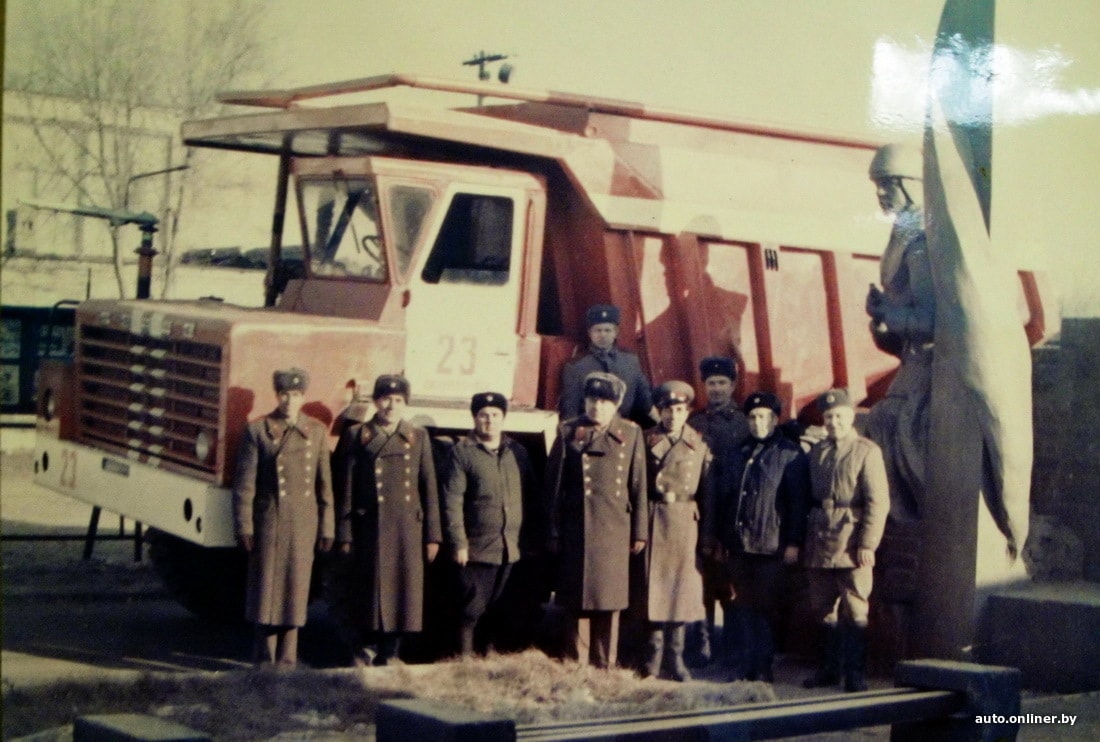
But there was also "professional" production of special vehicles based on BELAZ trucks. Organizations such as TsKPTBtranschermet, Gipronikel, NPO "Chermetmekhanizatsiya", and NIIKMA developed the technical documentation, while specialized repair plants built the special equipment according to that documentation.
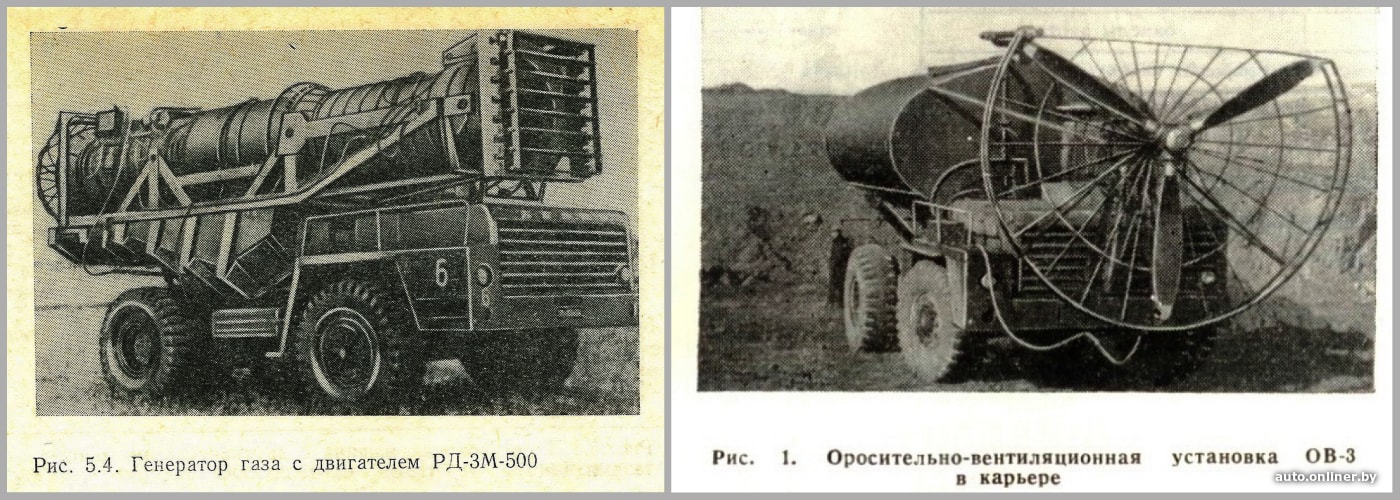
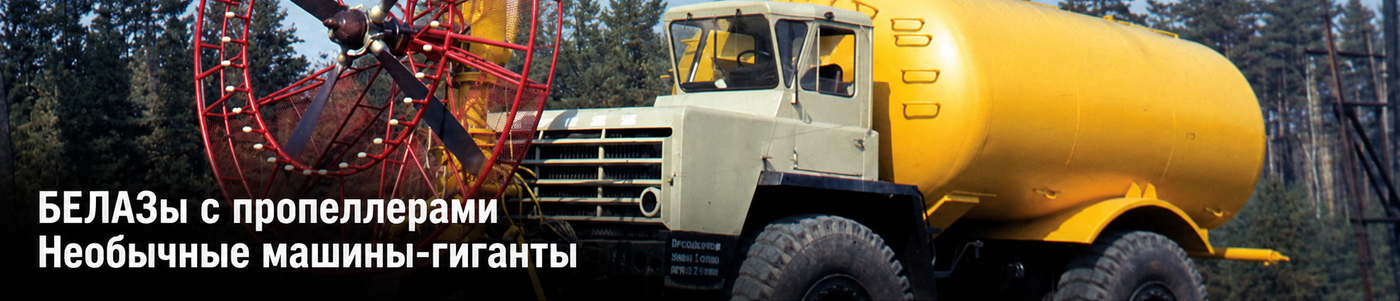
The most exotic were, of course, the quarry "blowers". Gas contamination was a colossal problem, and engineers tried to solve it with aircraft engines mounted on BELAZ trucks. Both jet and turboprop engines were used.
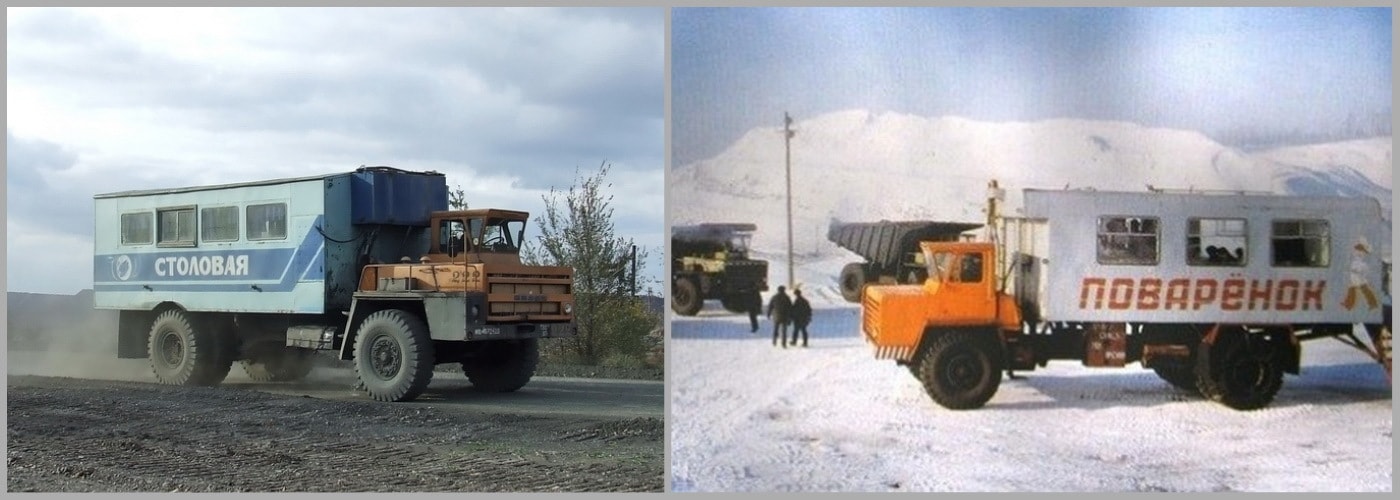
The favorite special vehicle of all BELAZ drivers working in quarries was this one — the mobile canteen. They were mass-produced by the Kafan ARZ in Armenia and the Belgorod plant "Avtoremgormash". Inside the insulated body there were two dozen seats and its own kitchen with an area of 6.4 m². By the way, in some Khrushchyovka apartments the kitchens were smaller.
Also built on the BELAZ-540 base were tow trucks, watering and irrigation machines, tank trucks, fuel tankers, oil tankers, blasting and repair vehicles.
The legacy of the BELAZ-540: what came to replace it
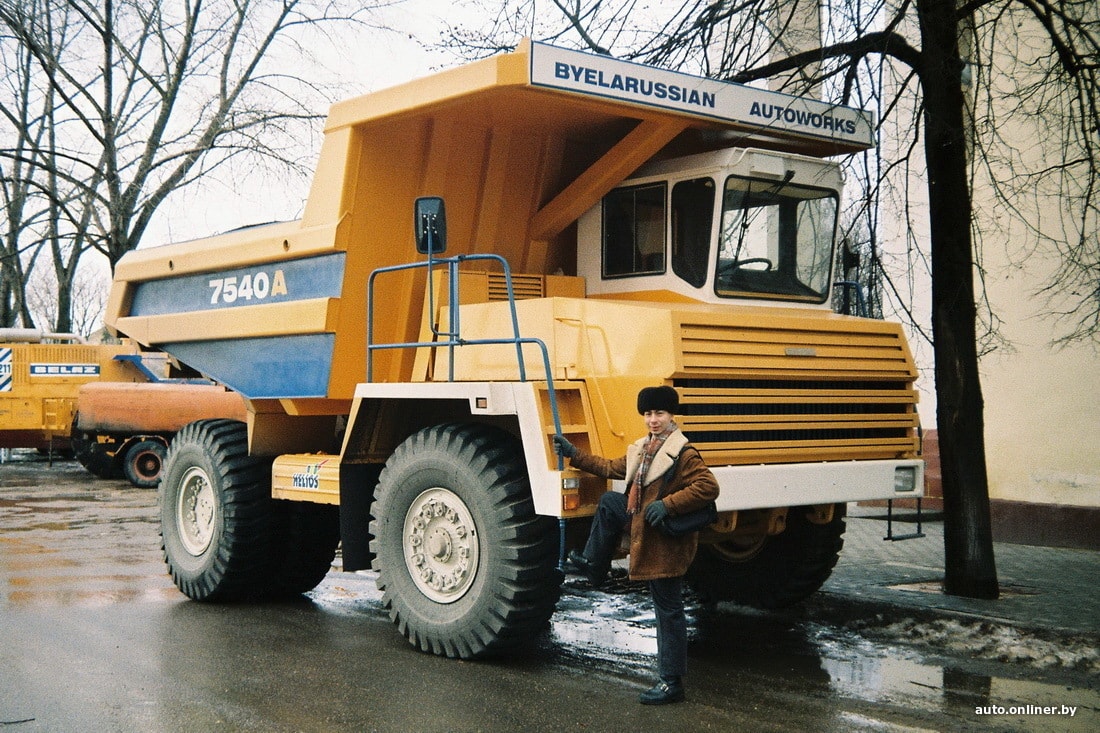
The BELAZ-7540A, which appeared in the 1990s, was already considered a new model. Yes, it used a completely different cab, different body panels, and a modified dump body. But structurally, this dump truck still traced its roots back to the classic BELAZ-540. This family is still present in the plant's program to this day.
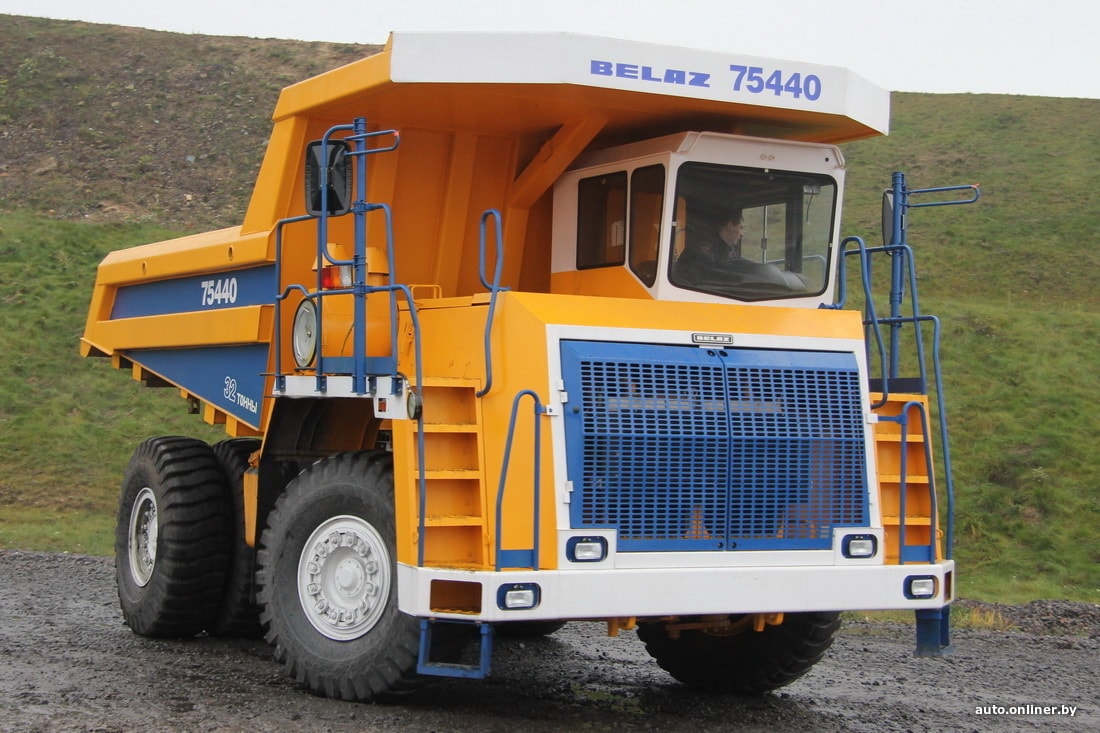
In 2013, a truly new generation of BELAZ "little ones" saw the light of day — the BELAZ-75440 family. Under the hood of these machines is a Cummins QSX15-C435 engine with an electronic control system. The hydromechanical transmission here also has electronic control. All structural and layout solutions are "tuned" to increase service life. Because of their appearance, these dump trucks were nicknamed "little bulldogs".
BELAZ-540 — if not the most famous, then certainly one of the most well-known Belarusian vehicles. At least, the world learned about the BELAZ brand precisely thanks to this model.
