Menu
The dollar is weakening? What is happening on the currency market of Belarus and what will happen in December 2026
Author and editor-in-chief: Vitaliy Kisterny 21.11.2026 13:40:00
There is just over a month left until the end of 2026, and the exchange rates of the main currencies on the Belarusian market, it seems, will continue to remain virtually unchanged. The "Minsk-News" agency told us about the current situation and expectations for December.
The market is balanced
According to the results of trading on the Belarusian Currency and Stock Exchange as of November 20, the dollar rate over the week has hardly changed - by -0.11%. Since the beginning of the year, the dollar has risen in price by 3.25%, and the week ended with a quote of 2.9970 USD/BYN. The volume of trading in American currency remains above average: for the incomplete November, dollars worth $286.15 million were sold - this is a sign of balanced demand and supply.
The Russian ruble over the same week added 0.17%, and since the beginning of the year, it remains in the minus by 1.3%. Friday's trading on the BCSE ended at the level of 3.6575 RUB/BYN per 100.
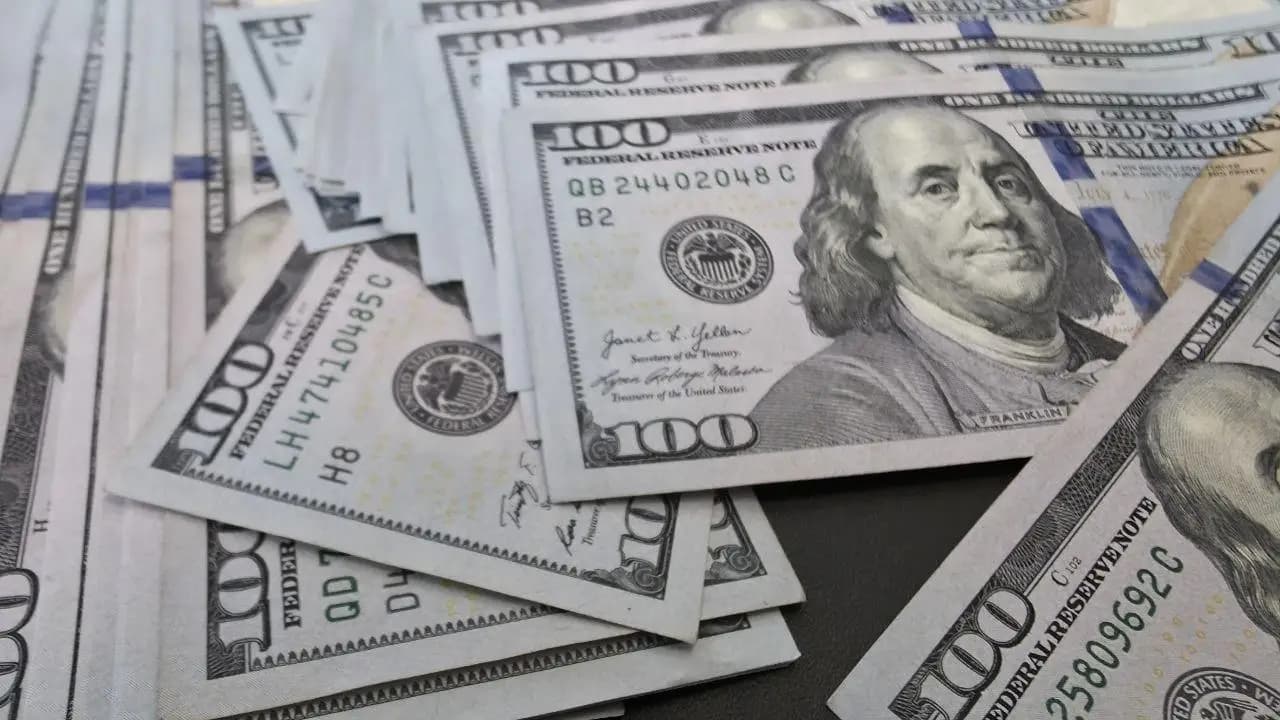
Photo: Belarusian News / US dollars. Author Vitaliy Kisterny Oil and the Russian market
The movement of exchange rates in Belarus repeats the dynamics of the Russian over-the-counter market: by the end of the week, the dollar fell below the 82 RUB mark, and the euro - below 90 RUB. The reason for the strengthening of the ruble is the same - expensive oil against the backdrop of moderate domestic demand for the currency of "unfriendly" countries.
The main influx of currency was formed back in October, when world oil prices updated their annual maximum. Due to the reduction in supplies from the Persian Gulf countries, the demand for Russian oil and energy carriers grew to the levels of 2022, and Urals was sometimes traded more expensive than the benchmark Brent - in the range of $112-117 per barrel. This allowed the Russian Ministry of Finance to increase daily currency purchases on the domestic market from November 9 to December 4 to 15.6 billion rubles, which kept the market in equilibrium.
Forecast for December
Until the end of November, the situation is likely to remain unchanged - it is not ruled out that the dollar will even weaken further on both markets. The reason is the approaching tax period in Russia: November payments are traditionally higher than average, and their peak, due to calendar features, falls on November 30, so trading will remain active throughout the month.
In December, the situation may change slightly. The influx of currency may decrease following oil prices and export volumes, although the Ministry of Finance is able to smooth this out by reducing purchases for the National Wealth Fund. However, at the end of the year, demand for currency usually increases for the closure of annual contracts - therefore, small fluctuations in exchange rates should not be ruled out.
Volatility will remain low
Nevertheless, any changes will likely remain within the current fluctuations, i.e., within fractions of a percent. The Central Bank of the Russian Federation's tight monetary policy keeps deposit rates high, making it difficult for currencies to compete with ruble savings. Judging by the inflation dynamics and the regulator's statements, this situation will persist for at least until the middle of next year.
For Belarus, this means the same thing: stable exchange rates of the dollar and the Russian ruble with stable volumes of exchange trading. Until the end of November, the dollar may continue to moderately weaken, and in December, it may reverse. At the same time, the dollar as a tool for saving family capital is losing its former attractiveness.