Menu
The demise of Buran: how the pride of Soviet cosmonautics was lost under the rubble of a building
STORIES
The Demise of Buran: How the Pride of Soviet Cosmonautics Was Lost Under the Rubble of a Building
Author: darriuss. Photos: buran.ru, flickr.com, Wikimedia, pinterest.com
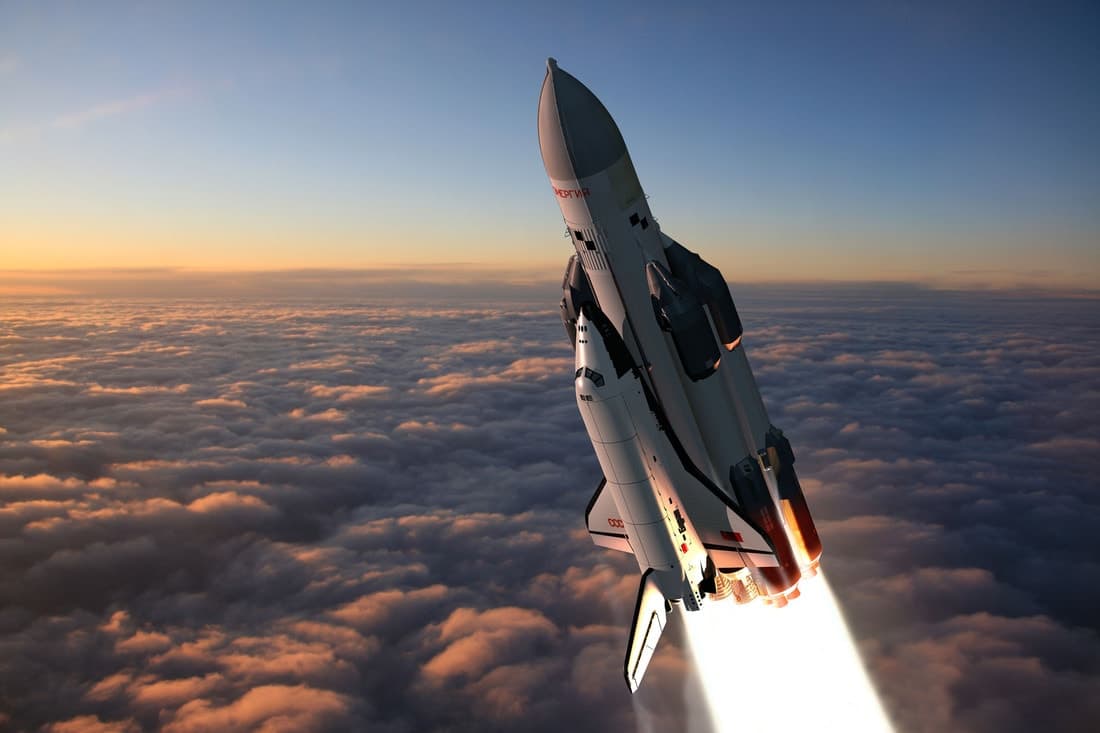
The Energia-Buran program is considered the pinnacle and swan song of Soviet cosmonautics, which had achieved numerous triumphant victories over its thirty-year journey. The reusable transport system, consisting of the most powerful rocket carrier in the country's history, Energia, and the orbital ship Buran, capable of returning to Earth on its own, seemed not just a forced response to the American Space Shuttle, but the next logical step in the development of the industry. However, the first flight of Buran exactly 38 years ago, in November 1988, turned out to be the last. And 13 years later, the ship perished under the collapsing roof at Baikonur, never having had the chance to go to space again. In this article, we recall how Buran took off and why its story ended so early.
About this article
Why the Soviet Union Needed Buran
Site 112: How Baikonur Was Rebuilt for Buran
Buran's Path to Space: Preparation, Testing, Launch
Why the First Flight Was the Last
The Demise of Buran: What Happened in May 2002
This article was previously published on Onlíner. We have expanded it and are sharing it with you again, as the stories and events it reveals continue to be important and interesting.
Why the Soviet Union Needed Buran
That single launch and flight of the product 11F35, which the developers from NPO Energia understood to be the orbital ship Buran, took place on November 15, 1988. The two orbits around the Earth, lasting 205 minutes and successfully ending with a landing at the Yubileiny airfield of the Baikonur cosmodrome, were preceded by 14 years of intense work by hundreds of different teams (scientific, engineering, industrial) and over a dozen billion Soviet rubles, which were still quite substantial at the time.
Some experts believe that the reusable space transport system (MTKS) Energia-Buran itself did not represent a natural stage in the evolution of Soviet cosmonautics, but was almost imposed on the industry from outside by the military-industrial lobby, which had succumbed (perhaps even in a panic) to the flow of information about a similar project of the "probable opponent", known as the Space Shuttle.
Soviet generals, and behind them the civilian leadership of the country, assumed that American space shuttles could be used to hijack Soviet satellites and other spacecraft from orbit, as well as to transport nuclear weapons. The theoretical use of a shuttle could bypass the early warning system for missile attacks and thus provide the opportunity to deliver a decisive blow to the USSR. These considerations were probably sufficient for the decision in 1974 to create a similar Soviet reusable system. Another example of how important it was for the Soviet Union to “catch up and over
In the mid‑1970s the N‑1 project was shut down, while at the same time the program for a reusable launch vehicle entered its active stage. Against this backdrop it was natural to repurpose the already built “lunar” facilities for more current functions, especially since their scales roughly matched each other.
Among other facilities for the N‑1 launch vehicle at Baikonur, a launch and test assembly building (Mik) was also constructed—a structure where, as the name suggests, the rocket was assembled and its systems tested. The cyclopean building on Site 112, externally resembling a gigantic factory workshop, was built between 1963 and 1967. Its dimensions matched the product it was meant to assemble inside. Three of the building’s five bays were eight stories high, the other two a bit smaller. The structure stretched 240 meters in length. Inside, three bridge cranes with a lifting capacity of 200 tons each operated during assembly.
All of this infrastructure remained unused for a while after the N‑1 was shut down, but was later converted to meet the needs of “Energiya‑Buran.” In the building on Site 112, the first flight‑capable launch vehicle was assembled (it flew in May 1987). The second, already with Buran, also launched from the same site in November 1988.
The path of Buran into space: preparation, testing, launch
The first Buran was assembled in 1984, but it was not immediately suitable for spaceflight. The prototype “0.02” was used to test aerodynamics and landing: the aircraft was fitted with additional engines so that it could take off on its own. The flying “iron” or “pavement” raised doubts, but the tests were successful: on November 10, 1985, pilots Igor Volk and Rimantas Stankevichus lifted the
Two months after the start of the prototype's flights, the American Challenger disaster occurred. For the USSR, this became an unexpected respite: the reusable system program got a chance to catch up with the delay. By the spring of 1987, the Energia rocket carrier was ready, and Buran was still undergoing tests. To test the rocket itself, a mockup of the Polus laser weapon was mounted on it. The rocket worked perfectly, although the "laser" did not reach the calculated orbit and fell into the ocean. The tests confirmed the reliability of the carrier and prepared the ground for the first real flight of the ship.
One of the most difficult stages of building Buran was the thermal protection. Geologists found quartz sand of the necessary composition, from which about 40,000 tiles were made - each costing 500 rubles. Without them, the ship would simply burn up when entering the atmosphere, and the task of their installation became a key moment before sending the ship to Baikonur.
The finished Buran - 105 tons, 36 meters long and 24 meters wing span - was assembled at the Tushino plant and transported to the Moscow region airfield, and then transported to Baikonur by the VM-T aircraft. All these steps were leading the program to its climax: the first launch.
Initially, the launch was scheduled for October 29, 1988, but a minute before the start, the automatic system worked - an error in the fuel system. The next date, November 14, also failed due to a strong cyclone. Finally, on November 15, 1988, at 06:00, Buran took to the sky. In 206 minutes, it made two orbits around the Earth and successfully landed, passing along the runway for about 1.6 kilometers, completing a decade of intense work by hundreds of engineers and scientists.
Why the first flight was the last
The flight was successful, but after it, there was only enough funding and resources for traditional manned missions on the Soyuz. For the country, it was becoming increasingly difficult to maintain the ambitions of "catching up and overtaking," and in the early 1990s, the Energia-Buran program was suspended.
The project was finally closed in 1993. The grand assembly and testing corps at Baikonur was turned into a kind of monument to Soviet cosmonautics: the developments on the system, including the ready-made stages of the Energia rocket, were stored here. In 1998, the first Soviet space shuttle was delivered to the Mriya, which was previously demonstrated at world aerospace salons, becoming the last symbol of the outstanding efforts and achievements of Soviet cosmonautics.
At Baikonur, the “Buran” was docked to the existing technological mock‑up of “Energia,” positioned in the fourth span of the upper part of the assembly‑test building, and the crew began showing it to tourists who had arrived at the cosmodrome. However, this lasted only four years, until a group of workers decided to repair the roof of the MIK.
The death of “Buran.” What happened in May 2002
Early on the morning of May 12, 2002, a truck carrying rolls of ruberoid arrived at the assembly‑test building. Along with it came a repair crew of eight people: seven Kazakh citizens and one Belarusian. In spring, Kazakhstan traditionally experiences rain, and the building’s roof, again traditionally, was leaking. Using a crane, the repairmen reached the roof of the MIK and lifted about 10 tons of ruberoid there. The rolls were laid along one of the building’s ends in the order in which they were intended to be unrolled. Around 09:40 local time, the outermost truss bearing that load collapsed, and a few seconds later the remaining trusses of the third, fourth, and fifth spans of the building fell as well. Thus the roof of the upper part of the building was completely destroyed. Part of its wall panels also collapsed. As a result of the catastrophe, all eight repair workers were killed. All objects inside the building, including the “Energia – Buran” assembly, were destroyed.
As usual, a rescue operation followed the technological disaster (although, as it soon turned out, there was no one or anything left to rescue), and then an investigation involving high‑level commissions. The situation was further complicated by the fact that the incident occurred on the territory of already independent Kazakhstan, in a building leased by Russian space agencies, and the victims were citizens of two independent states.
According to the official version released on June 17, just over a month after the disaster, its cause was a "significant (1.5 times) excess of the actual load on the roof compared to what was accepted in the project." In other words, the collapse of the MIK roof was blamed on the repair team that unloaded all the roofing material onto the extreme girder of the building, thereby exceeding the permissible load on it. An additional factor that contributed to the incident was called the "reduction in the strength of the concrete of the reinforced concrete roof slabs and the partial loss of adhesion of the concrete to the reinforcement over the long period of operation of the MIK." In other words, it took only 35 years for the complete degradation of a capital building that was built for the Soviet rocket and space program (i.e., it was not a pig farm built by amateur builders somewhere in the Bryansk region).
At the same time, the official version did not explain the chain reaction that followed the collapse of the extreme girder. It could indeed have been overloaded with roofing material, but the load on the other girders did not exceed the calculated load. In other words, it was completely unclear why they also collapsed. Initially, a version emerged about an so-called air explosion. The Energy tanks located inside the building were inflated to 1.2 atmospheres to maintain their strength. As a result of the fall of part of the roof on them, they could "explode," and the resulting wave could lead to the collapse of the remaining roof of the MIK.
However, from the information that later leaked into the media, it became clear that the chain destruction of the roof of the assembly and testing building was caused by an error in the design of the building. It turned out that the ends of the support columns, on which the girders were installed, were not rigidly fixed to the power columns. When an excessive load occurred, the end would be torn out of the mounting node, and then a chain reaction would follow with the collapse of the roof as a single whole.
None of the factors listed above (and as an accompanying circumstance, the use of much heavier keramzite as a roof insulator instead of fiberglass was also mentioned) could have led to such a catastrophe on its own. As is usually the case in such situations, the cause of the tragedy was a combination of conditions that came together at that specific moment. On May 12, 2002, this combination proved fatal for the eight construction workers and the Soviet shuttle.