Menu
Stage 1, 2 or 3? Speed Lab explains which tuning level to choose for you
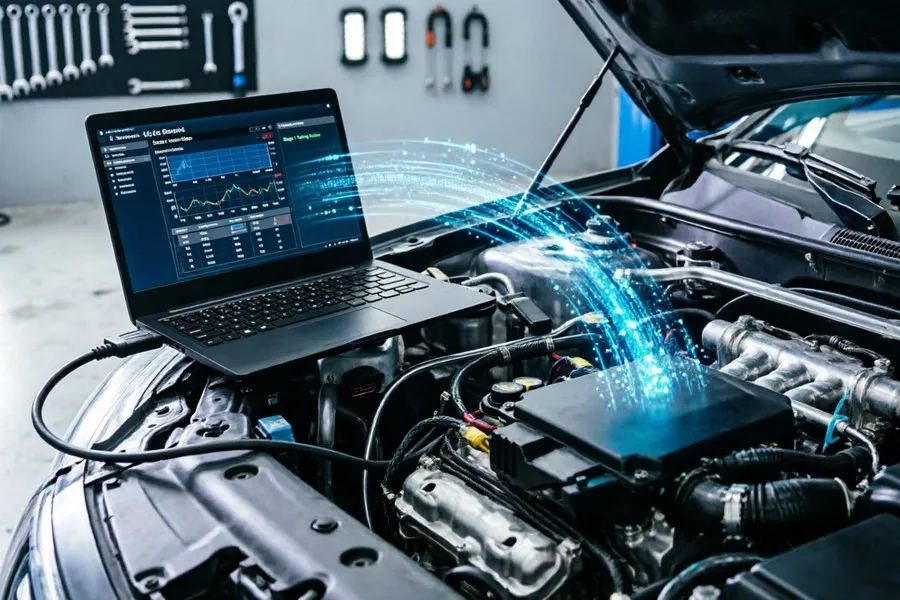
In the world of professional tuning, the term “Stage” — steps that define the depth of intervention in a vehicle — has become firmly established. Stage 1, Stage 2, Stage 3 — these terms are used today by everyone: from large tuning shops to garage mechanics. Yet few car owners understand the real difference between these stages, and the choice of the correct level determines not only the final power output but also engine durability, safety, and overall project cost.
An incorrect choice of Stage can result either in insufficient performance or serious engine and transmission failures. That is why consulting with professionals is not a luxury but a necessity. Specialists at Speed Laboratory have been helping Minsk car owners since 2003 select the optimal tuning level for specific tasks and budget, and a comprehensive deactivation of AdBlue and BlueTec systems often becomes an important step in preparing a vehicle for serious modification, especially on premium German cars, where ecology is closely tied to engine operation.
What is Stage and where did this classification come from?
The term “Stage” (from English — “step, stage”) entered tuning from the world of motorsport in the late 1990s. Initially it
Various climatic conditions (from Africa to Scandinavia)
Various fuel qualities worldwide
Marketing restrictions (the junior model must not be more powerful than the senior)
Tax restrictions in different countries
Environmental standards Euro 5, Euro 6
Protection against improper servicing
A properly done Stage 1 allows removing precisely the marketing and environmental restrictions while preserving all engine protection algorithms. Typical results: For turbodiesels: increase of 20–30% power and 25–40% torque For turbo gasoline engines: increase of 15–25% power For naturally aspirated engines: increase of only 3–8% (limited by physics)
Stage 1 suits the vast majority of car owners. It is a safe, reversible, and economically justified way to unlock the engine's potential without sacrificing
In Stage 2, special attention is given to work on premium vehicles, where the exhaust system is an extremely complex engineering unit. Professional chip tuning of Audi in Minsk at Stage 2 level requires a deep understanding of the specifics of Bavarian engines: from the 2.0 TFSI to the top-of-the-line 4.0 TFSI V8 in RS models. The engineers of Speed Laboratory are well aware of the specifics of Audi downpipes, the placement of lambda sensors, and engine protection algorithms.
Stage 3: serious engineering
Stage 3 is already a full-fledged tuning project that requires significant mechanical modifications. At this level, the stock engine and transmission components operate at the limit of their capabilities, and further power growth requires replacement of key units.
Typical set of Stage 3 modifications:
Larger turbocharger. The stock turbocharger is replaced with a more efficient one, often with a hybrid design.
Reinforced intercooler. A larger heat exchanger for cooling the increased airflow.
High-performance injectors. Increased fuel consumption requires more powerful sprayers.
Reinforced clutch. The stock clutch or torque converter cannot withstand the increased torque.
Reinforced transmission. In some cases, modernization of the gearbox is required.
Upgraded brakes. Increased power requires more effective braking.
Dispute