Menu
Sovkhoz Lidsky: a confident step yesterday, today, tomorrow
The history of the RUP "Sovkhoz Lidsky", one of the largest farms in the Lida region, can rightly be called a chronicle of constant search and bold decisions. This is a path of uniting different farms, a time of experiments, an era of strong leaders and selfless labor of villagers. And today, the enterprise demonstrates the potential of modern production: here, modernization is being carried out and promising development vectors are being determined. About the past, present, and future of the sovkhoz - in our material.
From caterpillar tractors to maximum profitability
The history of the farm begins in the difficult post-war years. During the era of collectivization, dozens of small collective farms were born one after another on the Lida lands. They changed names, merged, and searched for their path. The starting point was March 1959, when the "Lidsky" sovkhoz appeared on the district map (in October of the same year, it was renamed the "Dvorishche" sovkhoz). Archival chronicles preserve the memory of that time: "there was a catastrophic shortage of technicians, the land was plowed with heavy caterpillar tractors with trailed plows, and only disked and sowed with wheeled ones. For harvesting grain, they had to call in combines from the MTS, and horses remained the main draft force. Men manually mowed the meadows, and women gathered the grass into sheaves. But it was this hard peasant labor that laid the foundation for future victories.
In 1979, a landmark merger took place: the "Dvorishche" and "Soviet" farms were merged into the experimental base "Niva" under the wing of "BelSortSemObiedinenie". A young director, Viktor Kudlo, headed it. This period became a golden age of seed production for the enterprise. They did not just grow a second bread crop here - they created an elite. Every year, from 18 to 23 new potato varieties were tested on the farm's fields. The results were heard throughout the republic: in 1986, the grain yield reached 32 centners per hectare, and the "second bread" - a record 259 centners!
"Niva" officially received the status of a farm with high-level agriculture and animal husbandry. Potato sales reached 4-5 thousand tons per year, milk production soared, and profitability grew to 45%. As a result, the average salary of "Niva" workers became the highest in the region. It is worth giving credit: the leader, Viktor Ivanovich Kudlo, who is still aware of the advanced achievements in agriculture today, is full of energy and willing to share his experience.
Sharp turns and leadership ambitions of "Lidsky"
The 1990s brought new challenges. In 1995, the base was transferred to the management of "Gospelmkoneprom". The profile changed: the focus was on breeding livestock and raising elite horse breeds. At this pivotal moment, a young and energetic Vladislav Labetsky took the helm. A graduate of the Goretsky Agricultural Academy, he came to "Niva" as a simple construction master, and at the age of 35, he headed the enterprise, managing to keep it afloat during a time of change.
The beginning of the 2000s swept the experimental base into a whirlwind of reforms and renaming. The years passed, and the leaders changed... And in 2010, the farm was merged with the RSPC "Sovkhoz Lidsky".
Here, history writes another notable name - Vladislav Irchits (in the photo - left). Under his leadership, the sovkhoz firmly established itself in the top lines of the district ratings. The enterprise takes 1st place in the district in terms of total agricultural production, demonstrating a high level of farming culture. During the same period, the sovkhoz becomes the best in terms of feed preparation, and the machine milking operators set a record of 17 kilograms of milk per cow per day - a record result for the district at that time.
Development vector: from soybeans to the "APK of the future"
Literally a month ago, a new director, Vasiliy Olesyuk, took the helm of Sovkhoz Lidsky. However, the word "new" is relative here... For the local land, he is a native, a resident of the agro-town of Dvoryshche. He has solid experience in management in the agricultural sector behind him.
The tasks set by the chairman of the Lidsky District Executive Committee, Alexander Versotsky, for the leader are tough and comprehensive. There is no time for adjustment: it is necessary to complete the winter sowing in strict technological terms, accelerate the harvesting of corn and sunflowers, plow the stubble, and guarantee a nutritious wintering for the livestock. The priority tasks for the new director include the modernization of farms, strict financial discipline, and a regime of reasonable resource saving.
Today, Sovkhoz Lidsky is a blend of experience and advanced technologies. The deputy chairman of the district executive committee - head of the department of agriculture and food of the district executive committee, Anton Mukhanyuk, talks about the current day and prospects:
The modern farm is betting on the complete modernization of animal husbandry. Here, they have moved away from old linear milking machines – now high-tech milking parlors are in operation. A modern dairy complex has been built, and the know-how of this year is a new technological calf nursery. The result is predictable: both the quantity and quality of milk have increased. Today, the average daily milk yield is 16.2 kg of milk per cow, with good marketability at 91%.
The farm's crop production is also surprising with its flexibility. In addition to traditional barley, wheat, triticale, and sugar beets (300 hectares have been allocated for the latter), "Lidsky" is boldly introducing new products.
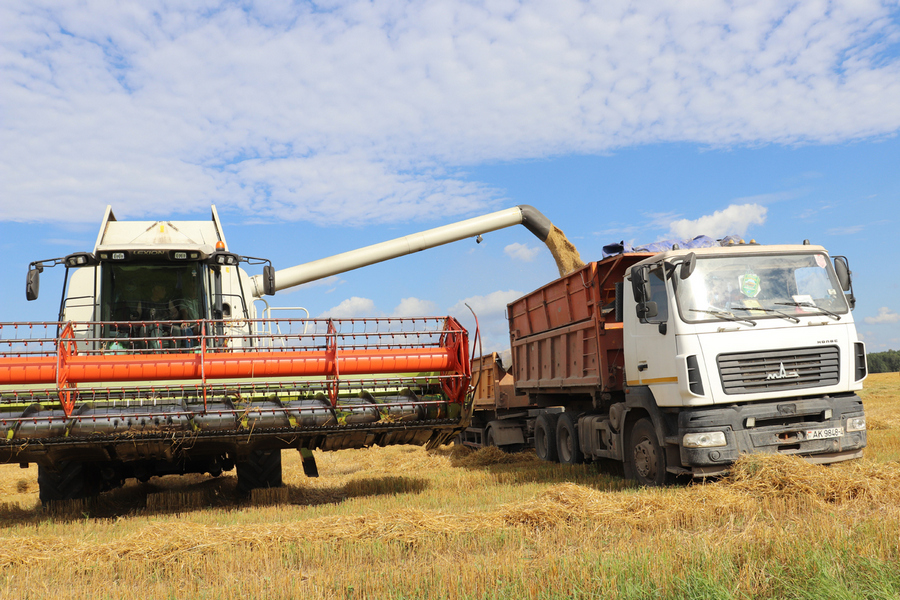
The state farm is the only one in the district that has taken the risk of engaging in promising soybean production: 20 hectares have already been allocated for seed production, in order to sow areas with its own material next year. Another 250 hectares have been allocated for profitable sunflowers. These areas are processed using domestic machines – the emphasis is on Belarusian equipment, and fortunately, the entire repair base is located nearby, in Lida.
I am confident that if the manager succeeds in uniting a team around himself, everything will definitely work out, emphasizes Anton Mukanuyk. Vasiliy Olesyuk knows this farm very well, and people know him. And this credit of trust is already working: personnel who left the farm earlier are returning, and even experienced specialists on well-deserved rest are coming to help.
As for long-term plans, the target is set for 2028-2030. The farm plans to join the large-scale state program "APK of the Future" and build another ultra-modern dairy complex on the territory of the "Lidsky" state farm.
The history of the state farm continues. And judging by the pace that has been set, new records for this land are waiting ahead.