Menu
She swapped Italy and China for life in the Belarusian backwoods. She regrets nothing.
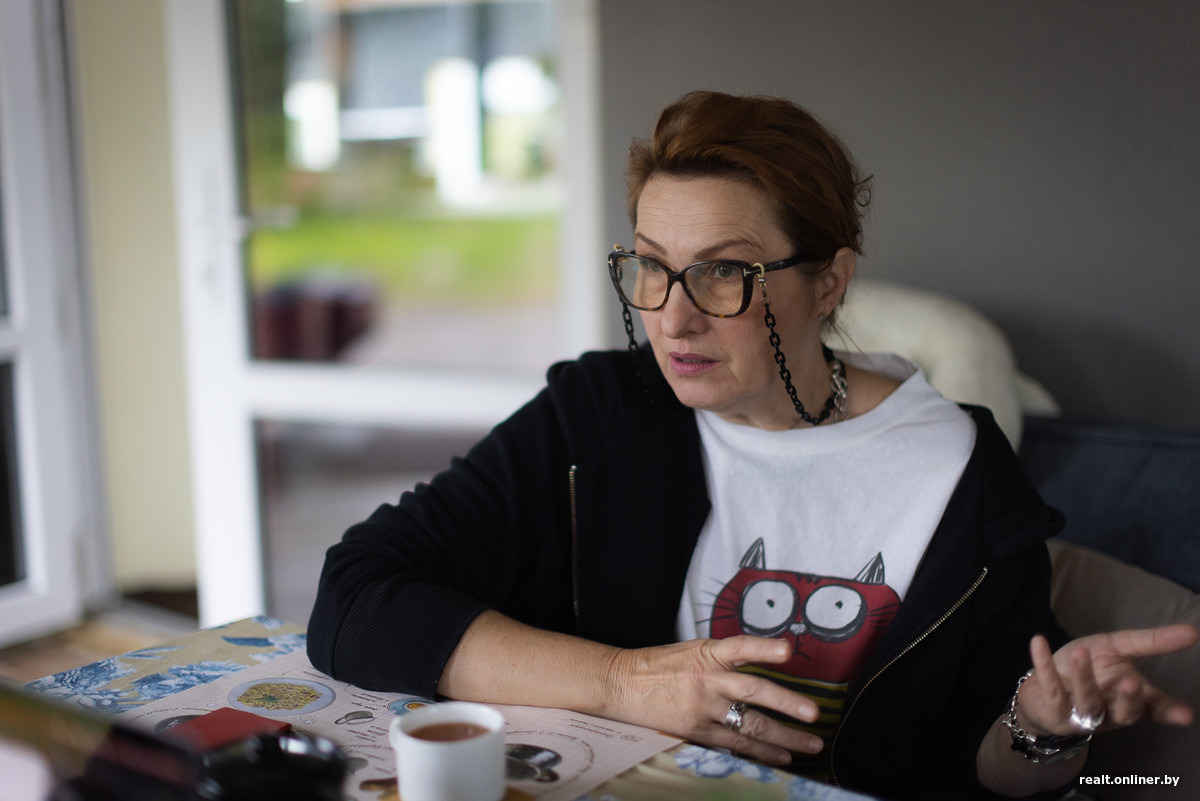
For many years, Tatyana was involved in big business and lived in three different countries. Tired of the bustle, she traded noisy megacities for a small village near Mstislavl. Here, she bought an old, abandoned house, completely rebuilt it with her husband, and opened the "Dukhmany Sad" farmstead. Now, in the Belarusian countryside, she prepares dishes from all over the world for her guests—from Thai tom yum to Spanish buns, makes sushi for local children, gathers herbs, and grows some of the hottest peppers in the world in her greenhouse, which people travel from all over the country to try.
Tatyana is originally from the Yaroslavl region. There, she graduated from the medical institute with a degree in pharmacy. She was on track for an academic career: after graduation, she was invited to teach at the department of pharmacognosy, which studies medicinal plants and their properties. But those were the turbulent 1990s, when the collapse of the USSR shattered old reference points and clear plans for the future. She had to struggle to survive.
After moving to Moscow, the woman went to work for a businessman. It all started with the classic "buy-sell" scheme of that time. They traded in anything that was in demand, from "Rubin" TVs to food products imported from Spain. Gaining experience, Tatyana started her own business in the fashion industry—she launched a clothing production facility. And not just anywhere, but in Italy! To get all the processes running, she had to travel there frequently. In total, according to the interviewee, she lived in this warm European country for about 15 years.
"When people find out I moved to a Belarusian village, they often are surprised: 'Why didn't you stay in Italy?' It's nice to vacation there, especially when you arrive with money. But living and working is a completely different story," Tatyana assures. "For example, I never could get used to the fact that there's no central heating. When I rented an apartment and constantly had the heated floor on, the landlord would say to me, 'You've used so much electricity, your communal bills alone will be over €500!' Add to that the colossal taxes, and it's all not so fairy-tale-like anymore."
The fairy tale finally ended when Italy's national currency, the lira, was replaced by the euro. Production suddenly became much more expensive and unprofitable, so the business had to be restructured on the fly: they kept only the development—creating patterns and designs—in Italy, while the actual sewing was moved to China, to the city of Guangzhou.
— Guangzhou is basically another planet. 25 million people — and that's only the officially registered population! A true human melting pot. There are incredible multi-level interchanges where even local taxi drivers get confused, not knowing where to go. In the city itself there are huge crowds of people. Perhaps some people like that pace, but it's a challenging environment. Although the Chinese themselves impress me immensely: they are incredibly hardworking, persistent, they really have something to teach.
— But what really captivated Tatiana about Guangzhou, and what later played a key role in her future occupation (we'll talk about that a bit later), was the gastronomic experience.
— If you want to try the cuisines of absolutely all peoples of the world, you definitely need to visit Guangzhou. Businesspeople from all over the planet flock there — for example, to the famous Canton Fair, where companies showcase their products. It occupies an area 5–6 times larger than the whole of Mstsislavl. Due to the large number of foreigners in the city, a huge number of authentic restaurants have opened. I loved dropping into the local German bistro, I went to an establishment opened by an Italian, I tried authentic Sichuan, Thai, Peruvian cuisine. There you could literally sample everything.
— Tatiana had to live across three countries, shuttling between offices in Moscow, Europe, and Asia. This continued until the mid-2010s: after several economic crises, our heroine made the difficult
— We bought this ordinary village house for $8,000. The conditions there were appropriate: no water, no gas, no internet. Everything was in a neglected state. To restore the building, I had to sell my new car. Fortunately, my husband is a builder and did almost all the work himself — that helped us save a lot.
The house required serious reconstruction. They dismantled the old stove. They relaid and the log house itself, replacing under