04 Sept 2026 | 08:04

"Sales of 9 million rubles a year." How a Belarusian entrepreneur sews bedding for seven countries

image

"Sales of 9 million rubles a year." How a Belarusian businessman sews bedding for seven countries

Author: Varvara Morozova. Photo: Vlad Borisevich

Add to main Google sources

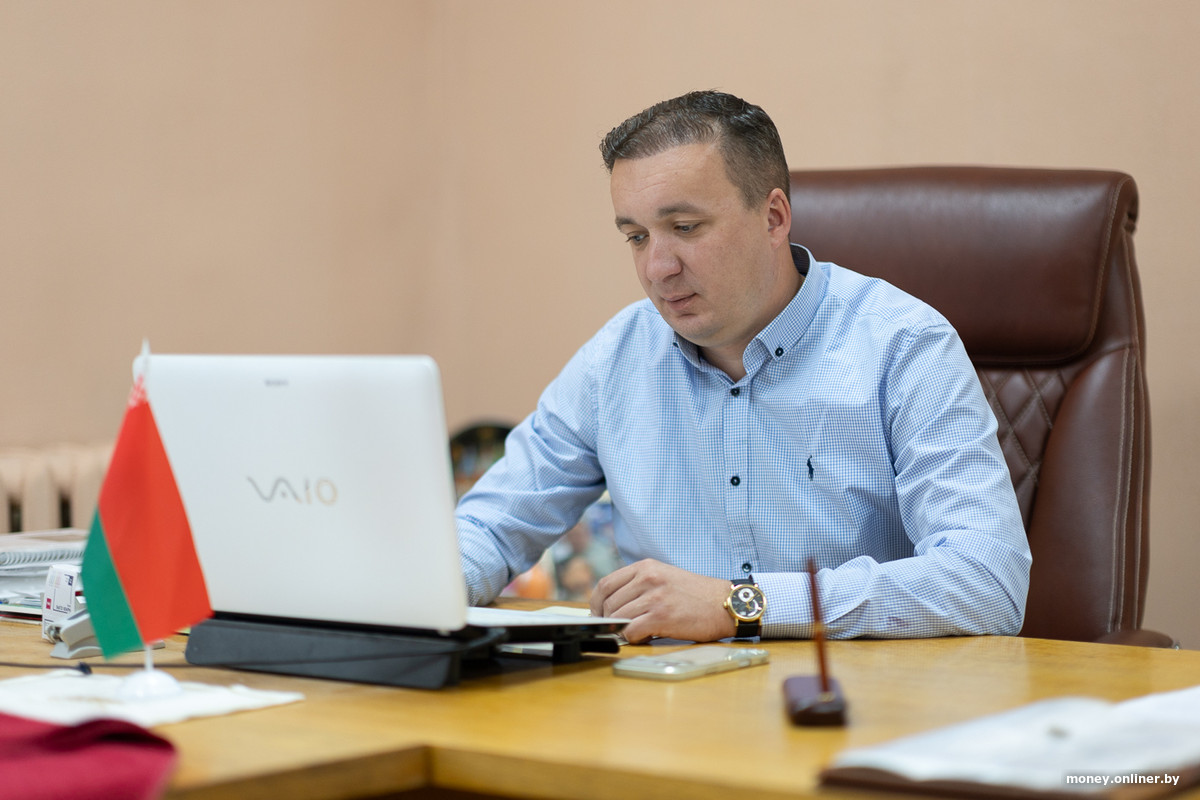
"A seamstress in the countryside earns up to 3.5 thousand in net pay. Even in Minsk it can be less," says Dmitry Muravyov. He left the Ministry of Foreign Affairs to go into the textile business, created an enterprise that sews bedding and sells it in Belarus, Georgia, Armenia, Kyrgyzstan, Russia, Uzbekistan, and Kazakhstan. Recently Dmitry lost 2 million rubles worth of goods in a fire, mourned for a while, and decided to build his own logistics center. Ahead lie the untapped markets of China, Europe, and the USA. Dmitry compares the state of his business to "a train without brakes." We asked how much he had to invest in his venture and why it's profitable to locate production in the countryside. We also got professional advice on how to choose bedding for a good night's rest.

"Linen should look like linen"

Dmitry calls himself a hereditary textile worker: his mother worked in the light industry sector. In 2010, the family set up a small sewing production facility in Minsk, where Dmitry became the director. The business turned out to be successful.

Then, the interviewee recounts, he was invited to the position of deputy general director and commercial director of the Orsha Linen Mill.

In those years, the mill sold its products to 36 countries around the world (with volumes reaching up to $6 million equivalent per year), and the director had many business trips and international contacts. He is still proud of the "historic" sales to China and India: there have been no direct shipments through customs either before or since, he says.

Dmitry worked in linen production for several years. He vividly remembers an amusing difference in tastes between local and American buyers: our manufacturers carefully tried to make the linen smooth, considering knots and uneven thread thickness to be defects, while importers from the United States were delighted with the linen texture and its irregularities and asked to leave everything in its natural state.

From the Orsha Linen Mill, Dmitry moved to the Ministry of Foreign Affairs. He says he even almost left for the embassy in Tajikistan, but in the end decided to end his career in the diplomatic service.

"We were just expecting a child, and I realized I needed to spend more time with my family," Dmitry recalls thinking in 2017.

photo

As a result, our hero returned to the same field he started in — light industry. Only this time it was private business.

Incidentally, that very first family business where everything began is still operating.

He drove 90 kilometers every day for tax benefits

Having decided to return to textile production, Dmitry found and purchased at market value an abandoned building of a household services combine in the Dzerzhinsky district, set up what he calls "modest" second-hand equipment, did renovations, and began from zero.

— There were household savings.

It took about $20,000 equivalent to get started.

He recruited workers through advertisements. At first there were five of them — professional seamstresses, experienced, no need to train anyone. In the countryside, people are simpler; they came to work at six, seven in the morning.

I always tell them: "Girls, we are partners — however many pillowcases you sew, that's what you'll earn." Everyone should be invested in quality and quantity.

photo

Dmitry explains his choice of location simply: he was guided by the provisions of Decree No. 6 "On stimulating entrepreneurial activity in medium-sized and small urban settlements, rural areas." Put simply, the opportunity to not pay profit and property taxes for seven years, along with other benefits, played its role.

— I would get up at six and drive from Minsk to the Dzerzhinsky district every day — 45 kilometers one way. The distance didn't scare me.

In the past, the entrepreneur recalls, workers at the household services combine had to go outside to use the toilet. Dmitry installed a septic system at the production facility, put in heating, and equipped a room for meals. Now the workshop features current equipment instead of second-hand machines and already has 23 employees. People come to apply for jobs from neighboring districts as well.

photo

— A professional seamstress earns up to 3,500 net. Take note: in the region it's 3,000 on a debit card, — Dmitry can't hide his emotions. — Seamstresses in Minsk sometimes earn less.

He lost 2 million rubles due to fires in Russia

At first, the main sales market consisted of budgetary organizations in Belarus. If you've had the chance to live in dorms, a barracks, or (knock on wood) end up in a hospital, then, quite likely, you slept on calico bed sheets from "Golden Peony."

"We focused on the social sphere, where affordable products are needed, but in large quantities. We purchased materials wholesale at Belarusian factories. Sometimes the machines at the factory in Baranavichy were booked exclusively for us three months in advance.

Dmitry continued to expand the product range and staff, working with contractor organizations. Almost immediately, he realized there were open markets, and they were beyond the country's borders. He didn't go into offline stores — instead, he placed his bet on marketplaces.

That decision paid off until August, when logistics centers in Russia burned down. Many of his fellow textile workers, especially those who had debts, gave up everything. Large Belarusian fabric manufacturers also felt the consequences, according to the interviewee — they were forced to keep working but had no one to deliver products to for a while. Dmitry lost 2 million rubles' worth of goods but intends to keep developing.

"We grieved for two weeks — then decided to build our own mini logistics center.

We're still not going into offline retail.

If you give it to shopping centers, you won't earn that much. Opening your own store — the foot traffic isn't there. Especially since we have too large an assortment for real shelves.

The profitability of sales on online platforms, according to Dmitry, is 10—12%. In this business, 10% is already considered a good figure, the source clarifies.

Over all the years, Dmitry says he has never taken out loans or incurred debts. He focused on sales volume and reinvests all earnings back into operations. Good profit, Dmitry emphasizes, allows him to do charity work: the company helps the Molodaya Gvardiya foundation, supports veterans and people with disabilities in the Dzerzhinsky district, and orphans in the Sovetsky district of Minsk.

In 2023, Dmitry acquired another building — this one in Minsk. It now houses an experimental workshop with 12 workstations. The seamstresses' salaries, the manager says, are 2,800—3,300 rubles. The workshop purchased 12 new Chinese sewing machines (each costing about 1,000 rubles). They bought them from Belarusian suppliers. This, Dmitry believes, is simpler and ultimately less costly: a special price list applies for wholesale buyers.

"Everyone here is friendly, everyone talks," the seamstresses catch the journalist's puzzled look and clarify: "The machines know how to say hello and goodbye."

Overall, over these years Dmitry has invested more than $100,000 (equivalent) into the equipment of his enterprise. Several dozen thousand more rubles went toward obtaining a certificate of own production and certificates of conformity.

Vegan sheets and restrictions on Mickey Mouse

In the light industry sector, and especially in textile manufacturing in Belarus, everyone knows everyone. This helps organize work partly on personal contacts, Dmitry acknowledges. But competition among bedding manufacturers is also fierce.

Dmitry considers his advantage to be the fully natural composition of the bedding. The approach is this: no synthetics. The price of the product is accordingly higher. However, Dmitry manages to reduce its cost price through the procurement of raw materials.

— We buy fabrics from the enterprise, say, for 250,000 rubles.

60,000 meters of fabric — you could pave the MKAD with it, and there would still be some left.

And I have 80 kilometers lying in one truck. It'll last us about a month. The enterprise gives a discount for such a volume.

Plans for the production include expanding the range — in addition to the bedding group, they will supply terry towels to CIS countries. They are also developing their own design patterns for fabrics.

— We draw, place an order — our suppliers print our image. If they sell our pattern to anyone, they pay a penalty. In general, the Chinese will print anything, and I once wanted to depict Mickey Mouse — the idea wasn't supported here, — Dmitry says with a laugh. — Donald Duck and other similar characters are off-limits, but no one will 'have a problem' with our native Winnie the Pooh.

Keeping an eye on demand, "Zolotoy Pion" picked up the trend on everything "eco" and began sewing bedding from unbleached and undyed cotton — "vegan sheets," as Dmitry calls them.

Taking the opportunity, we couldn't help asking a professional how to choose bedding so that it lasts a long time and pleases the eye.

— First of all, check whether GOST or TU is indicated. If it's technical specifications, the manufacturer could have cut corners somewhere. The fabric density should be 135—140 grams per square meter, whether it's calico, poplin, or satin. Fabric with a density of 90 or 100 grams will last only until the first wash.

And make sure the label doesn't say "polysatin."

Any "poly" is synthetic.

That's how they write to lure customers with the price. The buyer sees bright, beautiful colors, and then ends up sleeping on bedding that gets all staticky and makes them sweat.

photo

photo

"I'm a workhorse, I knew I could do it"

Current sales to CIS countries already bring the business $2.5—3 million equivalent per year. The entrepreneur now has his sights set on European and US markets. Looking ahead, Dmitry is working out the possibility of setting up production in one of the Baltic states.

— Sometimes I think: what if I were sitting here in a tie and a white shirt right now? After all, a ministry job is interesting, important for the country. And then I realize: you have to work everywhere. I'm more of a workhorse, I need production, a team. I knew I could do it.

I kicked this little enterprise into high gear, and it became like a freight train without brakes. At one point I realized that I wanted to go to the sea, but I couldn't. There were always issues to resolve: raw materials, capacity utilization, wages, taxes, deliveries...

I got worked up one time, went away to rest for a week — and what happened?

I come back — everything's fine, everything's running.

photo

photo

Enjoy reading Onlíner? Add our news to your Google "Primary sources"

Got something to share? Write to our Telegram bot. It's anonymous and fast

Reproduction of Onlíner's text and photographs without the editorial board's permission is prohibited. ga@onliner.by

Join our Newsletter