Menu
Real incomes of Belarusians grew by 8.2% over eight months of 2026, outpacing government forecasts.
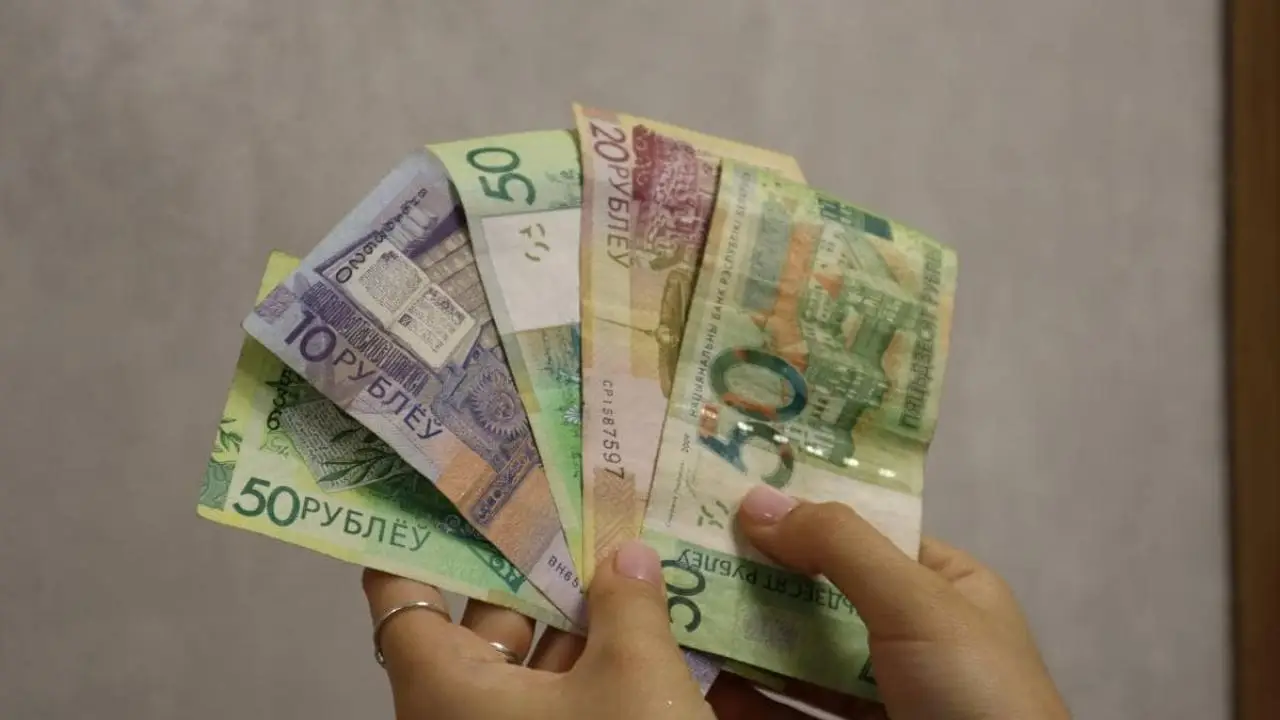
Real disposable household income in Belarus for January–August 2026 grew by 8.2% compared to the same period last year. The indicator significantly exceeded forecast values: the government planned growth of 4.8% for the year, however, after eight months the pace had already more than doubled this target.
This was reported by the National Statistical Committee.
The growth in real disposable household income in January–August 2026 amounted to 108.2% compared to the level of the analogous period of 2025.
In monetary terms, this means that Belarusian incomes are growing faster than inflation: over eight months consumer prices increased by 5.1%, and as of August, inflation stood at 4.5% – one of the lowest indicators among EAEU countries.
The main source of income remains labor compensation – it accounts for 66.6% of the overall structure.
Transfers to the population, including pensions, allowances and scholarships, account for 22%.
Income from entrepreneurial and other activities brings 6.8%, while income from ownership and other receipts is 4.6%.
Such distribution reflects a stable structure where the main part of citizens' well-being is formed thanks to wages.
The driver of income growth is wage dynamics. In real terms, for January–August 2026 it increased by 7.7%.
Even higher rates of growth are observed in labor compensation in the budget sector. The average nominal gross salary in August 2026 amounted to 3,135.9 rubles, which in equivalent terms exceeds 1,000 dollars.
The highest salary was recorded in Minsk – 4,032.7 rubles, while in the Mogilev region it amounted to 2,655.8 rubles.
The growth in real incomes was largely facilitated by measures to curb inflation adopted by the government.
Thanks to price control, earned money does not depreciate, which allows people to be more active on the consumer market.
Retail turnover for the eight months of 2026 grew by 8.4% compared to the level of the analogous period last year.
Indicators for the eight months significantly exceed forecasts. The government had planned growth of real disposable household income for 2026 at a level of 4.8%.
For the seven-month period, the growth rate amounted to 108.1%, which was already significantly above the forecast, and by August the indicator rose to 108.2%.
Deputy Minister of Economy Elena Baligatova noted that the ahead-of-schedule growth rates of income are ensured by the effective functioning of the economy. Further consolidation of the positive dynamics will be facilitated by the implementation of the production, export, and investment programs enshrined in Presidential Decree No. 342 of September 30, 2026 on the key socio-economic development indicators for 2027.