Menu
Peaceful life, stable income, and loyalty to one’s roots: what is the social portrait of a contemporary Belarusian?
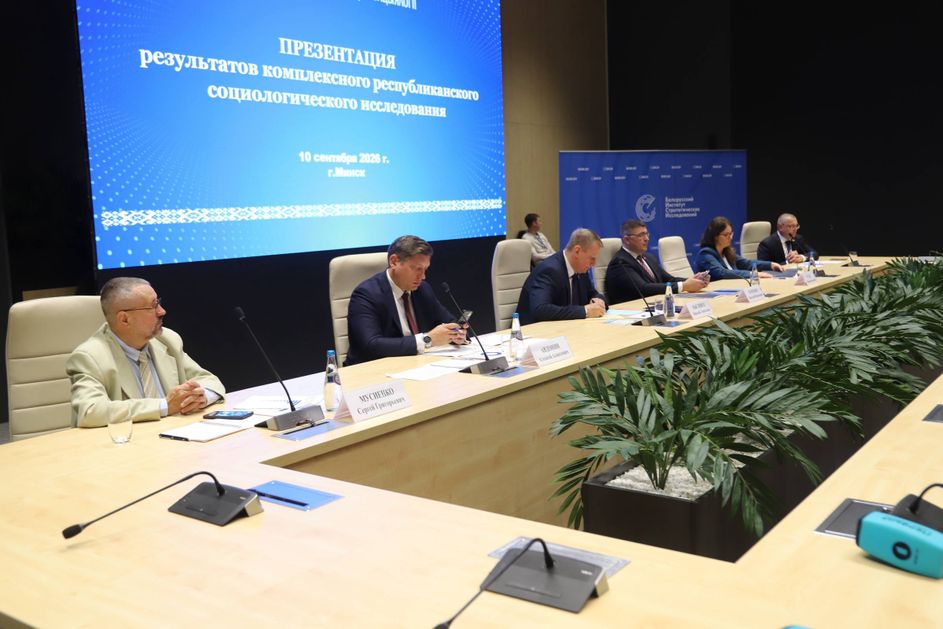
In Minsk, the first socio‑economic part of a large republican sociological study was announced, which experts call a “barometer of public consensus.” The data helped shape a representative portrait of Belarusian society, assessing its real level of comfort, key sources of pride, and financial priorities.
Who participated in the study?
Sociologists covered 99 settlements across all regions of the country. A total of 2,045 respondents were surveyed, whose sample fully reflects the demographic structure of Belarus:
Geography: 22.3% of respondents are residents of Minsk, 16.3% are residents of the Minsk Region, and the rest are distributed among other regions of the republic.
Type of settlement: 78.9% of participants represent cities, 21.1% rural areas.
Age and gender: 55.3% women and 44.7% men. The core comprised economically active citizens aged 31 to 62 (51.8%).
Education and family status: over 85% of respondents have higher or secondary specialized (professional‑technical) education. Meanwhile 55.4% are married, and 75.6% of respondents have children.
Main reasons for pride
The study showed which achievements of modern Belarus residents are most proud of. The top answers included:
Peaceful life – the absolute leader of opinions, garnering 85.2% of votes.
Quality of food products – this brand is valued by 62.5% of respondents.
Cleanliness and urban and rural development – 57.9%.
Preservation of historical memory – 37.9%.
Social security – 36%.
Moreover, more than 71% of Belarusians rate the overall level of development of their settlements highly.
Stability is also confirmed by migration attitudes: over 98% of respondents said they would not want to move abroad permanently.
Money and work: social well‑being
The economic section of the survey demonstrated the resilience of citizens' personal budgets. More than 82% of Belarusians are satisfied with their family's material situation. Meanwhile, residents of the republic show
First Deputy Minister of Labor and Social Protection Tatiana Astrayko, commenting on the results, emphasized that the study reflects healthy family values of society. Most citizens plan to have one or two children, yet many see the ideal model as having many children. For parents, the focus is on the personal development of children, ensuring them quality education and a confident start in their profession.
A Tool for Future Planning
As Deputy Director of BISI Vitaly Puchenkov noted, on the eve of the Day of National Unity, it is fundamentally important for the state to see points of convergence of the interests of various strata of the population – from youth to pensioners.
The results of the sociological study will serve as a basis for adjusting managerial decisions, developing internal policy, and long‑term strategic planning. Data processing is ongoing, and experts promise to present the socio‑political block of the study in the near future.
Tatiana Gembitskaya