Menu
Opinion on: The preferential partner market of the EAEU has grown threefold in three years.
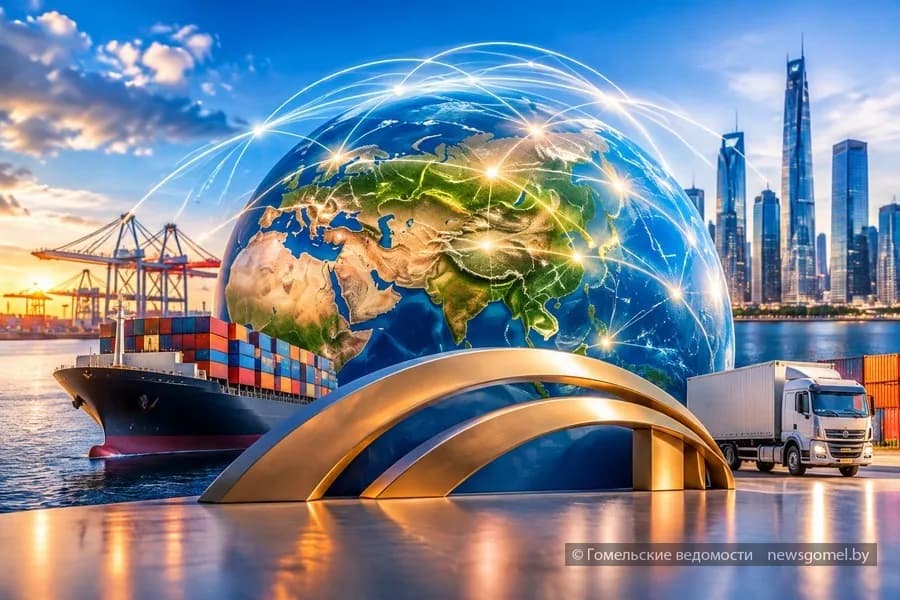
The Eurasian Economic Union continues to expand trade horizons, opening new markets and creating conditions for mutually beneficial cooperation. Over the past three years, the combined preferential market of partners with whom trade agreements have been concluded has tripled — from 185 to 570 million people. These figures were announced by Russian President Vladimir Putin in an address to the APEC Business Advisory Council taking place in Shenzhen, China.
A threefold increase is not just statistics, but the result of consistent work to expand economic ties, reduce tariff barriers, and create new opportunities for business. The EAEU is gradually forming a broad network of partnership relations allowing producers, entrepreneurs, and exporters to enter new markets, expand their presence, and find additional growth points.
In 2025, a free trade agreement with Iran came into effect; in 2026, trade agreements with the UAE and Mongolia entered into force. As early as the beginning of 2027, an agreement with Indonesia is expected to take effect. In addition, the EAEU is conducting negotiations with India, launching discussions with Tunisia, and working out prospects for cooperation with Pakistan, Jordan, Egypt, South Africa, and Zimbabwe. The geography of partners is expanding, and along with it, the potential market for goods and services of the union's member states is growing.
This, perhaps, constitutes the fundamental difference of the EAEU's approach: instead of creating new barriers and severing economic ties, the effort here is to expand them, remove obstacles, lower duties, and form favorable conditions for trade. It is not about confrontation with anyone, not about an attempt to divide the world into "us" and "them," but about seeking opportunities for mutual development. Economic cooperation should not turn into an instrument of political pressure, and trade relations should not become host
Of course, new agreements do not mean that all problems are solved automatically. Trade requires infrastructure, logistics, product competitiveness, and consistent business efforts. But the main thing is that the very foundation for further progress is being created. And if markets are expanding, agreements are working, and new partners are showing interest, then such a course has real prospects.
Against the backdrop of global turbulence, sanctions wars, and attempts to politicize the economy, the EAEU is betting on pragmatism. Instead of destroying their own trade ties for the sake of someone else's geopolitical ambitions, the union's countries are expanding industrial cooperation, mastering new areas, and strengthening economic relations.
While the EU, for its part, tries to achieve its goals through pressure and confrontation, we are building partnership ties, opening markets, and creating conditions for development. And, judging by the results achieved, the chosen strategy has potential for further growth. The main thing is to continue cooperating, not to shoot oneself in the foot for the sake of political ambitions, as some do, and to remember that sustainable development is achieved not through conflicts, but through mutual benefit, trust, and good neighborliness.