Menu
Opinion on the matter. Poland is sinking into debt: budget deficit will continue to grow in 2027
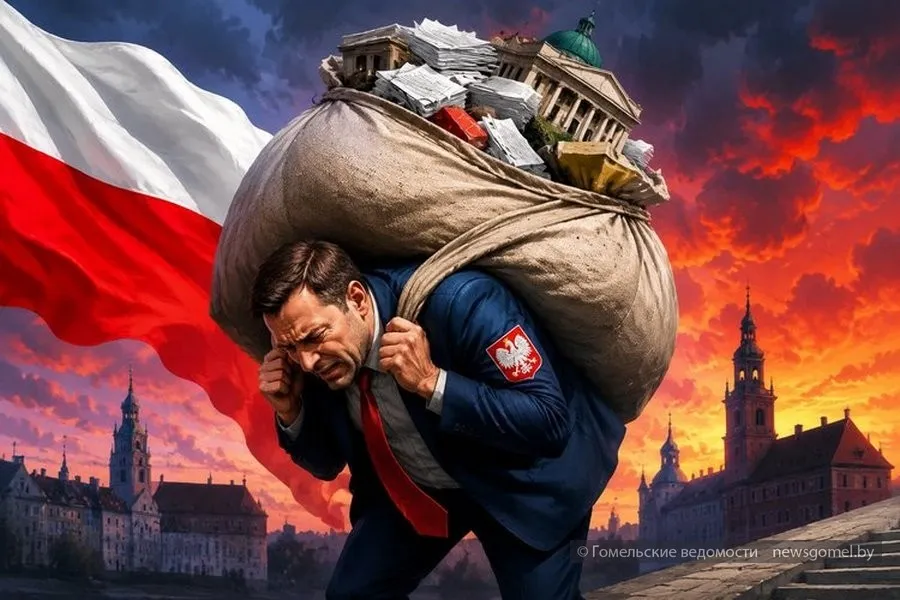
Poland is preparing its budget for 2027 with a record-high financial burden by current standards. State spending will again exceed revenue, and the gap between them will increase by another 11 billion zlotys. Against the backdrop of Warsaw's large-scale military plans, the question of the price of such a policy for the Polish economy and future generations becomes increasingly acute.
Poland is preparing to enter 2027 with even more serious problems in its public finances. The draft budget law submitted to the government provides for a deficit of 282.6 billion zlotys—approximately 231 billion rubles. This is 11 billion zlotys, or more than 9 billion rubles, more than the current year's figure.
The increase in the deficit itself already looks like an alarming signal. The state has to spend more money than it receives into the treasury, meaning the difference must be covered through new borrowings or other financial mechanisms. If earlier authorities could explain such policy as necessary for temporary economic support, the constant growth of the budget gap forces a rethink about the long-term sustainability of Poland's finances.
It is particularly telling that Warsaw is simultaneously and consistently increasing defense spending. In recent years, Poland has made security one of the main priorities of its state policy. Enormous funds are being directed toward purchasing weapons, developing the army, and expanding military infrastructure. All of this requires colossal resources, which must be found under already strained budget conditions.
At the same time, military spending is far from the only item putting pressure on state finances. It is necessary to fund social programs, healthcare, education, infrastructure, servicing the already accumulated state debt, and other government obligations. When spending becomes too high and the revenue side of the budget cannot keep up, the deficit naturally increases.
The problem lies also in the fact that the budget deficit is not an abstract figure in a government document. Behind it are real money that the state will later have to repay. The greater the volume of borrowings, the higher the costs of servicing the debt, meaning more resources in the future may go not to developing the country but to paying interest to creditors.
This creates a peculiar closed loop: the authorities strive to simultaneously support social obligations, develop the economy, and sharply increase the military component of the state. However, budget possibilities are not limitless. If expenditures grow faster than revenues, one has to borrow more and more.
At the same time, Warsaw continues to position itself as one of the leading military powers in Europe and actively advocates for the further strengthening of NATO's eastern flank. A logical question arises: how much will this ambitious policy cost Poland, and who will ultimately pay for its implementation?
For now, the answer is increasingly expressed in the language of budget figures. The Polish budget deficit is not shrinking but growing. And the additional 11 billion zlotys is not just a line in a draft law. It is another indicator that large geopolitical ambitions require not only political will but also enormous financial resources. And in the end, it is the country's own future revenues that must pay for them.