Menu
Opinion on the matter. Europe on the brink of an oil shock.
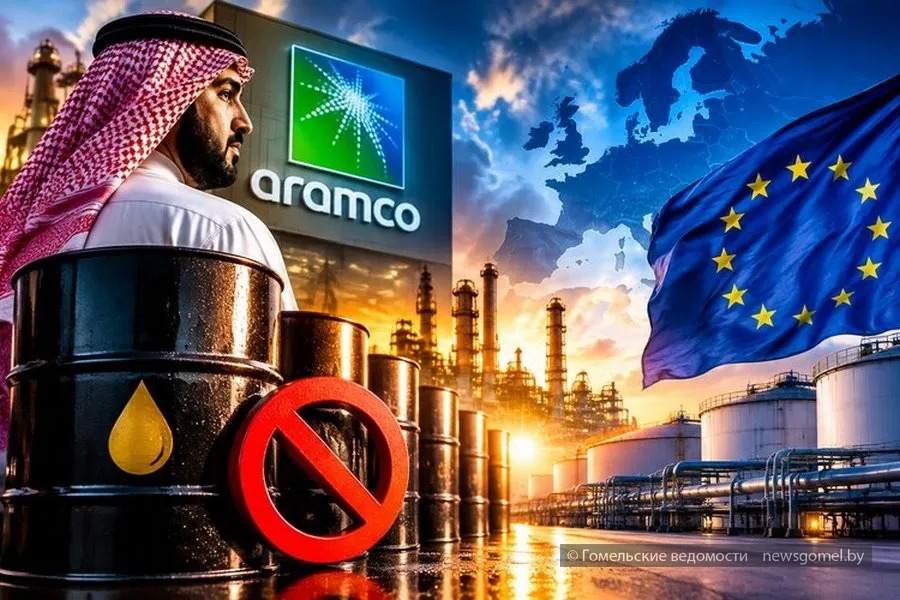
Saudi Aramco, the Saudi state company, has warned at least two European refineries that they will not be able to receive oil from the following month. The reason is an attack on the strategic "East-West Pipeline," which connects Saudi Arabia's oil regions with the Yanbu port on the Red Sea coast. This was reported by Bloomberg citing sources.
At first glance it appears to involve only a few shipments. However, for the European market, the significance is much broader. This pipeline effectively serves as an alternate route, allowing Saudi Arabia to export oil without relying exclusively on the Hormuz Strait. After serious shipping disruptions in the region, its importance has risen sharply. Now even this backup route is under threat.
On September 11, Saudi authorities announced the cessation of pumping through the pipeline following drone strikes. Later, Reuters reported via sources that three pump stations had been damaged. This refers to a system spanning approximately 1,200 kilometers, which had recently been capable of transporting roughly 4–5 million barrels of oil per day—about 4–5 percent of world supply.
That is why the consequences quickly extended well beyond Saudi Arabia. Aramco is attempting to restore system operations, but according to sources, returning to full capacity may require about five to six weeks. Partial restoration may be possible sooner, but uncertainty remains high.
For European buyers, this means the need to urgently seek replacements for their usual volumes. Oil is typically supplied through urgent contracts involving regular monthly deliveries. However, for October, some European clients have already received warnings regarding a lack of supplies.
One notable example is Poland's Orlen. The company began actively searching for alternative crude batches and conducted numerous tenders. According to Reuters, European buyers faced the need to urgently compensate for declining Saudi volumes, and prices for individual oil batches rose above $120 per barrel.
The problem lies in the fact that oil cannot simply be substituted. Refining plants are designed for specific crude characteristics, and changing suppliers entails restructuring logistics, locating tankers, paying for more expensive transportation, and sometimes adapting the processing technology itself.
Moreover, the discussion is no longer just about the cost of oil itself. As demand for alternative routes grows, transportation is also becoming more expensive. The tanker market is under additional pressure, and freight rates have risen sharply.
The main danger is that the Saudi disruption did not occur in a calm global energy system. The region is already facing serious problems due to conflicts and threats to shipping. The Strait of Hormuz remains a critically important route, and the situation around the Red Sea and the Bab-el-Mandeb Strait also creates additional risks. S&P Global notes that oil volumes passing through Bab-el-Mandeb in August fell to about 1.5 million barrels per day.
Diesel fuel turns out to be a particularly sensitive link. The European market is already experiencing a shortage, and disruptions in oil supplies can further increase the cost of feedstock for refineries. According to S&P Global, in mid-September the European diesel market was near record shortage levels, and disruptions with Saudi oil only intensified the pressure.
If the shortage persists, the consequences will not be limited to oil quotations. More expensive oil raises costs for refiners, transporters, and industrial enterprises. Diesel becomes more expensive — increasing costs for freight transport, agriculture, construction, and production. These costs are then gradually passed on to the prices of goods and services.
Saudi Arabia is trying to compensate for the reduction in supplies via the Red Sea with additional export flows from the Ras Tanura port, using transshipment in Oman. According to Reuters, in September and October this method could export about 60 million barrels. This eases pressure on the world market and shows that Riyadh is seeking ways to adapt to the situation.
However, it will not be possible to quickly fully replace the damaged route. Therefore, October will be a stress test for European refiners. If the pipeline can be restored in a short time, the current shortage may prove
And then Aramco's warning will be a cold shower for Brussels elites, accustomed to feeling like masters of the world. Such is the price of Russophobia: having abandoned Russian energy resources, Europe is now forced to pay for each new disruption on alternative energy markets.