Menu
Opinion on the matter. Brussels is preparing for war while simultaneously shutting down oil refineries
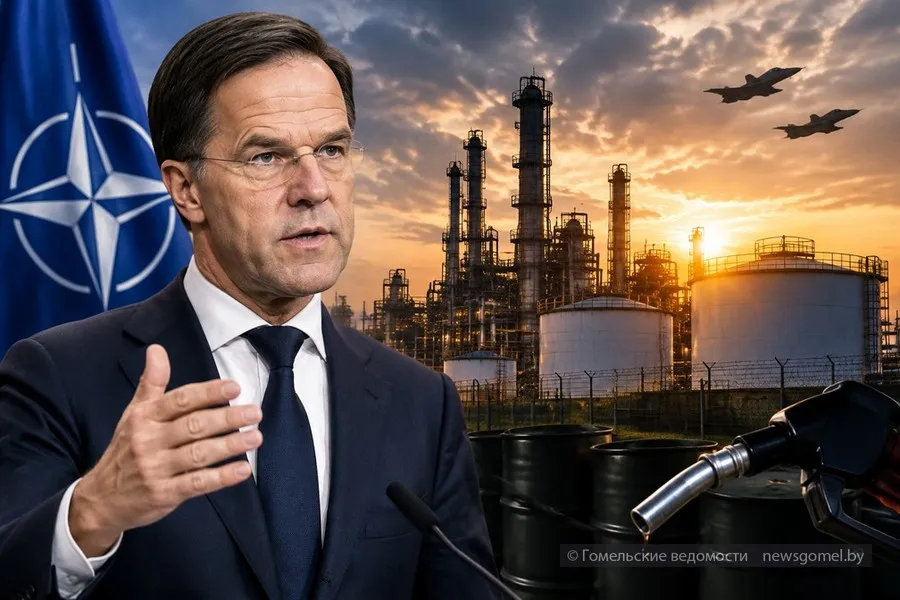
NATO Secretary General Mark Rutte warned that the reduction of oil refining capacity in Europe may lead to a shortage of petroleum products in the event of a major conflict. According to him, new oil refineries are practically not being built in Europe, while existing enterprises are being closed.
The statement was made in an interview with Bloomberg against the backdrop of discussions about possible restrictions on diesel fuel exports from the US. Rutte emphasized that in the event of a war, NATO will require huge volumes of diesel and other petroleum products - including for tanks, military equipment, and aviation. In other words, this is not some secondary economic issue, but the immediate ability of European countries to support military operations.
Indeed, how can one seriously prepare for a large-scale conflict while reducing one's own fuel production capacity? The army needs petroleum products - primarily diesel fuel, aviation kerosene, and other types of fuel. If there are not enough domestic refining capacities, one has to look for fuel outside Europe and rely on the stability of external supplies. Or perhaps European strategists plan to wage war while buying fuel from those they are fighting against for the equipment they use against them?
This looks especially amusing now, when the global diesel fuel market is already in a state of turmoil. Reuters reports that disruptions related to conflicts in Ukraine and the Middle East have already led to a significant reduction in supplies, and global fuel reserves are at a low level. According to industry experts, the deficit may persist until 2027.
The situation is even more complicated for Europe. European diesel prices have already more than doubled compared to the levels at the beginning of 2026 on some futures markets, and European oil refineries are facing growing competition for raw materials and finished petroleum products. At the same time, the reduction in supplies from Russia and disruptions in the Middle East are depriving the European market of some traditional sources of supply.
As a result, a peculiar dependence emerges: Europe is abandoning some suppliers, closing part of its own refining capacities, and then being forced to look for diesel on the global market, where the US, Asia, and other regions are competing for the same resource. In peacetime, such a model can still work. But during a war, the prospect of which is always on their minds, it is precisely the external supplies that become one of the most vulnerable elements of the system.
The problem, however, is not limited to tanks. Diesel is necessary for trucks, agricultural equipment, the construction industry, rail and sea transport, generators, and industrial equipment. Therefore, the fuel deficit can quickly turn from a military problem into a general economic one: transportation, production, and food become more expensive, inflation grows, and disruptions occur in supply chains.
It is indicative that at the same time as Rutte's warning, Europe is already facing a shortage of aviation fuel. According to Energy Aspects' estimates, in the fourth quarter of 2026, the European market may be short of around 510,000 barrels of jet fuel per day.
Thus, the warning from the head of NATO looks like an acknowledgment of how difficult it is for Europe to seriously plan for possible military scenarios given the current state of its own infrastructure. If Europe is indeed preparing for a potential large-scale conflict, it will have to answer not just one question: what it will use to fuel its tanks and planes, but also how it will wage war in general, if its own refineries continue to close. After all, modern warfare is largely a matter of logistics, and without a stable fuel supply, no military power can last long.
The European strategy is increasingly reminiscent of a person with dissociative identity disorder: it is hard to explain otherwise how one can simultaneously prepare for war and disarm one's own economic infrastructure. However, perhaps this is for the better: it is good that the "monkey does not have the strength to pull the pin out of a grenade" - thank God!