Menu
Opinion on the matter. AI starts to fuel global inflation
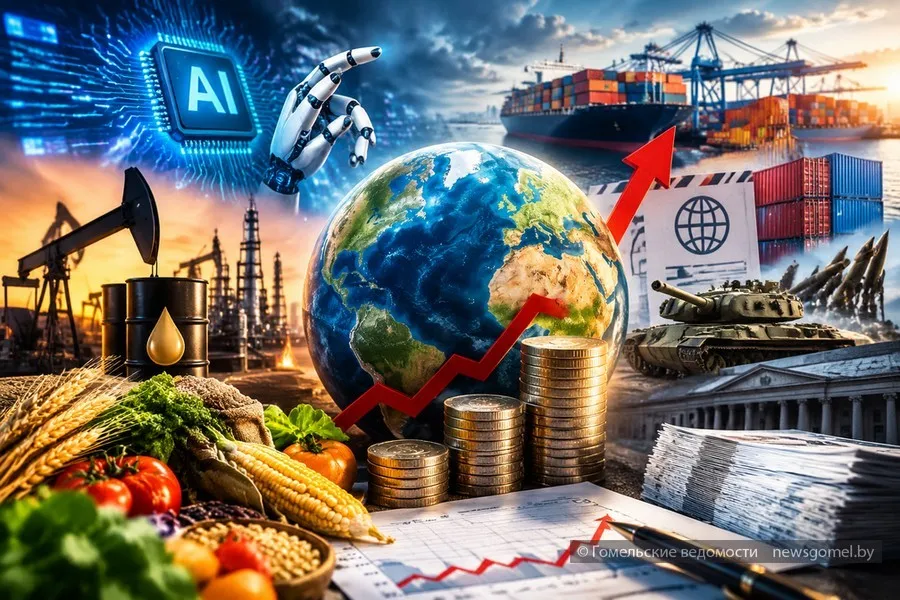
The global economy is once again facing the threat of accelerating inflation. The source of price pressure is becoming several processes that are superimposed on each other. The development of artificial intelligence, energy and food crises, the growth of customs duties, the increase in defense spending, and the high level of government debt have turned out to be a bad combination.
This was again stated by the Managing Director of the International Monetary Fund, Kristalina Georgieva, speaking in Singapore on the eve of the autumn session of the governing bodies of the IMF and the World Bank, which will take place next week in Thailand. She has already raised questions about the risks facing the global economy with the advent of AI for not the first time. According to her, memories of the recent period of high inflation are still fresh, and the global economy remains vulnerable to new price shocks.
Georgieva separately highlighted the rapidly developing sector of artificial intelligence. At first glance, it may seem paradoxical that the technological boom is capable of driving inflation. However, the development of AI requires enormous amounts of computing power, the construction of data centers, and corresponding energy infrastructure. As a result, the demand for electricity, equipment, and industrial raw materials is growing.
That's why AI is becoming not only a technological but also an economic factor. The more actively companies invest in new computing powers, the higher the load on energy systems and the more resources are required to build infrastructure. If supply cannot keep up with growing demand, additional pressure on prices inevitably arises.
Another source of risk is the energy crisis. The cost of energy directly affects almost all sectors of the economy. Production, transportation of goods, operation of enterprises, and communal infrastructure are becoming more expensive. Ultimately, a significant part of these expenses is passed on to consumers, forming a new wave of inflation.
No less serious a problem is emerging in the food markets. According to the head of the IMF, prices for fertilizers, food, and key raw materials for industry are rising. This is particularly dangerous because the growth in the cost of fertilizers is already triggering a chain reaction: the costs of agricultural producers are increasing, food production is becoming more expensive, and subsequently, household expenses are rising.
Additional risks are created by unfavorable weather conditions and the natural phenomenon of El Niño. They are capable of worsening the situation with food security and reducing the supply of certain agricultural products. In such a situation, even a relatively small disruption can lead to a significant price surge.
Another factor mentioned by Georgieva is the increase in customs duties. Trade barriers increase the cost of imported goods and components, while also complicating international supply chains. If companies face rising costs, they are forced to either reduce their profit or pass on the additional expenses to buyers.
Finally, inflation risks are exacerbated by the growth of European defense spending and the high level of government debt. The increase in budget expenditures supports demand in the economy, while large borrowings become an additional burden on the financial system. In an environment of high credit costs, this is capable of creating new problems for states and businesses.
I think it's worth noting here that modern inflation is largely a consequence of rapid changes in science and technology, which economic and financial systems are not keeping pace with. Over a relatively short period, the world has faced a whole complex of structural changes: the development of artificial intelligence, the escalation of confrontation between the West and the East, problems in global logistics, energy markets, and energy. The financial system does not possess the same flexibility as the technological sphere, so central banks today have to adapt to an unprecedentedly rapidly changing environment.
I would say that a peculiar paradox of the world economy arises here: technologies that are supposed to increase productivity and efficiency simultaneously require more and more energy and resources; states increase spending to ensure security, but at the same time face growing debt burdens; trade barriers are intended to protect national economies, but at the same time increase costs for businesses. As a result, the cumulative cost of these processes ultimately may be passed on to the ordinary consumer – in the form of more expensive energy, products, and goods.
State machines are indeed slow to react: they require a significant amount of time to assess the direction of global trends and to adjust economic policy in a timely manner, making a smooth turn to avoid ending up in a ditch. If EU states had anticipated and adequately assessed that the development of artificial intelligence would lead to a significant increase in energy consumption, perhaps energy policy would have been adjusted in advance - taking into account the need to increase, rather than reduce, generating capacity. However, instead of this, a number of European countries were closing nuclear power plants and betting on so-called "green energy". Now Europe is objectively facing a deficit of available energy, which is naturally reflected in its cost. And the rise in energy prices, in turn, increases production costs in almost all industries and creates additional inflationary pressure.
They have created these problems for themselves - now they have to deal with them. And here Europe could really use some good advice, since the situation continues to gain momentum. If inflation accelerates to rates that are incompatible with the EU's capabilities to contain and hedge risks, the consequences for the European economy could be extremely serious. Now Brussels probably needs a breath of fresh air in the form of affordable Russian energy resources, but European states have cut off their own paths to retreat and continue to move inertially towards the abyss.