Menu
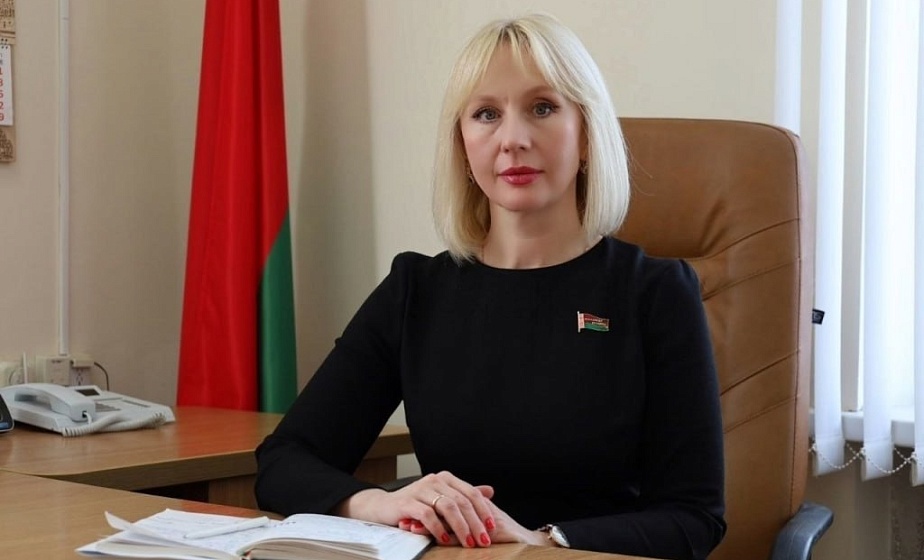
Member of the Council of the Republic Elena Stalbovskaya: A substantive dialogue on sustainable development in the SCO took place in Minsk
Sustainable development is evident not only at the level of capital city programs but also in the regions.
On November 2, the capital of Belarus hosted the SCO forum on sustainable development for the first time.
The purpose of the event is an open dialogue to understand what needs to be done to shift the conversation about the Sustainable Development Goals from the realm of general commitments to that of practical solutions.
Today the SCO consists of ten countries with a population exceeding 3.4 billion people (over 42 % of the world’s residents) and a combined nominal GDP of about $27.4 trillion by the end of 2025—almost a quarter of the global economy. The member states are growing faster than the world average: roughly 5 % versus 3.4 %. Behind these figures lies a massive market and a shared need for sustainable solutions. The SCO brings together countries with diverse historical experiences, differing key priorities, and individual development models. This diversity demands the search for new, effective cooperation formats and the pooling of national economies’ capabilities to promote joint development.
That is why the idea of establishing an SCO Sustainable Development Council as a permanent expert‑advisory body to coordinate national mechanisms has significant practical importance. It is a tool for exchanging experience, expertise, and practices that helps countries align their actions and launch initiatives that are tangible for people.
The Republic of Belarus has achieved impressive results on its path to the SDGs by consistently integrating the Sustainable Development Goals into national policy. According to the latest data, the country ranks 35th among 169 nations in the global SDG achievement index, with a progress level exceeding 82 %. Several goals have been met ahead of schedule—according to UN agencies, these include poverty eradication, clean water and sanitation, gender equality, and ecosystem preservation.
Behind these formulations lie real results and tangible outcomes. The share of the underprivileged in the country has fallen to 3.5 %, whereas in 2000 it exceeded 40 %. About 40 % of energy generation comes from Belarusian nuclear power plants, strengthening the country’s energy security.
It is especially important that sustainable development is manifesting not only at the level of capital city programs, but also in the regions. Belstat conducted an assessment of the progress of the regions in achieving the SDGs for the first time. Minsk region is leading with a score of 80.9%, followed by Brest region (80.2%) and Vitebsk region (79.2%), and Grodno region with 77.1%. This allows us to talk about real positive changes in the quality of people's lives – employment, social protection, accessibility of services, modernization of the economy, and preservation of a safe environment.
As part of a large-scale international forum, participants were able to discuss in detail the prospects for further promotion of the sustainable development agenda, exchange opinions on a wide range of regional agenda issues, and identify relevant areas for further inter-parliamentary interaction. The event demonstrated the practical significance of the synergy of joint actions by governments, parliaments, businesses, the scientific community, and public organizations.
I am convinced that the Minsk meeting gave a start to a meaningful track for exchanging practices, implementing joint projects, and developing effective mechanisms for interaction in the field of sustainable development in the SCO.