Menu
Its own nuclear power plant and upgraded grids. How Belarusian energy has changed in 25 years.
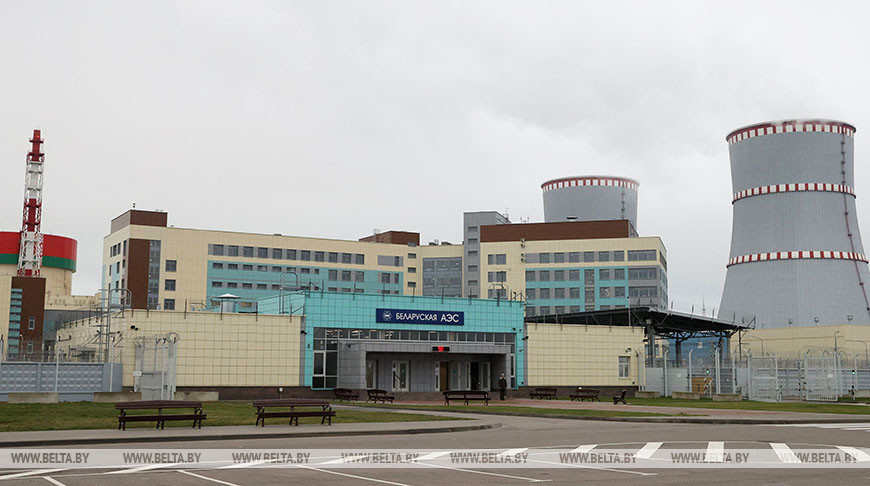
On the 25th day of today, the Ministry of Energy of Belarus turns 25 years old. Over the quarter century, the power system in Belarus has grown in capacity, electric and thermal networks have expanded, and heat losses have decreased. The introduction of the Belarusian NPP changed the structure of generation and created the foundation for developing new areas of electrical consumption – heating housing, electric transport, and industrial technologies. Correspondent of BELTA, Minister of Energy Denis Moroz, told the reporter how the Belarusian energy system has been transformed and what the prospects for the future are.
From Import – To Self-sufficiency in Electricity
In the early 2000s it was necessary to solve strategic questions regarding the development of the Belarusian economy. Energy resource consumption was growing, industrial production was being restored, and there needed to be an answer to the question of what would happen next in terms of energy. Therefore, a separate state administrative body – the Ministry of Energy – was established. Together with the government and the head of state, MinEnergo determined the further course of the industry's development. An important task was ensuring the country's energy independence.
"Belarus at that time was an importer of electrical energy. We were forced to buy quite significant volumes. In 2001 we imported approximately 8 billion kWh. And in 2019 our country had turned into a pure exporter of electrical energy. We created energy capacities that produced the required volume of electricity for increasing needs both within the country and abroad," noted Denis Moroz.
Over the past 25 years, the power system capacity and electricity generation in Belarus have grown by approximately 1.6 times, consumption – almost by 30%, the length of electric networks increased by 46.42 thousand km. Heat losses decreased from almost 10% to less than 7%.
Atomic Generation
The Belarusian NPP became the largest energy development project in recent decades. The decision to build the nuclear station was made in 2008 to improve the country's energy security. The first power unit entered industrial operation on June 10, 2021, the second one on November 1, 2023. The installed capacity of the station in the balance of the unified Belarusian energy system is 2400 MW. Since the station was connected to the energy system, more than 67.5 billion kWh of electricity has been generated. The share of BelAES in the generation of electricity by the energy system is about 40%.
For integrating the Belarusian NPP into the energy system, more than 1,000 km of new 330 kV airlines have been built and about 700 km of operating lines at 110-330 kV voltage have been reconstructed. The station serving the Grodno, Vitebsk, and Minsk regions has been connected by seven 330 kV lines.
In 2024, peak-reserve sources with a total capacity of 825.6 MW were introduced at four energy objects. These installations can deliver their nominal power to the grid within 15 minutes. At 20 energy objects for integrating the Belarusian NPP, electro-catalytic units with a total capacity of 916 MW have been introduced.
Radioactive Waste Disposal Site
Even before the construction of the Belarusian NPP was completed, the issue of how to handle radioactive waste was actively discussed. A corresponding strategy has been adopted in the country and plans have been made to build a radioactive waste disposal site. A special enterprise – BelRAO – has been created to organize this work. Three alternative sites for placing the site are being considered: Khoynitsky district (Gomel region), Ostrovetsky district (Grodno region), and Mstislavsky district (Mogilev region). "This is a specific object. There are certain requirements regarding geology, hydrology and other parameters. We conducted extensive work and analyzed all of Belarus. First we identified approximately 20 potential sites. Then an expert community determined that the three sites had the greatest prospects, which underwent environmental impact assessments. This is already pre-project preparation, when details of constructing this object are being worked out," explained the minister.
After the environmental impact assessment in the three prospective areas, public discussions took place: August 20 in Ostrovets, August 26 in Mstislavl, and September 10 in Khoynitsk. Following consideration of all factors and proposals, a decision will be made on the location of the radioactive waste disposal site. As the minister emphasized, safety issues are paramount. Multi-barrier protection and special engineering-technical solutions will be provided.
Updating thermal networks and digital technologies
By the beginning of 2026, from 7.8 thousand km of thermal networks belonging to the organizations of "Belenergo" (single-bore calculation), 4.1 thousand km have been completed using previously isolated pipes. The infrastructure update is accompanied by reduced losses.
In 2021, the first digital substation of 330 kV voltage class "Mogilev-330" was opened. Another example is the 110 kV substation "Aul's", where an automated control system for technological processes was created based on software from domestic developers.
New directions of electricity consumption
"At the beginning of the 2000s, the volume of electricity consumption exceeded 30 billion kWh. In 2025, it surpassed 43 billion kWh. This means that the economy grew, the population's standard of living increased, and all this was accompanied by the development of the energy industry," noted Denis Moroz.
The increase in electricity generation in the country enabled the development of new directions of electricity consumption. The use of electricity for heating and hot water supply by the population and equivalent consumers grew from 93 million kWh in 2020 to 1.2 billion kWh in 2025 – almost 13 times. From January to July 2026, the indicator reached about 1 billion kWh. As of August 1, 2026, more than 143 thousand household subscribers used electric energy for these purposes.
During 2021-2025, 89,979 individual residential houses were connected for these purposes. From January to July 2026, another 10,818 were added. During the first seven months of 2026, 22,470 requests for issuance of technical conditions were received, and 21,121 technical conditions were issued, or 94%. The growth of electroheating demonstrates how the development of energy...