Menu
Investments, new production facilities, and a comfortable environment: results of the socio-economic development of the Mogilev Region
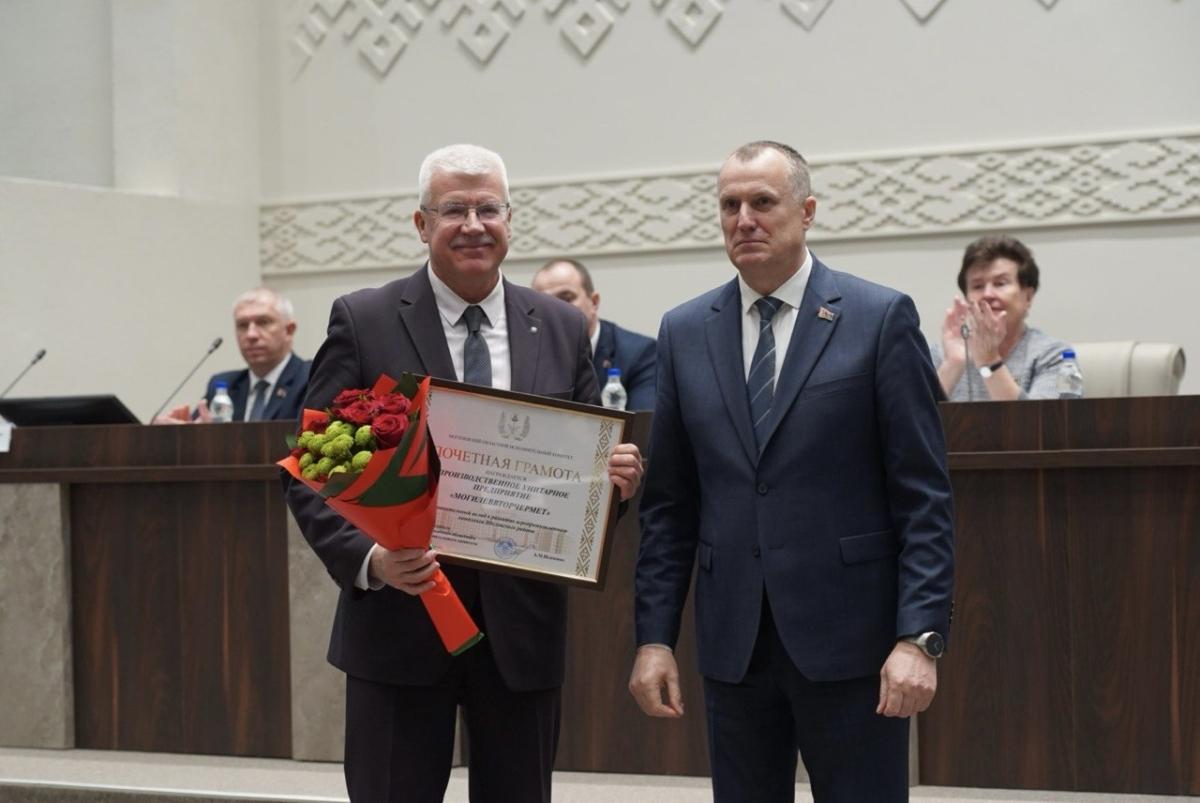
In the Mogilev Regional Executive Committee, the results of the socio-economic development of the region for the nine months of 2026 were summarized and the progress of implementing the new five-year program was assessed. The main topics of the meeting were strengthening the economy, attracting capital, housing construction, and the development of social infrastructure.
The meeting was chaired by the head of the Regional Executive Committee, Anatoly Isachenko. Participants included the Deputy President of the Republic of Belarus — Inspector of the Mogilev Region, Nadya Kotkovets, Chairman of the Regional Council of Deputies, Alexander Goroshkin, Deputy Minister of Economy, Maria Majinskaya, parliamentarians, delegates of the All-Belarusian People's Assembly, heads of local government bodies, enterprises, and organizations of the region.
Before the official agenda, a ceremony of awards was held. Nadya Kotkovets presented Certificates of Gratitude to the head of the Administration of the President of the Republic of Belarus for the contribution of enterprise and organizational representatives to the development of Shklovsky District. Anatoly Isachenko also handed awards to employees and heads of labor collectives.
Opening the discussion, the head of the region identified the main target of the current five-year plan, which is the real improvement of the well-being of each resident. According to his words, during the past months the region was able to maintain a positive dynamic in key indicators. Now the region faces the task of reaching a qualitatively new level of living standards, which is impossible without strengthening the real sector and a constant influx of investments.
The context of regional successes was set by Deputy Minister of Economy Maria Majinskaya, who presented the national development program for 2026-2030. The document is based on seven priorities and more than sixty indicators covering production, demographics, education, and healthcare. As the ministry representative emphasized, these measures will allow the economy to successfully adapt to changing external conditions and reduce dependence on external factors.