Menu
In Turkey, fragments of wood from the time of the Great Flood have been discovered
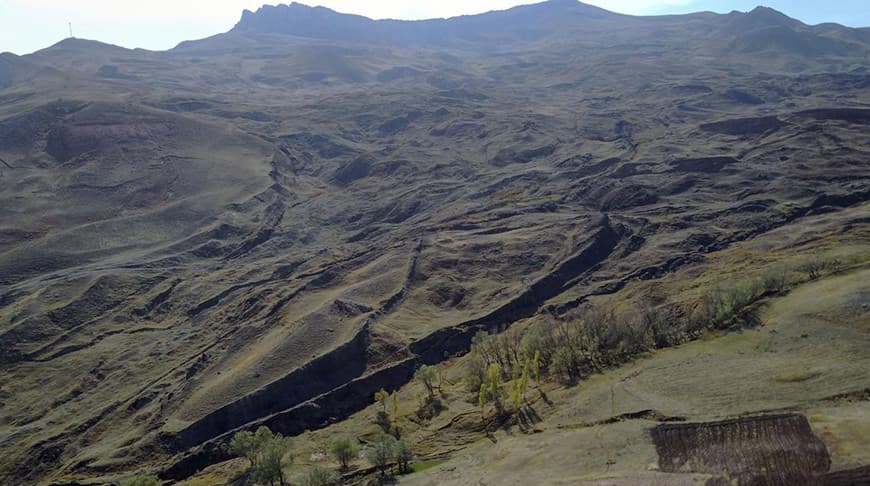
Radiocarbon analysis of wood fragments found in the search area for Noah's Ark near Mount Ararat in Turkey has shown that their age may be around 4,000 years. This coincides with the time of the global flood described in the Old Testament, reported Professor Cenkver Atilla of Sivas University (Turkey), who is leading the international project to search for the biblical vessel, according to TASS.
According to him, the analysis was conducted in the USA. Scientists are also awaiting the results of similar studies of artifacts from Switzerland and Turkey to confirm their origin, writes the newspaper Cumhuriyet.
"Yesterday, we received the results from an American laboratory. According to the sacred books, the global flood occurred around 2300 BC. The results of the radiocarbon analysis perfectly match this time. In our analysis, the wood samples were dated to the period between 2200 and 2400 BC. This is a very important and interesting result for us," noted the scientist.
Earlier, it was reported that fragments of charred wood, preserving signs of human processing, were found by archaeologists at a depth of about 9 meters under a rock formation in the Durupinar area, 28 kilometers from Ararat, during excavations from June 28 to September 30. Its contours and 164-meter length correspond to the size of the ark described in the Old Testament.
Also, this year, clay vessels were discovered in the Durupinar area, which are believed to date back to the period before the global flood.
According to biblical traditions, the righteous Noah, by the command of the Almighty, built an ark to save his family and animals from the global flood. After the flood ended, the ark came to rest in the Ararat mountains. In 1949, a US Air Force plane, while on a secret flight mission, photographed a geological formation in Durupinar, which the scientific community called the "Ararat anomaly".