Menu
In Gomel, forensic experts met with medical students.
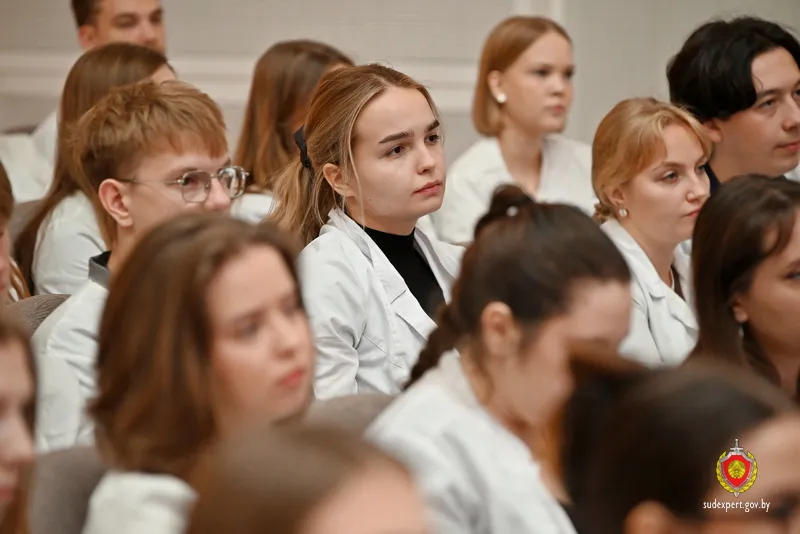
A career orientation event was held at Gomel Medical University. Representatives of the central office of the State Service for Forensic Expertise (GKSÉ), all regional offices, and the Minsk office met with graduates of the medical, medical‑diagnostic, and medical‑preventive faculties.
The partnership between the GKSÉ Gomel regional office and the university is developing: a cooperation agreement was signed in 2024, a professional mastery contest among experts was held in 2025, after which students participated. Four experts teach at the department of pathological anatomy, and two are enrolled in postgraduate studies.
"We are proud of the target‑trained students who chose the profession of forensic expert. Our graduates serve honorably," said the rector of Gomel Medical University, Irina Nazarenco.
For the second year, GKSÉ representatives travel to Gomel to explain the conditions of service and prospects for advancement.
"Forensic expertise requires broad knowledge. One must compare medical data, morphology, and laboratory diagnostics," noted Ivan Provada. He emphasized that forensic medicine is not only work with deceased bodies.
Pavel Bakshansky assured that the agency has created conditions for advancement, with each young specialist assigned a mentor.
Students were told that annually GKSÉ conducts about 250,000 examinations across more than 160 types of studies, and since 2013 in total more than 2.5 million.
Student Yana Miftakhova admitted that she admires the experts but does not see herself in the profession. Victoria Mazur is interested in genetics and forensic medicine. Vladislav Nahimov, a future anesthesiologist‑therapist, considers such meetings useful for broadening his perspective.
The meeting took place in an open dialogue format. Experts noted that their work helps restore justice and protect citizens' interests.