Menu
In Belarus, a service has appeared where you can buy leftover materials after construction and renovation.

Building a house or renovating an apartment often ends in overpayments and a mountain of unused materials. Almost everyone has a bag of dry mix, leftover tiles, or a "spare" roll of wallpaper gathering dust in the garage or on the balcony for years. It's a shame to throw them away, but there's no time or energy to sell them. On the scale of large construction companies, this problem turns into hundreds of thousands of "burned" rubles: dead stock and leftovers from completed projects gather dust in warehouses for years, lose their marketable appearance, and eventually end up in a landfill. The creators of the Secondstroy portal—a specialized aggregator for buying and selling construction leftovers—decided to connect those who don't know where to put materials and tools with those who want to save money. We spoke with the project's author about how the platform works for ordinary people and legal entities, who controls prices, and whether it's really possible to do renovations several times cheaper.
The project's founder is Alexey Didenko. By education, he is an engineer. He has been working in the construction sector since the early 2000s: he started with small renovations, then for more than 15 years he headed a construction company with a staff of more than 50 people—he built large structures as a general contractor and was involved in major repairs and reconstructions.
— Absolutely every construction organization faces the problem of leftovers. For example, you take on a new project and buy materials. Somewhere in the project there was an error, or plans simply changed—and now part of the materials is no longer needed. This becomes clear a few months later, when returning the goods to the seller is no longer possible. The materials are sent to a warehouse, where they are moved from place to place, losing their properties and quality. Then they are simply written off and taken to a landfill, and the company thus loses profitability.
Later, Alexey encountered the same problem, but from the other side, when he started building his own house.
— At work, you look at the figures in the estimate and don't analyze them. But when it comes to personal money, you realize how enormous these costs are. At the same time, prices for construction materials are constantly rising. And I thought: on the one hand, warehouses packed with leftovers and discarded tools; on the other, people looking for ways to save. Then I began to think about how to help both at the same time?
The solution was found in creating a specialized aggregator—a marketplace where construction companies and ordinary people can quickly sell their leftovers, and buyers can purchase materials below market value. That's how the Secondstroy portal came to be.
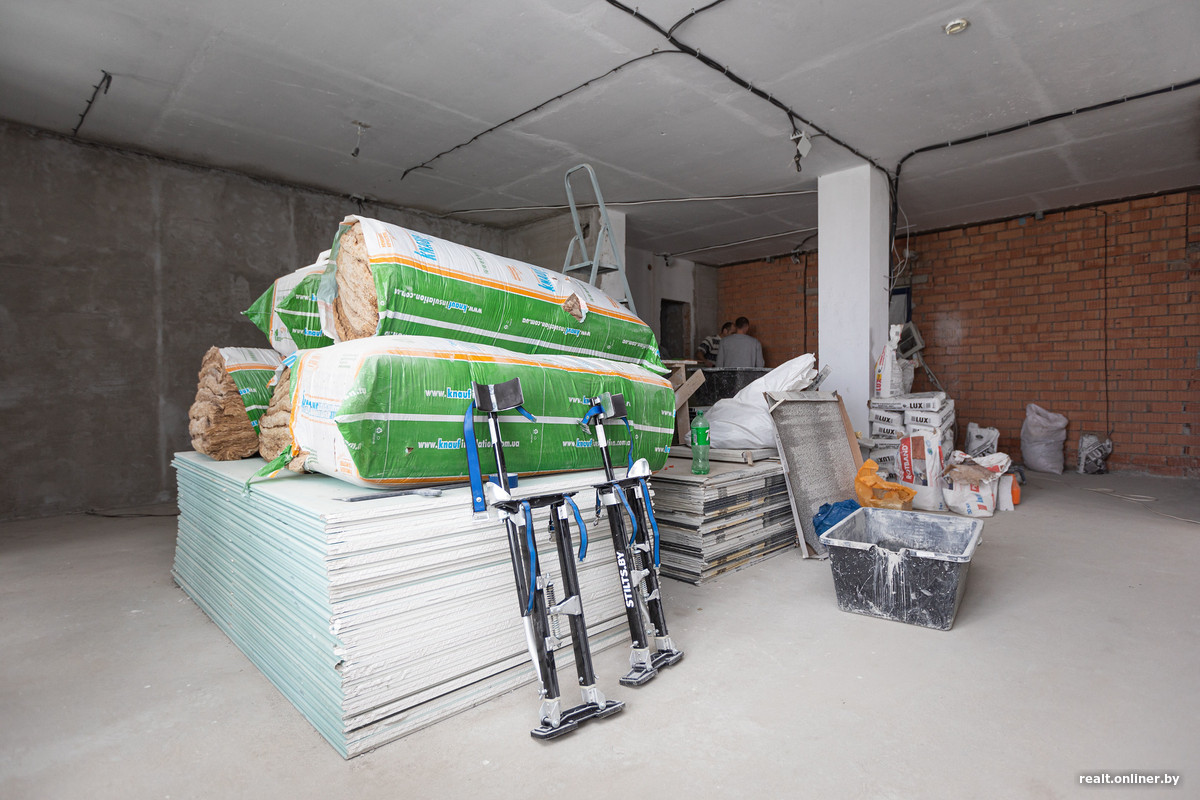
Officially, it started operating in May, although its creation story has been going on for two years already.
— At first, we opened an offline store where construction companies could place their products, and a mobile app. But development was unstable, and this format didn't allow for scaling. Then our team underwent training, after which we decided to abandon offline sales and move completely online: refine the app and build a full-fledged website.

Now, according to Alexey, the portal hosts more than 6,000 listings. Both individuals and legal entities can publish them.
For ordinary citizens, the service is completely free. The process is extremely simple: just register, take a couple of photos of leftover tiles or remnants of plaster, and create a listing specifying the price, delivery options, and other details.
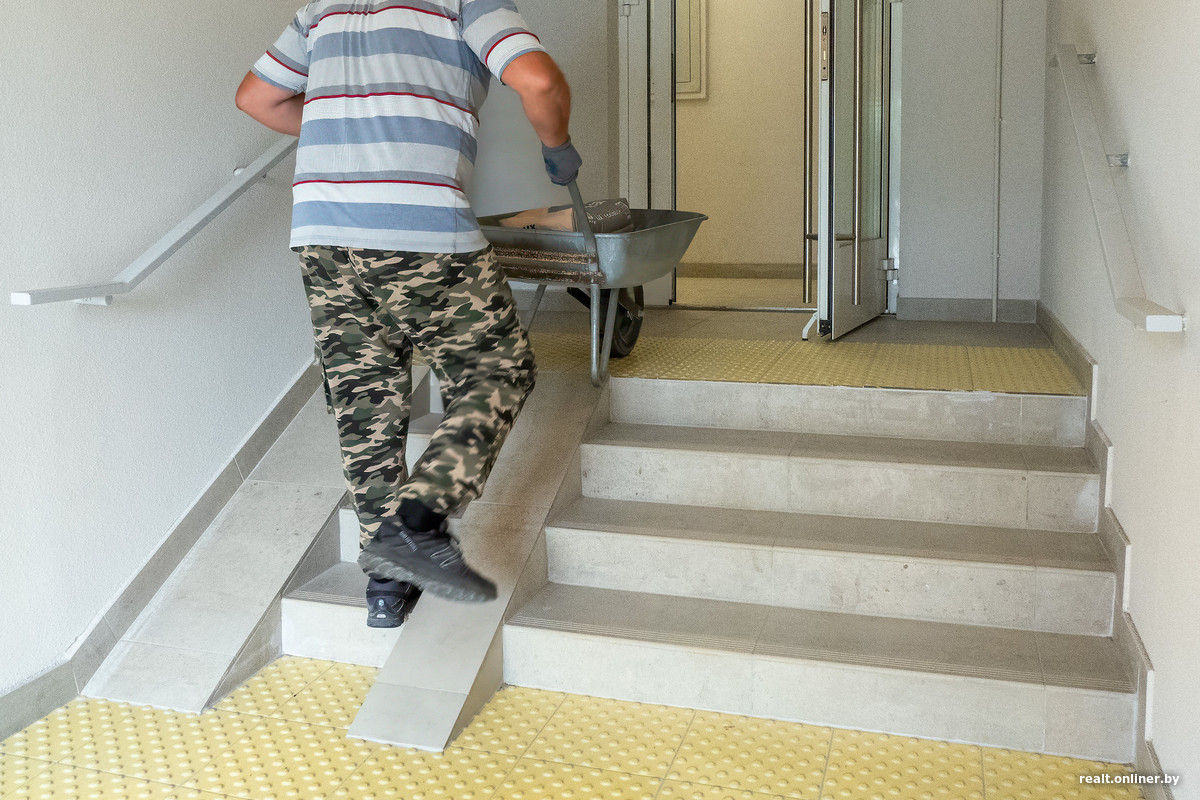
For companies, registration is also simple, but they will have to sign an official contract with the platform.
— We don't charge a subscription fee for publishing listings; a commission is taken only for an actual completed transaction. The commission rate depends on the seller and the product. For large retailers, such as those selling discounted goods, the commission is minimal at 3–4%. For construction companies and manufacturers selling stale illiquid stock, the commission can reach 15%. If builders don't want to handle sales themselves, Secondstroy managers can go to the company's warehouse, conduct an assessment, take photos, classify the goods, create product cards, and see the deal through to sale — for this service, the commission is 20%.
Now let's look at the platform from the buyer's perspective. Before starting to choose materials, the user needs to complete a quick registration on the site — this is a mandatory condition for everyone.
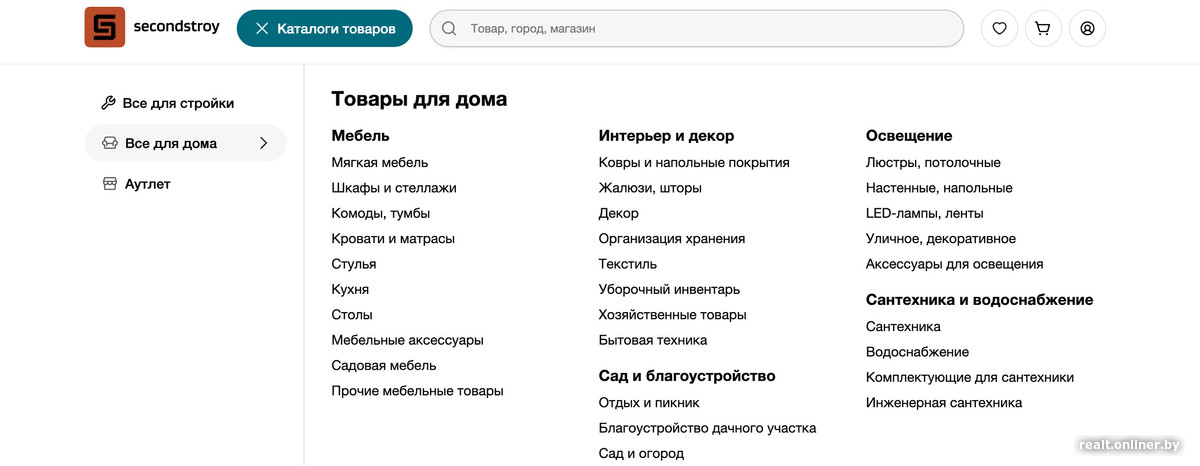
The catalog is divided into two large categories. The "Everything for Construction" section includes building materials (from blocks to plaster), flooring and wallpaper, doors and windows, as well as any construction tools and equipment. The second category, "Everything for Home," covers furniture, decor, textiles, lighting, and everything needed for the garden and landscaping. For those looking for large volumes or products exclusively from companies, there is a separate "Outlet" section, which includes items from all categories, but strictly from legal entities.
Filters help you find what you need. A buyer can quickly sort out offers by seller type, price range, item condition, and delivery method — choosing pickup or options with direct home delivery. Moreover, products are offered not only in Minsk but also in other cities of Belarus.
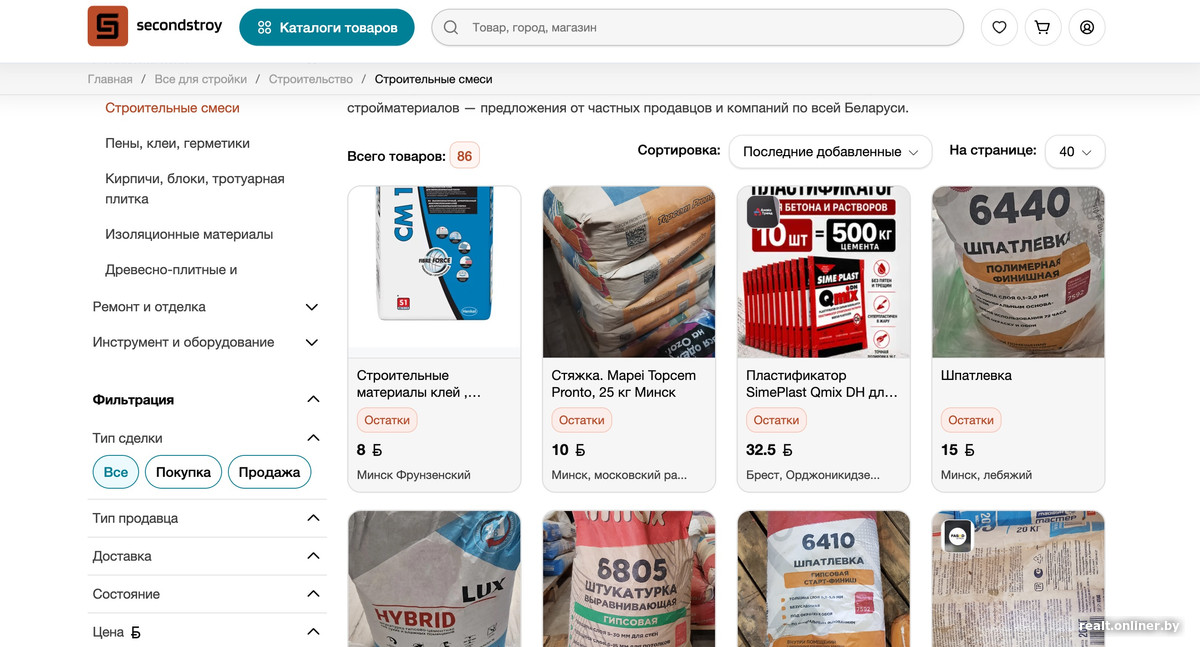
The further purchase scenario depends on who exactly the product is being bought from. In a transaction with an individual, the buyer contacts the seller directly by phone or through the built-in chat to arrange the deal. If the product is purchased from a legal entity, the item is added to the cart, after which an order is created, and a platform manager or company representative contacts the buyer to clarify details.
At the moment, Secondstroy does not participate in financial transactions: all payments go directly between the buyer and the seller. However, the project's development plans already include launching payments directly on the site to make transactions safer.
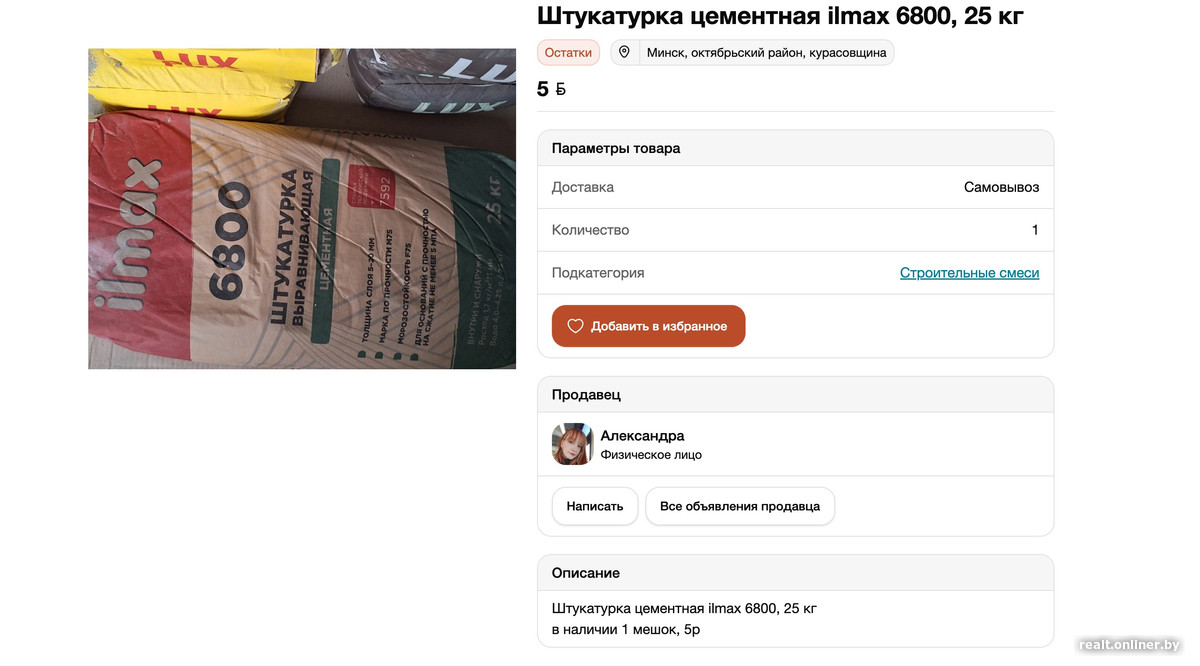
Now, what about the savings? Let's look at specific examples. New Danogips Dano Jet 5 putty weighing 25 kg is sold on well-known marketplaces for 45 rubles, while on Secondstroy it can be found for 20 rubles. New leveling plaster "Typhoon Lux Hybrid" weighing 30 kg costs about 25 rubles in stores, while on the platform it is given away for 17 rubles.
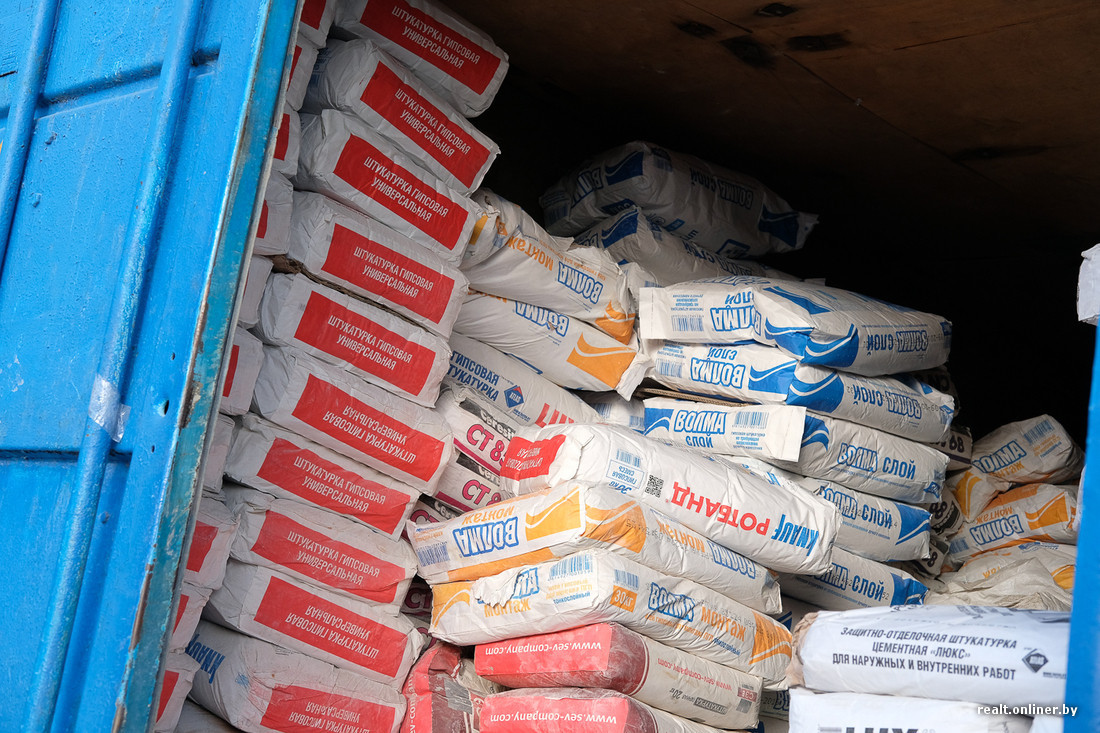
True, some sellers still try to cheat.
— During our work, we encountered a problem: some legal entities began listing goods on the platform at standard market prices. To preserve the concept of a discount platform, we will soon introduce automatic AI-based moderation. The neural network will scan the Belarusian building materials market and analyze prices for similar items in all possible places to buy. The price of a product on Secondstroy must be at least 20% lower than the average market price, which the artificial intelligence will calculate. If it is higher, the listing simply will not pass moderation.
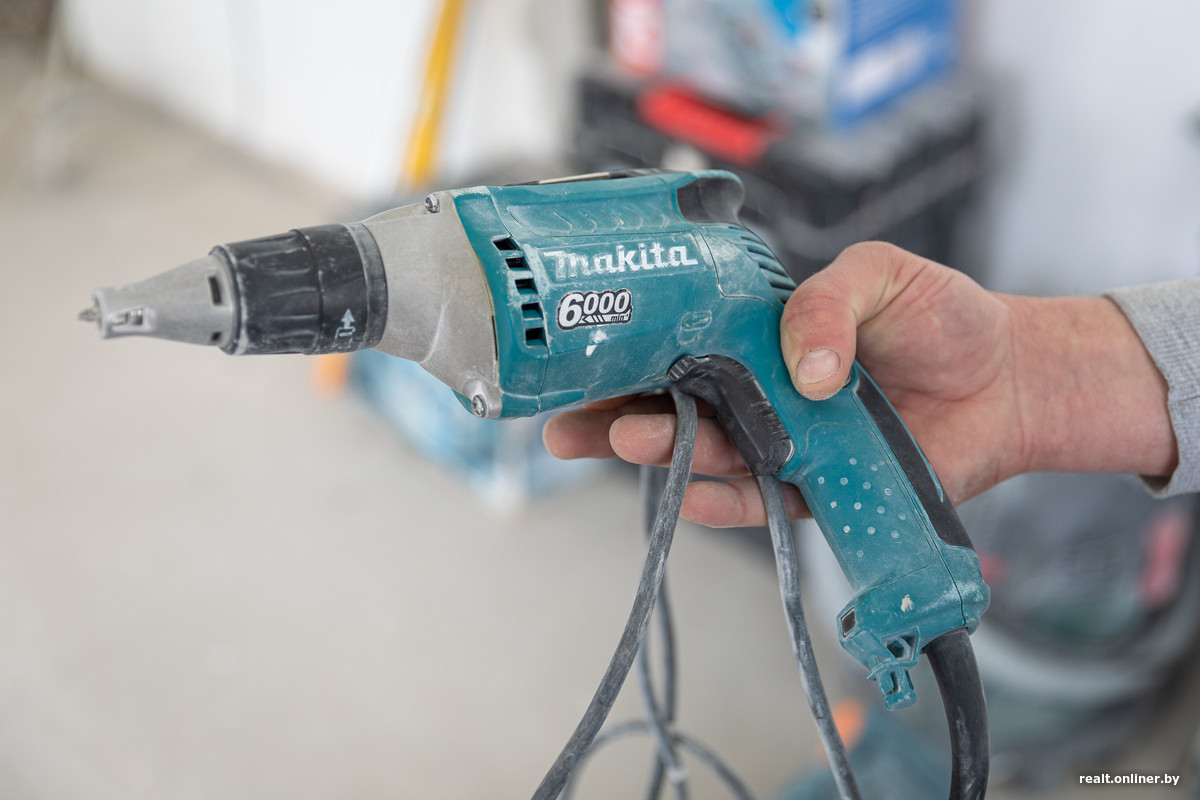
Well, the idea looks at least interesting: free up warehouse space for businesses, give ordinary people a chance to earn, and save money for those who are starting a renovation. Whether Secondstroy will become a truly popular people's marketplace or not, time will tell.