Menu
If you replace the bulbs in your car's headlights with more powerful ones
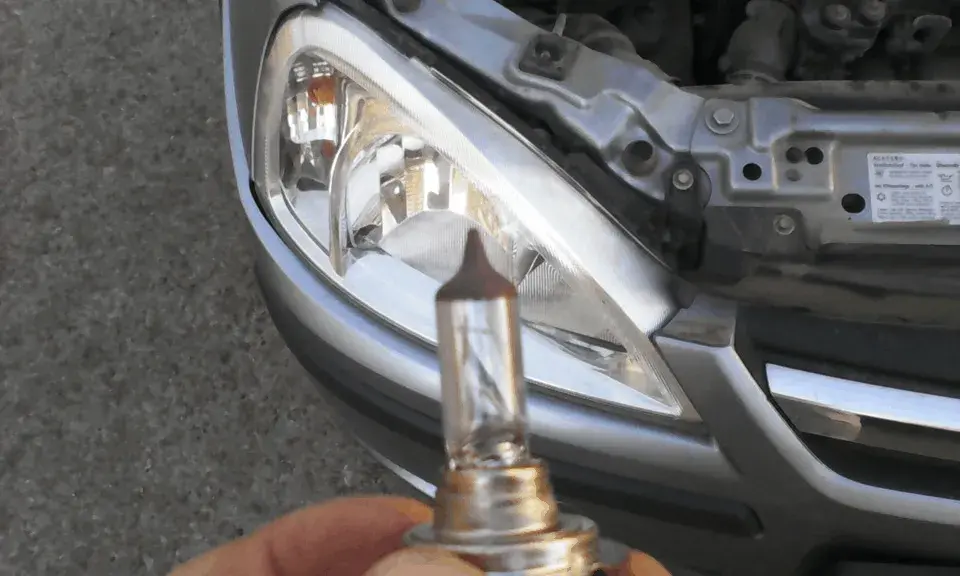
– How does the installation of headlight lamps in vehicles that are brighter than those not approved by the manufacturer affect safety?
Dmitry Ostrovsky, senior expert of the State Committee of Criminal Expertise and accounting of the State Committee of Criminal Expertise of the Mogilev region, answers:
– The correct operation of a vehicle's headlight plays an important role in ensuring visibility and reducing the risk of road traffic accidents. Often, drivers, in their efforts to improve the quality of their vehicle's headlights, decide to install lamps in the headlights that were not provided by the vehicle's design or that do not meet the requirements of technical regulatory legal acts. However, installing such lamps can negatively affect road safety.
Three main types of light sources (lamps) can be identified in vehicle headlights:
- incandescent tungsten lamps,
- gas discharge (xenon) lamps,
- light-emitting diodes (LED).
The above-mentioned types of lamps have different designs, operating principles, and characteristics, which is why each headlight is developed by the manufacturer for a specific light source and has its own optical system that forms a light beam of a certain shape and direction.
The type of light source (lamp) used by the manufacturer in a particular headlight can be learned from the marking on the headlight:
- with incandescent tungsten lamps: NS – near light, HR – far light, HCR – dual-mode (near and far light);
- with gas discharge (xenon) lamps: DC – near light, DR – far light, DCR – dual-mode (near and far light).
It should also be noted that according to the currently valid technical regulatory legal acts in the Republic of Belarus, headlights with light sources whose light output exceeds more than 2000 lumens (a unit of measurement of light brightness), which is practically all xenon and LED lamps, must be equipped with fogging devices and an automatic fogging angle adjustment device for the headlights.
Installing non-approved lamps in a vehicle's headlight, even if it can conditionally improve visibility for one driver, can significantly worsen visibility for another and create dangerous situations on the road caused by glare from other road users.