Menu
"I would send snow as a gift to my family." He came to Belarus from Yemen to study — and stayed
Special project
“I would send snow to my loved ones as a gift.” He came from Yemen to Belarus to study — and stayed
Author: Daria Kosko. Photo: Maxim Malinovsky
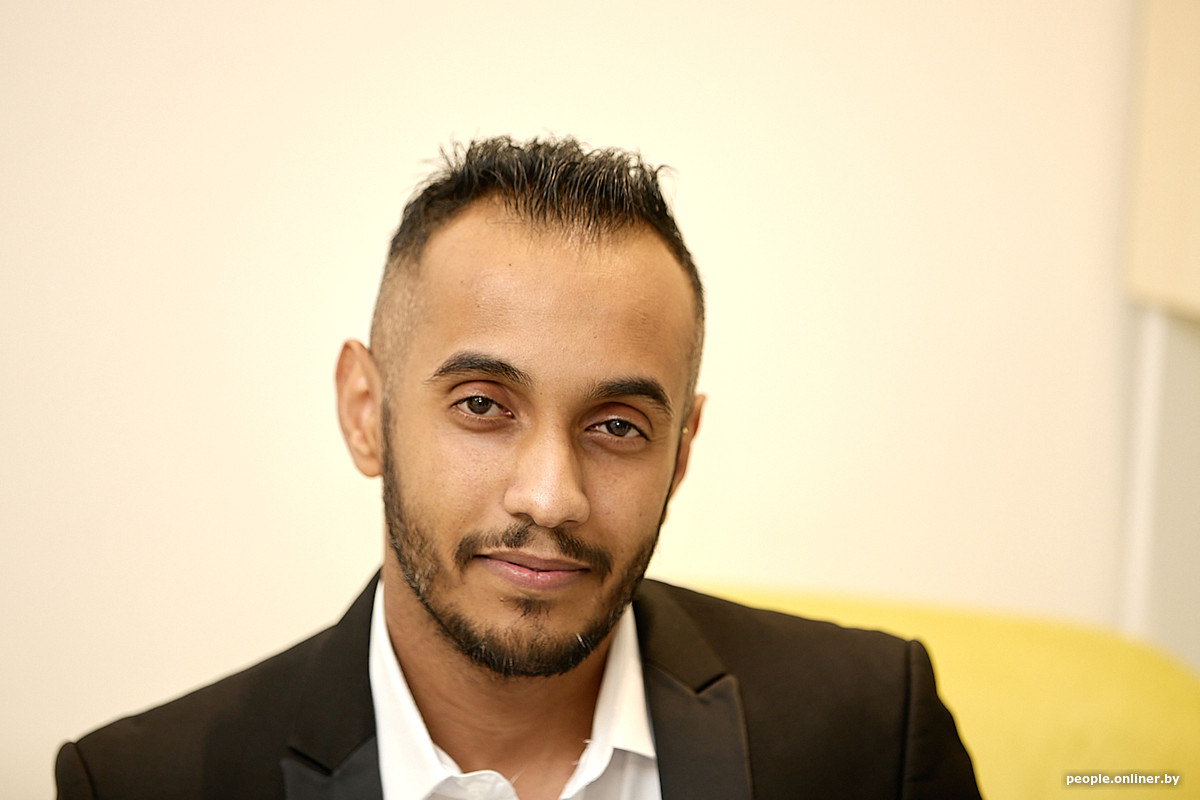
Saïd arrived in Belarus from Yemen ten years ago to train as a dentist. He didn’t know Russian at the time, and had only seen snow in pictures. Now the young man treats the teeth of Minsk residents, dates a Belarusian, confidently uses the word “pryhoža” in conversation, and is preparing to submit documents for Belarusian citizenship. He has not been back to his homeland even once during all this time. In the new edition of the joint Betera special project “Now that’s something!” we’ll talk about how an unexpected change can turn a life around by 180 degrees.
“I learned about the existence of Belarus from the internet”
At the very start of our conversation Saïd admits: he first read about Belarus on the internet. He was looking for a place where he could go to study, and there the tuition was affordable and the level of education good. As the dentist himself notes, moreover, with that diploma one can later work in various countries.
Yemenis in Belarusian medical universities are not rare. According to Saïd, most of his compatriots study in Gomel, while in Vitebsk at his time there were about fifteen of them. He himself came alone, without a group of friends.
Initially the plan was simple: get a diploma and leave. But over time it became clear that the young man really wants to stay here. His relatives supported the idea.
Saïd had dreamed of becoming a doctor since childhood, specifically a dentist. “My uncle — also a dentist — is to blame for that.”
— I was still a child when he took out his tools and explained to me what he was doing and why. I was so fascinated! Even then I realized: I will be only a dentist. In Yemen this is one of the most respected professions. There are many people with dental problems. Here there are fewer. It’s all about the water — in my homeland it’s very bad.
By the way, Saïd himself takes care of his teeth: he practically doesn’t eat sweets, only some special dishes that remind him of home, and even those in minimal quantities.
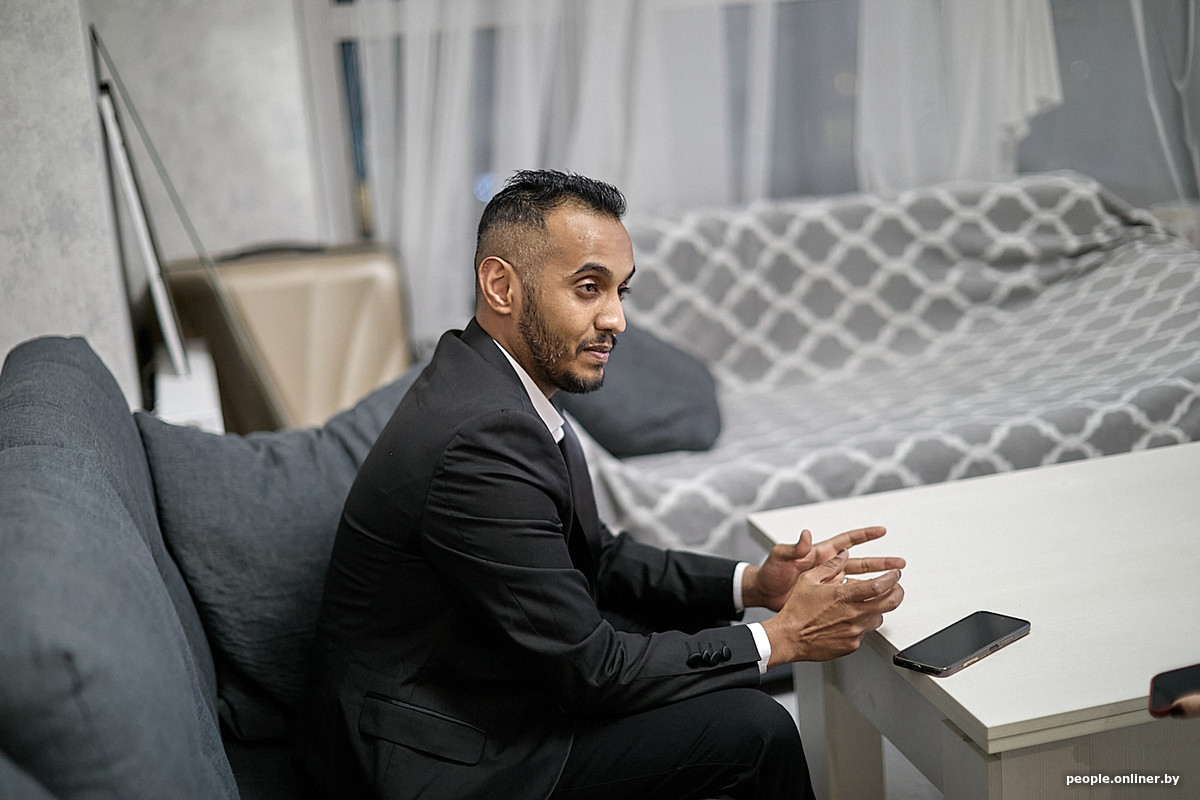
But let’s return to his story. Preparing for admission was not easy for the guy. All exams had to be taken in English, and then he had to continue his studies in a foreign language. He learned Russian from scratch already on site. By the way, now Saïd speaks Russian fluently. He also knows a few words in Belarusian: of course, “bulba”, as well as “pryhoža” and “pachaikaj”.
After starting work, it was necessary to quickly adapt: interacting with patients had to be done in Russian from the very beginning. If misunderstandings arose, colleagues would come to the rescue. But now Saeed copes without "translators": he says that in dentistry, much is understandable without words.
Our interlocutor admits that, on the contrary, problems with his native Arabic have appeared.
- I'm starting to forget it. I meet with an acquaintance, he wants to talk, and I'm unable to. I've gotten used to responding in Russian.
Patients themselves periodically ask where the doctor is from. However, not everyone can find Yemen on a map right away.
The country is located in the southwest of the Arabian Peninsula, bordering Saudi Arabia and Oman. The population of the country is approximately 43 million people. Only a third of the locals live in cities, the rest in rural areas.
Since 2014, the political situation in Yemen has remained extremely unstable: a civil war is ongoing.
- If someone has heard of my country, it's usually from the news. And then they immediately start asking about the war, says Saeed.
He himself is from the city of Taiz, near the Red Sea. According to Saeed, this is relatively far from the conflict zone - his loved ones are safe. By the way, he calls his relatives every day. His family is very large: eight brothers and sisters, Saeed is the youngest. He already has more than 20 nephews.
When asked to recall his first impression of Belarus, Saeed responds with one word:
- Snow.
- Had you never seen it before?
- Never. I arrived in winter, and it snowed on the very first day. I really liked it. All I did was look at the snow. The first year, the second, I played in the snow like a child, and then I stopped. I got used to it.
The last winter, the snowiest and coldest in 30 years, no longer surprised him: after all, he is a person with experience. Although for a guest from a hot country, the Belarusian frost is still a challenge.
- In Yemen, the average temperature is plus 30 degrees Celsius all year round. If it's plus 25, the day is already considered cool, and everyone wears jackets.
When I call my parents, they ask: "How do you live there? Is it not cold at home?" And I'm sitting at home in ordinary clothes. I explain that there are heaters, that the house is warm.
Said confesses: he would very much like his relatives to come and see Belarus with their own eyes. He has invited them several times, but so far, no one has decided to make the trip, as they cannot leave their jobs for an extended period.
Incidentally, despite the constant heat, Yemen also has its own weather peculiarities: there is a rainy season when it rains every day for four months straight.
"We have few forests, but we do have very large mountains. Looking at them is so beautiful. And here everything is flat, which is hard to get used to."
"Have you been to the forest to pick mushrooms yet?"
"No, no one has invited me yet. But soon I will have a vacation, and a friend has promised to take me fishing."
Said's social circle is roughly divided 50/50: he has already made some Belarusian friends, but he also has a large group of fellow Yemenis. We ask him what still surprises him here, and he says it's the calmness of the Belarusians and the quietness of the streets. This is especially noticeable after living in his noisy hometown for a long time.
"I think now I wouldn't be able to get used to such a thing. Now I love the calmness," Said smiles.
Said calls Belarusians friendly, although he partially agrees with the stereotype of their being somewhat closed-off:
"There are very nice people. Of course, there are also cold ones, especially with strangers. At first, I found this strange."
Said has traveled extensively around the country: he has visited all the regional centers. He studied in Vitebsk, did his internship in Orsha, and now lives in Minsk. He has his own ranking of favorite cities: Minsk is first, then Grodno, and then Mogilev. But Gomel didn't work out for him: it's not his city.
Said has a warm relationship with Belarusian cuisine, but with some reservations. He especially loves borscht and potatoes. However, he finds it difficult to accept the abundance of pork and alcoholic beverages on the menus: Said is a Muslim, and he does not consume such products.
There are no Yemeni restaurants in Belarus, though. With his friends, he often goes to Turkish establishments.
At home, however, Said cooks dishes from his own cuisine and teaches his girlfriend how to make them.
What Said really misses is fish. At home, he had seafood on the menu every day.
"Do you miss the sea?"
"Of course. Although, unfortunately, I don't know how to swim."
For now, Saeed's longing for the sea is alleviated by visiting water parks once or twice a month. There, he says, you don't even need to swim.
It's easy to meet a girl here, but finding someone who will be by your side, who you can think about the future with, is very difficult.
Saeed separately notes the beauty of Belarusian women: I have never seen such beautiful girls. This is not a compliment, it's the truth. Such girls should be valued, loved, and not offended. They are simply wonderful.
In Yemen, it is still common to get married early, around 18 years old, while men get married closer to 25-30 years old. So, usually, there is an age difference between the couple. Families still have many children: five or six kids do not surprise anyone. However, Saeed himself is already moving away from such traditions: he believes that one or two children are quite enough.
Why have more? It's too hard!
We also touch on the topic of religion. Saeed explains that it's not necessary for his wife to be a Muslim. The main thing is that she respects his religion and culture.
He himself has fallen in love with Belarusian culture from the heart - this topic comes up repeatedly in the conversation. His favorite holiday is unexpectedly the City Day, and only in second place is the New Year. Saeed is also delighted with the "Slavianski Bazaar in Vitebsk".
It's great there. I spent two weeks there and didn't get bored at all. I would have been ready to even sleep on the street, it was so much fun.
In a few months, Saeed will be applying for a Belarusian passport. But even now, he behaves like a local: he reads Belarusian news and only watches TV series in Russian. One of the last ones he watched was "Chernobyl".
In addition to cuisine, one of the strongest "threads" that still strongly connects him to his native culture is heavy Eastern perfume. Saeed simply adores it, and it's what his loved ones most often send him in packages.
Finally, we ask what he would send to his loved ones from Belarus.
They have everything there. If I could, I would send snow. That's what they don't have, our interlocutor laughs.
The project partner is Betera.
The company Betera has launched a charity project "Kilometers of Hearts" to support homeless animals.
Until October 15, those who wish can walk, run, or bike a distance that forms the shape of a heart, and then share their result on social media, tagging the official account @betera_by.
All screenshots collected during the project will be converted by Betera into real food (at a rate of 1 publication = 1 kilogram of food), and the author of the largest heart will receive a bicycle!