Menu
I want to work six hours. Young Belarusians shared what they expect from their first job
Special Project
“I want to work six hours.” Young Belarusians
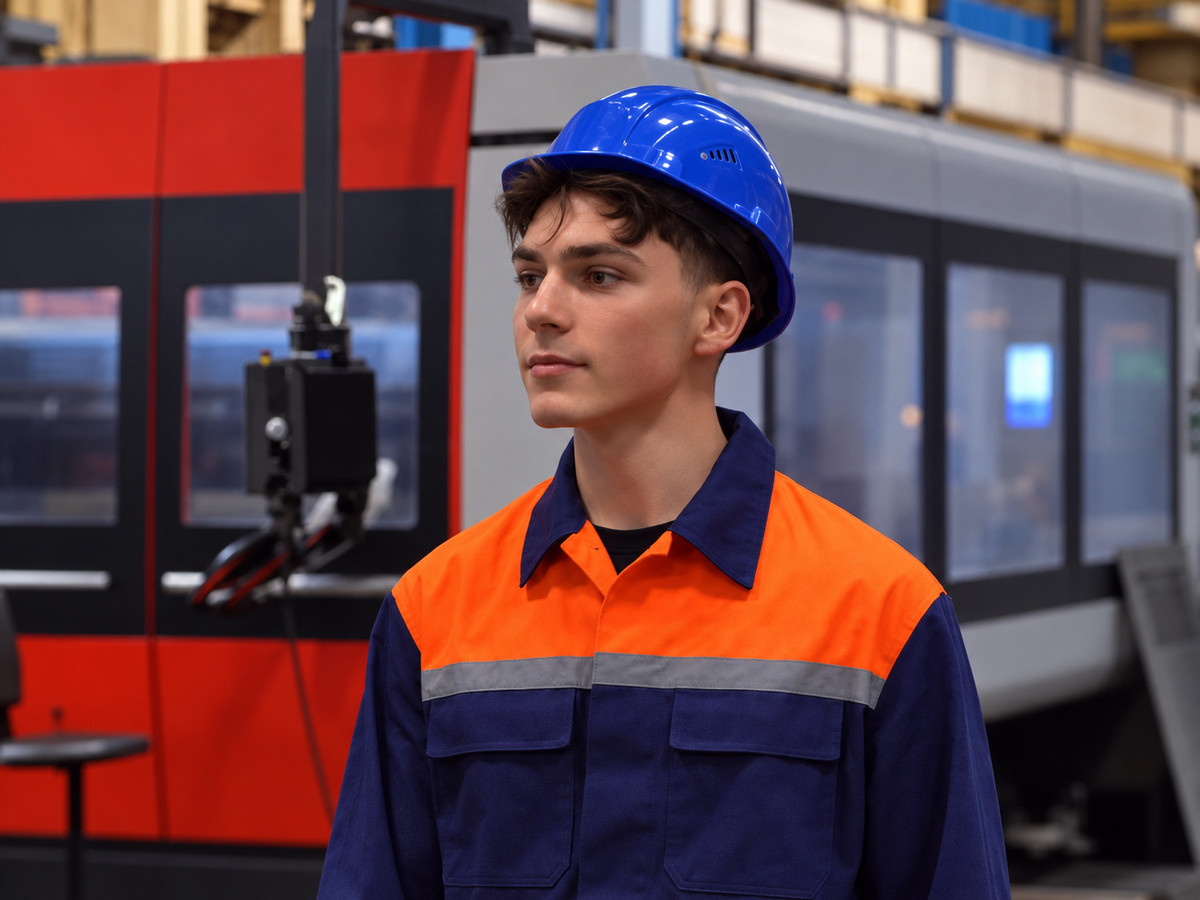
When I was just about to start at the factory, I imagined that there would be mostly adults, tough men. But it turned out that there are quite a few young employees. I was accepted normally, there were no serious difficulties in communication. No one yelled at me, no one tried to offend me because of my age or lack of experience.
In addition to my main job at the factory, Roman is actively engaged in blogging. The guy is trying to develop his social media and hopes that over time this will become an additional source of income for him.
If we talk about what is most important to me in my work, then first and foremost, of course, is the money. I think that now few young people will be satisfied with a small salary, especially if they have to pay for housing and all other expenses on their own.
I think that for a young person in Mogilev, a salary of around 2,000 rubles would be quite comfortable. You could pay for housing, eat normally, go somewhere, buy necessary things, and at the same time, save a little for the future.
After all, you want to live not just from paycheck to paycheck. It's essential to understand that you have money left over for your own plans.
But, of course, salary is not the only thing I look at. The schedule is also very important. I wake up for work at 6 am and come home around 4 pm. On the one hand, it's convenient: you're free quite early, and you still have the whole evening ahead of you. On the other hand, you have to get up very early.
If I had the opportunity to choose, I would want to work only six hours a day. I think an eight-hour working day is already too much. Just calculate it yourself: about eight hours are spent on sleep, and another eight and a half hours are spent on work, including lunch. Add the commute to and from work. As a result, you have about six hours left for the rest of your life. And in that time, you need to manage to do so much! Come home, clean up, go to the store, cook dinner. For me, it's essential to have a clean home. And I also want to simply go for a walk, meet someone, or do some sports.
When people say that young employees do not want to stay after work, I perfectly understand them. Personally, I am not ready to regularly work overtime, but, of course, if I were offered double pay, I could consider it. It would depend on how long I need to stay. In general, free time is very important to me, I do not want my whole life to consist only of work, the road home, and sleep.
But in general, how ready is the current youth to go work in factories? Or at the age of 20, do they still want to get a job in some cozy office, where there is a coffee machine, a comfortable chair, and no need to get up at six in the morning?
— I think it all depends on the job itself. If I were offered an office job with the same salary and schedule, where I would have to spend the whole day just filling out tables, I doubt I would be interested, because it's boring. If the tasks are interesting, I do not mind whether it's an office or a factory. And if every day you have to do the same thing and you do not see the point in your work, no beautiful office can save the situation.
I like that in production, you can see how everything works in practice. You are not just sitting at a computer, but you are dealing with real equipment, figuring out how it works. This is an interesting experience, especially after university, where you study almost only theory.
"I don't want my whole life to go to work." The story of Nadezhda
Nadezhda is 22 years old. The girl graduated from the geographical faculty of BSU with a specialization related to tourism and excursion activities. She searched for a job on her own and eventually got a job as a guide in the corporate museum of the brewing company "Alyvariya". She has been working here since August, and this is her first job.
— I am a Minsk native, I grew up literally two stops from the factory. I constantly walked past it, saw how people went on excursions in robes and hats. My mom even said once: "We should go take a look too." But I myself had never been on an excursion here and certainly did not think that one day I would be leading them.
I sent my resume, I was invited for an interview. Even before starting work, I came to see how everything was arranged, met with a future colleague. I liked how we communicated, and I decided that I wanted to work here.
— My first working day was quite hectic: everything was new, new people, new responsibilities. But what I was most worried about was the tours themselves: for example, that I would forget the text or get something mixed up. After all, it's one thing to conduct trial classes at the university, and another thing to stand in front of 30 unfamiliar people and tell them something.
The first two weeks, only my throat hurt from the unaccustomed strain, but then it passed.
Usually, three to four tours take place at the museum per day. Nadezhda conducts them alternately with her colleague. Her working day begins with preparing the museum: she needs to lay out robes and hats for visitors, prepare everything necessary for the tasting. Then the tours themselves begin, and at the end of the shift, she has to deal with the paperwork.
— The hardest thing is to constantly maintain engagement, especially when you have a tour at 6 pm, and you've been on your feet all day. Fatigue, of course, appears, but you can't show it. People come for impressions, and you don't want them to think: "Damn, it's boring, why did I even come here?"
My schedule is five days on, two days off, I work from 11:30 to 20:30, and my days off are Sunday and Monday. At first, I thought: "Damn, the whole day will be spent at work." But then I got used to it and even found some advantages. I don't like getting up early, so now I can go to bed later, wake up later, and get enough sleep. And having Monday off is very convenient. For example, you can go to the doctor when there are fewer queues.
Nadezhda doesn't say how much she earns: corporate rules. But she doesn't hide that her first salary pleasantly surprised her. Back in university, the girl had heard stories about the incomes of young specialists and was preparing for the worst, but fortunately, her concerns were not justified.
— I'm very pleased with my salary. Of course, it's a bit easier for me because we live together with my young man, and I don't have to rent an apartment separately. So I have more money left over for myself. I want not only to cover my mandatory expenses but also to allow myself some pleasant things: buy clothes, cosmetics, get a manicure, or go somewhere. And sometimes order food delivery, because after work, I don't really feel like cooking.
Generally, for me, it is essential to live comfortably, without constant restrictions, so I don't have to think every time whether I can afford something or if I need to wait for my next paycheck. If we talk about how much I would like to earn, then it's definitely not less than 2000 thousand rubles. After all, we live in Minsk, and prices here are not small and continue to grow.
Nadezhda needs more than just money for complete happiness at work: she also wants a schedule that suits her, and to have something to talk about with her colleagues, not just about work-related issues.
When I first arrived, I was immediately well-received. There was no attitude like "You're new, so figure it out yourself." On the contrary, my colleagues helped me get settled, explained everything, and gave me hints. We even have a tradition of communicating on a first-name basis, regardless of age, and I like that.
For me, support at work is very important. When you see that your efforts are noticed, that your work is truly valued, you get the desire to work even better. I think it's essential for young people like me to have such an attitude: to be listened to, to have our opinions taken into account, and not to forget to acknowledge our results.
Nadezhda would never want to tolerate being yelled at, even if offered a higher salary in exchange for putting up with such treatment.
I'm a fairly sensitive person and take everything close to heart. Therefore, working in a place where the boss yells and takes it out on employees would be difficult for me. Even if they offered me 500 rubles more for it, I would think about whether it's worth it. I don't want to come to work every day and experience stress because of someone else's emotions.
I have a more relaxed attitude towards hypothetical overtime, but also within reasonable limits. If something urgent comes up and I need to stay late, I'll go along with it without any problems. But if requests to stay after work become frequent, that's a completely different story. I would start refusing, because I have my own life, friends, loved ones, and plans. I don't want work to take up all my time.
When people say that zoomers do not want to work, I do not entirely agree with this. It seems to me that the issue is often not about a lack of desire to work, but rather about the person not seeing any prospects. If you understand that you are not going anywhere, nothing is changing, and your opinion is not being taken into account, then why hold on to such a place? Young people also want to develop, to feel that their work has value.
Vlada is 21 years old, and she has already managed to try her hand at IT. The girl is involved in information security and is simultaneously studying for her master's degree. She started her first job in February of this year.
— In general, I stumbled into information security quite by chance. This field had interested me even before I entered university, but in the end, I scored a few more points and chose a different specialty. Initially, I was interested in security in a more traditional sense, and then the opportunity arose to try myself in cybersecurity. I thought, why not?
Vlada's work is not quite what people far from IT might imagine. Here, you have to deal not only with technical issues but also with documents and explaining the rules of information security to colleagues.
— If I simplify it, then my profession is half technical, half organizational. Now I'm more involved in the second part: I familiarize employees with the principles of security, prepare documents on how everything should be organized within the company. But at the same time, I'm developing my technical skills.
There is also system monitoring, responding to various incidents. The field is quite broad, with many areas, and probably the most difficult thing for me now is that information security is still actively developing. Even experienced specialists have questions about how to properly set up certain processes. And when you're just starting out, it's even harder to understand everything.
When choosing her first job, Vlada was most worried not about the salary or schedule, but about the prospect of ending up in a team where newcomers have a hard time. Especially since she had already heard similar stories from acquaintances.
— I was told how younger employees were dumped with other people's tasks, set up with some kind of sabotage, and tried to be squeezed out of the team. Everyone has their own stories, but after that, of course, you start to worry. So for me, it was very important to know what kind of people I would be working with. Not that salary and schedule were completely irrelevant, I just think that if the relationships within the team are good, then everything else will be easier too.
As a result, my concerns were not justified: I immediately felt quite comfortable. Colleagues themselves came to introduce themselves, so I didn't even have to go through those awkward first conversations when you don't know who to approach and what to say.
The heroine also got along well with the schedule. She got used to coming to work at 9 am and prefers the office to remote work. Although there is an opportunity to work from home, especially when you need to combine work tasks with studying.
- I'm generally more of an office person. I like coming to work, communicating with colleagues. And in terms of time