Menu
"I couldn't even save 1000 rubles before, and now I've flown to Milan." Some thoughts on small decisions
Before he could even save 1000 rubles, now he was rushing to Milan. Something about small decisions
We live in a world where instant pleasure is available. One click and cheap dopamine from TikTok enters the brain, and a food delivery courier is already speeding toward help. How to build serious long-term plans in such a universe? Let's try to be the captain of obviousness: through small decisions and tiny but regular actions. In this text readers of Onlíner share how they reached their goal step by step, and experts are generous with comments. What do the person who dreams of attending a match for their favorite football club in Milan have in common with someone who wants to read Stephen King in the original language? Why is postponing 50% of income right away such an inadequate solution? How does one separate violence from effort in a new habit? All answers are in the special project with Dzengi.
"San-Siro"
It's hard even to describe your emotions at "San-Siro."
Nikita, a 38-year-old manager from Minsk, is convinced that saving just 335 rubles a month led him to experience the best week of his life.
— My dream might seem too modest to some, but as far back as I can remember, I was a fan of the football club "Milan." There was a time when without any internet, matches were broadcasted on television and even — an archaic thing of the nineties — by radio. In the era of Milan's greatness, personalities played every position — from Paolo Maldini to Alessandro Costacurta. Now, unfortunately, the team isn't in its best form, but that doesn't mean I've stopped caring about them. I love — all of them! In 2026 I wanted to see firsthand, with my own eyes, how Youssouf Fofana would make an accurate pass at the San-Siro stadium. That's all there is to it!
But to understand why the path from point A to point B took me so much time, I need to rewind the tape. Over 20+ years, my relationship with money has been an endless carnival. I want new branding — went to a shop in central Minsk and don't count how many rubles remained until payday. Tired at work, suddenly decided I needed to rest in Dubai — took out a loan and flew without thinking. Friends ask: "Are you going to miss the Muse concert in Moscow?" I buy tickets with my last money and, of course, go. Older family members repeat: "You need to save money, put aside," — and you simply laugh.
This financial illiteracy, as I now realize, meant I turned 30 with several loans on my hands. And I firmly decided to never allow myself any more travel or trips. At 32 I got married, and my wife suggested a completely different approach to dreams. "Baby steps, small steps," she would repeat.
We decided to go to Milan and began preparing—for the first time in my life—a year and a half beforehand. We have equality in our family: we earn the same, and we split the financial load in half, just like household duties. So the calculations were simple. For five days in Milan, including the bus, airfare, hotel, various little pleasures, and—most importantly—tickets to the Milan derby, we needed about 12,000 rubles. Accordingly, each of us diligently saved 335 rubles a month.
Milan, 2015
Regularly putting money into a little box, I felt a pleasant sensation: I was in control of my own life and finances. I liked it. Spontaneous purchases, impulsive decisions—no longer my thing.
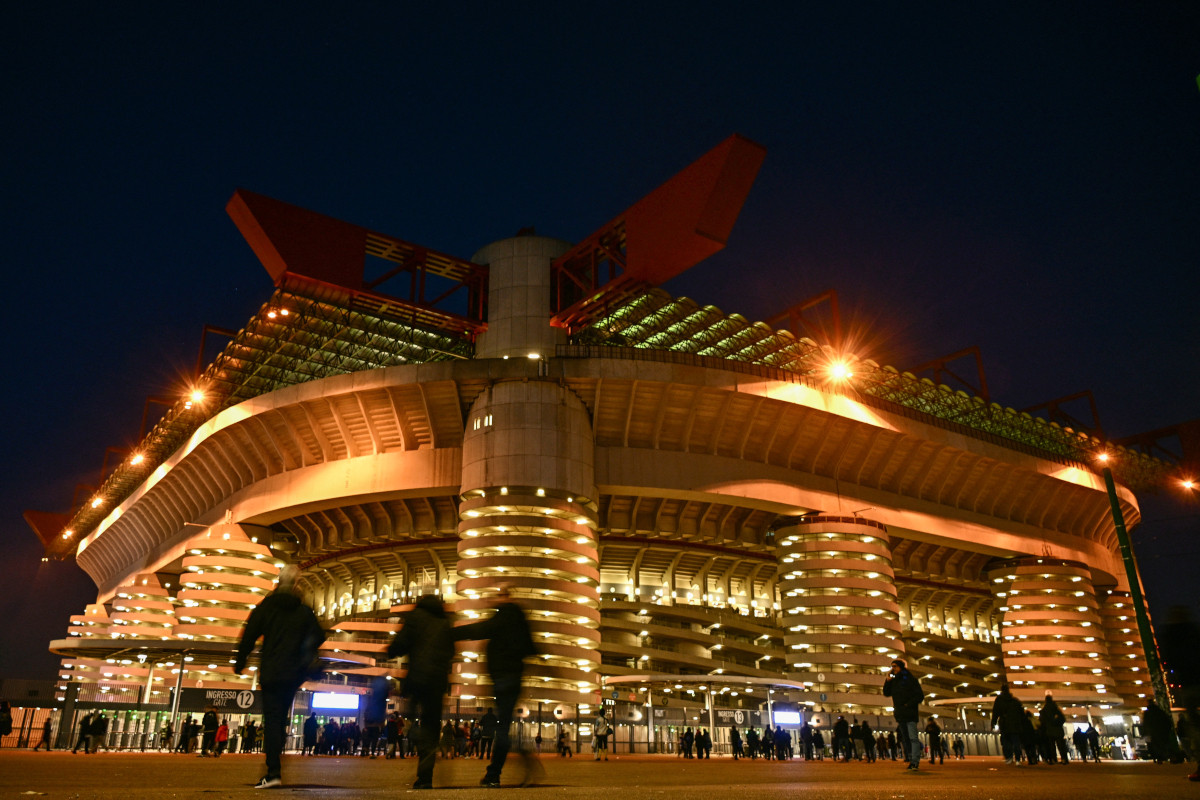
When I found myself at San Siro and saw the giant spiral towers, the place where history was made... It's hard for me even to describe my emotions. Pervis Estupiñán beautifully slotted the ball into the near top corner—and we, the red-and-black fans, erupted with a roar of happiness. And when the entire stadium—80,000 people—began singing along with the southern fan section to the song Sarà Perché Ti Amo, I actually had tears in my eyes. A feeling of unity, brotherhood, of being where I belonged—I was happy.
My poor English made me feel like a failure
Sometimes cause-and-effect relationships are unexpected. When 35-year-old Alesya from Minsk decided to watch "Bridgerton" in the original, she had no idea it would affect her salary.
"I honestly admit that I finished school and university with poor English—and for a long time I had a complex about it. My specialty is auditing, and I had to deal with foreign colleagues, which caused me great stress every time. Well, how could it be otherwise, if your English is at such a level that you translate 'behind bars' as 'behind the bars of a pub' rather than 'behind prison bars.' Or at a wedding you choose Harry Styles' song 'Sign of the Times' for the first dance—it's a beautiful melody, after all—and your friend raises an eyebrow in surprise: 'Are you sure you want to dance with your husband to an anthem about the end of the world?' There should be a facepalm emoji here."
Harry Styles at the Coachella Festival
At first I had grandiose fantasies: what if I moved to London for a year and immersed myself in a native‑speaker environment? Or hire the most expensive tutor and study literally every day? But these ideas had little to do with reality (and my budget). I simply remained paralyzed by a sense of failure and self‑pity. At some point I realized that only small, daily actions work. For example, I switched all my apps—from taxis to online banking—to English. I started watching English‑language TV shows for an hour each day and listening to audiobooks in the original. Yes, it was painful, but I kept going. At first I just read the subtitles, constantly looking up words in the dictionary, but gradually my brain began to recognize English speech better and better. In a year I reached Upper Intermediate level, suddenly understood what The Beatles and Radiohead were singing about, and got the meaning of that meme about Matt Damon and Jimmy Kimmel.