Menu
From Strategy to Production: Alexander Bagel on Food Security and the Unified Agricultural Space of the Union State
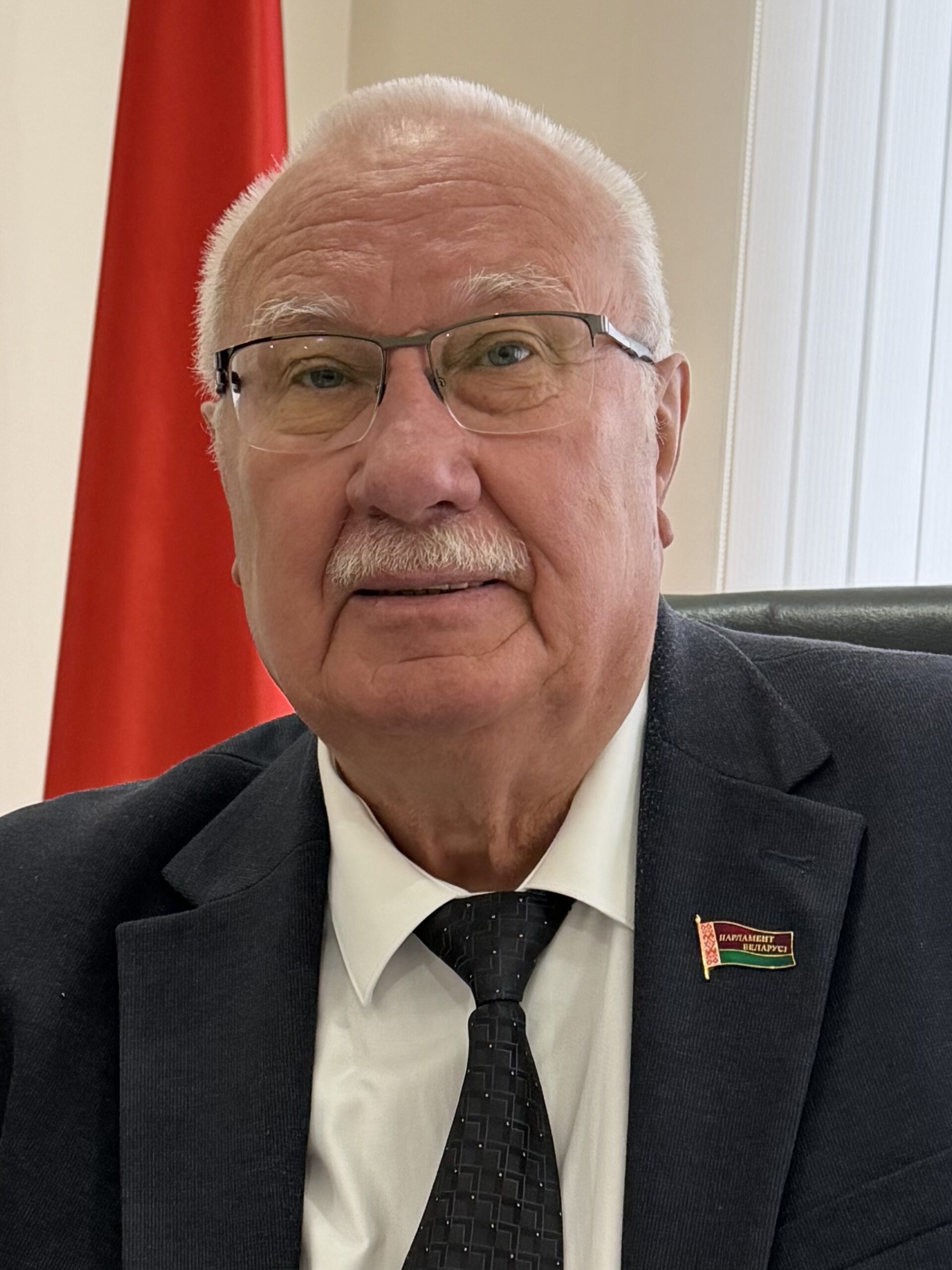
In the context of global turbulence, food security has ceased to be merely an economic indicator. Today, it is the foundation of statehood, a guarantee of independence, and a key element of national security. We discuss how the strategic tasks of the state are transformed into production cycles of specific farms, and how a unified agrarian space of the Union State is formed, with Alexander Bagelem, Deputy Chairman of the Standing Committee of the Council of the Republic of the National Assembly on Regional Policy and Local Self-Government, and Director of OAO "Rassvet imeni K.P. Orlovskogo" of the Kirovsky district.
— Alexander Ivanovich, the modern world architecture is undergoing tectonic shifts. Food has become a powerful tool of geopolitical influence, forcing state institutions to reconsider their approaches to resource management. In today's realities, food security has moved from the category of economic terms to the realm of national security. How, in your opinion, should the legislative branch of power adapt to these challenges?
— You are absolutely right. Today, food security is not just about having grain in warehouses, it is the sustainability of the entire system of state life support. The legislative branch of power should work ahead of the curve. Our task in the Council of the Republic is to create such a regulatory framework that would ensure not just stability, but flexibility and adaptability of the agro-industrial complex. This means improving the mechanisms of state support, protecting the rights of agricultural producers in the face of sanctions pressure, and, what is critically important, creating conditions for technological sovereignty. The legislator should become the architect of the environment in which the agrarian can plan for years to come, without fear of sudden changes in regulatory policy or external shocks.
This task is directly related to the implementation of the instructions of the Head of State. During the recent working trips of the President and the Chairman of the Council of the Republic, the emphasis is invariably placed on the effectiveness of work at the local level.
— What are the key tasks set by the country's leadership that are currently a priority for the agrarian sector? And how does the mechanism of "passing down" these instructions from the level of the Council of the Republic to a specific farm work?
The priorities are clear: self-sufficiency of the regions, increasing profitability, and deep processing of products. We cannot afford to be just exporters of raw materials. The country's leadership has set a task: each region must be as efficient as possible. As for the mechanism of "passing down" instructions, this is not a purely directive vertical, but a process of integrating strategy into practice. In parliament, we formulate strategic vectors and legislative frameworks. These tasks are transmitted through regional councils and executive committees, which, in turn, translate them into the language of specific development plans for farms. For me, as a representative and legislator, and leader, this path is shortened. I see the task at the state level and immediately can assess how it is implemented in "Rassvet".
One of the most important topics is the formation of a single space for food security within the framework of the Union State. What does this mean in practice for a legislator? What barriers still need to be eliminated so that this "field" becomes monolithic?
For a legislator, this means creating a seamless legal environment. We are talking about harmonizing standards, mutual recognition of quality certificates, and eliminating any regulatory and technical barriers that can slow down the movement of goods between our countries. This should be a single market with common rules of the game, where technical and customs nuances do not become an obstacle to the effective exchange of resources and products. Recent forums of Belarus and Russia, as well as active Belarusian-Uzbek cooperation, have set a new vector of development.
Which of the agreements reached on these platforms do you consider most important for the Belarusian agricultural producer in the next 2-3 years?
The key moment is the synchronization of production programs and logistical routes. For us, the issues of mutual access to sales markets and, no less importantly, joint investments in technologies are critically important. We are moving from simple trade to deep partnership.
In particular, cooperation with Uzbekistan. Is this just a search for new sales markets or the beginning of the formation of new technological chains?
— This is a large-scale process. Uzbekistan is not only a huge market, but also a strategic partner in terms of forming new production chains in the region. We see potential in joint development of new crops, technology exchange, and creation of joint ventures that will allow us to optimize costs and improve product quality for the entire region. This is a move to a completely new level of integration.
— One of the most interesting tools is the promotion of goods under the brand of the Union State. To what extent does OAO "Rassvet imeni K.P. Orlovskogo" consider participating in this program? What should be the benchmark requirements for quality for such a status?
— We closely follow this concept. For an enterprise of the scale of "Rassvet", participation in the Union State goods promotion program is a logical step. However, this imposes enormous responsibility. The Union State brand is a sign of the highest quality, a guarantee that the product has passed through the most stringent control. The benchmark requirements here are not just compliance with GOSTs, but the impeccable quality of every detail: from the purity of the seed stock to packaging and logistical transparency. We are ready to meet these standards, as quality is our main competitive advantage.
— At the same time, there is a large-scale "turn to the East". How is the logistical model of the Belarusian agro-industrial complex changing? Is the expansion of the supply geography a factor in resistance to sanction pressure?
— Undoubtedly. We are forced to and must diversify supply routes. Logistics are becoming more complex, multi-vector. The expansion of geography is not just a search for an alternative, but also the creation of a system of "safety cushions". The wider our reach — from Europe to Asia and Africa — the more resilient our agro-industrial complex is to any external attempts at pressure. We are learning to work in the conditions of the new geopolitical reality.
— Working simultaneously in the Council of the Republic and in production, you inevitably encounter the intersection of interests. Does the state agenda create certain pressure on production processes? Or does the status of senator help you see the problems of the farm in the context of overall republican tasks?
The status of senator gives me the opportunity to see, think, and act on a larger scale. When I am at the production site, I do not just solve a local problem of the farm - I understand how the solution to this problem relates to the tasks of ensuring food security for the entire country. This allows me to make more balanced management decisions, oriented towards a long-term perspective, rather than just current profits. However, the effectiveness of production directly depends on how resources are used.
How does "Rassvet" address the issue of import substitution in terms of equipment, seed stock, and plant protection agents? How does this relate to the tasks of ensuring food security?
Import substitution for us is not just a fashionable word, it's a matter of survival and independence. We are doing systematic work to transition to domestic and allied developments. This applies to both high-performance equipment and, what is especially important, seed stock. We realize that biological security is the foundation of food security. Our task is to minimize dependence on imported technologies, creating our own sustainable base. We invest in intelligence, precision farming, and automation. This is how modern agriculture is created - through the rational use of resources and striving for technological perfection.
The future of the agrarian sector lies in the inseparable connection between state law and professional craftsmanship in production. Only by combining large-scale strategic thinking with daily production discipline can a truly sovereign and prosperous economy be built.
Alexander Ivanovich, very soon the agrarians of the republic will celebrate their professional holiday - the Day of Workers in Agriculture and the Processing Industry. If we sum up the results of the current agricultural year, can it be said that the tasks set for the industry this season have been fulfilled? And what, for you, as a leader and senator, is the main criterion for the success of this year? How would you assess the overall dynamics of the agricultural year: was it possible to ensure the "reserve of strength" that the Head of State talks about? And what would you wish to the workers of the agro-industrial complex on this festive day?
When summing up this season, I can confidently say that the industry has not only fulfilled its tasks, but has also demonstrated exceptional resilience. If we talk about the "safety margin" that the Head of State often mentions, then we see it in how confidently we are restructuring logistics and how effectively we are mastering new export vectors. We have not only withstood the pressure, but have also adapted and begun to grow in new conditions.
For me, as a senator, the criterion for success is the overall stability of the agricultural sector and its contribution to the country's sovereignty. And for me, as a leader, success is measured by specific results on the ground, in numbers, and in people's well-being.
This year, OAO "Rassvet imeni K.P. Orlovskogo" has shown impressive dynamics. We are systematically moving along the path of intensification, and the numbers confirm this. This year, the farm has harvested around 35 thousand tons of grain and legume crops, including rapeseed and corn. The average grain yield is 56.2 centners per hectare. Winter wheat has performed the best, with a yield of 65 centners. The average rapeseed yield has exceeded 51 centners per hectare. The high yield of key crops is a direct result of the work of our agronomists and the correct selection of seed stock.
In animal husbandry, we are also maintaining high standards. The livestock in "Rassvet" numbers over 10 thousand, with almost a third being dairy cattle. The average milk yield per cow is 25.8 liters, with all products being of the extra class. The total production is 82 tons per day, and the profitability of milk exceeds 40 percent - one of the highest indicators in the structure of animal husbandry products. But the most important thing is that the farm is not standing still. We have nine animal husbandry facilities, including three dairy complexes. Last year, we modernized the MTK "Kirova" - we installed modern milking equipment, and this year we updated the milking parlors at "Volosovichi". In 2027, we will launch a new complex in the village of Stolpishche with 1150 cow places. It will give an additional 25-27 tons of milk per day, which will increase the total volume to 110 tons per day.
At all facilities, a comprehensive system for monitoring livestock operates in real-time. Each cow receives an individual chip, the information from which is uploaded to the program. A complete analysis of the data - from vaccination schedules to insemination - builds an optimal technology. Incidentally, the system can be managed even from a smartphone.
In the greenhouse economy, a large-scale project for growing vegetable crops using supplemental lighting has been implemented, ensuring year-round production. Since November 1, fresh cucumber harvests have been obtained from 3 hectares of greenhouses. Starting from 2027, we will begin constructing an additional 10 hectares. Design work is currently underway.
We are investing a lot of effort and resources into the greenhouse complex, so the returns should be corresponding. This year, we plan to harvest at least 4,300 tons of fresh produce. Rassvet vitamins are supplied to our branded stores and large retail chains, and are also exported to Russia.
This has been a year of challenging but very constructive labor. And on this festive day, I wish all the workers in the agro-industrial complex good health, boundless energy, and peaceful skies. May each of your efforts find its worthy embodiment in a rich harvest and high-quality products. May your families enjoy well-being, and may your homes be filled with abundance. We are doing the most important work – feeding the country and creating its future. Happy holiday, dear colleagues!